Some weeks pass quietly.
Others seem to arrive with a bit more drama.
This week in America was one of the dramatic ones.
Not YouTube dramatic.
Actually dramatic.
An ice storm rolled through Tennessee. Schools closed. Power went out for thousands of people — some for more than a week. It even made the news back home in Australia.
But living through something like that and watching it on television are two completely different experiences.
Because when I think about the week now, it’s not really the headlines that stay with me.
It’s my youngest daughter selling Girl Scout cookies outside Kroger.
Sitting in front of the fire when the power went out.
It’s filling out job applications late at night.
That’s what the week actually felt like.
✈️ Planning travel between Australia & the US?
:I usually compare flights and accommodation here with Expedia:
Girl Scout Cookies Outside Kroger
On Saturday, my youngest — Brianna — stood outside Kroger in full Girl Scout uniform trying to sell cookies to strangers.
Thin Mints.
Samoas.
Tagalongs.

There’s a folding table.
A small square card reader.
A roster system run by mums who sound a bit like army sergeants.
Everyone has allocated supermarket time slots. Everything is scheduled and organised.
And the interesting thing is — people just know what to do.
No one looks confused.
No one wonders why a kid is selling biscuits outside the supermarket.
They’ve grown up with it.
Some people buy two boxes without slowing down.
Some stop and chat for a minute.
You’ll hear “Good luck sweetheart,” as they tap their card, and keep walking.
It’s a very American kind of scene.
There’s an idea here that confidence is something you practise publicly.
You walk up to strangers.
Speak clearly.
You handle rejection.
Keep smiling.
In Australia we did fundraisers too, of course.
But we weren’t running what felt like a small retail operation outside Woolworths in full uniform.
There’s something impressive about it.
It’s community — but structured.
Standing there with my accent, feeling slightly out of place but also very proud, I realised something.
For Bri, this isn’t cultural.
It’s just normal.
She was born here. This is her country.
She won’t remember it as “a very American experience.”
She’ll just remember standing there and being brave.
When the Ice Storm Hit
Then the ice arrived.
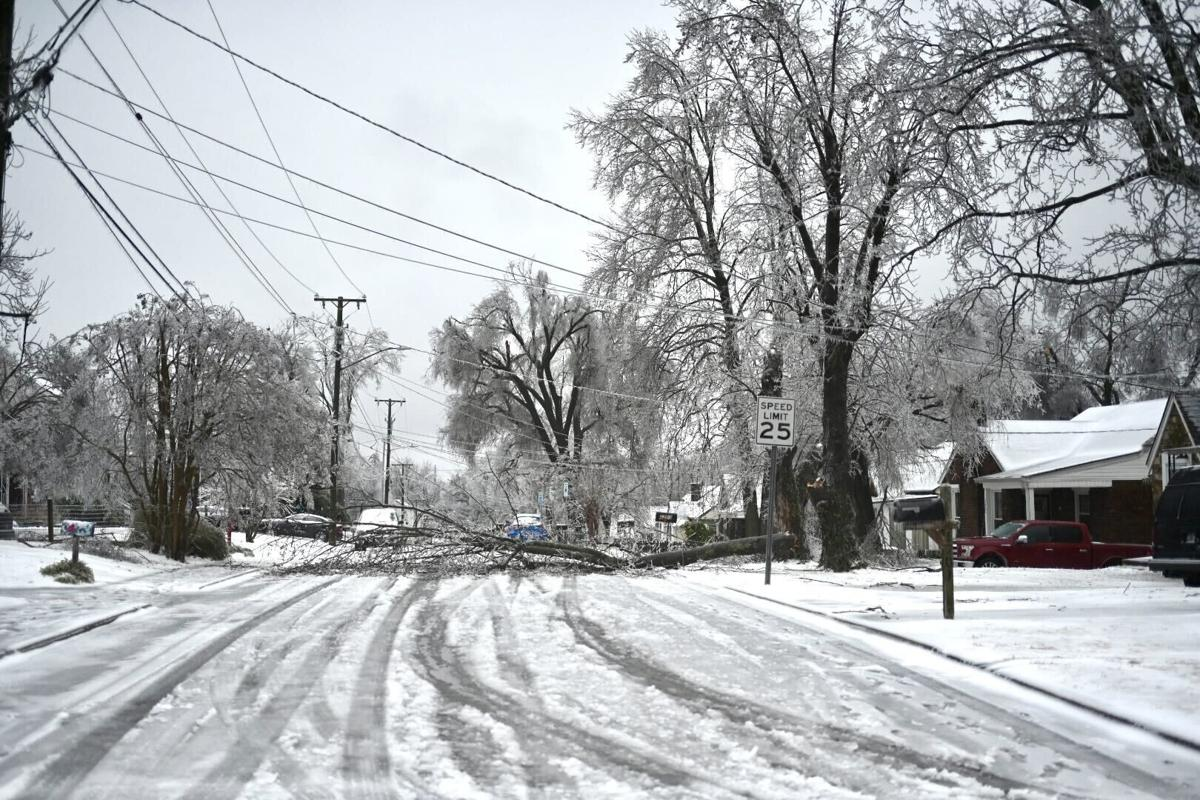
If you’ve never lived through an ice storm, it’s difficult to explain properly.
Rain falls.
But the moment it touches anything — trees, roads, power lines — it freezes instantly.
Branches turn into glass sculptures.
Honestly, it’s beautiful at first.

The whole neighbourhood looks like it’s been coated in crystal.
And then the trees start snapping.
That’s the sound that stays with you.
Sharp cracks in the night — like something under pressure finally giving way.
You lie there half awake waiting for the next one, hoping none of the trees in the backyard end up on the roof.
Then the snow arrived.
Fresh snow always looks beautiful.
White rooftops.
Silent streets.
Everything softened.
The deer came back through the neighbourhood too, trotting down the middle of the road like they’d taken the place over again.
Which, to be fair, they probably had.
No cars.
No engines.
Just deer walking down suburban streets.
Suburban Skiing
At one point people were actually skiing down our road.
Skiing. In the suburbs.
Meanwhile I’m outside reminding the kids not to eat the yellow snow — which I’m fairly certain is universal parenting advice.
But underneath the strange beauty of it all, the storm was serious.
Schools closed for seven days.
Seven.
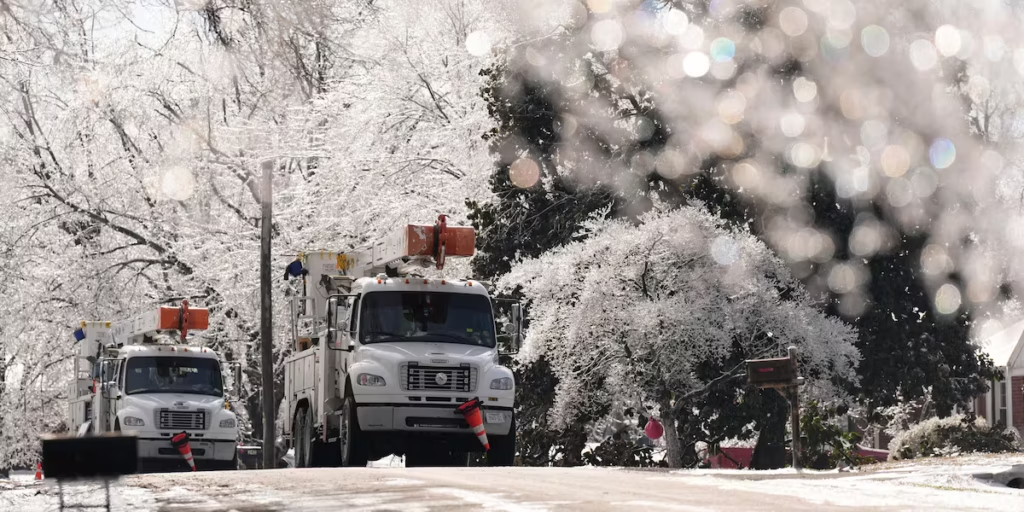
Some people lost power for ten days or more.
Many homes had no heat.
And sadly, there were deaths too. Not dramatic headline events — just quiet cold-related deaths. Elderly people found alone in freezing homes.
That part still feels strange to me.
Because winter in Australia just doesn’t carry that kind of risk.
You rug up.
Have a bit of a whinge.
Put the jug on.
Make a cuppa.
Here — especially in the South where we’re not really built for extreme winter — things get exposed quickly.
Branches snap.
Power lines sag.
Roads turn into ice rinks.
And within about a day, the bread, milk and eggs disappear from the supermarket.
I’m still not sure what everyone’s baking during these storms, but it must be something extraordinary. Maybe they are trying to replicate my ANZAC biscuits recipe!
Every time.
We lost power for two days.
Two days without power is annoying, but we were lucky.
We’ve got an open fireplace.
So we layered up and managed fine.
At one point I was outside cooking steaks on the barbecue in minus twelve while snow was falling around me.
I reckon they tasted better for it.
Maybe that’s just survival bias.
The girls thought the whole thing was a bit of an adventure.
But I kept thinking about the families who didn’t have the same setup.
America often feels incredibly capable.
Until weather hits.
And then you see how quickly everything pauses.
It’s not criticism.
It’s just… bigger.
Everything here feels bigger.
The Quiet Part of the Week
And then there’s the quieter side of the week.
The part that doesn’t make headlines at all.
Filling out job applications.
Uploading resumes.
Typing the same information into online portals that don’t talk to each other.
America talks a lot about opportunity.
And that’s fair — there is opportunity here.
But it’s also very structured.
Masters degrees required for minimum wage roles.
Specific certifications required.
Years of experience required.
If the box isn’t ticked, the system simply keeps moving.
Even things like being asked to identify your race on job applications stand out when you’re not used to it.
It’s not cruel.
It’s just the system.
And as an immigrant, you notice those systems very quickly.
Because work here ties into everything.
Healthcare.
Stability.
Long-term plans.
So you adapt.
You build slowly.
You look for another way in.
It’s not dramatic.
It’s just part of living here. I explore that more in this video titled When You Live Between Two Countries
Participation
Looking back at the week — the cookies, the ice storm, the job applications — they all seem to point to the same idea.
America asks something of you.
It asks kids to step forward.
Families to prepare.
Adults to compete.
There is opportunity here.
But you participate in it.
Living here hasn’t made me less Australian.
If anything, it’s made me more aware of the pace I grew up with.
Things felt smaller.
Less sharp around the edges.
Here everything feels turned up a little.
Not worse.
Just louder.
And watching Bri confidently asking strangers outside Kroger if they’d like to buy cookies, I realised something.
She won’t see any of this as cultural analysis.
She’ll just see it as life.
Living Overseas
Maybe that’s the real thing about living overseas.
You adjust.
Grow into it.
You learn to stand steady when the ice comes.
That was this week in America.
☕ Buy me a coffee:
https://buymeacoffee.com/fromdownundertodownsouth
📺 YouTube:
https://www.youtube.com/@FromDownUndertoDownSouth
📘 Facebook:
https://www.facebook.com/profile.php?id=100068568677919
🐦 X:
https://x.com/aussiemika74
📩 Business enquiries:
michael@fromdownundertodownsouth.com
Thanks for reading.
Hoo roo maties.