There is a point in every parent’s life when you realise your child’s hobby has developed its own economy.
I think we reached that point somewhere between the dance costumes, competition fees, hotel rooms and my wife working an eight hour shift at Bridgestone Arena while I sat in a car outside a dance studio doing work on my phone.
Our ten year old daughter Georgia dances competitively.
Seven routines this year.
Our seven year old, Brianna, has gone back to dance too and has already announced that she would like to try out for the competition team next year.
Because apparently we looked at our current family schedule and thought it lacked ambition.
The funny thing is, none of this feels particularly unusual anymore.
Afternoons are spent driving to the studio.
Groceries happen while somebody is dancing.
Work gets done from the car.
Weekends disappear into competitions.
Family trips get built around nationals.
Money quietly moves from one part of the family budget to another.
Somewhere along the way I realised there is an enormous economy sitting underneath American kids’ activities that you barely notice until your own family becomes part of it.
And I don’t just mean money.

It Starts Out So Innocently
Georgia started ballet when she was two years old in Australia.
She loved dance from the moment she put on her first ballet shoes.
Back then, dance was relatively simple.
You went to class.
You learned your routine.
There was an end of year recital.
Parents watched.
Everyone went home.
Competitive dance is a different universe.
Georgia is now in her fourth year on company, and the older she gets, the greater the commitment becomes.
Tuition is higher.
There are competition entry fees.
Costumes.
Choreography fees.
Solo lessons.
Travel.
Hotels.
Food.
Then there are seven competition dances, which means seven routines have to somehow make their way from a studio in Tennessee onto stages around the Southeast.
We regularly travel to Kentucky and Georgia for competitions. Nationals this year was in Daytona Beach, Florida.
We were there for seven days.
One day without dance.
We called it a family holiday. Technically, I think that counts.
The Three Minutes You See Aren’t the Expensive Part
A competition routine might last a few minutes.
Getting a child onto that stage can consume an entire weekend.
For us, a typical competition begins on Friday.
If we’re heading somewhere like Atlanta, Georgia may have to leave school early so we can get there that evening. At the moment her elementary school doesn’t consider dance competition an excused absence, which is something that will become more complicated as she gets older and Friday night performances become more common.
We arrive Friday evening, check into the hotel, find dinner and get to bed.
The preparation has already started.
Georgia may have done her fake tan a couple of days earlier, or sometimes before we leave on Friday.
If she has an early Saturday performance, Nikki can be up at 4 a.m. doing hair and makeup.
Four.
In the morning.
I grew up dancing ballroom in Australia and somehow I don’t remember Bankstown RSL requiring this level of preparation.
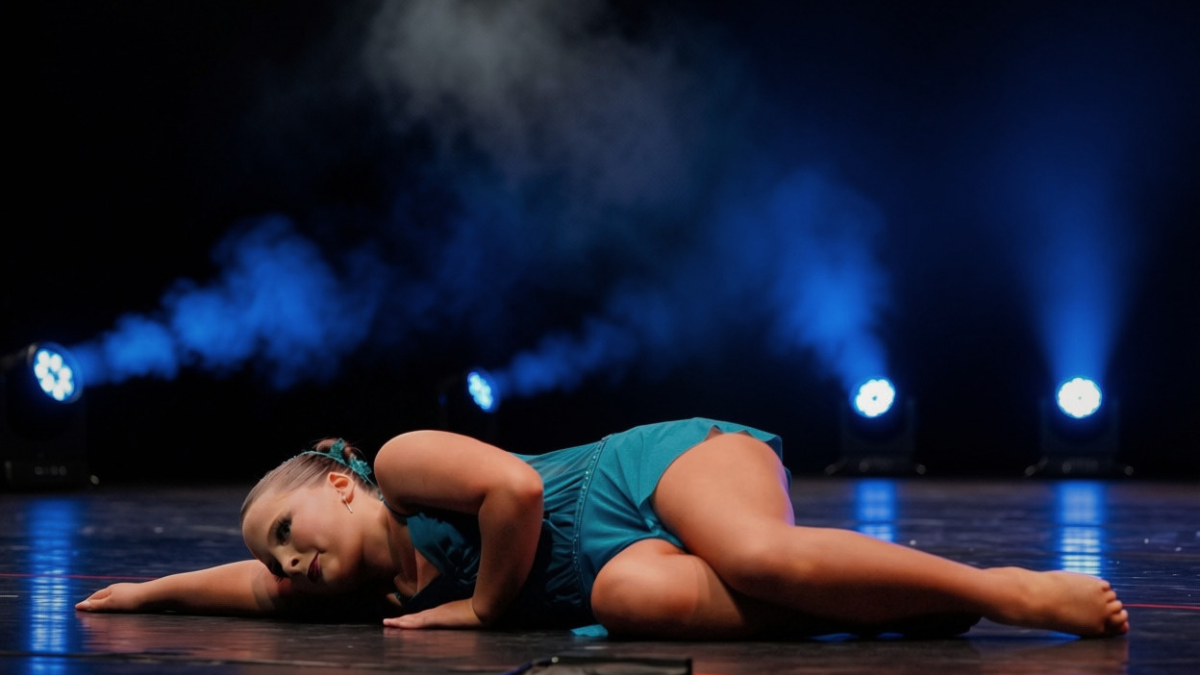
Then you arrive at the competition.
Some of these events are extraordinary.
Huge stages.
Professional lighting.
Multiple cameras.
Some of the bigger ones feel less like the dance competitions I remember growing up and more like television productions.
It is genuinely impressive.
You can then spend anywhere from 8 a.m. until 9 p.m. there.
At one competition in Atlanta last year, it was so crowded that Brianna and I couldn’t even find somewhere to sit and watch Georgia.
We had already checked out of the hotel.
So after driving all the way from Tennessee to Atlanta to watch our daughter dance, we went back to the car…
and watched her on an iPhone. Parenting is magnificent.

Then There Is the Cost Nobody Puts on an Invoice
This is the part I hadn’t really thought about before becoming a dance parent.
Time.
A 30 minute dance class does not take 30 minutes.
There is the drive there.
The wait.
The drive home.
Multiply that across two children and several days a week and suddenly large pieces of your family life are being organised around a dance studio.
I deliberately schedule my own ballroom lessons while the girls are at school.
Afternoons are largely theirs.
If one of them only has a 30 minute or one hour class, sometimes there isn’t much point driving home, so I stay in the car and work.
Other times I do the groceries while they’re dancing.
You become surprisingly good at this.
Dance class at 5:00.
Groceries at 5:07.
Back at the studio at 5:56.
Child retrieved.
Nobody forgotten.
Successful evening.
The car becomes an office, waiting room, transport department and occasionally somewhere to eat dinner. A portable charger has become essential equipment for this dance dad when I’m working from the car.
Nobody sends you an invoice for any of that.
But it still costs something. Time is part of the hidden economy too.
Sometimes Hockey Pays for Ballet
This may be my favourite part of the whole strange system.
Nikki is the only member of our immediate family who doesn’t dance.
So naturally, she has been dragged into the dance economy anyway.
She works concession stands at Bridgestone Arena in Nashville through a fundraising arrangement that allows parents to work events to help raise money toward their children’s activities.
She’s the only parent from our studio doing it, but she works alongside dance mums from other studios.
The shifts are long.
Usually around eight hours.
There is a small set amount, but most of what the group receives comes from tips that are shared among the people working. Nikki will typically generate around $120 to $150 from a night, with checks made out to the dance studio.
That means somebody can walk into Bridgestone Arena to see a Predators game or a country concert, buy something from the concession stand and leave a tip.
A little piece of that money eventually helps pay for a child’s dance.
Last week Nikki worked the Brooks & Dunn concert.
Now the Nashville Predators are back.
So in our house, hockey season is also dance fundraising season.
Country music pays for ballet.
Hockey pays for tap lessons.
America has some fascinating economic systems. Similar nonprofit concession fundraising arrangements operate elsewhere in Tennessee, where registered organizations staff arena concession stands and funds can be applied toward participants’ fees and other activity costs.

Not Every Family Experiences the Cost the Same Way
There is another side of competitive dance that I’ve become increasingly aware of.
Some of the families around us appear considerably better off than we are.
You see the houses.
The cars.
The travel.
Some live in homes that, by our standards, look like mansions.
I don’t know their finances, and appearances certainly don’t tell you everything.
But I do know ours.
There have been times when I’ve looked at what is coming up and wondered how we’re going to afford all of it.
So far, we always have.
We have never sat Georgia down and told her she might have to stop dancing because we can’t pay for it.
I hope we never have to.
But it has made me realise something.
When people talk about opportunities for children, we often focus on whether the opportunity exists.
I’ve written before about something else I’ve come to admire in America: the willingness to encourage children to imagine what might be possible.
But encouragement is only part of it.
Someone still has to get the child there.
Pay the entry fee.
Buy the costume.
Book the hotel.
Be available at 4 a.m. to do the hair.
Someone has to sit in the car. Someone has to make the whole thing work.
Because This Isn’t Just a Hobby to Her
This is the part that matters.
If Georgia were miserable, none of this would make sense.
She isn’t.
Dance is her passion.
She started ballet at two and she’s now ten. She’s been on company for four years.
I regularly give her the opportunity to try something else.
Her response is usually some variation of:
Dad, are you serious?
This is all she wants to do.
If we told her tomorrow that school had been cancelled permanently but dance was still on, I suspect we’d barely finish the sentence before she was in the car.
She lights up when she dances.
She already talks about going to college and eventually becoming a dance teacher.
There are genuine pathways from dance into higher education in America. Universities including USC’s Glorya Kaufman School of Dance offer competitive talent based dance scholarships, while other universities offer scholarship opportunities tied to dance majors and auditions. USC Glorya Kaufman School of Dance
She’s ten.
Nobody knows where any of this will lead.
She may become a dance teacher.
She may pursue something completely different.
Life has plenty of time to work that out.
Right now, our job is simply to give her the opportunity to find out.
I’ve already had moments when I’ve realised just how much Georgia’s dreams are being shaped by growing up here rather than in the Australia where she was born.

Apparently One Competitive Dancer Isn’t Enough
Then there’s Brianna.
She returned to dance this year and is taking jazz, hip hop and ballet.
She now wants to try out for company next year.
This should probably terrify us.
Instead, our reasoning has become:
Well, she’s already at the competitions anyway.
There would be overlap.
The second child is cheaper.
We’re already paying for the hotel.
What could possibly go wrong?
There is something slightly alarming about reaching the point where adding a second competitive dancer starts sounding like an efficiency measure.
But that’s how embedded this world has become in our family.
It isn’t something we occasionally attend anymore.
It is part of the rhythm of our lives.
Nationals Is a Holiday. Sort Of.
This year nationals took us to Daytona.
We were there for seven days and, thanks to some flight credits I needed to use, we flew rather than drove.
We spent plenty of time at the beach.
We ate out.
A lot.
That last part belongs firmly in the expense column.
We had a great time and absolutely treated the trip as a family holiday.
But out of seven days, we had exactly one day with no dance.
That pretty much sums it up.
Even the family holiday gets absorbed into the machinery.
Dance first.
Beach around it.

Then She Walks Onto the Stage
After all of that, there is the actual dancing.
I don’t get particularly nervous watching Georgia in group routines.
The smaller groups, with five or so dancers, are fun.
The enormous team productions can become a completely different challenge.
Sometimes there are so many dancers moving on and off stage that if you don’t already know where Georgia is supposed to be, finding your own child becomes part of the entertainment.
Then there’s her solo.
That’s different.
I get nervous.
Really nervous.
I feel like I watch the entire thing holding my breath.
For those few minutes there is nowhere for her to disappear.
It’s just her.
And perhaps that’s when the hidden economy becomes visible to me.
Not the dollars.
Not the hotel.
Not the petrol.
Not the hours in the car.
All the things behind it.
The lessons.
The rehearsals.
The 4 a.m. makeup.
Mum working at Bridgestone.
Dad working from the car.
The trips to Kentucky and Georgia.
The week in Daytona.
The costumes.
The school juggling.
All of it leads to one little girl standing alone under the lights doing the thing she loves. Suddenly, it doesn’t feel particularly complicated.
What I’d Tell Another Parent
If somebody with a five year old who loves dance asked me whether their child should try out for a competition team, I wouldn’t tell them not to.
I’d tell them to understand the commitment.
Because the child isn’t the only person joining the team.
The family is.
Competitive activities don’t simply occupy a line on the family calendar.
Eventually they start rearranging the calendar around themselves.
That doesn’t make them bad.
It doesn’t make the money wasted.
It simply means parents should understand what they’re saying yes to.
Because if the child really loves it, you may be saying yes for quite a while.
I Don’t Think There Was Ever Much Doubt
Sometimes I think back to Georgia putting on her first ballet shoes in Australia.
She was two.
It would be tempting to say I never imagined that tiny ballet class would eventually lead to enormous American competition stages, seven routines, interstate travel, national competitions and an entire family economy operating behind her.
But that wouldn’t really be true.
She loved dance from the moment she put those shoes on.
I don’t think there was ever much doubt we’d end up somewhere like this.
The stages got bigger.
The commitment got bigger.
The bills definitely got bigger.
But the reason we’re doing it hasn’t really changed at all.
She loves to dance. Sometimes an entire family economy grows around something as simple as that.

Enjoy From Down Under to Down South?
If you enjoy these stories about the parts of American life you don’t always see from the outside, you can support From Down Under to Down South through Buy Me a Coffee. Every coffee helps me keep writing, recording the podcast and sharing what life in America looks like through Australian eyes.
