AUSTRALIA EXPLAINED
Australians aren’t opposed to tipping. We just have a very different idea of when someone deserves one. After living in America, I’ve learned to navigate the rules. Well, most of them.
I have lived here for eight years, and I still occasionally find myself standing in front of a payment terminal wondering whether I’m supposed to tip the person on the other side of the counter.
Restaurants? Easy.
Bars? No problem.
The barber? I’ve got that one sorted.
But the person handing me a takeaway bag?
The bloke who delivered my furniture?
Apparently, somebody even tips their chiropractor.
At this rate, I’m beginning to wonder whether I should be tipping the woman who checks my receipt at Costco.
Tipping is one of those cultural differences between Australia and America that seems relatively straightforward until you actually have to navigate it.
Australians do tip. I’ve done it myself, both as a customer and during my years working in hospitality.
The difference is that, traditionally, Australians have viewed tipping as a reward for particularly good service. In America, especially in full-service restaurants, it’s an established part of the transaction.
After living on both sides of the Pacific, I’ve come to appreciate certain aspects of the American approach. Others still leave me scratching my head.

Australians Do Tip. Just Not the Way Americans Do.
Growing up in Australia, tipping was never something my family automatically did.
I remember occasionally going to restaurants where my parents would leave something extra because the service had been particularly good.
They’d comment on how well the server had looked after us and say they deserved a tip.
That was the reasoning behind it.
Someone had done a great job, so you gave them a little extra to show your appreciation.
It was also something I only remember happening when we were eating in at restaurants.
We weren’t tipping the person who handed us a takeaway order, the person making our coffee or someone who performed an everyday service.
You paid the advertised price, and that was generally the end of the transaction.
But I think there’s a misconception that Australians simply don’t tip.
Having spent years working as a chef in Australia, I can tell you that tipping was very much a thing in the restaurants where I worked.
At one restaurant, the tips went exclusively to the front-of-house staff. At another, more upmarket establishment, they were shared with the kitchen as well.
The amounts weren’t usually substantial, but occasionally we’d have a particularly good night.
I remember diners leaving unexpectedly large tips and the staff being genuinely blown away.
It was a lovely surprise.
The important distinction was that nobody expected it.
We weren’t standing around calculating what percentage of the evening’s sales we should receive from customers.
If someone left a tip, fantastic. If they didn’t, that was perfectly normal too.
Why Australian Restaurant Workers Don’t Depend on Tips
Part of the explanation lies in how hospitality workers are paid.
Australia has a system of minimum wages and industry awards that establish legally enforceable pay rates and working conditions.
Under the Restaurant Industry Award, employees are entitled to minimum rates determined by factors including their classification and employment status. Additional payments can apply for evening work, weekends, public holidays and overtime.
As of July 2026, Australia’s national minimum wage is A$26.44 an hour, although restaurant employees may be entitled to different rates under their applicable award.
The important point isn’t the precise hourly figure.
It’s that an Australian restaurant worker’s legal minimum wage isn’t dependent on whether I decide to leave an extra ten dollars after dinner.
That doesn’t mean every hospitality worker in Australia is financially comfortable. The cost of living is a very real issue, and hospitality can involve long hours, difficult customers and physically demanding work.
I spent enough time in commercial kitchens to know that it’s not an easy way to earn a living.
But the wage structure is different.
In Australia, tipping is generally additional income rather than a mechanism employers use to meet their minimum wage obligations.
And that helps explain why the social expectation surrounding tipping developed differently.

Why Tipping Matters So Much More in America
Before moving to America, I already knew tipping was a big part of the culture.
That wasn’t a surprise.
What I wasn’t entirely sure about was how much to tip and, perhaps more importantly, who I was supposed to tip.
I Googled it. I asked American friends.
Eventually, I worked out the basics.
But understanding why tipping is so firmly established requires looking at how American hospitality workers are paid.
Under federal law, employers can pay eligible tipped employees a direct cash wage of just $2.13 an hour, provided their wages and tips together meet the applicable minimum wage.
The federal minimum wage is $7.25 an hour. If tips don’t bring an employee’s earnings up to that required minimum, the employer must make up the difference.
Here in Tennessee, those federal figures apply to covered tipped employees.
That doesn’t mean every American server earns $2.13 an hour, or that $7.25 represents what servers typically take home.
America’s wage arrangements vary considerably by state, employer and individual worker.
Washington, for example, requires employers to pay the full state minimum wage before tips. In 2026, that statewide minimum is $17.13 an hour.
Yet tipping remains a familiar part of restaurant culture in states with very different wage systems.
So while wages help explain why tipping matters, they aren’t the entire explanation.
Tipping has also become an established social custom. And once a custom becomes that deeply embedded, changing it isn’t necessarily as simple as changing the wage structure.
Does Tipping Actually Produce Better Service?
Here’s where my experience might surprise some Australians.
I think tipping can encourage better service.
Having spent years living in America, I’ve noticed a considerable difference between the restaurant service I experience here and what I’ve experienced in Australia.
American servers are often incredibly attentive.
They greet you when you arrive, explain the menu, check whether everything is going well and make sure your drinks are topped up.
Sometimes they’re a little too attentive.
There are occasions when I’d quite like to finish chewing before being asked whether everything is tasting fantastic.
But generally speaking, I appreciate the effort.
When we visited Australia last year, the difference was particularly noticeable.
At several establishments, we weren’t greeted when we arrived. We had to ask for menus, waited a long time to be served and sometimes struggled to get someone’s attention when we wanted the bill.
Not everywhere, of course.
Australia has some wonderful restaurants and exceptional hospitality professionals.
But across a number of dining experiences during that trip, the service felt noticeably more relaxed than what we’d become accustomed to in America.
Whether tipping itself causes that difference is a more complicated question.
Restaurant culture, staffing, management and customer expectations all influence service.
What I can say is that, from my own experience, the American system often seems to encourage a level of attentiveness that I appreciate. Although perhaps we could find a happy medium somewhere between being completely ignored and having someone ask how my meal is going every four minutes.

The Steakhouse Waitress Who Absolutely Deserved Her Tip
One of my favourite examples of American hospitality happened at a steakhouse.
I can’t remember which restaurant it was, but I certainly remember the waitress.
We were dining with our daughters, who were being a little fussy about what they wanted.
She was incredibly accommodating.
Nothing seemed too much trouble. She was quick with the drinks, attentive throughout the meal and genuinely friendly.
It wasn’t simply that she performed her job efficiently.
It was how she made us feel.
We felt welcome, comfortable and looked after.
She received a substantial tip.
That’s the kind of experience that reminds me why I appreciate having the opportunity to reward someone for exceptional service.
Interestingly, it’s exactly the same thinking I remember from growing up in Australia.
The difference is that, in America, I’m also expected to tip when the service is merely adequate.
And even when it’s downright awful, I find it difficult not to leave something.
I Once Left a Tip After Some Truly Terrible Service
I don’t think I’ve ever left an American restaurant without tipping.
But I have certainly reduced the amount.
One experience at a Cracker Barrel in Knoxville comes to mind.
The server was rude, our order was wrong, everything took forever, and there was virtually no attention throughout the meal.
It was a thoroughly unpleasant dining experience.
I still left a tip, although considerably less than usual.
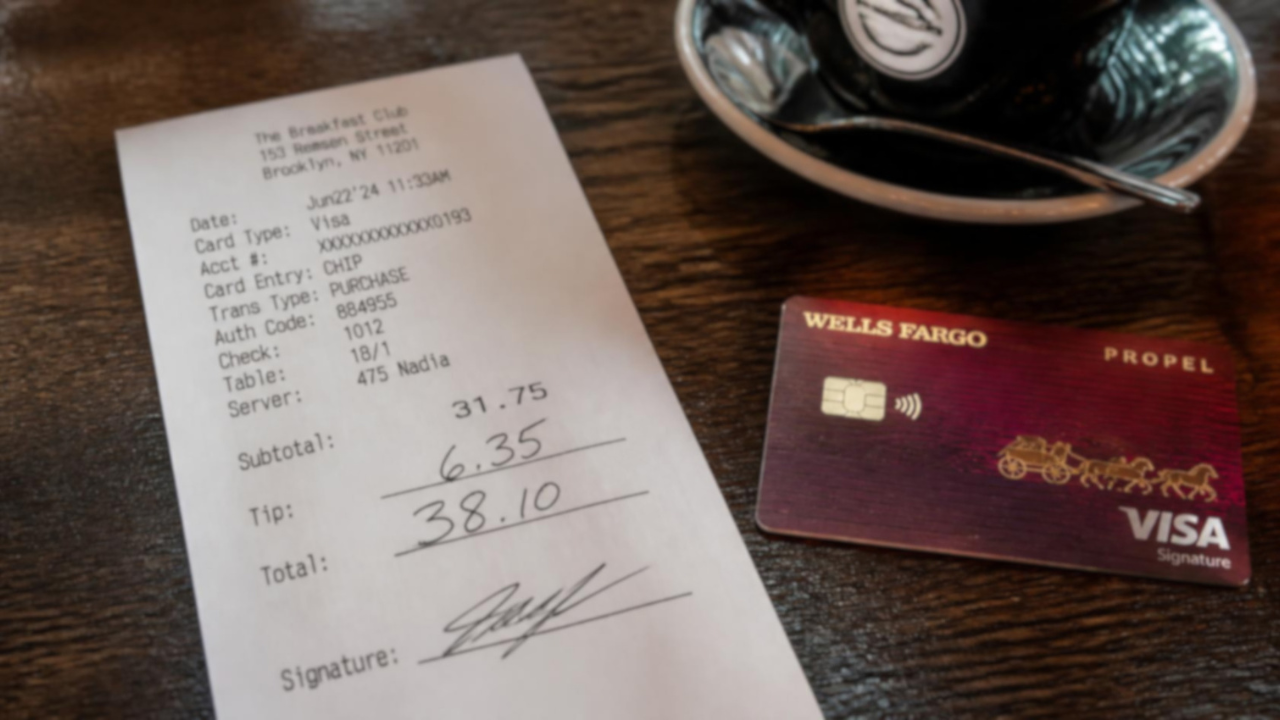
For particularly poor service, I’ve sometimes left 10% or simply five dollars.
My normal approach is around 20%, often with a little rounding.
If the bill comes to $152 and the service has been good, I might round the total up to $190.
If it hasn’t been particularly good, I might make it $180.
It’s not a complicated mathematical formula.
I’m simply acknowledging the quality of the experience.
But this is one of the tensions in American tipping culture.
I understand that servers may depend heavily on tips to earn a living.
At the same time, I don’t think customers should feel obligated to reward genuinely poor service at exactly the same level as exceptional service.
That’s a difficult balance.
And it becomes even more complicated when you consider how much individual servers can earn.
Some American Servers Make Serious Money From Tips
Living in Nashville, I’ve had conversations with bartenders working on Broadway.
Some have told me they can make between $1,000 and $2,000 a week in tips.
That’s a substantial amount of money.
Of course, Broadway is a particularly busy entertainment district, and those figures are what individual bartenders have told me about their own experiences. They’re not representative of every bartender in Nashville, let alone America.
The people I’ve spoken to described it as hard work, but they also enjoyed the atmosphere.
They were young, loved the rush of the job and enjoyed the social side of working in such a lively environment.
For them, tipping could be financially rewarding.
But I’ve also spoken to hospitality workers in quieter establishments who tell a very different story.
Some struggle to make ends meet and need multiple jobs to cover their rent and living expenses.
That’s the difficulty with a system where a significant portion of someone’s earnings can depend on customer traffic and generosity.
A busy Saturday night on Broadway can look very different from a quiet Tuesday afternoon in a suburban restaurant.
It also explains why I’m not convinced there’s a simple answer to the question of whether America should eliminate tipping and replace it with higher wages.
Some workers may prefer the predictability of a higher guaranteed wage.
Others may value the earning potential of tips.
The experiences I’ve heard certainly aren’t all the same.

When Did Everyone Start Asking for a Tip?
This is where American tipping culture starts to lose me.
I’m perfectly comfortable tipping at restaurants and bars.
I’ve become accustomed to tipping my barber.
But I don’t understand why I’m increasingly being presented with tipping options for services that involve little more than handing me something I’ve already paid for.
Take Starbucks.
I use the drive-through, order my coffee, and eventually reach the payment window.
The employee hands me the payment terminal.
Then comes the familiar line.
“It’s just going to ask you a question there.”
I know what the question is.
You know what the question is.
The payment terminal certainly knows what the question is.
Would I like to leave a tip?
No, thank you.
I’m not suggesting that making coffee doesn’t involve work or skill. Of course it does.
But I’ve already paid for the coffee.
If I’m collecting takeaway and someone simply walks a bag from the kitchen to the front counter, I don’t understand why that transaction should automatically involve a gratuity.
To me, that’s the service I purchased.
Apparently, I’m not alone in noticing how widespread tipping requests have become.
A 2023 Pew Research Center survey found that 72% of US adults believed tipping was expected in more places than it had been five years earlier.
Research reference: Pew Research Center, How Americans See the Norms and Practices of Tipping (2023) .
That distinction matters.
It’s not simply Australians arriving in America and struggling to understand the rules.
Americans themselves are navigating a tipping culture that can feel increasingly complicated.

Eight Years Later, I’m Still Not Sure Who I’m Supposed to Tip
When we moved to America, our furniture took three months to arrive by ship from Australia.
Eventually, a removal company delivered everything and unpacked it.
That was the service we’d paid for.
I didn’t tip the removalists.
At the time, it didn’t even occur to me.
Now, looking back, I sometimes wonder whether I should have.
Were they expecting a tip?
Did I commit some terrible American social offence without realising it?
I genuinely don’t know.
Then somebody recently told me they tip their chiropractor.
Their chiropractor!
I’ve never done that.
Suddenly, I found myself questioning another perfectly ordinary transaction.
This is what I find most confusing about American tipping culture.
There are situations where the expectations are clear, and then there are others where you seem to need an instruction manual.
Restaurants, bars and barbers? Sorted.
Furniture delivery and chiropractors?
Apparently, I’m still learning.
Why I Think Australians Should Tip When Visiting America
Despite my occasional frustration with the system, I think Australians visiting America should follow the local tipping customs.
It’s part of visiting another country.
When you travel, you encounter different expectations, traditions and ways of doing things.
I’ve lived in several countries, including Samoa and New Zealand, and I’ve learned that respecting local customs is an important part of adapting to a different culture.
You don’t walk into a Samoan fale and insist on keeping your shoes on simply because that’s what you might do at home.
Likewise, the Māori hongi, a traditional greeting involving the touching of noses, is something to approach respectfully when invited to participate.
Different cultures have different expectations.
Tipping in America is another example.
You don’t have to agree with every aspect of the system to recognise that the person serving your dinner didn’t create it.
Refusing to tip a restaurant server because you disagree with American wage structures isn’t going to change those structures.
It may simply leave that individual worker worse off.
My approach is to follow the established customs where I live while reserving the right to question the increasingly inventive places where tipping requests appear.
I think that’s a reasonable compromise.
Would I Want American Tipping Culture in Australia?
Not really.
Australia already has a wage structure designed to ensure employees receive a legally enforceable minimum payment for their work.
I don’t see a compelling reason to replace the traditional Australian approach with an expectation that customers routinely add another percentage to their restaurant bills.
That doesn’t mean tipping should disappear.
Far from it.
I like being able to reward someone who makes an evening special.
I remember how much an unexpectedly generous tip could mean when I worked in Australian kitchens.
But I’d rather it remain a genuine gesture of appreciation than become something customers feel obliged to do every time they encounter a payment terminal.
And there’s another aspect of the American system that bothers me.
Restaurant prices have increased considerably during my time living here, at least in the places my family frequents.
Yet the expectation to tip remains.
Because tips are often calculated as a percentage of the bill, higher menu prices also mean a larger tip in dollar terms, even when the percentage doesn’t change.
A 20% tip on a $100 meal is $20.
If that same meal costs $150, the tip becomes $30.
That’s a substantial difference when you’re taking a family out for dinner.
I’m not opposed to paying for good service.
I simply think the total cost of dining out is worth considering when discussing how much customers should be expected to contribute.
Perhaps the Biggest Difference Isn’t Generosity at all
After eight years in America, tipping has become a fairly normal part of my life.
I generally leave around 20% in restaurants. I’ll happily leave more when someone provides outstanding service.
I also understand that many American hospitality workers depend on tips in a way that Australian workers generally don’t.
But I still think about those childhood restaurant visits in Australia.
When my family left a tip, it was because somebody had made the experience special.
Nobody had to calculate a percentage.
Nobody felt pressured by a payment terminal.
It was simply a way of saying thank you.
That’s what I liked about the Australian approach, and it’s still what I appreciate most about tipping in America.
When someone goes out of their way to make my family feel welcome, I’m more than happy to acknowledge it.
Just don’t ask me to tip the chiropractor. I’m still trying to work that one out.
Enjoy reading about life in America through Australian eyes?
If you’ve enjoyed this article and feel like leaving a tip, you can buy me a coffee. Completely optional, of course. I’m Australian.