Tag: Australian slang

  • Why Do Australians Call McDonald’s “Macca’s”?

    Why Do Australians Call McDonald’s “Macca’s”?

    Why do Australians call McDonald’s “Macca’s”? Because we shorten everything. It’s just what we do. Afternoon becomes arvo, a service station becomes a servo, David becomes Davo and somewhere along the way McDonald’s became Macca’s. These days even McDonald’s Australia uses the name.

    If you go anywhere in Australia and ask someone where the nearest Macca’s is, almost everybody will know exactly what you’re talking about.

    McDonald’s.

    The strange thing for me is that I don’t remember it always being that way.

    I grew up in Australia in the 1970s and 80s, and in my childhood memories it was McDonald’s.

    Not Macca’s.

    McDonald’s.

    And going there was a treat.

    McDonald's Australia in the 1970s

    When McDonald’s Was Still McDonald’s

    One of my strongest childhood McDonald’s memories involves Sydney Airport.

    When relatives were visiting and we had to take them back to the airport, we’d sometimes stop at the McDonald’s at Sans Souci on the way home.

    For a kid, that was an event.

    I remember the foam containers the burgers came in. I remember the character pens and the promotions. I remember another McDonald’s at Figtree near Wollongong.

    Strangely, I don’t have the same childhood memories of McDonald’s in Nowra, where I grew up.

    The restaurants that stuck in my memory were the ones associated with going somewhere.

    McDonald’s wasn’t simply somewhere you stopped because you couldn’t be bothered cooking dinner.

    It was a treat.

    McDonald’s had only arrived in Australia in 1971, when its first Australian restaurant opened at Yagoona in western Sydney. From there, those Golden Arches gradually became part of the Australian landscape.

    But somewhere between my childhood and adulthood, something changed.

    McDonald’s became Macca’s.


    So Where Did “Macca’s” Come From?

    There doesn’t appear to be one magical moment when the entire Australian population held a meeting and voted to rename McDonald’s.

    It happened much more naturally than that.

    And by the time I was working, I remember Macca’s being completely normal.

    “Mate, let’s do a Macca’s run on the way home.”

    “Let’s stop at Macca’s on the way.”

    Nobody had to explain what Macca’s was.

    It was simply what we called it.

    The nickname fits perfectly into one of the great peculiarities of Australian English: we shorten absolutely everything.

    Afternoon becomes arvo.

    Service station becomes servo.

    Bottle shop becomes bottle-o.

    Breakfast becomes brekkie.

    Barbecue becomes barbie.

    David becomes Davo.

    McDonald’s?

    Macca’s.

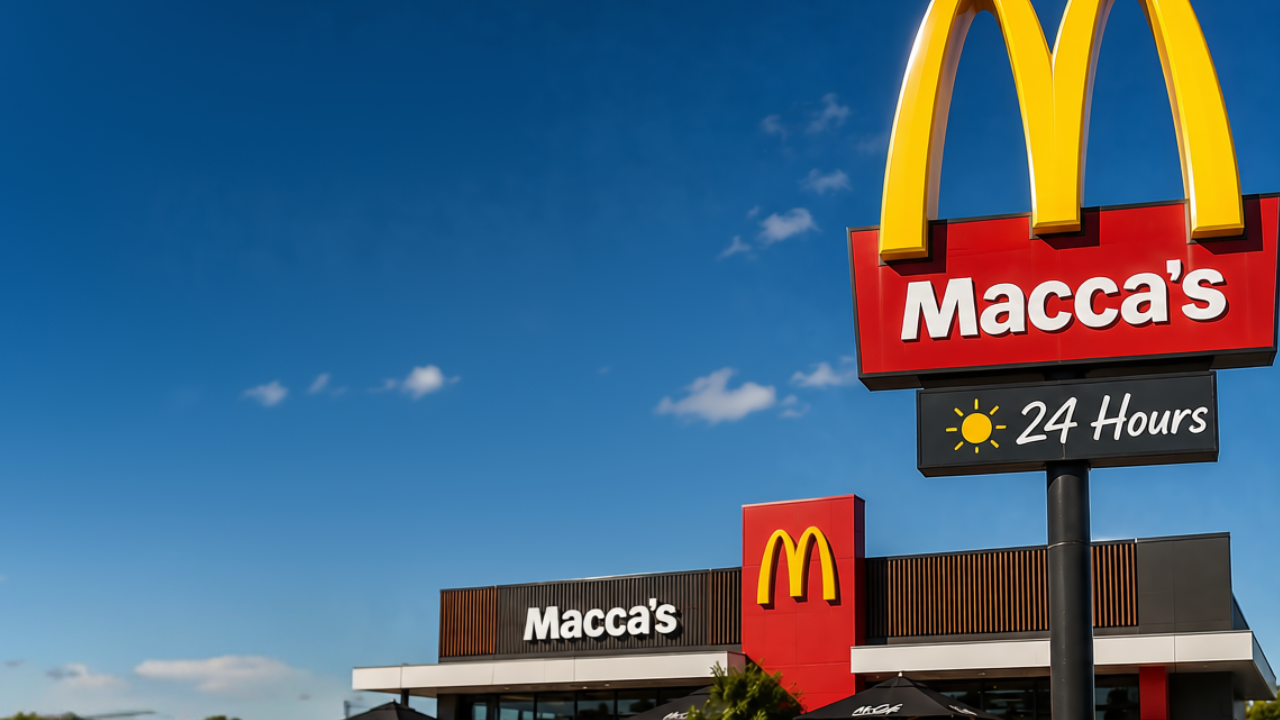
    McDonalds signage in Australia rebranded as Maccas

    To demonstrate just how far this can go, here’s a perfectly reasonable Australian sentence:

    “Chuck a U-ey down here, we’ll grab some Macca’s and then hit the bottle-o before we go to Davo’s for a barbie.”

    To an Australian, there is nothing particularly remarkable about that sentence.

    To an American, I may have just suffered a stroke.


    Why Do Australians Shorten Everything?

    There are linguistic explanations for the Australian obsession with abbreviations, but I think there’s something cultural going on as well.

    Australians are generally pretty informal.

    There’s a laid back attitude to language and perhaps a little bit of cheekiness in taking the proper name for something and deciding we’re going to call it something else.

    Maybe there’s even a touch of our reluctance to conform.

    You can tell us the restaurant is called McDonald’s.

    That’s lovely.

    We’re calling it Macca’s.

    There’s also something strangely affectionate about an Australian nickname.

    We do it to our friends.

    We do it to our towns.

    We do it to occupations.

    We do it to everyday objects.

    So perhaps one of the signs that McDonald’s had truly embedded itself into Australian culture was that we stopped bothering to use its proper name.

    We gave it a nickname instead.


    McDonald’s Eventually Gave In

    This is my favourite part of the story.

    McDonald’s didn’t try to correct Australians.

    Eventually, it embraced the name.

    By 2012, research commissioned by McDonald’s found that 55 percent of Australians surveyed called the company Macca’s. The nickname was so recognizable that it ranked just behind “footy” among the Australian abbreviations included in the research.

    McDonald’s even pushed for Macca’s to be included in the Macquarie Dictionary.

    Then, in January 2013, it went considerably further.

    As part of an Australia Day campaign, 13 McDonald’s restaurants around Australia temporarily replaced their regular McDonald’s signage with signs saying Macca’s.

    Not just in an advertisement.

    On the actual restaurants.

    Locations including Bondi Beach, Engadine and other stores around the country suddenly had Macca’s written where one of the world’s most recognizable corporate names would normally be.

    The signs eventually changed back.

    The nickname didn’t.

    Today, McDonald’s Australia doesn’t merely tolerate Macca’s. It routinely uses the name itself.

    Its app is called MyMacca’s.

    Its Australian website has a section called Macca’s Story.

    Official press releases tell Australians to head into their local Macca’s.

    An Australian nickname for an American company effectively became part of the company’s Australian identity.


    Macca’s in Australia Isn’t Quite McDonald’s in America

    Living in America has made me notice something else.

    Macca’s doesn’t just have a different name.

    It tastes different.

    I find the Australian beef nicer, and overall the Australian product has always seemed fresher to me.

    There’s some substance behind the Australian ingredient difference too. McDonald’s Australia says its beef is Australian, and during its 50th anniversary celebrations the company said its beef, chicken, potatoes, wheat flour, lettuce and tomatoes were locally sourced.

    Australia has also had menu items Americans don’t necessarily recognize.

    The McOz, for example, arrived on the Australian menu in 1999. It’s the sort of burger that immediately announces where it comes from, most famously through that very Australian hamburger ingredient: beetroot.

    McOz burger from McDonald's Australia

    Breakfast is broadly familiar on both sides of the Pacific, although living in the American South has introduced me to something you won’t find on a normal Australian Macca’s breakfast menu:

    Biscuits.

    Not Australian biscuits.

    American biscuits.

    That’s an entirely different article.

    Biscuits are on the menu at McDonalds in the American south

    Some things, however, apparently transcend international borders.

    The ice cream machines break in Australia too.

    Humanity remains united.


    Try Calling It Macca’s in America

    Of course, the problem with Australian slang is that you don’t always realize something is Australian slang until you leave Australia.

    I remember Nikki and I talking about Macca’s in front of someone here in America once.

    We were happily having a conversation.

    The other person was looking at us blankly.

    Macca’s?

    What on earth were we talking about?

    That was one of those little expat moments when you suddenly realize a word that requires absolutely no explanation in one country can be almost meaningless in another.

    These days, living in America, I obviously hear “McDonald’s” far more than I hear Macca’s.

    My kids call it McDonald’s.

    They know perfectly well what Macca’s means because they’ve heard us use it, but it isn’t naturally the word they reach for.

    For me, it’s the opposite.

    In my head, it’s still Macca’s.


    The Funny Thing Is, Australians Barely Notice It

    When I go back to Australia now, hearing the word Macca’s doesn’t jump out at me.

    Neither does seeing it in advertising.

    It’s simply part of the scenery.

    That’s probably the best indication of how deeply the nickname has embedded itself into Australian English.

    It doesn’t feel like slang.

    It doesn’t feel like someone trying to sound Australian.

    It certainly doesn’t need translating.

    It’s just Macca’s.

    And I like that McDonald’s embraced it.

    One of the world’s biggest American brands arrived in Australia in 1971. Australians adopted it, grew up with it and eventually decided its name was too formal.

    So we gave it a nickname.

    McDonald’s could have spent millions insisting on consistent global branding.

    Instead, eventually, it effectively said:

    Fair enough.

    Macca’s it is.

    Modern Macca's McDonald's restaurant in Australia

    Macca’s Is One of Those Little Pieces of Home

    Living overseas changes your relationship with words like this.

    When you’re in Australia, Macca’s isn’t special.

    It’s a fast food restaurant.

    It’s somewhere you stop on a road trip. Somewhere you grab breakfast. Somewhere you swing through on the way home from work.

    It’s part of the background.

    But once you live somewhere else, these tiny pieces of language start to mean a little more.

    Macca’s reminds me of childhood trips home from Sydney Airport and stopping at Sans Souci.

    It reminds me of foam burger containers and character pens.

    Later, it became Macca’s runs after work.

    Today, my American kids know exactly what I mean when I say Macca’s, even though they’ll answer me by calling it McDonald’s.

    It’s a tiny difference.

    But that’s often how home works when you live overseas.

    Not through the enormous things you expect to miss.

    Sometimes it’s just a word you’ve been saying for decades.

    And somewhere in the back of my head, no matter how long I live in America, those Golden Arches will probably always be Macca’s.

  • Why Do Australians Say Mate?

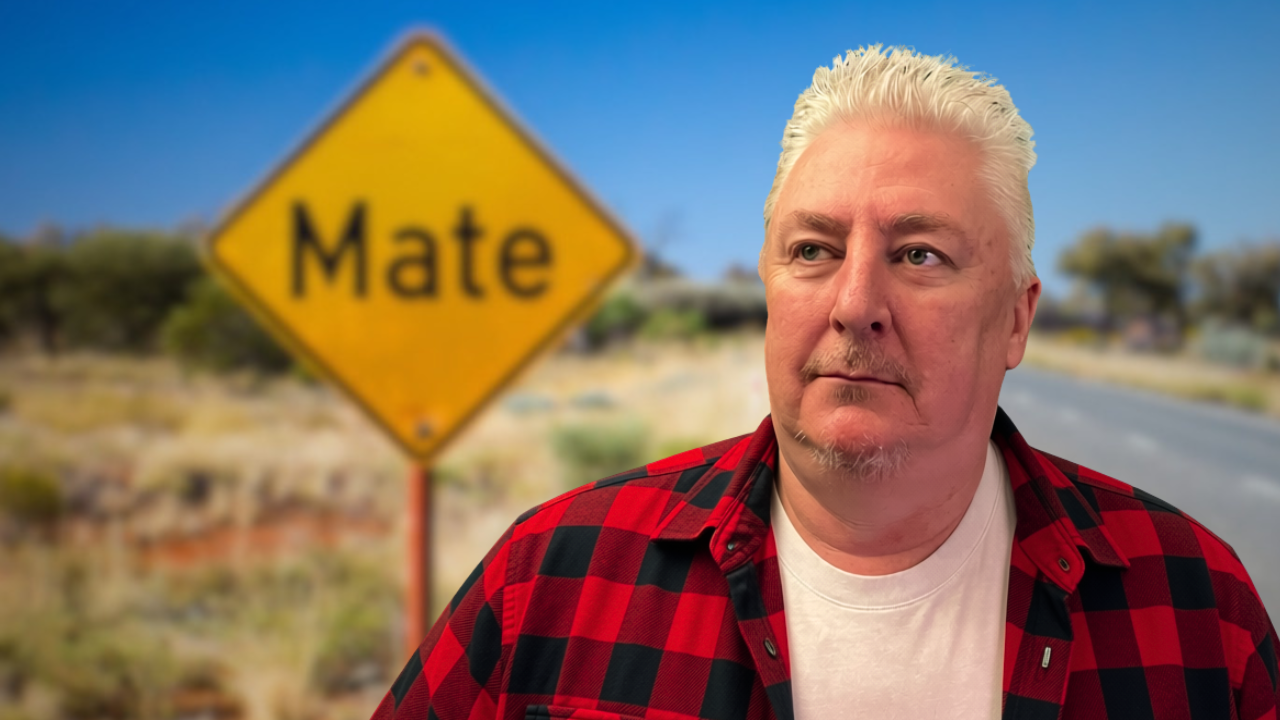
    Why Do Australians Say Mate?

    Australians say mate because it’s more than just a word. It’s a greeting, a thank you, a sign of friendship, a warning, a term of affection, and sometimes all five at once.

    Eight years after moving to America, I still say it dozens of times a day.

    “Cheers, mate.”

    “Thanks, mate.”

    “No worries, mate.”

    “See ya, mate.”

    Now the people that know are plenty used to it by now but those that don’t always pause for a split second when they hear it. You can almost see them translating it in real time.

    Then it clicks.

    Oh right.

    He’s Australian.

    The funny thing is that I don’t even notice I’m saying it anymore.

    It’s one of those habits that survived the move. My accent has softened a little over the years. I’ve learned to say gas station instead of servo. I’ve stopped confusing cashiers by handing over exact change and expecting them to appreciate it.

    Why Living Overseas Changes How You Hear Accents

    But mate never left.


    Mate Doesn’t Mean What Americans Think It Means

    One of the biggest misconceptions is that Australians call everyone mate because we’re all best friends.

    That’s not really how it works.

    I’ve called complete strangers mate. Shop assistants have called me mate. Taxi drivers, tradies, neighbours, and random blokes I’ve met for thirty seconds have all used it.

    It’s less about friendship and more about familiarity.

    It’s a way of saying, “We’re alright. Let’s keep this simple.”

    One of my closest friends here in Tennessee is Mexican.

    Years ago she started saying mate back to me.

    These days I call her matey and she calls me mate.

    Neither of us are using it correctly anymore, but we’ve committed to it so heavily that there’s no turning back now.

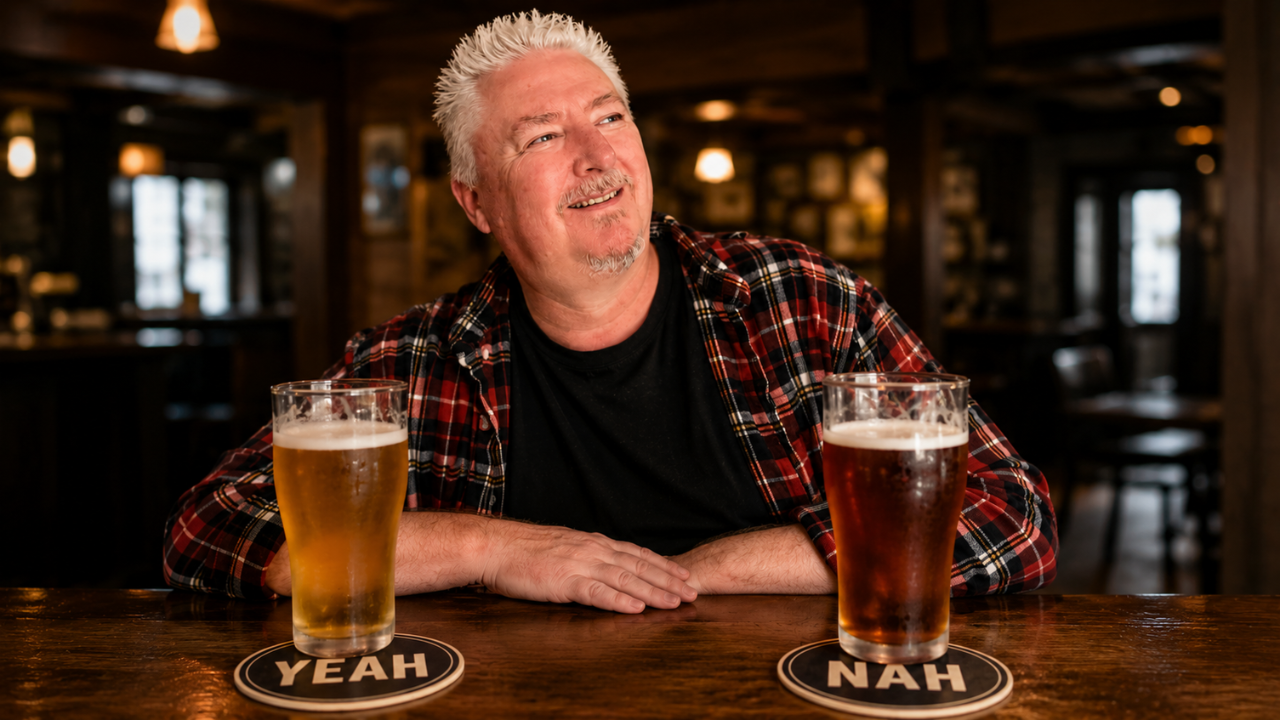
    Australians drinking at the pub
    In Australia, “mate” is often less about friendship and more about familiarity and connection.

    Not Everyone Gets Called Mate

    Despite what Hollywood might suggest, Australians don’t call absolutely everyone mate.

    There are situations where it fits and situations where it doesn’t.

    When I worked in banking, I wasn’t walking into meetings with ambassadors and saying, “G’day mate.”

    That would have been a very short diplomatic meeting.

    In Australia, mate is often a social leveler.

    It works best when people are meeting as equals.

    Tradies use it.

    Country Australians use it.

    Blokes leaning on fences use it.

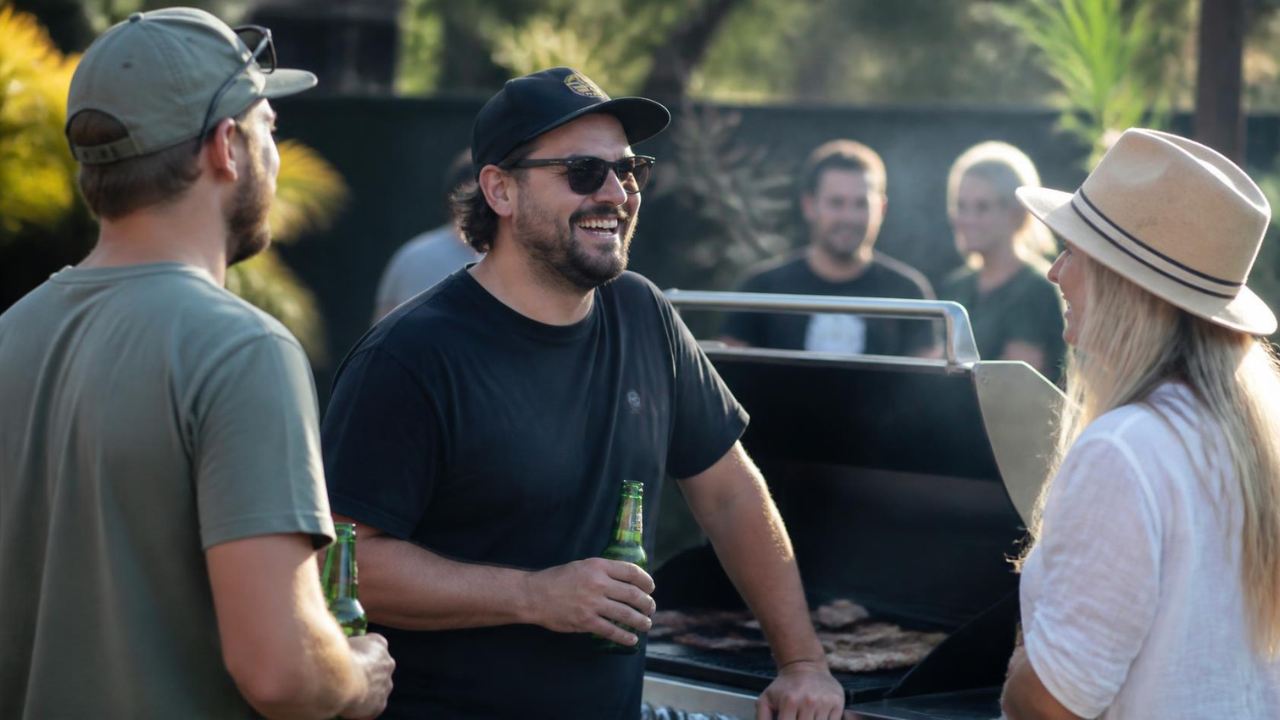
    People standing around a barbecue use it.

    It strips away a bit of formality and makes the conversation feel more relaxed.

    Things Americans Think Are Normal (That Still Confuse Me After 8 Years)

    That’s one reason Australians often sound more casual than we actually are.


    The Same Word Can Also Start an Argument

    Of course, Australians have found a way to make the word mean the complete opposite too.

    Tone matters.

    “Thanks, mate.”

    Friendly.

    “Good to see you, mate.”

    Friendly.

    “Listen here, mate…”

    Not friendly.

    Nobody in Australian history has ever heard the words “Listen here, mate” and thought something positive was about to follow.

    The same goes for:

    “Pull your head in, mate.”

    Or the classic Alf Stewart line from Home and Away:

    “You’re a bit of a drongo, mate.”

    Australians have somehow managed to turn one of our friendliest words into a warning system.

    It’s actually quite impressive when you think about it.


    Why I Still Say It

    I’ve lived in America long enough now that some Australian habits have faded.

    Others haven’t.

    Mate is one of the ones that stuck.

    Partly because it’s habit.

    Partly because it feels natural.

    But if I’m being honest, there’s probably another reason too.

    The person who used the word most in my life wasn’t a tradie, a farmer, or one of my mates at the pub.

    It was my mum.

    Every phone call started the same way.

    “Hi mate.”

    Or sometimes:

    “Love you, mate.”

    I was telling my daughters about that the other day.

    The Moment I Realised My Children Belong in America

    How normal it felt at the time.

    It was something I never thought twice about it.

    How I never imagined I’d miss hearing a single word so much.

    Looking back, I think that’s why Australians keep using it.

    Yes, it’s friendly.

    It’s a social leveler.

    Yes, it’s part of our culture.

    But it’s also a word that carries connection.

    It’s a word we use with friends, family, workmates, neighbours, and sometimes complete strangers.

    Somehow Australians found a way to squeeze friendship, affection, gratitude, sarcasm, and belonging into four letters.

    Not bad, mate.

  • What Is a Servo in Australia?

    What Is a Servo in Australia?

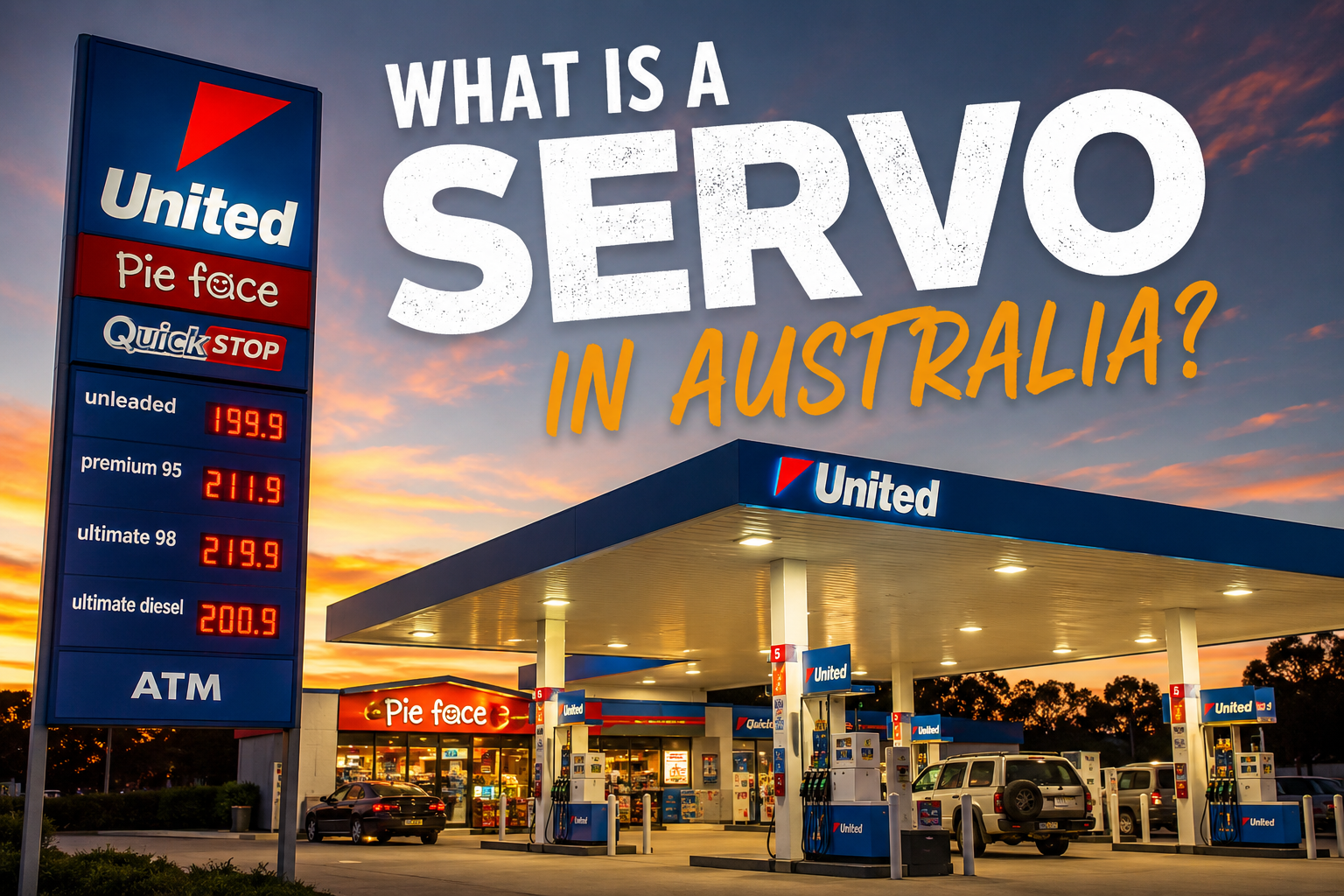
    What is a servo in Australia? A servo is the Australian word for a gas station or petrol station. It’s one of those everyday Australian terms that can completely confuse Americans the first time they hear it.

    When I first moved to America, I quickly learned that what Australians call a servo, Americans call a gas station.

    The funny thing is that Australians use the word so casually that we often forget it’s slang.

    “Just pulling into the servo.”

    “Need anything from the servo?”

    “The servo down the road has cheaper fuel.”

    To an Australian, those sentences sound completely normal. To an American, they can sound like we’re talking about some mysterious piece of machinery.

    Why Do Australians Call It a Servo?

    The word servo is simply a shortened version of service station.

    Australians love shortening words. In fact, it’s almost a national hobby.

    We don’t just have:

    • Servo (service station)
    • Arvo (afternoon)
    • Bottle-o (liquor store)
    • Macca’s (McDonald’s)
    • Rego (vehicle registration)

    We shorten so many words that sometimes visitors feel like they’re learning a second language.

    A service station became a servo, and the name stuck.

    What Happens at a Servo?

    Meat Pie

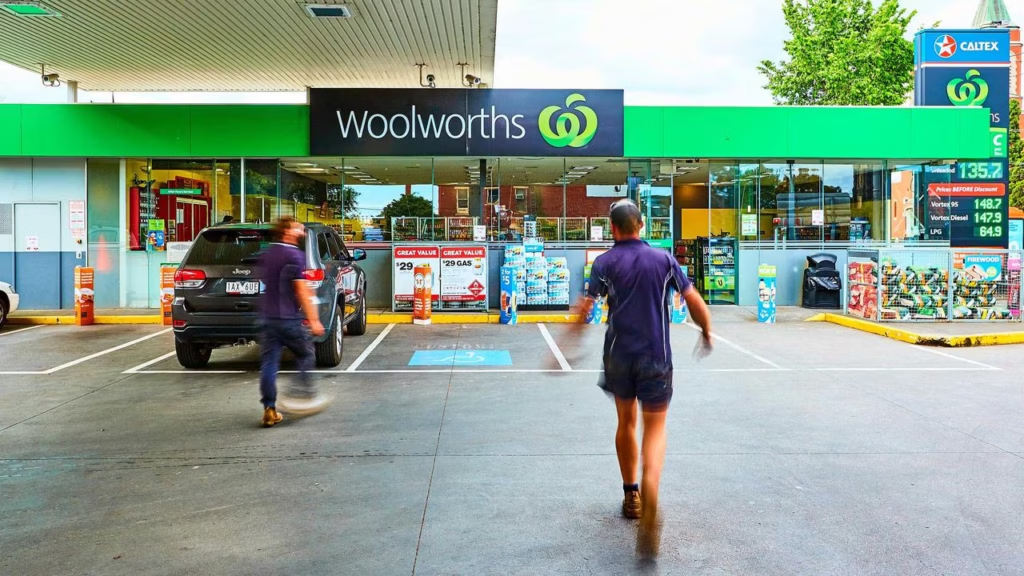
    Traditionally, a servo was a place to buy petrol and maybe get basic vehicle services.

    Today, Australian servos are much more like American gas stations.

    Most have:

    • Fuel pumps
    • Convenience stores
    • Soft drinks and snacks
    • Coffee machines
    • Ice
    • Toilets
    • Basic automotive supplies

    Some larger servos have surprisingly good food.

    On long road trips across Australia, stopping at a servo is often part of the journey. You fill the tank, grab a meat pie, buy a drink, and stretch your legs before heading back onto the highway.

    • Buying meat pies in the US is so difficult! Here’s a bumper sticker for those of you who want to start spreading the word here on how good they are!

    Servo vs Gas Station

    Although they serve the same purpose, there are a few language differences between Australia and America.

    AustraliaUnited States
    ServoGas station
    PetrolGas
    Fill up the tankFill up the tank
    Unleaded petrolRegular gas
    Service stationGas station

    The first time someone in America asked me where I got gas, I nearly answered, “At the servo.”

    Then I remembered that nobody around me would have any idea what I meant.

    Do Australians Ever Say Gas Station?

    Not usually.

    Most Australians say either servo, service station or petrol station.

    If you said “gas station” in Australia, people would understand you, largely because of American movies and television, but it would sound distinctly American.

    It’s similar to how Australians understand words like “sidewalk” or “apartment,” even though we would normally say “footpath” and “unit.”

    One of Australia’s Most Recognisable Words

    Servo is one of those words that instantly identifies someone as Australian.

    The moment an Australian abroad says, “I need to stop at the servo,” other Australians know exactly where they’re from.

    It’s a small word, but it’s part of a much larger Australian habit of shortening everyday language and turning ordinary words into nicknames.

    And once you’ve spent enough time around Australians, you’ll probably find yourself saying it too.

    If you’ve ever wondered what is a servo in Australia, the answer is simple: it’s the Australian term for a gas station or petrol station.

    Hoo roo maties.

  • The Small Things Australians Miss After Moving to America

    The Small Things Australians Miss After Moving to America

    You think the big things will be what you miss when you move overseas.

    Family. Friends. Familiar places.

    And you do miss those things.

    But honestly… some of the strongest homesickness hits come from standing in an American supermarket looking for chicken salt.

    Or opening a packet of “Australian-style” lollies and realising they just don’t taste right.

    I’ve lived in America for around eight years now, and over time I’ve realised that home slowly becomes a collection of tiny things.

    Little routines. Familiar foods. Smells. Phrases.

    Small comforts that quietly remind you who you are.


    Australian food care packages for expat overseas
    A typical care package from Australia never lasts long in our house.

    Vegemite Becomes a Survival Item

    We go through a lot of Vegemite in our house.

    We normally keep four or five jars in the cupboard at any given time.
    I have it most mornings on toast, and both of our girls love it too. Nikki’s mum sends it to us in bulk from Australia, so at any given moment there are usually four or five jars sitting in the cupboard like emergency supplies.

    If we ever got down to one jar, I’d probably start rationing it.

    Americans are fascinated by Vegemite too. Whenever friends come over, it eventually turns into:
    “Alright then… let’s see you try it.”

    The reactions are usually dramatic. But for Australians overseas, Vegemite isn’t really about the taste anymore. It’s familiarity. It’s routine. It’s sitting at the kitchen table in the morning feeling, for a few minutes at least, like you’re back home again.

    I talked more about the strange experience of keeping an Australian identity while living overseas in this article:


    Allens snake lollies

    Australian Road Trips Just Feel Different

    One of the things I never expected to miss was Australian road trip culture.

    Growing up, road trips for us usually meant driving from Canberra to the coast, or inland to see Nikki’s family in Griffith. And before every trip, there was always the same ritual.

    Fill up the car.

    Go into the servo.

    Buy a bag of Allen’s snakes, maybe some other lollies, and drinks for the drive.

    There was something oddly comforting about it.

    Now, in America, we’ve replaced that ritual with Buc-ee’s stops.

    And honestly? Buc-ee’s is incredible.

    Australia has absolutely nothing like it.

    But even now, grabbing nuts or lunch at Buc-ee’s still doesn’t quite hit the same emotional note as buying a bag of snakes before heading down the highway in Australia.

    Part of that is because the lollies here just aren’t the same. The snakes are too sweet. Even the Cadbury chocolate tastes different because the version sold here is British Cadbury, not Australian Cadbury. You don’t realise how specific your memories are until you try to recreate them somewhere else.

    Every now and then we’ll order a mixed Australian lolly box online just because we are feeling homesick.

    • I’ve spoken before about how living overseas slowly changes the way you think, sound and even remember home, the below video is a great example of that.

    Care Packages Mean More Than You’d Think

    Care packages from Australia hit differently when you live overseas.

    Nikki’s mum sends boxes over for us and the girls, usually packed with Australian food, little gifts, chocolates, random surprises… and somehow it always feels bigger than just “stuff.”

    australian care package sent to expat overseas

    One year my old workplace in Australia sent us a huge Christmas box filled with Australian snacks, games, soccer balls, all sorts of things.

    It honestly felt like someone had posted a piece of Australia directly to our front door.

    And for the girls, it’s not even necessarily the food they love most.

    It’s knowing that Nanna packed it.

    That connection matters.

    I will admit though that they always beat me to the Caramello Koalas, they barely last a few days.


    Australian Bakeries Overseas Are Usually Disappointing

    This might upset a few people, but Australian bakeries overseas are almost always disappointing.

    We’ve been to Australian bakeries in America — including one in Atlanta that’s pretty good — but it’s still not quite the same.

    There’s also an Australian-owned café near us in Tennessee that sells meat pies and sausage rolls.

    Again… not even close to home.

    The funny thing is, the first thing I want when I land back in Australia isn’t anything fancy.

    It’s a bakery stop.

    A sausage roll.

    A meat pie.

    A vanilla slice.

    And an iced coffee Dare.

    That’s home.

    I make my own sausage rolls here now because sometimes it’s easier than trying to recreate the feeling through substitutes. We buy Jamaican meat pies and chicken pasties occasionally too, and while they’re definitely not Australian pies, they scratch a similar itch. Close enough becomes an important concept when you live overseas.


    Smells Become Emotional Time Machines

    Smell might actually be the strongest trigger of all.

    The bush after rain.

    Gum trees.

    The ocean.

    Jervis Bay National Park Australia

    Sunscreen.

    That hot Australian air right before a storm rolls in.

    Sometimes you’ll randomly smell something in America that takes you straight back to Australia for half a second before reality catches up again.

    It’s strange how powerful that can be. Even thinking about it now makes me a bit homesick.


    Watching Your Kids Grow Up Between Two Cultures

    One of the strangest parts of living overseas long term is watching your kids slowly become a blend of both countries.

    We still celebrate Australia Day at home, although having a barbecue in January is a bit harder when there’s snow outside in Tennessee.

    I try teaching the girls Aussie slang too.

    “How’s it goin’ mate.”
    “Yeah nah.”
    “No worries.”

    And Georgia especially will switch between Australian and American words or accents depending on who she’s talking to.

    It’s fascinating to watch.

    Because in some ways, that’s exactly what living overseas feels like yourself. You slowly become a mix of places.


    The Small Things Matter More Than You Expect

    I think that’s the biggest surprise about moving overseas.

    Home stops being one giant thing.

    It becomes little things.

    A jar of Vegemite in the cupboard.

    A care package from family.

    A bag of snakes before a road trip.

    A bakery stop after a long flight.

    A phrase your kids still say with an Australian accent.

    Tiny things that remind you who you were before life got complicated.

    And maybe that’s why Australians overseas hold onto those small comforts so tightly. Because sometimes the smallest things are the ones that make a place feel like home again.


    If you enjoy these Australia vs America reflections, I also talk about them regularly over on the podcast and YouTube channel:

  • Are Bogans Just Australian Rednecks?

    Are Bogans Just Australian Rednecks?

    If you ask an Australian what a bogan is, there’s a good chance they’ll immediately say:

    “Basically Australia’s version of a redneck.”

    And honestly… that’s not completely wrong.

    A bogan is usually someone seen as rough around the edges, loud, proudly uncultured, and deeply committed to their own style regardless of what society thinks about it.

    But like most Australian things, it’s a bit more complicated than that.

    Because in Australia, “bogan” can be:

    • an insult
    • a joke
    • a personality type
    • or something people weirdly become proud of once they hit their 30s.

    Especially once winter arrives and half the country suddenly looks like it’s preparing for a camping trip to Bunnings.


    So… What Actually Is a Bogan?

    The easiest way to explain a bogan to Americans is this:

    Imagine someone who:

    • drinks energy drinks like water
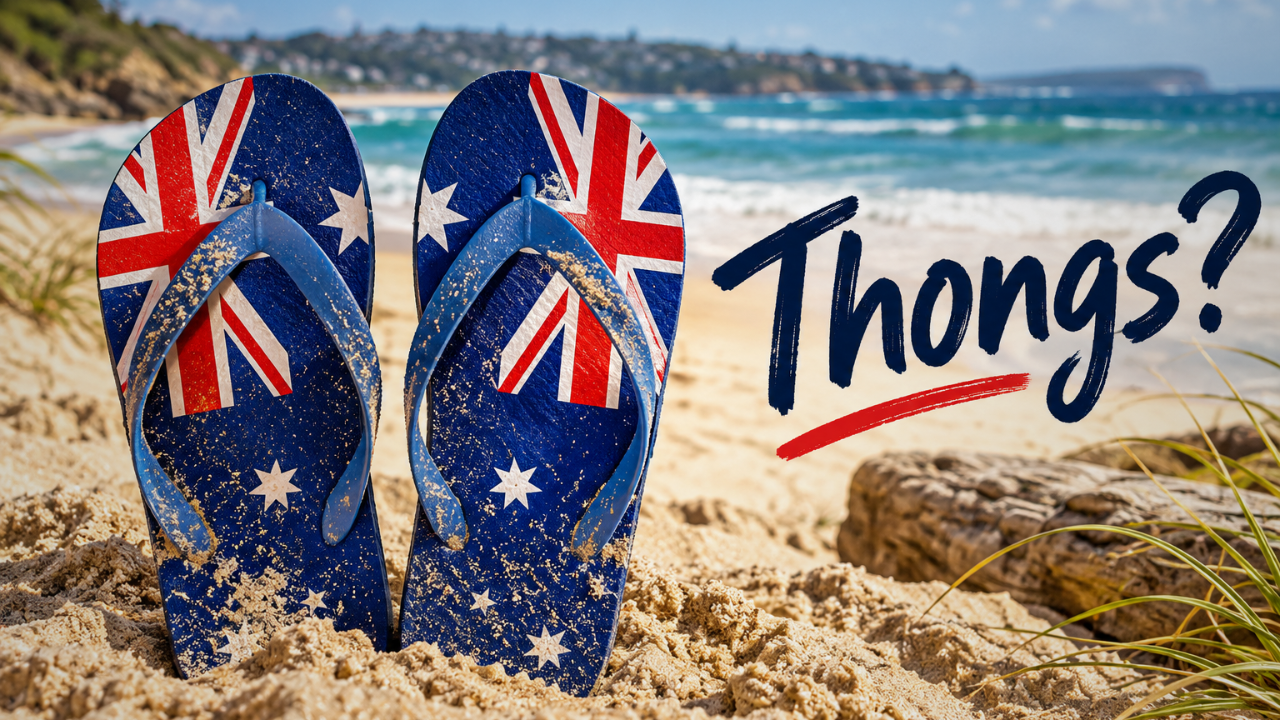
    • owns at least one pair of thongs specifically for the servo
    • thinks a loud exhaust adds horsepower
    • and has definitely said “yeah nah” during a serious conversation.

    That’s roughly the territory we’re working with.

    There’s also a decent chance they:

    • own a Holden Commodore
    • wear a flanno year-round
    • have strong opinions about meat pies
    • and know someone named “Dazza.”

    And before Australians start yelling at me…

    Yes, women can absolutely be bogans too.


    Women Can Be Bogans Too

    Important clarification here:
    bogans are not exclusively blokes.

    Australia has produced many female bogans over the years too.

    Usually identified by:

    • oversized sunglasses
    • aggressively highlighted hair
    • iced coffee
    • and the ability to yell across an entire carpark without moving.

    There’s also a strong chance of seeing:

    • fake leopard print somewhere
    • a cigarette being held with deep emotional commitment
    • and at least one sentence beginning with:

    “Listen here, hun…”


    Growing Up Around Bogans

    I grew up on the south coast of NSW in a town called Nowra, which Australians would politely describe as “a bit bogan.”

    And by “a bit bogan,” I mean there was a decent chance of seeing:

    • someone doing laps of the main street for three straight hours
    • someone arguing outside Centerlink before 9am
    • or half the Bomaderry Pub carpark filled with Commodores held together by stickers and optimism.

    Australian country towns also have a long tradition where young people simply drive up and down the same street repeatedly for entertainment. (I may have done that myself in my yellow Datsun 180b years ago too).

    Which sounds ridiculous now that I say it out loud…

    …but honestly, we all did it.


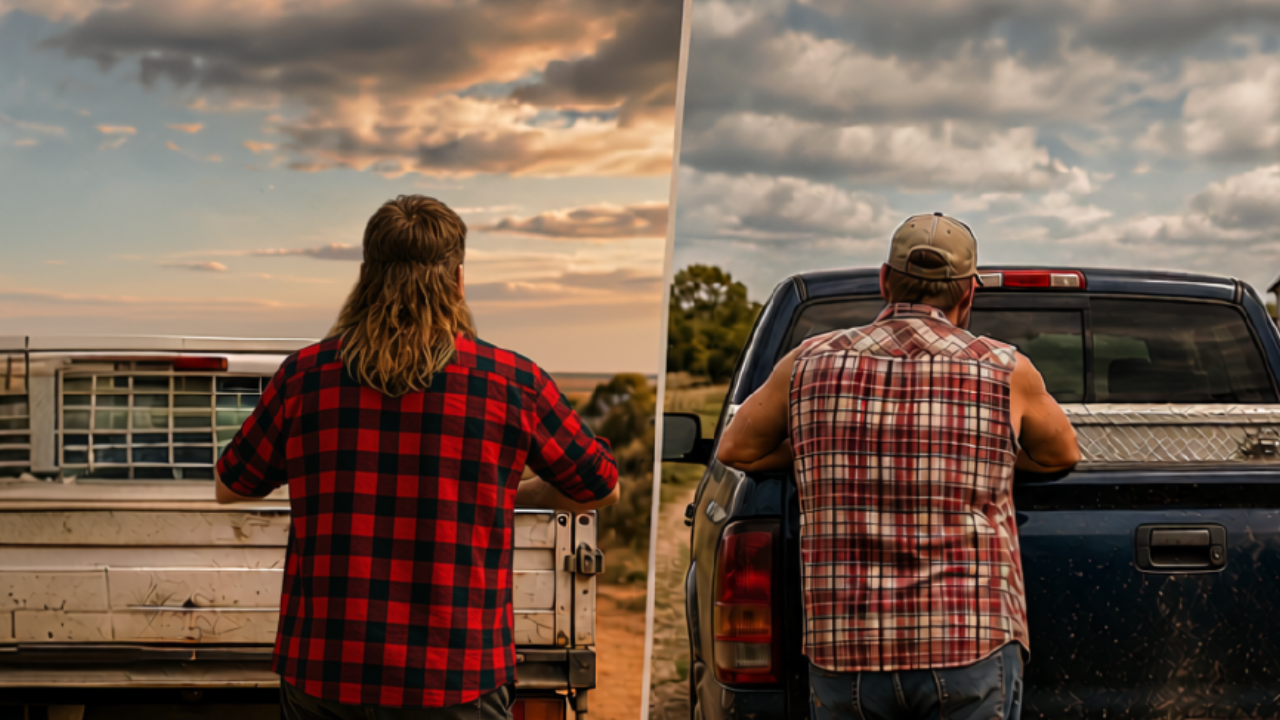
    But Not Everyone in a Flanno Is a Bogan

    This is where Americans can get confused.

    Because Australia has a lot of overlap in clothing.

    Tradies wear flannos.
    Farmers wear flannos.
    Half of Canberra wears flannos once winter hits.

    Wearing one doesn’t automatically make you a bogan.

    Otherwise half the country would qualify by July.

    My wife loves calling me a bogan because I wear flannos around the house, but honestly, if you’ve spent a winter in Canberra you realise the entire city starts looking like a camping catalogue.

    UGG boots everywhere.
    Flannos everywhere.
    People scraping ice off their windscreen holding servo coffees the size of paint tins.

    Canberra might be Australia’s capital…

    …but there’s a strong argument it’s also the flanno capital.

    And regional Australia is different again.

    You’ll see plenty of farmers in old flannos and muddy boots, but that doesn’t make them bogans. That’s just practical country Australia.

    A farmer with an Akubra and an old ute is not the same thing as a bloke doing burnouts outside a kebab shop at midnight while blasting AC/DC through a cracked Bluetooth speaker.

    There are levels to this.


    Bogans Exist in New Zealand Too

    Australians don’t fully own bogan culture either.

    New Zealand absolutely has bogans too.

    Slightly different flavour…
    same overall energy.

    More likely to involve:

    • rugby
    • old Falcons
    • stubbies
    • and someone named “Gazza” yelling across a backyard.

    Australians and New Zealanders may disagree on many things…

    …but both countries can instantly recognise a bloke wearing a flanno carrying a box of beer like it’s an Olympic event.


    Bogans and Eshays Are Also Different

    Now before Australians start another argument in the comments…

    Eshays are a completely different category again.

    Different haircut.
    Different posture.
    Different soundtrack.

    Usually found travelling in packs near train stations while wearing enough Nike gear to qualify as sponsored athletes.

    A bogan might own a Holden Commodore on purpose.

    An eshay is more likely to ask if you’ve got a spare vape.

    Australians know these are completely different subcultures, even if they occasionally overlap in the wild.


    Famous Australian Bogans on TV

    If Americans want a rough cultural reference point, Kath & Kim is probably the best introduction to suburban Australian bogan energy.

    Not every bogan looks like Kim Craig

    …but every Australian knows someone who reminds them of her.

    Housos is what happens when you turn the dial all the way to maximum.

    Australia’s greatest cultural achievement might honestly be our ability to create entire TV shows based around people yelling in thongs outside a servo.


    So… Are Bogans Australia’s Version of Rednecks?

    Kind of.

    But Australian bogans usually feel a bit more suburban than rural.

    Less camouflage.
    More flanno.
    Less pickup truck.
    More Holden Commodore with one mismatched door.

    And unlike America, Australians tend to joke about bogans constantly — including themselves.

    That’s probably the biggest difference.

    Deep down, most Australians know they’ve got at least a tiny bit of bogan in them somewhere.

    Usually it appears:

    • at Bunnings
    • during summer cricket
    • or while wearing UGG boots to the shops pretending it’s acceptable.

    Which, to be fair…

    it absolutely is.