AUSTRALIAN EYES ON AMERICA
Why Does America Still Have the Death Penalty? The Answer Changes by State.
In Australia, I have stood near gallows as part of a prison tour. In Tennessee, I can drive about 40 minutes from home to a prison where executions are still carried out.
That difference has stayed with me more than I expected.
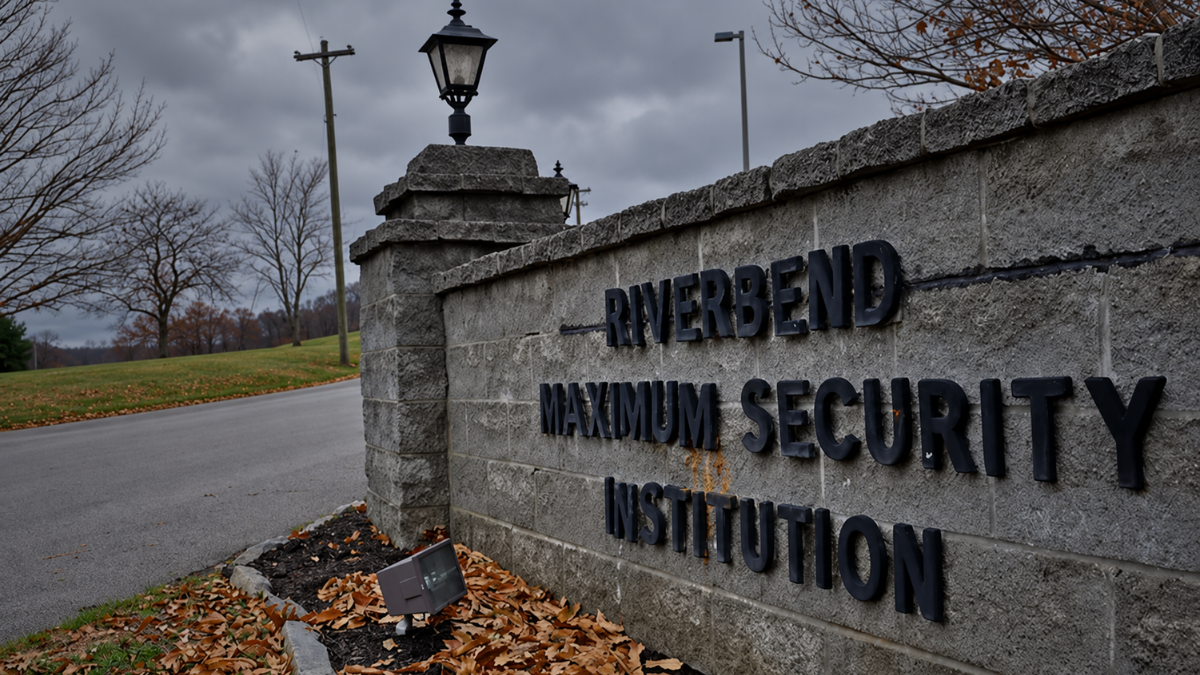
At Fremantle Prison, the gallows belonged to a history I was visiting. At Riverbend Maximum Security Institution, outside Nashville, the execution chamber belongs to the government of the state where I live.
Same subject. A very different relationship to it.
Why does America still have the death penalty? The short answer is that American law continues to permit it, some states continue to choose it, and support for it has remained politically significant. But that answer leaves out the part I find most revealing: Americans have made very different decisions about it within the same country.
After more than eight years here, I have learned to be careful with any explanation that begins with Americans believe.
Which Americans? Where? Those questions matter particularly when the subject is whether a government should be allowed to put somebody to death.
When execution became something that happened elsewhere
Nobody has been executed in Australia during my lifetime. Ronald Ryan, the last person executed there, was hanged in 1967.

That did not mean capital punishment disappeared from Australian news. I remember the coverage of Kevin Barlow and Brian Chambers facing execution in Malaysia in 1986. Decades later, the executions of Andrew Chan and Myuran Sukumaran in Indonesia brought the subject back into Australian homes.
For me, though, there was a distinction. These were Australians facing execution overseas. At home, the places associated with hanging had become historical attractions.
I visited Fremantle Prison on a night tour. Standing near its gallows was sobering. At the Old Melbourne Gaol, my attention was drawn more to Ned Kelly, but the history was there too. You could walk into those places, consider what had happened and then walk back out into a country that no longer did it.
Australia reached that position gradually. Federal abolition came in 1973, abolition across all states was complete by 1985, and federal legislation in 2010 extended the prohibition to prevent states and territories from reintroducing capital punishment. The Australian Parliament’s account of the 2010 legislation explains that final step.
Growing up with that legal settlement made it feel permanent. It did not mean every Australian agreed with it.
I certainly do not think being Australian requires me to oppose the death penalty and I support retaining it for the most heinous murders where there is no doubt about who committed them. I believe Australia should still have that option too. What changed after moving here was how close the subject became. A punishment I had mostly encountered through history or foreign news became a decision made by my own state government.

America faced the question and took another path
One thing surprised me when I began looking into this: the United States had a major reckoning over capital punishment around the same period Australia was abandoning it.
In 1972, the Supreme Court’s decision in Furman v. Georgia invalidated the death penalty systems then before it. The problem centred on how death sentences were being imposed, including their arbitrary application. The justices did not produce a single majority explanation declaring that execution could never be constitutional.
That distinction left room for states to rewrite their laws.
In 1976, Gregg v. Georgia and related decisions upheld revised systems. The Court accepted procedures that guided sentencing decisions, including separate consideration of guilt and punishment. America’s modern death penalty developed through that response. The Federal Judicial Center’s history of capital juries explains the change.
So it would be misleading to say America simply never got around to having the argument. It had the argument in court, then legislatures made choices about what came next.
Some chose to preserve capital punishment within the new legal boundaries. Over time, others abolished it. For me, that changes the question. Shared history and a shared language do not guarantee that countries will reach the same settlement about punishment. The institutions making the decisions matter, as do the people willing to defend or challenge those decisions.
America has several answers at once
As of October 2026, 23 states have abolished the death penalty and 27 retain it. The District of Columbia has abolished it, while the federal government and US military retain separate capital punishment systems. The Death Penalty Information Center’s state guide sets out those distinctions.
But even a map divided into states with and without capital punishment cannot tell the whole story.

Michigan’s abolition of the death penalty for ordinary crimes took effect in 1847. Australia was still a collection of colonies. The American Civil War had not begun. An American state had already made a decision that Australia would take well over a century to complete nationally.
Kansas gives us a different answer. It retains the death penalty, yet its last executions were in 1965. That is before Australia’s last execution.
Then there is Tennessee, where I live, which has continued carrying out executions in the modern era.

These examples reveal three questions that are often bundled together. Does the law allow a death sentence? Do courts impose one? Does the state actually carry it out?
The answers need not match. A state can keep capital punishment in its law while going decades without an execution. A temporary pause can stop executions without abolishing the punishment. A state that abolishes it still sits within a country whose federal system retains it.
That is why I struggle with the idea of the death penalty as a single American cultural trait. An American in Michigan and an American in Tennessee can live under different state rules governing the most severe punishment available. Calling both positions American is accurate. Trying to turn them into one national opinion is where things go wrong.
Public support helps explain why it survived
The law is only part of the answer. There also has to be enough support to keep a punishment politically viable.
Gallup’s long running survey asks whether people favour the death penalty for a person convicted of murder. In March 1972, 50 percent said yes. In 1994, support reached 80 percent. By October 2025, it had fallen to 52 percent.
That is a substantial change. It also shows why describing capital punishment as something imposed against a consistently hostile public would miss an important part of its history.
For years, the idea had strong support. More recently, that support has become much narrower. Neither finding tells us what every state wants, or what a jury would decide in a particular case.
The wording matters too. Supporting a punishment for murder in a survey is a different decision from choosing it for an actual defendant after hearing evidence about both the crime and the person who committed it.
I know my own support is conditional. The seriousness of the crime and certainty about guilt matter enormously to me. A national percentage cannot capture all of that. It also cannot tell us whether people trust the procedures used to carry out a sentence. That became a very immediate question here in Tennessee.
When the question arrived on Nashville television
On September 30, 2026, Tennessee attempted to execute Christa Pike at Riverbend. She had been sentenced to death for the 1995 torture and murder of 19 year old Colleen Slemmer.

I watched the local television coverage. Pike survived the administration of two doses of pentobarbital and was taken to hospital. Governor Bill Lee subsequently paused the remaining execution scheduled for 2026 and ordered an independent review. The reported account of the failed execution describes what witnesses observed. The Department of Correction’s statement said it had followed the established protocol.
The contrast between those two things deserves scrutiny. A procedure can be followed and still fail to achieve its intended outcome.
My support for capital punishment includes cases such as Pike’s. It also comes with an expectation that the state can carry out the sentence lawfully and competently. When it cannot, asking what went wrong is a responsibility that supporters should take seriously too.

Colleen Slemmer must remain part of that discussion. She was 19 when she was murdered. Attention to the execution procedure should never reduce her to a detail in the story of the person convicted of killing her.
I explored what happened at Riverbend, and the questions it raises for Tennessee, in this episode of From Down Under to Down South.
Living here gives the question a different weight
The first time I went out towards Riverbend, I was interested in the old Tennessee State Prison nearby. Parts of The Green Mile were filmed there, and I wanted to see the place.

Riverbend looked very different. I remember grassy hills, earthworks and a quietness that seemed at odds with what happened inside. There was also a warning not to pick up hitchhikers. Outside a maximum security prison, that strikes me as fairly sound advice.
I have been out that way several times. Those visits did not give me access to what happens behind the walls. They did make the prison a real place in my own landscape.
Someone once asked in a comment how I could live somewhere that still had the death penalty. It had never been a factor in my decision to move here. I understood the question more clearly once I considered the distance between an Australian museum visit and a Tennessee news bulletin.
I have written before about loving a new country without loving the old one less. Living between them also means looking carefully at decisions that familiarity might otherwise allow you to overlook.
Sometimes that produces a question about a phrase or a custom. Sometimes it means considering the powers we give a government, and what we expect when it uses them.
I came up against a different version of that question while writing about online safety and government power. Agreement with an aim does not settle every question about the means.
With capital punishment, the consequences make those questions particularly demanding.
Why does America still have the death penalty? Because its constitutional framework permits it, because some governments continue to choose it, and because enough people continue to support it. Other Americans have spent generations choosing differently.
Living in Tennessee has made me pay closer attention to which choice my state makes, how it carries it out and who has to live with the consequences. At Fremantle, I could leave those questions in the past when the tour ended. Here, they can be waiting for me when I turn on the evening news.
If you value these independent observations about life between Australia and America, you can support From Down Under to Down South through Buy Me a Coffee. It helps me keep researching and creating articles, videos and podcasts.
