Tag: expat experience

  • Why Living Overseas Changes How You Hear Accents

    Why Living Overseas Changes How You Hear Accents

    I didn’t sit down to make a video about accents because I thought it was clever content.

    I made it because something small kept happening — and I couldn’t un-notice it.

    After living in the United States for a while, I started having this tiny mental double-take when people spoke.

    Not all the time.

    Just enough to be noticeable.

    Someone would start talking and, for a split second, my brain would hesitate:

    British?
    Australian?
    American?
    Something else entirely?

    That pause never used to exist.

    Back home, accents were immediate. Obvious. You heard them before you processed the words.

    Somewhere along the way — quietly, without ceremony — that certainty faded.

    And once I noticed it, I couldn’t stop noticing it.

    That’s where this video came from.


    Why Accents Sound Different When You Live Overseas

    When you grow up in one country, your ear becomes calibrated.

    You don’t consciously analyse vowel shapes or cadence. You just know.

    Australian.
    Kiwi.
    British.
    American.

    Instant recognition.

    But living overseas does strange things to your internal reference points.

    You don’t lose them.

    They just stop being automatic.

    Your brain starts absorbing new rhythms. New inflections. Different pacing. Subtle shifts in tone. And over time, the sharp edges between categories soften.

    It’s not that accents disappear.

    It’s that your certainty does.

    There’s something mildly unsettling about that.

    Not dramatic.

    More a quiet, “Oh… that’s new.”

    ✈️ Planning travel between Australia & the US?
    :I usually compare flights and accommodation here with Expedia:


    The In-Between Space of Living Abroad

    Living overseas puts you in an in-between state.

    You’re not fully of one place anymore.

    But you’re not fully of the new place either.

    You begin to rely less on automatic cultural shortcuts — because the landscape has changed.

    Slang doesn’t land the same way.
    Humour hits at a slightly different tempo.
    Vowels stretch differently.

    Your brain has to work just a fraction harder to place things.

    That gentle disorientation shows up in surprising places.

    Accents are one of them.

    Goodbyes are another.

    I wrote about that shift here:

    👉 I’m Still Caught Off Guard by the American Goodbye

    In both cases, it’s not about right or wrong.

    It’s about timing.


    Why Australia and New Zealand Get Confused Overseas

    Part of what made me think about this more deeply was noticing how often Australia and New Zealand are confused internationally.

    That confusion isn’t random.

    When you’re outside a region long enough, subtle distinctions blur.

    I explored that dynamic in another episode here:

    👉 Why Everyone Confuses Australia and New Zealand

    From a distance, similarities become louder than differences.

    And when you’re immersed in a different dominant accent — in my case, American — the categories in your head start reorganising themselves.


    Why I Chose Observational Humour Instead of Explanation

    I could have turned this into a linguistics deep dive.

    There’s plenty written about accent adaptation, phonetic convergence, and how exposure reshapes perception. Even academic research from places like the University of Pennsylvania’s Linguistics Lab has shown how listeners recalibrate their perception of sound based on environment and frequency of exposure.
    https://www.ling.upenn.edu

    But that wasn’t what this reflection was about.

    This wasn’t a technical analysis of vowel shifts.

    It was about the feeling of your brain hesitating for half a second.

    Humour felt more honest than explanation.

    Not punchline humour.

    Observational humour.

    The kind that simply says:

    “Well… that’s interesting.”

    Laughing at the pause is easier than trying to fix it.

    It turns confusion into curiosity.

    Sometimes humour isn’t about making light of something.

    It’s about making room for it.


    Recording a Video With No Big Point

    I hesitated before recording this one.

    It’s shorter than my usual videos.
    There’s almost no B-roll.
    It’s mostly just me talking.

    No dramatic thesis.
    No list.
    There’s no neat conclusion.

    Just an observation and the feeling that came with it.

    But that’s also why I hit record.

    Because these are the moments that actually shape life overseas.

    Not the big culture shocks everyone expects:

    Healthcare.
    Politics.
    Driving on the “wrong” side of the road.

    It’s the subtle rewiring.

    The way your internal map changes quietly, without asking permission.


    When Accents Start to Blur, It Means Something

    Accents blurring together isn’t a problem to be fixed.

    It’s a signal.

    It means you’ve been somewhere long enough for your ear to adjust.

    Long enough for your categories to soften.

    Long enough for your brain to build a second reference system.

    That’s not loss.

    It’s adaptation.

    And maybe the most honest response to that isn’t analysis.

    It’s just a small smile and a raised eyebrow.

    If you’re curious, the video that came out of this reflection is here:

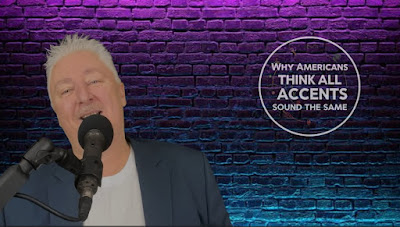
    👉 Why Americans Think All Accents Sound the Same

    Hoo roo, maties.
  • An Aussie Expat’s Take on Culture Shock, Identity & Life in America

    An Aussie Expat’s Take on Culture Shock, Identity & Life in America

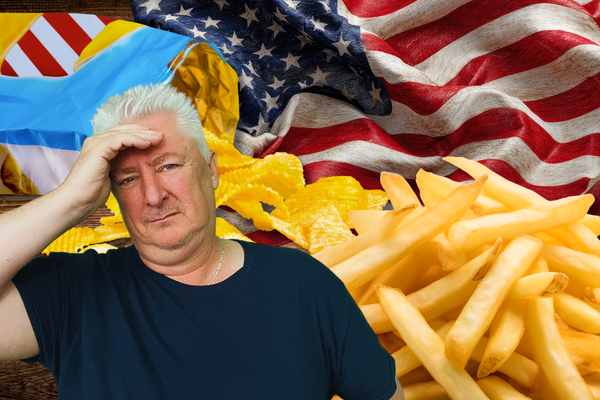
    The first time I ordered “chips” at a diner in the United States, I asked for a side with my burger.

    The waiter nodded.

    Walked off.

    Came back with a tiny packet of potato chips.

    I stared at the sad little bag while he cheerfully asked if I wanted ketchup for my “fries.”

    Everyone else was eating hot chips.

    I was holding something you’d pack in a kid’s lunchbox.

    And honestly — that tiny moment sums up why this whole project exists.

    Because living overseas isn’t defined by dramatic culture clashes.

    It’s defined by moments like that.

    Small.
    Harmless.
    Slightly confusing.

    And very funny in hindsight.


    From Nowra to Nashville

    I grew up in Nowra on the NSW South Coast.

    Later, I spent about 15 years in Canberra before packing up and moving to Nashville in 2018.

    Work was the official reason.

    Adventure was the unofficial one.

    And if I’m honest — so was curiosity.

    As a country music fan and musician, Nashville has always had a certain mythology. Road trips. Songwriters. Guitars in every bar. The whole thing.

    It’s changed a lot. Hot chicken joints, rooftop bars, bachelorette weekends.

    But the music’s still there.

    From country to indie to the odd metal show tucked into a corner somewhere.

    And that contrast — myth vs reality — became part of what I started noticing.


    Living Between Two Countries

    I live here with my Aussie wife and our two daughters.

    One was born in Australia.

    The other is a proper Southern belle — born right here in Nashville.

    Part of the move was about options.

    Two passports.
    Two systems.
    Two cultural lenses.

    Before Nashville, I’d also spent time living in Samoa and Fiji. The Pacific has shaped me in ways I probably didn’t understand at the time.

    Looking back, Nashville wasn’t a dramatic leap.

    It was just the next chapter.

    Living across multiple cultures has a quiet effect on you. I wrote more about that feeling in:

    👉 When Accents Start to Blur After Living Overseas

    It’s subtle.

    But it changes how you hear the world.


    Walking Away From a 24-Year Career

    In 2024, I stepped away from a 24-year career in finance.

    That wasn’t impulsive.

    It was gradual.

    Seventy-hour weeks.
    Long commutes.
    Missing small moments with the kids.

    At some point, I realised I was financially stable but time-poor.

    And time, especially with young kids, doesn’t compound.

    It just goes.

    So I shifted.

    Less corporate.
    More present.

    More storytelling.


    Why I Created “From Down Under to Down South”

    This channel and blog weren’t built to criticise America.

    Or romanticise Australia.

    They exist because living between cultures sharpens observation.

    You start noticing things you never noticed before:

    How Americans end conversations.
    Why Australia and New Zealand get confused.
    The way politeness lands differently.
    How goodbyes feel faster here.
    How home feels when you’re far from it.

    I’ve written about some of those moments here:

    👉 I’m Still Caught Off Guard by the American Goodbye

    👉 Why I Ended Up Making a Video About Australia and New Zealand

    These aren’t rants.

    They’re reflections.

    Calm ones.

    The kind you’d have over a barbecue or on a long drive.


    What Aussie Expat Culture Shock Actually Looks Like

    When people think of expat culture shock, they imagine big things:

    Healthcare systems.
    Politics.
    Driving on the other side of the road.

    But most of it is smaller.

    It’s vocabulary.

    Social timing.

    It’s ordering “chips” and getting crisps.

    Sociologists often describe culture shock as a gradual adjustment process rather than a dramatic event. The University of Queensland has written about how adaptation tends to unfold in subtle stages rather than one big moment.
    https://www.uq.edu.au

    That feels accurate.

    It’s not one shock.

    It’s a thousand micro-adjustments.

    And over time, those adjustments become stories.


    What You’ll Find Here

    When I’m not filming or recording the podcast, I’m:

    Being a dad.
    Dancing ballroom.
    Cooking — I’m a qualified chef, so the kitchen’s still my reset button.

    This project sits at the intersection of all of it:

    Family.
    Identity.
    Food.
    Humour.
    Cultural contrast.

    It’s about noticing.

    And sometimes laughing.

    And sometimes pausing.

    If you enjoy thoughtful, understated reflections on Aussie vs American life — without outrage or hype — you’ll probably feel at home here.

    You can watch the latest episodes here:

    👉 From Down Under to Down South on YouTube
    https://www.youtube.com/@FromDownUndertoDownSouth

    And if you’d like the occasional reflection in your inbox, there’s a free Aussie Slang Cheat Sheet waiting in the newsletter.

    Thanks for being here.

    Hoo roo, maties.