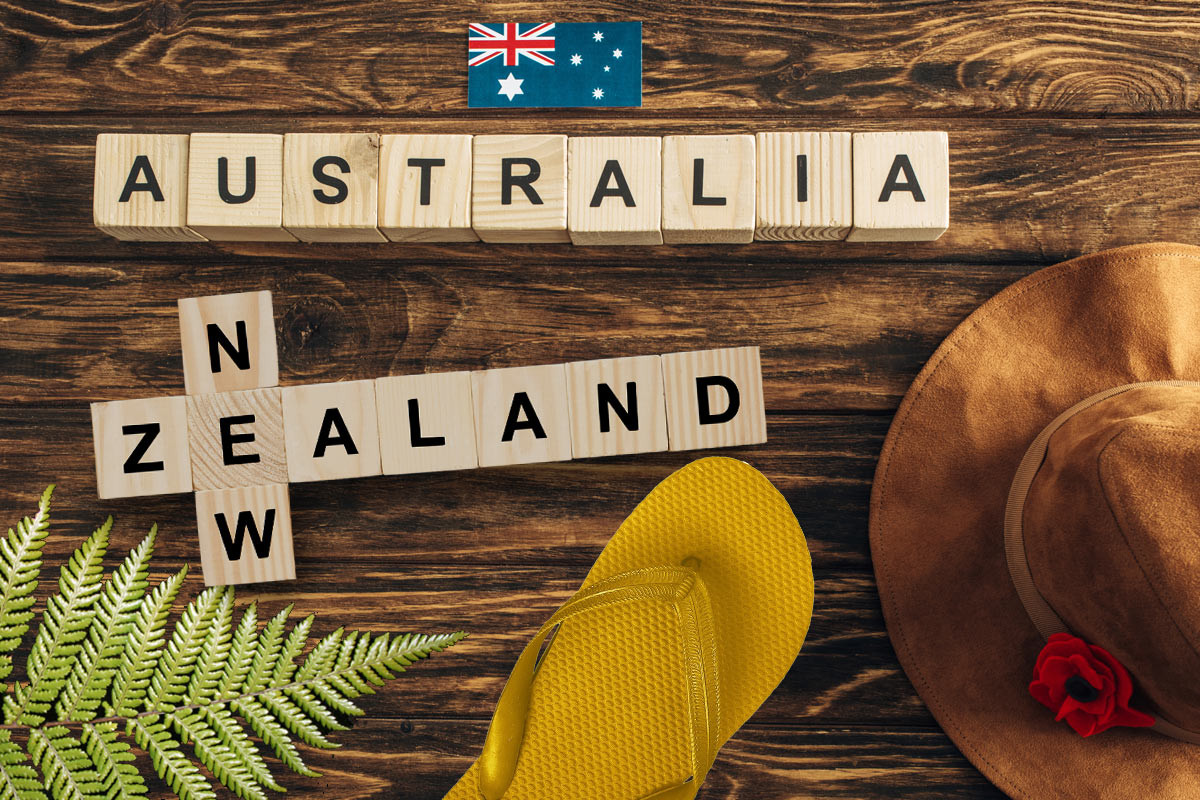
I didn’t set out to make a video comparing Australia and New Zealand.
It just… kept happening.
Since moving to the United States, there’s a moment that repeats itself with almost comic reliability.
Someone hears my accent.
They smile politely.
And they say:
“Oh! You’re a Kiwi!”
And look — it’s never meant badly.
Quite the opposite.
New Zealand has a strong reputation here. Friendly people. Stunning landscapes. Good rugby. I’ll happily take the compliment.
So I usually say, “Australia.”
There’s often a beat.
Then:
“Oh! Right… like New Zealand?”
And that’s where the confusion lives.
Not in malice.
Not in ignorance.
Just in proximity.
Why Do People Confuse Australia and New Zealand?
From the outside, it makes sense.
Australia and New Zealand are geographically close.
Historically linked.
Culturally intertwined.
We share sporting rivalries.
Military history through the ANZAC legacy.
Overlapping accents — well at least to international ears.
But we are not interchangeable.
And if you’ve spent meaningful time in either place, that becomes obvious very quickly.
From thousands of miles away, though, nuance flattens.
It’s human nature.
The further you are from something, the more similarities you see — and the fewer distinctions.
That’s what fascinated me.
Need an Aussie flag? Grab one here!
Living Across the Pacific Changes Your Perspective
I’ve spent significant time in New Zealand. I could happily call it home.
Kiwis are grounded. Direct. Quietly funny in a way I really appreciate.
I’ve also lived in Samoa and travelled extensively around the Pacific. And once you’ve spent time in Polynesian cultures, you realise how often outsiders compress entire regions into a single vague “island” category.
That flattening isn’t hostile.
It’s distance at work.
The more time you spend inside a region, the more layered it becomes:
Different relationships to land.
Colonial histories.
Cultural rhythms.
Different humour.
But from afar, it blurs.
That’s not a criticism.
It’s just how perception works.
I noticed something similar when I wrote about how accents start to shift over time:
👉 Living Overseas and Losing Your Automatic Ear
Distance softens edges.
Exposure sharpens them.
The Moment It Became a Video
The idea didn’t arrive fully formed.
It crept in through repetition:
– Being mistaken for a Kiwi (again)
– Seeing Australia and New Zealand described interchangeably in American media
– Watching people struggle to hear the difference between accents
– Realising comparison often replaces curiosity
At some point, I realised I wasn’t annoyed.
I was interested.
Why does this happen so often?
Why do we keep getting treated as a matched set?
And what gets lost when two distinct places are reduced to “basically the same”?
That’s when it stopped being a passing irritation and started becoming a story worth telling.
It Wasn’t About Debate — It Was About Context
The video wasn’t about deciding which country is “better.”
It wasn’t about correcting people sharply or taking offence.
It was about perspective.
An Australian who’s spent time in New Zealand.
Who’s lived in the Pacific.
Who now navigates these assumptions from the other side of the world.
There are jokes in it — about flags, vowels, sport, and the strange sibling-energy between Aussies and Kiwis.
But there’s also respect.
Shared history matters.
The ANZAC legacy matters.
Rivalry doesn’t cancel connection.
If anything, slowing down to notice the differences actually deepens appreciation for both.
Why Australia and New Zealand Feel Different Up Close
From an American vantage point, the two countries can feel like variations on a theme.
But up close, the distinctions become clearer.
Australia’s size alone creates internal diversity — culturally and geographically.
New Zealand’s relationship with Māori identity shapes its national story in a very specific way.
Even accent differences — subtle though they may seem internationally — are obvious within the region.
Linguists often talk about how accent perception depends heavily on exposure. Research from institutions like The University of Canterbury’s New Zealand Institute of Language, Brain and Behaviour has explored how vowel shifts and perception vary depending on listener familiarity.
https://www.canterbury.ac.nz/nzilbb
If you grow up hearing the difference, it’s immediate.
If you don’t, it blends.
That blending isn’t wrong.
It’s contextual.
Living Overseas Makes You Explain Things You Never Had To
Before moving to the US, I never had to explain the difference between Australia and New Zealand.
It was assumed knowledge.
Distance changes that.
When you live overseas long enough, you start seeing your own culture through someone else’s frame.
And suddenly you’re explaining things you never consciously articulated before:
Accent distinctions.
Historical context.
Regional identity.
You become a translator of your own home.
I’ve found that theme running through many of the videos on this channel — including:
👉 An Australian Perspective on American Politeness and Cultural Differences
It’s not about correcting people.
It’s about widening the lens.
Why I Told It Simply
I kept the video short. Tight. Personal.
I didn’t want it to feel like a lecture.
Or a travel documentary.
Or a cultural defence speech.
I wanted it to feel like the conversation you’d have at a barbecue after someone says:
“Wait — aren’t those basically the same place?”
That’s why the format stayed simple.
Talking head.
Familiar setup.
No spectacle.
Observation works better when it’s quiet.
Sometimes the most honest way to explain something is just to say:
This keeps happening.
Here’s why I think that is.
The Bigger Thread: Identity From a Distance
This video also sits inside a larger theme I keep coming back to:
What happens when you live overseas long enough to see your own country from the outside?
Distance sharpens some details.
It blurs others.
It forces you to articulate identity in ways you never had to before.
And occasionally, it gives you a story worth sharing.
If you’ve ever been mistaken for something you’re not — or watched your home simplified into a stereotype — you’ll probably recognise the feeling.
Not defensive.
Just aware.
And yes — the confusion really does come up a lot.
Hoo roo, maties.
Catch the full YouTube video here 👉 Why Everyone Confuses Australia and New Zealand