If you’ve ever wondered why Americans seem so polite, you’re not alone.
It’s one of the first things you notice… and one of the hardest things to figure out.

I remember a moment early on that really threw me.
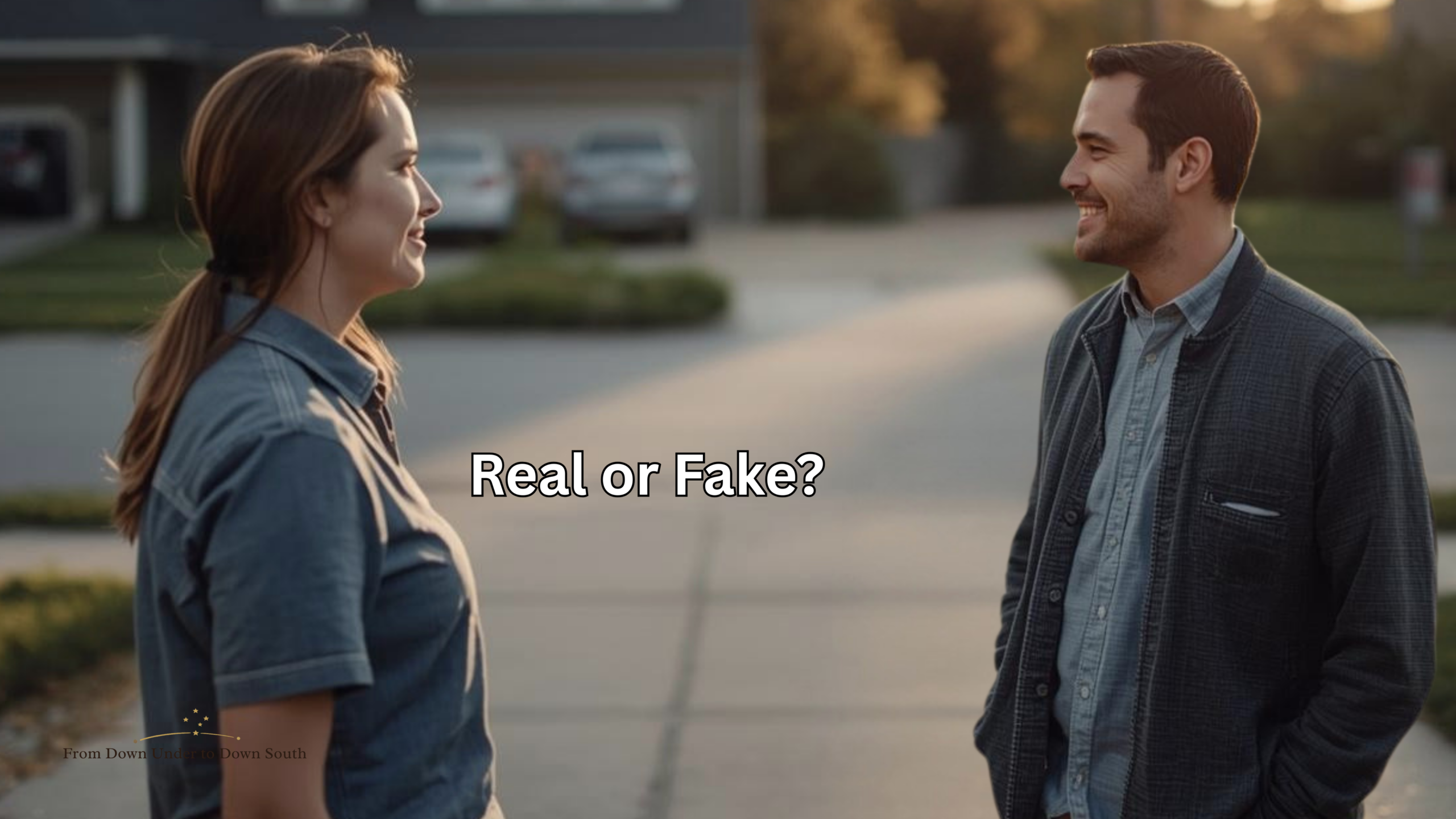
We’d have women come over to the house to see my wife Nikki.
They’d be warm, chatty, asking questions, including me in the conversation like we’d known each other for years.
And then the next time we’d see them… usually with their husbands…
they’d barely speak to me.
Same people. Same setting. Completely different energy.
I remember thinking,
hang on… was that real?
At the time, I genuinely didn’t know what to make of it.
I remember thinking…
maybe there’s some kind of unspoken American rule here.
Like wives don’t really talk to other husbands once their own partner is around.
It sounds ridiculous now, but in the moment, it honestly threw me.
Because the warmth I’d experienced the first time felt completely genuine.
There was nothing fake about it.
And then suddenly… it just wasn’t there anymore.
I couldn’t quite reconcile the two.
And that wasn’t the only time.
Over the first couple of years, I kept running into moments like that.
People being incredibly open… and then just as quickly, distant again.
Not rude.
Not cold.
Just… different.
And to be honest… I’m not even sure I fully understand it now.
Over time, I realised it wasn’t everyone.
There are plenty of situations where that warmth carries through.
The some of the dance mums I see at competitions, for example, are usually really chatty.
Easy to talk to. Inclusive. Just… normal.

(Well… most of them.)
And in those environments, it feels natural.
Consistent.
Which is what makes the other experiences stand out even more.
I’ll be honest… there are moments where it does feel a little bit fake.
Not in a deliberate way.
Not like people are trying to deceive you.
But there’s definitely a situational quality to it.
I’ve had people I genuinely thought were good friends…
people we spent time with, had conversations with, felt connected to…
and then when our situation changed—when we moved, or the context shifted—
it became clear the relationship was more tied to that situation than I realised.
In one case, it turned out what I thought was a friendship…
was really more of a business relationship.
That was a strange one to process.
What I’ve started to notice is that friendships here can feel more… compartmentalised.
You’ve got:
- work friends
- school friends
- dance friends
- church friends
- hobby groups
And those worlds don’t always overlap.
You can be very friendly with someone…
but only within that specific environment.
This ties into something I noticed about everyday interactions as well →
Why Americans Say “You’re Welcome” So Often
Whereas back in Australia…
it often felt more fluid.
You’d meet someone in one context…
and over time they’d just become a mate.
They’d move across different parts of your life with you.
Barbecues. Birthdays. Random catch-ups.
It all blurred together.
Here, it feels more defined.
Not worse… just different.
And then there were moments that made it even harder to read.
When we first moved here, we were invited to all sorts of things.
Church events mostly.
Trunk or treat. Fall festivals. Christmas gatherings.
There was always something on.

And at the time, it felt incredibly welcoming.
People were warm.
Inclusive.
Eager to have us there.
We thought… this is amazing.
But over time, we started to realise something else was going on as well.
A lot of those invitations weren’t just about connection.
They were also about bringing people into something.
Church communities. Groups. Networks.
And once you saw that…
it didn’t make it fake.
But it did change how it felt.
Because the friendliness wasn’t always just about you.
It was also about something bigger.
Seasonal events like this are a big part of American life — decorations, themed setups, the whole thing.
If you’ve never seen it, this is the kind of thing people go all out for → Amazon Trunk or Treat Decorations
I think that’s where the confusion comes from.
American friendliness often feels very real in the moment.
Because it is.
People are open.
They’re expressive.
They include you quickly.
It’s similar to something I noticed with goodbyes as well →
Why American Goodbyes Feel Faster Than Australian Goodbyes
But at the same time…
it can also be situational.
Tied to:
- the environment
- the purpose
- the group
And when that situation changes…
sometimes the relationship changes with it.
That’s probably the biggest shift for me.
Back home, friendliness often felt like the beginning of something.
Here… it can sometimes feel like part of the moment itself.

And if you expect it to mean the same thing…
that’s where it gets confusing.
And then there are people who cut straight through all of that.
One of the people we’re closest to now lives just a couple of doors down from us.
She’s American… but she spent 14 years living in Australia.
Sometimes you even hear a slight accent come through.
And with her, everything just feels… familiar.

Easy to talk to.
Consistent.
Natural.
Relatable.
I don’t think American friendliness is fake.
But I do think it works differently.
It’s more immediate.
More expressive.
More tied to the moment you’re in.
And if you try to measure it by Australian standards…
it can feel inconsistent.
Even a bit confusing.
But once you start to see it on its own terms…
it makes a bit more sense.
You can find audio versions of this article and more on the Listen page.
