Why do Australians call McDonald’s “Macca’s”? Because we shorten everything. It’s just what we do. Afternoon becomes arvo, a service station becomes a servo, David becomes Davo and somewhere along the way McDonald’s became Macca’s. These days even McDonald’s Australia uses the name.
If you go anywhere in Australia and ask someone where the nearest Macca’s is, almost everybody will know exactly what you’re talking about.
McDonald’s.
The strange thing for me is that I don’t remember it always being that way.
I grew up in Australia in the 1970s and 80s, and in my childhood memories it was McDonald’s.
Not Macca’s.
McDonald’s.
And going there was a treat.

When McDonald’s Was Still McDonald’s
One of my strongest childhood McDonald’s memories involves Sydney Airport.
When relatives were visiting and we had to take them back to the airport, we’d sometimes stop at the McDonald’s at Sans Souci on the way home.
For a kid, that was an event.
I remember the foam containers the burgers came in. I remember the character pens and the promotions. I remember another McDonald’s at Figtree near Wollongong.
Strangely, I don’t have the same childhood memories of McDonald’s in Nowra, where I grew up.
The restaurants that stuck in my memory were the ones associated with going somewhere.
McDonald’s wasn’t simply somewhere you stopped because you couldn’t be bothered cooking dinner.
It was a treat.
McDonald’s had only arrived in Australia in 1971, when its first Australian restaurant opened at Yagoona in western Sydney. From there, those Golden Arches gradually became part of the Australian landscape.
But somewhere between my childhood and adulthood, something changed.
McDonald’s became Macca’s.
So Where Did “Macca’s” Come From?
There doesn’t appear to be one magical moment when the entire Australian population held a meeting and voted to rename McDonald’s.
It happened much more naturally than that.
And by the time I was working, I remember Macca’s being completely normal.
“Mate, let’s do a Macca’s run on the way home.”
“Let’s stop at Macca’s on the way.”
Nobody had to explain what Macca’s was.
It was simply what we called it.
The nickname fits perfectly into one of the great peculiarities of Australian English: we shorten absolutely everything.
Afternoon becomes arvo.
Service station becomes servo.
Bottle shop becomes bottle-o.
Breakfast becomes brekkie.
Barbecue becomes barbie.
David becomes Davo.
McDonald’s?
Macca’s.

To demonstrate just how far this can go, here’s a perfectly reasonable Australian sentence:
“Chuck a U-ey down here, we’ll grab some Macca’s and then hit the bottle-o before we go to Davo’s for a barbie.”
To an Australian, there is nothing particularly remarkable about that sentence.
To an American, I may have just suffered a stroke.
Why Do Australians Shorten Everything?
There are linguistic explanations for the Australian obsession with abbreviations, but I think there’s something cultural going on as well.
Australians are generally pretty informal.
There’s a laid back attitude to language and perhaps a little bit of cheekiness in taking the proper name for something and deciding we’re going to call it something else.
Maybe there’s even a touch of our reluctance to conform.
You can tell us the restaurant is called McDonald’s.
That’s lovely.
We’re calling it Macca’s.
There’s also something strangely affectionate about an Australian nickname.
We do it to our friends.
We do it to our towns.
We do it to occupations.
We do it to everyday objects.
So perhaps one of the signs that McDonald’s had truly embedded itself into Australian culture was that we stopped bothering to use its proper name.
We gave it a nickname instead.
McDonald’s Eventually Gave In
This is my favourite part of the story.
McDonald’s didn’t try to correct Australians.
Eventually, it embraced the name.
By 2012, research commissioned by McDonald’s found that 55 percent of Australians surveyed called the company Macca’s. The nickname was so recognizable that it ranked just behind “footy” among the Australian abbreviations included in the research.
McDonald’s even pushed for Macca’s to be included in the Macquarie Dictionary.
Then, in January 2013, it went considerably further.
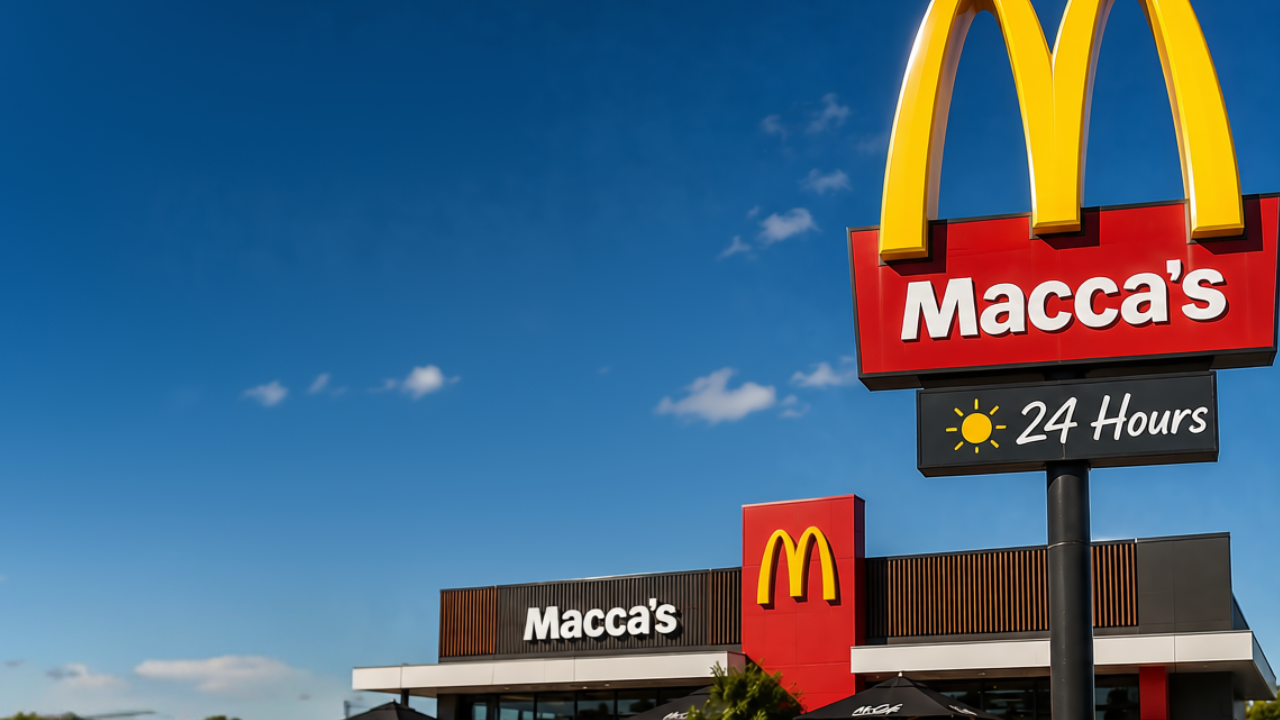
As part of an Australia Day campaign, 13 McDonald’s restaurants around Australia temporarily replaced their regular McDonald’s signage with signs saying Macca’s.
Not just in an advertisement.
On the actual restaurants.
Locations including Bondi Beach, Engadine and other stores around the country suddenly had Macca’s written where one of the world’s most recognizable corporate names would normally be.
The signs eventually changed back.
The nickname didn’t.

Today, McDonald’s Australia doesn’t merely tolerate Macca’s. It routinely uses the name itself.
Its app is called MyMacca’s.
Its Australian website has a section called Macca’s Story.
Official press releases tell Australians to head into their local Macca’s.
An Australian nickname for an American company effectively became part of the company’s Australian identity.
Macca’s in Australia Isn’t Quite McDonald’s in America
Living in America has made me notice something else.
Macca’s doesn’t just have a different name.
It tastes different.
I find the Australian beef nicer, and overall the Australian product has always seemed fresher to me.
There’s some substance behind the Australian ingredient difference too. McDonald’s Australia says its beef is Australian, and during its 50th anniversary celebrations the company said its beef, chicken, potatoes, wheat flour, lettuce and tomatoes were locally sourced.
Australia has also had menu items Americans don’t necessarily recognize.
The McOz, for example, arrived on the Australian menu in 1999. It’s the sort of burger that immediately announces where it comes from, most famously through that very Australian hamburger ingredient: beetroot.

Breakfast is broadly familiar on both sides of the Pacific, although living in the American South has introduced me to something you won’t find on a normal Australian Macca’s breakfast menu:
Biscuits.
Not Australian biscuits.
American biscuits.
That’s an entirely different article.

Some things, however, apparently transcend international borders.
The ice cream machines break in Australia too.
Humanity remains united.
Try Calling It Macca’s in America
Of course, the problem with Australian slang is that you don’t always realize something is Australian slang until you leave Australia.
I remember Nikki and I talking about Macca’s in front of someone here in America once.
We were happily having a conversation.
The other person was looking at us blankly.
Macca’s?
What on earth were we talking about?
That was one of those little expat moments when you suddenly realize a word that requires absolutely no explanation in one country can be almost meaningless in another.
These days, living in America, I obviously hear “McDonald’s” far more than I hear Macca’s.
My kids call it McDonald’s.
They know perfectly well what Macca’s means because they’ve heard us use it, but it isn’t naturally the word they reach for.
For me, it’s the opposite.
In my head, it’s still Macca’s.
The Funny Thing Is, Australians Barely Notice It
When I go back to Australia now, hearing the word Macca’s doesn’t jump out at me.
Neither does seeing it in advertising.
It’s simply part of the scenery.
That’s probably the best indication of how deeply the nickname has embedded itself into Australian English.
It doesn’t feel like slang.
It doesn’t feel like someone trying to sound Australian.
It certainly doesn’t need translating.
It’s just Macca’s.
And I like that McDonald’s embraced it.
One of the world’s biggest American brands arrived in Australia in 1971. Australians adopted it, grew up with it and eventually decided its name was too formal.
So we gave it a nickname.
McDonald’s could have spent millions insisting on consistent global branding.
Instead, eventually, it effectively said:
Fair enough.
Macca’s it is.

Macca’s Is One of Those Little Pieces of Home
Living overseas changes your relationship with words like this.
When you’re in Australia, Macca’s isn’t special.
It’s a fast food restaurant.
It’s somewhere you stop on a road trip. Somewhere you grab breakfast. Somewhere you swing through on the way home from work.
It’s part of the background.
But once you live somewhere else, these tiny pieces of language start to mean a little more.
Macca’s reminds me of childhood trips home from Sydney Airport and stopping at Sans Souci.
It reminds me of foam burger containers and character pens.
Later, it became Macca’s runs after work.
Today, my American kids know exactly what I mean when I say Macca’s, even though they’ll answer me by calling it McDonald’s.
It’s a tiny difference.
But that’s often how home works when you live overseas.
Not through the enormous things you expect to miss.
Sometimes it’s just a word you’ve been saying for decades.
And somewhere in the back of my head, no matter how long I live in America, those Golden Arches will probably always be Macca’s.