Tag: Nashville

  • A Nashville Man Allegedly Posed as a Vet. How Do We Know Who to Trust?

    A Nashville Man Allegedly Posed as a Vet. How Do We Know Who to Trust?


    After a man accused of impersonating a veterinarian was arrested in Nashville, I started wondering how much we really know about the people we trust with our health, our money and our families.


    There’s been a disturbing story unfolding here in Nashville, and it’s one that has made me think twice about something I’ve probably taken for granted most of my life.

    Fake vet arrested in Nashville

    When you walk into a veterinary clinic, you assume the person examining your dog or cat is actually a veterinarian.

    You see the white coat, the name badge, the examination room and the certificates hanging on the wall.

    Hand over your beloved pet, explain what’s wrong and trust that the person standing in front of you knows what they’re doing.

    You certainly don’t expect to discover that the bloke treating your animal has allegedly been practising without a licence.

    Yet that’s exactly what police say happened at a veterinary clinic in East Nashville. And the more I’ve read about this case, the more I’ve wondered whether we’re placing too much faith in the appearance of professional authority.


    The Nashville Veterinary Case That Started Me Thinking

    On November 3, 2026, Metro Nashville Police arrested 45-year-old Prashant Pandya on a felony charge of impersonating a veterinarian.

    According to investigators, Pandya had been presenting himself as a qualified veterinarian at Caudle Veterinary Clinic on Gallatin Pike in East Nashville, despite never having obtained a Tennessee licence to practise veterinary medicine.

    Police allege he used the title Doctor of Veterinary Medicine and wore a white coat displaying his name followed by the letters DVM.

    Now, there’s nothing unusual about a veterinarian wearing a white coat. That’s kind of the point.

    It’s exactly what you’d expect to see.

    But according to records obtained by Nashville’s NewsChannel 5, Pandya had failed the North American Veterinary Licensing Examination at least ten times.

    Failed 10 times

    I’ve failed a few things in my life.

    I failed my driving test the first time. I’ve had more job applications rejected than I care to remember. I’ve even attempted to assemble IKEA furniture without reading the instructions.

    But after ten unsuccessful attempts at a professional licensing examination, surely there’s a point when somebody needs to have a serious conversation about the next step. I mean, if you fail your driving test ten times, the solution isn’t to buy a bus and start transporting passengers.


    It’s a lot more than a failed exam

    Unfortunately, this story involves something far more serious than somebody failing an examination.

    The police investigation began after pet owners complained about what happened to their animals following treatment at the clinic.

    Investigators identified at least seven cases involving adverse outcomes between August 2025 and September 2026.

    Nashville police outside the fake vet clinic

    Local reporting has included accounts from families whose dogs died after undergoing procedures, as well as others whose pets experienced serious complications.

    One family lost their dog, Wunjo, after surgery in September. Another family eventually had to make the heartbreaking decision to euthanise their dog, Reggie, following serious complications after treatment.

    For those families, this isn’t an amusing story about a man wearing a white coat. It’s about animals they loved and trusted somebody else to care for.

    I was discussing this case with a friend here in Tennessee who happens to be a veterinarian and owns their own practice.

    When somebody has spent years studying veterinary medicine, completing examinations and building a professional career, you can imagine how a story like this might become a rather interesting dinner conversation.

    But our conversation got me thinking about something that extends well beyond veterinary medicine. How often do any of us actually check that the professionals we’re dealing with have the qualifications they claim to possess?


    We Trust People Every Single Day Without Thinking About It

    Think about the number of people you place your trust in during an ordinary week.

    You visit a doctor and assume they’re properly qualified.

    Sit in a dentist’s chair and allow somebody to start drilling into your teeth.

    Hire an electrician and trust that the wiring in your house won’t catch fire.

    Veterinarian operating on a cat

    You leave your children at school and expect the people responsible for them to have been appropriately screened.

    Most of us don’t ask to see certificates or professional licences.

    We trust the title, the workplace, the reputation and the system that supposedly sits behind it all.

    I don’t remember ever asking a dentist to prove they’d passed their examinations before starting a root canal.

    Imagine how that conversation might go.

    Before we begin, mate, could you just show me your qualifications? Perhaps your examination results? Any complaints I should know about?

    I’d guess the appointment might become a little awkward.

    But here’s the thing.

    We shouldn’t have to ask.

    That’s why professional licensing systems exist in the first place.

    They establish minimum requirements, provide a way to verify credentials and, at least in principle, help protect the public from people who aren’t qualified to do the work. The problem comes when the existence of those systems gives us a sense of security that isn’t always justified.


    I Saw the Other Side of Trust Working in Banking

    I spent more than twenty years working in banking in Australia before eventually managing banks here in America.

    During that time, I dealt with customers who trusted us with everything from their weekly wages to their life savings.

    Sometimes the amounts involved were enormous.

    Other times, the money sitting in an account represented everything somebody had managed to put aside.

    Either way, the responsibility was real.

    There’s an interesting book by Maria Konnikova called The Confidence Game that explores why ordinary, intelligent people can be deceived.

    I remember dealing with a young woman who was preparing to transfer around $90,000 overseas for what she believed was a property purchase.

    As we discussed the transaction, things weren’t adding up.

    The more questions I asked, the more concerned I became.

    Eventually, it became clear that she was caught up in a scam.

    We managed to stop the transfer before the money disappeared.

    Scam alert signs

    But what stayed with me wasn’t simply the attempted fraud.

    It was how easily somebody could be convinced that the person they were dealing with was legitimate.

    The people behind these scams often understand something fundamental about human behaviour.

    We tend to trust people who appear knowledgeable, confident and professional.

    A convincing explanation, an official looking document or a reassuring manner can go a surprisingly long way.

    Of course, there’s an important difference between a scammer deliberately deceiving somebody and a properly qualified professional doing their job.

    But the underlying question is similar. How do we know when the trust we’re placing in somebody is justified?


    The Safeguards Were Supposed to Protect People

    Here’s the part of the Nashville story I find particularly troubling.

    According to NewsChannel 5, Caudle Veterinary Clinic went through permit renewal checks in 2023 and 2025.

    Both sets of documents showed the clinic was in compliance.

    The records listed an older, licensed veterinarian, Fatchkumar Pandya, as the veterinarian on staff.

    Yet investigators subsequently alleged that his son, Prashant Pandya, had been performing veterinary work without holding the required licence.

    So we’ve got a clinic that appeared to have satisfied its regulatory requirements, a licensed veterinarian associated with the business and a man now accused of providing veterinary services without the necessary credentials.

    How is an ordinary pet owner supposed to recognise that something might be wrong?

    They walk through the door of an established clinic.

    A professional environment.

    They meet somebody who introduces himself as a veterinarian. What exactly is supposed to make them suspicious?

    Nashville Metro Police outside the Veterinarian clinic
    Nashville Metro Police outside the Veterinarian clinic

    Operating Outside the System

    This raises another question.

    What happens when the system responsible for regulating a profession discovers somebody operating outside that system?

    According to local reporting, Tennessee’s veterinary board has limited authority over people who were never licensed in the first place.

    TVMA logo

    That means a complaint about an unlicensed practitioner may require action from law enforcement or prosecutors rather than the professional board itself.

    Now, I understand that different agencies have different responsibilities.

    But from the public’s perspective, it seems a rather strange arrangement.

    The board exists to help regulate veterinary medicine.

    Yet if somebody is allegedly practising veterinary medicine without a licence, the board may not have the same direct enforcement powers it has over a licensed veterinarian.

    Surely that deserves a closer look.

    Because a licensing system is only as reassuring as the mechanisms behind it. If those mechanisms don’t identify a problem until families have already suffered, it’s reasonable to ask whether something needs to change.


    Should We Really Have to Check Everyone’s Qualifications?

    Here’s something I discovered while looking into the Nashville case.

    You can actually check whether a veterinarian holds a Tennessee licence through the state’s online verification system.

    The Tennessee Department of Health maintains an official database that allows members of the public to search for professional licences.

    It’s a useful service.

    question mark

    But I wonder how many people know it exists.

    Until this story, checking a veterinarian’s licence probably wouldn’t have crossed my mind.

    I’d look at reviews, ask friends for recommendations and maybe check how long the clinic had been operating.

    I’d probably spend more time comparing the cost of an appointment than investigating the professional credentials of the person conducting it.

    Which brings us back to the original question. Should we really be expected to verify every professional we deal with?

    There’s certainly an argument that we should take more responsibility for protecting ourselves.

    We check reviews before buying a television.

    Compare prices before booking a holiday.

    We research cars, insurance policies and mobile phone plans.

    Maybe checking a professional licence should become another normal part of making an important decision.

    But there’s a limit to how much responsibility we can reasonably place on consumers.

    When you’re worried about a sick pet, the last thing you want is to spend the evening investigating whether the person offering treatment has passed the appropriate examinations.

    You want somebody who knows what they’re doing. More importantly, you want to believe that the authorities responsible for professional standards have already done their job.

    screenshot of the Tennessee Department of Health License Verification tool
    Tennessee residents can check professional credentials through the state’s online licensing database.

    Trust Is What Allows Everyday Life to Function

    After eight years living in America, I’ve come to appreciate just how much of daily life depends on trusting people we barely know.

    You trust the mechanic who tells you your car needs new brakes.

    The builder who says your house is structurally sound.

    You trust the pharmacist who fills your prescription.

    The people preparing your food, looking after your children and handling your personal information.

    Of course, trust isn’t always misplaced.

    If this sort of thing interests you, there’s another book called Nobody’s Fool, which looks at why people can be deceived even when they believe they’re being careful.

    Most professionals have worked hard to obtain their qualifications and take their responsibilities seriously.

    My veterinarian friend certainly has.

    That’s one reason cases like this are so frustrating.

    They don’t just affect the people directly involved.

    They can also undermine confidence in an entire profession, including the many people who have done everything properly.

    I’ve seen a similar problem in banking.

    When customers hear about financial scams, dishonest advisers or failures within financial institutions, it can make them suspicious of everybody.

    Sometimes that suspicion is understandable.

    But if we reach the point where we don’t trust anybody, ordinary life becomes incredibly difficult.

    We can’t all become experts in veterinary medicine, dentistry, electrical engineering, banking and every other profession we depend upon.

    That’s why we have professional standards and licensing requirements.

    That’s why we have regulators. They’re supposed to provide some reassurance that the person we’re dealing with has met the necessary requirements.


    Maybe the Question Isn’t Who We Trust

    There’s something else worth remembering about the Nashville case.

    The allegations remain subject to the legal process.

    An arrest and criminal charge don’t establish guilt, and it would be wrong to suggest that every reported complication has already been proven to result from the alleged unlicensed practice.

    But the questions raised by the investigation are important regardless of the eventual outcome.

    How does a member of the public know that a professional is properly qualified?

    What responsibilities do employers and businesses have to verify credentials?

    What happens when concerns are raised about somebody operating without a licence?

    And maybe even more importantly, who is responsible for making sure the safeguards actually work?

    I don’t think the answer is to become suspicious of every professional we encounter.

    I don’t intend to start demanding examination results from my dentist before allowing him anywhere near my teeth.

    For me, the bigger issue is that trust shouldn’t depend entirely on appearances.

    A white coat doesn’t make somebody a veterinarian.

    A title doesn’t automatically establish expertise.

    Impressive offices don’t guarantee professional competence.

    And a licence, while important, is only one part of a system that also needs proper oversight and accountability.

    We can’t spend our lives questioning everybody.

    Society simply wouldn’t function.

    But if we’re going to place our trust in qualifications, professional standards and the authorities responsible for enforcing them, surely we should be able to expect those safeguards to mean something.


    I’m an Australian who’s been living in Tennessee since 2018, trying to explain the differences between two countries that supposedly speak the same language. You can find more stories about Australian culture and life in America at From Down Under to Down South.

    If you enjoy these stories about Australian language, culture, and the little things that make us who we are, you can support From Down Under to Down South through Buy Me a Coffee . Every bit of support helps keep the stories coming.

    This article contains affiliate links. If you purchase through them, I may earn a small commission at no additional cost to you.
  • What Tennessee Lost When Dolly Parton Died

    What Tennessee Lost When Dolly Parton Died

    THIS WEEK IN AMERICA

    There are famous people whose deaths you hear about.

    Then there are the ones you feel.

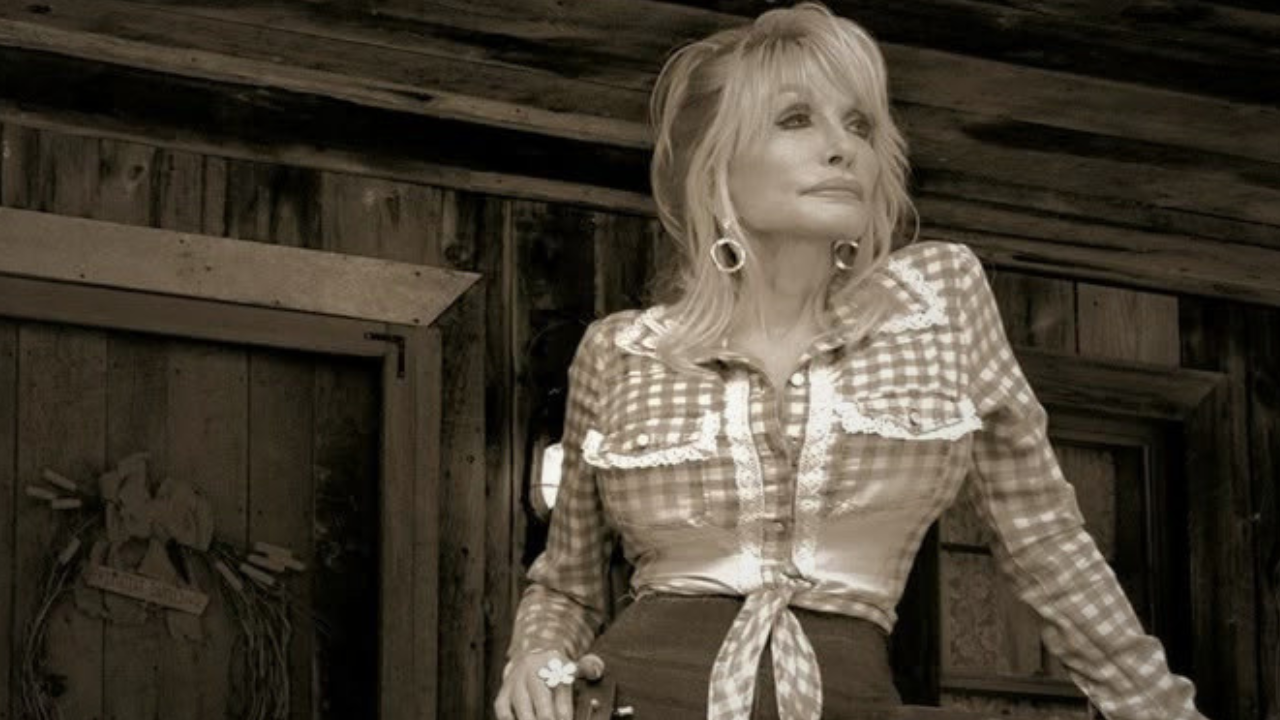
    Dolly Parton died on August 25, and here in Tennessee, you could feel it almost immediately.

    It wasn’t simply another celebrity death appearing on television screens and social media feeds. People were crying. Flowers appeared outside her home. Schools found their own ways to remember her. Radio stations played her music. Conversations that normally had nothing to do with country music somehow ended up being about Dolly.

    I cried too.

    That surprised me a little.

    I knew she’d been unwell. Only days earlier I’d watched an interview with her. She still looked happy. She still sounded like Dolly. There was nothing about it that made me think I was watching one of the final interviews she would ever give.

    Then she was gone.

    Over the next few days, I watched Tennessee react to losing someone who had been part of this state for generations.

    And I began to understand that people here weren’t simply mourning a famous country singer.

    They were mourning something much closer to home.

    Our family at Dollywood in Pigeon Forge, Tennessee, with the Smoky Mountains in the background.
    A family trip to Dollywood in Pigeon Forge. Living in Tennessee changed the way I came to understand Dolly Parton and her connection to this part of the state.

    Dolly Was Different in Tennessee

    I grew up in Australia, so Dolly Parton existed in my life long before Tennessee did.

    She was already one of those people who seemed permanently famous.

    The hair.

    The rhinestones.

    The voice.

    The jokes.

    The songs everybody somehow knew, even if they claimed they didn’t listen to country music.

    But living in Tennessee changed the way I saw her.

    Celebrity looks different when you live close enough to see the fingerprints someone has left behind.

    I’ve been to Dollywood several times. What always struck me about the place wasn’t simply that Dolly Parton owned a theme park.

    Plenty of famous people can put their name on something.

    Dollywood feels connected to the place that made her.

    There are craftsmen, music, old Appalachian traditions, reminders of mountain life and pieces of a culture that could very easily have been polished away in the name of creating something newer and shinier.

    Dolly became one of the most recognisable women on Earth without ever appearing remotely embarrassed by the mountains she came from.

    Quite the opposite.

    She took them with her.

    I think that’s one of the things I came to admire most about her.

    Success didn’t seem to require pretending she had come from somewhere else.

    I’ve even been eyeing a Dolly Parton TIME cover poster for the wall of my studio. Eight years ago, I’m not sure that would ever have occurred to me. Now it feels strangely appropriate.


    The Dolly Parton You Heard About Around Town

    Living around Nashville also means occasionally meeting people whose worlds have crossed with people you’ve only ever seen on television.

    Over the years I’ve met several people who knew Dolly.

    One woman had worked as her videographer.

    When Dolly came up in conversation, she described someone remarkably similar to the public version the rest of us knew.

    Funny.

    Sassy.

    Energetic.

    Caring.

    That always stayed with me because celebrity reputations often become considerably less impressive the closer you get to them.

    Dolly’s seemed to work the other way.

    There’s even an antique store not far from where we live where the owner has a photograph of herself with her. Apparently she used to drop in and browse.

    That image of Dolly somehow feels more Tennessee to me than a red carpet ever could.

    Dolly Parton, international superstar, wandering around an antique store.

    Yep.

    That really fits.

    A few years ago, when I was working as a bank manager in Franklin, Tennessee, I saw another side of her that I’ve never forgotten.

    Occasionally, checks would appear.

    They had Dolly Parton’s signature on them.

    Sometimes they were for $10,000.

    Sometimes $20,000.

    They were going to ordinary families who were struggling.

    There wasn’t a television crew standing beside them.

    Or an oversized novelty check.

    There wasn’t a press conference explaining what a wonderful person Dolly Parton was.

    Someone needed help.

    She helped.

    Working in banking meant I obviously couldn’t go home and start telling everybody whose accounts I’d seen. But I remember looking at those checks and thinking about how extraordinary it would be to have reached a point in life where you could quietly alter the course of someone else’s life.

    More importantly, it made me think about what I was doing with mine.

    That’s a fairly impressive legacy for a piece of paper.

    Carnton historic home in Franklin, Tennessee.
    Carnton in Franklin, Tennessee. It was while working as a bank manager in Franklin that I caught a small glimpse of Dolly Parton’s quiet generosity.

    Tennessee Didn’t Mourn Her Like a Celebrity

    In the days after Dolly died, I began noticing something interesting about the way Tennessee responded.

    There were certainly the expected tributes.

    Pink.

    Boots.

    Sparkles.

    Music.

    But there was something underneath all of that.

    Schools across Middle Tennessee encouraged children to wear pink or western clothes, bring books and perform acts of kindness. At Gladeville Middle School, students were invited to take part in a “What Would Dolly Do?” kindness challenge.

    At my daughters’ school, the principal spoke to the children over the loudspeaker.

    She asked them to honour Dolly through kindness.

    Not by listening to one of her records.

    Not by finding the biggest blonde wig in Tennessee.

    Kindness.

    Of everything they could have chosen to represent her, that’s what they chose.

    Meanwhile, mourners gathered outside Dolly’s Brentwood home in such numbers that flowers, signs and balloons accumulated around the property and police eventually had to manage traffic in the area.

    This wasn’t simply Tennessee saying goodbye to someone famous.

    It felt much more like people saying goodbye to someone they believed belonged to them.

    Or perhaps someone they believed they belonged to.

    There’s a difference.

    Tennessee tribute to Dolly Parton following her death in August 2026.
    Dolly Parton’s house in Brentwood Tennessee

    Then I Started Thinking About Mum

    My mum loved Dolly.

    She had her albums.

    One of my earliest memories of Dolly Parton’s music is Coat of Many Colors.

    I remember hearing it as a boy in Australia.

    More specifically, I remember Mum singing it.

    There were times when we didn’t have much money either.

    Mum worked hard. She loved horses, the country and life on the land. Given the opportunity, I think she would happily have disappeared onto a property somewhere with several horses and reappeared only when somebody reminded her she had children.

    There were parts of Dolly’s story that I think Mum understood instinctively.

    So when Dolly died, all those old memories suddenly came rushing back.

    My mum died four years ago.

    Grief does something strange after enough time has passed.

    It stops occupying the whole room.

    You learn to live around it.

    Days go by.

    Then weeks.

    You work. Take the kids to school. You complain about the electricity bill. You wonder why nobody in the house except you appears capable of replacing an empty toilet roll.

    Life resumes its normal nonsense.

    Then something completely unexpected opens a door you didn’t know was still there.

    A song.

    A smell.

    A photograph.

    Or apparently, the death of Dolly Parton.

    Suddenly I wasn’t only thinking about the woman Tennessee had lost.

    I was thinking about the woman I’d lost too.

    My mum helping her granddaughter Georgia sit on her horse in Australia.
    Mum helping Georgia onto a horse. She loved horses, the country and life on the land. I think there were parts of Dolly’s story she understood.

    A Song Somehow Travelled 9,000 Miles With Me

    The strange part is where life eventually took me.

    Imagine explaining this to the little Australian boy listening to his mum singing Coat of Many Colors.

    One day you’ll move to America.

    Not just America.

    Tennessee.

    You’ll visit the Smoky Mountains that Dolly sang about.

    Go to Dollywood.

    You’ll meet people who knew her.

    Even see small evidence of things she did for people when nobody was watching.

    Then decades after first hearing those songs on the other side of the world, you’ll be living just outside Nashville when Tennessee wakes to the news that Dolly Parton is gone.

    Life is ridiculous sometimes.

    We talk about migration in terms of places.

    I moved from Australia to America.

    That’s geographically true.

    But I’m increasingly convinced that when you move countries, you don’t leave one life behind and start another.

    You carry bits of the old one with you.

    Songs.

    Expressions.

    Memories.

    People.

    Most of the time they sit quietly in the background.

    Then something happens in your new home that suddenly reaches all the way back into your old one.

    For me, Dolly Parton became one of those bridges.

    A woman from the mountains of East Tennessee was part of my childhood in Australia because my mum loved her music.

    Decades later, East Tennessee became part of my own life.

    I don’t know that I could have written a more unlikely circle if I’d tried.


    I talked about that strange connection between Dolly, Tennessee and Mum on This Week in America. You can hear the original story below.


    Maybe That’s Why Dolly Meant So Much

    I’ve joked for years that if aliens ever arrive and demand to meet someone who represents humanity, we shouldn’t send a politician.

    Send Dolly Parton.

    Give her twenty minutes.

    We’ll probably be fine.

    It’s a joke, obviously.

    Mostly.

    But there’s a reason it works.

    Dolly managed something that’s becoming increasingly difficult.

    People who disagreed about almost everything seemed capable of liking her.

    She had her own beliefs, but she never seemed interested in turning every interaction into a test of whether you shared them.

    Dolly was deeply rooted in her faith and her culture without expecting everybody else to be exactly like her. She could make fun of herself without diminishing herself, and become extraordinarily successful without pretending she’d achieved it alone.

    Perhaps most remarkably, after making enormous amounts of money, she still seemed to notice people who didn’t have much.

    That’s much rarer than a good singing voice.

    Her Imagination Library has also put hundreds of millions of free books into the hands of children, an extraordinary extension of something Tennessee families had known about her for decades: she cared deeply about where she came from and believed success carried some responsibility to give something back.

    Dollywood has already announced that it intends to preserve that philosophy as it develops tributes to her legacy, including places for reflection and new experiences built around dreaming, storytelling and kindness.

    That seems right.

    Because I don’t think Dolly Parton’s most important legacy is Jolene.

    Or 9 to 5.

    Or even I Will Always Love You.

    It’s certainly not the wigs.

    Although, fair play, that’s a fairly substantial body of work on its own.

    I think her real legacy is much simpler.

    She came from very little.

    Achieved almost everything.

    She never seemed to become embarrassed by the people or the place she came from.

    And somewhere along the way, she made a lot of people want to be a little kinder.

    That’s not bad for one life.


    Goodbye, Dolly

    Tennessee feels a little different without her.

    I imagine it will for quite some time.

    For me, though, her death will always be connected to something more personal.

    I’ll think about Mum singing Dolly’s songs in Australia.

    About growing up without much money.

    I’ll think about horses and country life and those records playing when I was a boy.

    About the absurd route that eventually brought me from there to here.

    And perhaps that’s one of the gifts music gives us.

    It attaches itself to people.

    We think we’re remembering a song when we’re actually remembering a kitchen, a car, a childhood, a parent or a version of ourselves that disappeared years ago.

    Dolly Parton belonged to Tennessee.

    But somehow, a little piece of her belonged to my mum too.

    I hope wherever they both are, Mum finally gets to see the concert.

    Knowing Mum, she’ll probably want decent seats.

    Gatlinburg, Tennessee, at sunset in the Great Smoky Mountains.
    Gatlinburg, Tennessee, at sunset. Somehow the mountains Dolly sang about became part of my life too.

    If you enjoy these stories about life in America through Australian eyes, you can help support From Down Under to Down South with a coffee. Every coffee helps me keep writing, recording and sharing the stories I find along the way. Thank you for being here.