Tag: This Week in America

  • Dance Dads Have a Clique. I Didn’t Make the Cut.

    Dance Dads Have a Clique. I Didn’t Make the Cut.


    I recently discovered that I have failed to join the dance dads.

    Apparently there is a group.

    There may be a committee.

    There could be membership requirements.

    I wouldn’t know.

    Nobody sent me the paperwork.

    My daughter Georgia has been dancing at the same studio for six years now, including four years on the competition team.

    I know most of the teachers. I know many of the parents. I know the kids. I know which competition venues have decent coffee, which ones have terrible parking and roughly how many rhinestones can fall off a costume before somebody declares an emergency.

    But somehow, after all these years, I remain an independent contractor. A freelance dance dad.


    I should have noticed the dance dads years ago

    The evidence was there from the beginning.

    At competitions, a group of dads would help build the sets. They’d carry everything onto the stage, assemble whatever needed assembling and then, when the job was done, take a little bow before running offstage to applause.

    It was like a very specialised Broadway production where nobody actually danced.

    I was never asked to join them.

    I wasn’t offended.

    At first I didn’t think much about it.

    But over the years, I started noticing the same dads together elsewhere.

    At practices, they’d stand around talking in a circle.

    At competitions, they’d sit together.

    Sometimes they’d go out for dinner afterwards.

    There was clearly a social structure here that I had somehow missed.

    The dance mums had their groups too, of course. I’d noticed those.

    I just assumed the dads operated differently.

    Turn up.

    Find somewhere to sit.

    Look at phone.

    Move costume bag when instructed.

    Ask when we’re leaving. Apparently I had underestimated the complexity of dance fatherhood.

    Parents and families gathered at a children's dance competition.
    Dance competitions have their own little communities. Some of us are apparently non playing members

    Then one of the dads confirmed my suspicions

    Recently, I was standing outside the studio waiting for Georgia.

    One of the dance dads walked out.

    I’ve known him for several years. Not well, but certainly well enough that we’re not strangers.

    He looked straight at me.

    I said hello and asked how he was.

    I got a quick good, how are you?

    Then he proceeded to enthusiastically talk to seemingly everyone else within a fifty metre radius.

    People walking past.

    Other parents.

    People sitting in their cars.

    Had somebody driven past slowly enough, I suspect he would have leaned through the passenger window.

    It was like watching a politician work a rope line.

    And I stood there thinking:

    Well.

    Nice catching up.

    To be fair, perhaps I’m being unfair.

    Because there is another possibility I have been forced to consider. Maybe they think I’m the snob.


    This is where my argument begins to fall apart

    I don’t approach groups.

    Ever.

    If I walk into the dance studio and six dads are standing in a closed circle talking, there is absolutely no chance I am walking over and inserting myself into the middle.

    None.

    They could be discussing how to divide a winning Powerball ticket and I’d probably stand twenty feet away looking at my phone.

    Part of it is probably shyness.

    I’m much better one on one than I am in groups, particularly with people I don’t know well.

    Part of it may simply be habit.

    And part of it is that I often walk into the studio without my glasses and can’t actually tell who anybody is.

    It’s difficult to confidently greet someone when there’s a reasonable possibility you’re about to introduce yourself to a coat rack.

    So I sit down.

    I pull out my phone.

    I answer emails.

    I work on the website.

    I check YouTube.

    I watch Georgia or Brianna through the window.

    From my perspective, I’m giving everyone else their space.

    • Somewhere along the way I’ve also learned that a portable phone charger is less an accessory at a dance competition and more emergency equipment. These things can run all day.

    From their perspective, perhaps there’s an Australian bloke sitting in the corner staring at his phone who never comes over and talks to anyone. This investigation is becoming increasingly inconvenient.


    I don’t actually dislike talking to people

    That’s the strange part.

    If one of the dads comes over and talks to me, I’m perfectly happy.

    It has happened occasionally.

    At Nationals over the summer, I ended up having a great conversation with another dad about soccer and the World Cup.

    He’d had a couple of drinks, which may have assisted international diplomacy.

    But it was easy.

    Natural.

    Two dads talking about football.

    I’ve had similar conversations with other parents over the years.

    The confusing part comes afterwards.

    Sometimes you’ll have a really good one on one conversation with somebody. You think you’ve finally broken through that awkward stage.

    Then the next time you see them, they’re back with their usual group and it’s as though the conversation never happened.

    Hello again, coat rack.

    That’s when the whole thing can start to feel slightly performative.

    Warm and friendly when you’re one on one.

    Different when the group reappears. And that’s probably why I’ve become even less inclined to push myself into it.

    Young competitive dancer performing onstage at a dance competition.
    The kids somehow manage to make friends while competing against each other. The adults have developed a more complicated system.

    The kids may actually be better at this than we are

    Georgia has her best friend at dance.

    Like most childhood best friendships, it can occasionally resemble Days of Our Lives.

    They’re inseparable.

    Then they’re not.

    Then they are again.

    The other girls her age seem to operate similarly. They have close friendships and often pair off rather than moving around as one enormous group.

    Meanwhile, some of us adults seem to have recreated high school in the lobby.

    The children are learning choreography.

    We’re apparently still working out where we’re allowed to sit at lunch.

    And that, I’ve realised, might be part of why I find these situations uncomfortable.


    Just tell me where I’m supposed to sit

    At competitions, we’re often sitting by ourselves or with Georgia’s best friend’s mum and another parent we know.

    I’ve watched other dance studios arrive and seemingly have this sorted.

    Their families sit together.

    They have a section.

    They cheer together.

    Some even have team chants.

    You can see immediately that they’re there as a studio.

    I actually think I’d enjoy that.

    Which surprised me when I thought about it.

    Because my problem isn’t necessarily being around everybody.

    My problem is the bit beforehand.

    Walking into a room and trying to work out where you belong.

    I don’t want to walk up to a row of people and ask whether a seat is free, only to hear:

    Sorry, someone’s sitting there.

    Suddenly I’m back on the school bus trying to work out where I’m allowed to sit.

    I’m 52.

    I don’t need that kind of pressure.

    Give me assigned seating.

    Put my name on a chair. I will happily participate.

    • I’ve spent enough hours in dance venues now that I’m beginning to think a decent stadium seat cushion should be issued when your child joins the competition team.

    Apparently I require organised socialising

    There was an awards night at Nationals over the summer.

    Families were invited.

    I didn’t go.

    I stayed with Brianna in the hotel room instead.

    Maybe I should have gone.

    But I could already picture myself walking into the area, looking around at all the established groups and trying to work out where to stand.

    No thanks.

    Yet if the studio announced tomorrow that all the families were sitting together at the next competition, I’d genuinely look forward to it.

    So apparently my social requirements are:

    I would like to be included.

    I do not wish to ask to be included.

    Please provide clear instructions.

    Assigned seating preferred. Refreshments appreciated.

    Daytona Beach Florida
    Daytona Beach, dance dad life does include some travel perks.

    The really annoying part is that I’m perfectly sociable elsewhere

    I dance too.

    Ballroom.

    And at my ballroom studio, I feel completely at home.

    From the beginning, people said hello when I walked through the door.

    They remembered my name.

    They talked to me.

    It was welcoming.

    Now I can walk in and feel like I belong there.

    Same bloke.

    Same personality.

    Same reluctance to charge into a group of strangers.

    The difference is that somewhere along the way, I was given enough little signals that said:

    You’re part of this place.

    That’s all it took.

    At Georgia’s studio, after five or six years, I know almost everybody.

    I always say hello to the teachers by name.

    Sometimes I wonder whether they know mine.

    Although, in fairness, it is a children’s dance studio.

    They’re there for Georgia.

    I’m essentially transport. Transport with a credit card.


    Put me in my own house and I’m completely different

    Here’s another piece of evidence against my claim that everyone else is responsible.

    We’ve hosted plenty of birthday parties for the girls.

    When people come into my house, I’m a host.

    I talk to them.

    I make them feel welcome.

    If I see another dad standing by himself, I’ll go over and talk to him.

    I don’t want someone standing alone wondering whether anybody wants them there.

    Because I know exactly what that feels like.

    Once I’ve spent time with someone, things become much easier.

    There are dads I’ve got to know through the girls’ friendships, birthday parties and school events. I can walk up to them now, say hello, sit down and have a chat.

    It just takes me time.

    Apparently quite a lot of time. Possibly several financial years.


    Phones probably aren’t helping any of us

    There is also a modern complication.

    The phone.

    If I’m sitting alone at dance, my phone gives me somewhere to go.

    I can work.

    I can read something.

    I can scroll.

    I can look extremely busy while accomplishing absolutely nothing.

    Twenty years ago, if you were sitting alone waiting for your child to finish an activity, eventually you probably had to look up.

    Someone else looked up.

    You talked.

    Now we can spend two hours sitting six feet apart without ever acknowledging that another human being exists.

    The phone makes being alone easier.

    It also makes being alone look intentional.

    Someone might look at me and think:

    He’s busy. I’ll leave him alone.

    Meanwhile I’m looking at the group across the room thinking:

    They obviously don’t want me over there.

    Excellent.

    Everybody has successfully respected everybody else’s desire to do something none of us actually wanted.

    Phone and dance bag while waiting at a children's dance studio.
    The modern dance dad survival kit. A phone, somewhere to sit and several hours to kill.

    Maybe I’ve been watching the wrong people

    This is the part I hadn’t really considered until recently.

    I’ve spent years noticing the group.

    Dads standing together.

    Parents sitting together.

    People going out afterwards.

    Maybe I should start looking for the other person.

    The dad sitting twenty feet away on his phone.

    The mum standing by herself waiting for rehearsal to finish.

    The parent who walked into the room, saw the established groups and quietly found a chair.

    Because maybe they’re not antisocial either.

    Maybe they’re doing exactly what I’m doing.

    Waiting for someone else to go first.

    I’m still not walking into the middle of that closed circle.

    Let’s not get ridiculous.

    But perhaps next time I see another parent sitting alone, I’ll say hello.

    One person I can handle.

    Give me another five or six years and I may even help build a set.

    Just don’t expect me to take a bow.

    Actually, that’s not true.

    I’m a ballroom dancer. Of course I’ll take the bow.


    If you enjoy these stories about family, dance and the strange little things I notice while living in America, you can support From Down Under to Down South through Buy Me a Coffee.

    It helps me keep writing, filming and podcasting. And, apparently, gives me something productive to do on my phone while all the other dance dads are talking to each other.

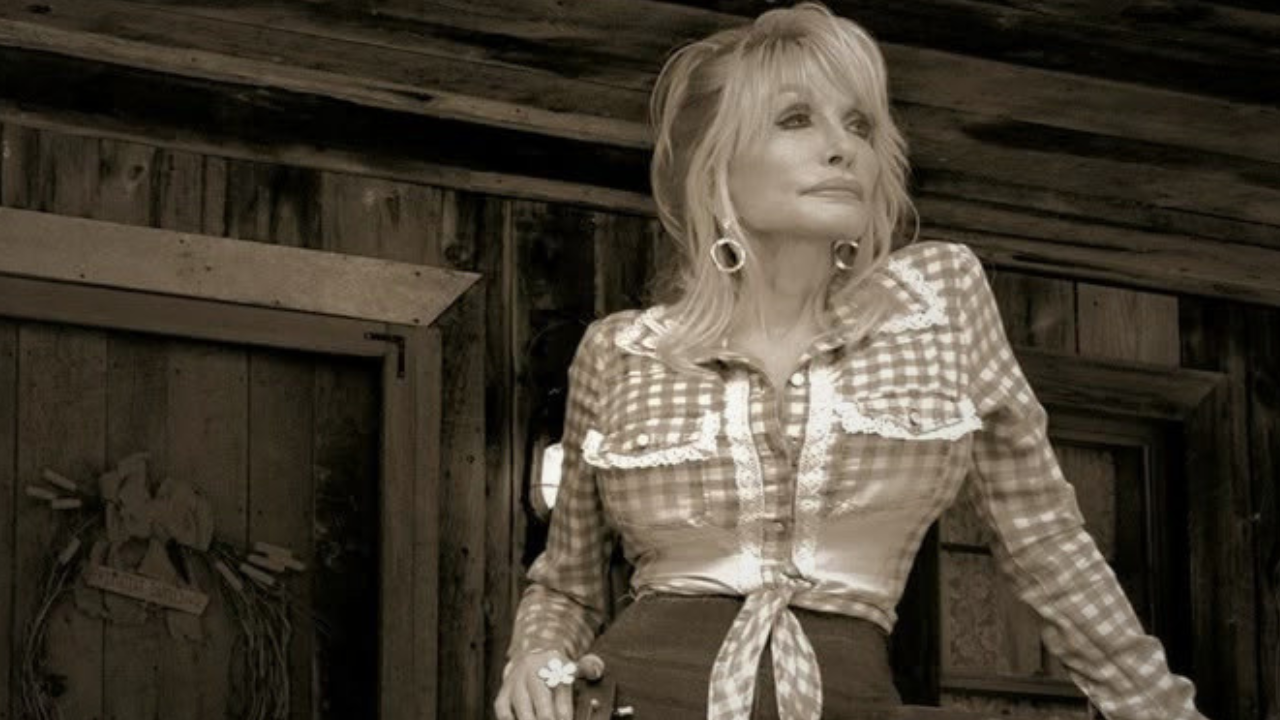
  • What Tennessee Lost When Dolly Parton Died

    What Tennessee Lost When Dolly Parton Died

    THIS WEEK IN AMERICA

    There are famous people whose deaths you hear about.

    Then there are the ones you feel.

    Dolly Parton died on August 25, and here in Tennessee, you could feel it almost immediately.

    It wasn’t simply another celebrity death appearing on television screens and social media feeds. People were crying. Flowers appeared outside her home. Schools found their own ways to remember her. Radio stations played her music. Conversations that normally had nothing to do with country music somehow ended up being about Dolly.

    I cried too.

    That surprised me a little.

    I knew she’d been unwell. Only days earlier I’d watched an interview with her. She still looked happy. She still sounded like Dolly. There was nothing about it that made me think I was watching one of the final interviews she would ever give.

    Then she was gone.

    Over the next few days, I watched Tennessee react to losing someone who had been part of this state for generations.

    And I began to understand that people here weren’t simply mourning a famous country singer.

    They were mourning something much closer to home.

    Our family at Dollywood in Pigeon Forge, Tennessee, with the Smoky Mountains in the background.
    A family trip to Dollywood in Pigeon Forge. Living in Tennessee changed the way I came to understand Dolly Parton and her connection to this part of the state.

    Dolly Was Different in Tennessee

    I grew up in Australia, so Dolly Parton existed in my life long before Tennessee did.

    She was already one of those people who seemed permanently famous.

    The hair.

    The rhinestones.

    The voice.

    The jokes.

    The songs everybody somehow knew, even if they claimed they didn’t listen to country music.

    But living in Tennessee changed the way I saw her.

    Celebrity looks different when you live close enough to see the fingerprints someone has left behind.

    I’ve been to Dollywood several times. What always struck me about the place wasn’t simply that Dolly Parton owned a theme park.

    Plenty of famous people can put their name on something.

    Dollywood feels connected to the place that made her.

    There are craftsmen, music, old Appalachian traditions, reminders of mountain life and pieces of a culture that could very easily have been polished away in the name of creating something newer and shinier.

    Dolly became one of the most recognisable women on Earth without ever appearing remotely embarrassed by the mountains she came from.

    Quite the opposite.

    She took them with her.

    I think that’s one of the things I came to admire most about her.

    Success didn’t seem to require pretending she had come from somewhere else.

    I’ve even been eyeing a Dolly Parton TIME cover poster for the wall of my studio. Eight years ago, I’m not sure that would ever have occurred to me. Now it feels strangely appropriate.


    The Dolly Parton You Heard About Around Town

    Living around Nashville also means occasionally meeting people whose worlds have crossed with people you’ve only ever seen on television.

    Over the years I’ve met several people who knew Dolly.

    One woman had worked as her videographer.

    When Dolly came up in conversation, she described someone remarkably similar to the public version the rest of us knew.

    Funny.

    Sassy.

    Energetic.

    Caring.

    That always stayed with me because celebrity reputations often become considerably less impressive the closer you get to them.

    Dolly’s seemed to work the other way.

    There’s even an antique store not far from where we live where the owner has a photograph of herself with her. Apparently she used to drop in and browse.

    That image of Dolly somehow feels more Tennessee to me than a red carpet ever could.

    Dolly Parton, international superstar, wandering around an antique store.

    Yep.

    That really fits.

    A few years ago, when I was working as a bank manager in Franklin, Tennessee, I saw another side of her that I’ve never forgotten.

    Occasionally, checks would appear.

    They had Dolly Parton’s signature on them.

    Sometimes they were for $10,000.

    Sometimes $20,000.

    They were going to ordinary families who were struggling.

    There wasn’t a television crew standing beside them.

    Or an oversized novelty check.

    There wasn’t a press conference explaining what a wonderful person Dolly Parton was.

    Someone needed help.

    She helped.

    Working in banking meant I obviously couldn’t go home and start telling everybody whose accounts I’d seen. But I remember looking at those checks and thinking about how extraordinary it would be to have reached a point in life where you could quietly alter the course of someone else’s life.

    More importantly, it made me think about what I was doing with mine.

    That’s a fairly impressive legacy for a piece of paper.

    Carnton historic home in Franklin, Tennessee.
    Carnton in Franklin, Tennessee. It was while working as a bank manager in Franklin that I caught a small glimpse of Dolly Parton’s quiet generosity.

    Tennessee Didn’t Mourn Her Like a Celebrity

    In the days after Dolly died, I began noticing something interesting about the way Tennessee responded.

    There were certainly the expected tributes.

    Pink.

    Boots.

    Sparkles.

    Music.

    But there was something underneath all of that.

    Schools across Middle Tennessee encouraged children to wear pink or western clothes, bring books and perform acts of kindness. At Gladeville Middle School, students were invited to take part in a “What Would Dolly Do?” kindness challenge.

    At my daughters’ school, the principal spoke to the children over the loudspeaker.

    She asked them to honour Dolly through kindness.

    Not by listening to one of her records.

    Not by finding the biggest blonde wig in Tennessee.

    Kindness.

    Of everything they could have chosen to represent her, that’s what they chose.

    Meanwhile, mourners gathered outside Dolly’s Brentwood home in such numbers that flowers, signs and balloons accumulated around the property and police eventually had to manage traffic in the area.

    This wasn’t simply Tennessee saying goodbye to someone famous.

    It felt much more like people saying goodbye to someone they believed belonged to them.

    Or perhaps someone they believed they belonged to.

    There’s a difference.

    Tennessee tribute to Dolly Parton following her death in August 2026.
    Dolly Parton’s house in Brentwood Tennessee

    Then I Started Thinking About Mum

    My mum loved Dolly.

    She had her albums.

    One of my earliest memories of Dolly Parton’s music is Coat of Many Colors.

    I remember hearing it as a boy in Australia.

    More specifically, I remember Mum singing it.

    There were times when we didn’t have much money either.

    Mum worked hard. She loved horses, the country and life on the land. Given the opportunity, I think she would happily have disappeared onto a property somewhere with several horses and reappeared only when somebody reminded her she had children.

    There were parts of Dolly’s story that I think Mum understood instinctively.

    So when Dolly died, all those old memories suddenly came rushing back.

    My mum died four years ago.

    Grief does something strange after enough time has passed.

    It stops occupying the whole room.

    You learn to live around it.

    Days go by.

    Then weeks.

    You work. Take the kids to school. You complain about the electricity bill. You wonder why nobody in the house except you appears capable of replacing an empty toilet roll.

    Life resumes its normal nonsense.

    Then something completely unexpected opens a door you didn’t know was still there.

    A song.

    A smell.

    A photograph.

    Or apparently, the death of Dolly Parton.

    Suddenly I wasn’t only thinking about the woman Tennessee had lost.

    I was thinking about the woman I’d lost too.

    My mum helping her granddaughter Georgia sit on her horse in Australia.
    Mum helping Georgia onto a horse. She loved horses, the country and life on the land. I think there were parts of Dolly’s story she understood.

    A Song Somehow Travelled 9,000 Miles With Me

    The strange part is where life eventually took me.

    Imagine explaining this to the little Australian boy listening to his mum singing Coat of Many Colors.

    One day you’ll move to America.

    Not just America.

    Tennessee.

    You’ll visit the Smoky Mountains that Dolly sang about.

    Go to Dollywood.

    You’ll meet people who knew her.

    Even see small evidence of things she did for people when nobody was watching.

    Then decades after first hearing those songs on the other side of the world, you’ll be living just outside Nashville when Tennessee wakes to the news that Dolly Parton is gone.

    Life is ridiculous sometimes.

    We talk about migration in terms of places.

    I moved from Australia to America.

    That’s geographically true.

    But I’m increasingly convinced that when you move countries, you don’t leave one life behind and start another.

    You carry bits of the old one with you.

    Songs.

    Expressions.

    Memories.

    People.

    Most of the time they sit quietly in the background.

    Then something happens in your new home that suddenly reaches all the way back into your old one.

    For me, Dolly Parton became one of those bridges.

    A woman from the mountains of East Tennessee was part of my childhood in Australia because my mum loved her music.

    Decades later, East Tennessee became part of my own life.

    I don’t know that I could have written a more unlikely circle if I’d tried.


    I talked about that strange connection between Dolly, Tennessee and Mum on This Week in America. You can hear the original story below.


    Maybe That’s Why Dolly Meant So Much

    I’ve joked for years that if aliens ever arrive and demand to meet someone who represents humanity, we shouldn’t send a politician.

    Send Dolly Parton.

    Give her twenty minutes.

    We’ll probably be fine.

    It’s a joke, obviously.

    Mostly.

    But there’s a reason it works.

    Dolly managed something that’s becoming increasingly difficult.

    People who disagreed about almost everything seemed capable of liking her.

    She had her own beliefs, but she never seemed interested in turning every interaction into a test of whether you shared them.

    Dolly was deeply rooted in her faith and her culture without expecting everybody else to be exactly like her. She could make fun of herself without diminishing herself, and become extraordinarily successful without pretending she’d achieved it alone.

    Perhaps most remarkably, after making enormous amounts of money, she still seemed to notice people who didn’t have much.

    That’s much rarer than a good singing voice.

    Her Imagination Library has also put hundreds of millions of free books into the hands of children, an extraordinary extension of something Tennessee families had known about her for decades: she cared deeply about where she came from and believed success carried some responsibility to give something back.

    Dollywood has already announced that it intends to preserve that philosophy as it develops tributes to her legacy, including places for reflection and new experiences built around dreaming, storytelling and kindness.

    That seems right.

    Because I don’t think Dolly Parton’s most important legacy is Jolene.

    Or 9 to 5.

    Or even I Will Always Love You.

    It’s certainly not the wigs.

    Although, fair play, that’s a fairly substantial body of work on its own.

    I think her real legacy is much simpler.

    She came from very little.

    Achieved almost everything.

    She never seemed to become embarrassed by the people or the place she came from.

    And somewhere along the way, she made a lot of people want to be a little kinder.

    That’s not bad for one life.


    Goodbye, Dolly

    Tennessee feels a little different without her.

    I imagine it will for quite some time.

    For me, though, her death will always be connected to something more personal.

    I’ll think about Mum singing Dolly’s songs in Australia.

    About growing up without much money.

    I’ll think about horses and country life and those records playing when I was a boy.

    About the absurd route that eventually brought me from there to here.

    And perhaps that’s one of the gifts music gives us.

    It attaches itself to people.

    We think we’re remembering a song when we’re actually remembering a kitchen, a car, a childhood, a parent or a version of ourselves that disappeared years ago.

    Dolly Parton belonged to Tennessee.

    But somehow, a little piece of her belonged to my mum too.

    I hope wherever they both are, Mum finally gets to see the concert.

    Knowing Mum, she’ll probably want decent seats.

    Gatlinburg, Tennessee, at sunset in the Great Smoky Mountains.
    Gatlinburg, Tennessee, at sunset. Somehow the mountains Dolly sang about became part of my life too.

    If you enjoy these stories about life in America through Australian eyes, you can help support From Down Under to Down South with a coffee. Every coffee helps me keep writing, recording and sharing the stories I find along the way. Thank you for being here.


  • This Week in America — A Kentucky Weekend: Dance, Derby & the Moments You Don’t Plan

    This Week in America — A Kentucky Weekend: Dance, Derby & the Moments You Don’t Plan

    We travelled to Louisville this week for a dance competition.

    That was the plan, at least.

    But I’ve noticed something about these weekends.

    They rarely stay as simple as the reason you go.


    The Drive In — When a City Takes Over

    We arrived just before the lead-up to the Kentucky Derby.

    And the city already felt like it was gearing up.

    Traffic backed up everywhere.
    Police on the roads.
    That quiet sense that something big was about to happen.

    We were still twenty minutes out and:

    • the GPS kept changing
    • the girls were asking how much longer every six minutes
    • Nikki had moved into that calm voice that means she’s not calm
    • and I was confidently choosing alternate routes despite having no idea where I was going

    Which, as a husband and father, is one of the more pointless confidence moves available.


    When a Place Has Its Own Identity

    We were there for dance.

    Louisville was there for Louisville.

    And I liked that.

    America does this well.

    When something matters locally, it doesn’t stay contained.
    It spills into the streets.

    You feel it—even if you’re not part of it.


    The Fort Knox Moment

    Driving through, we saw signs for Fort Knox.

    For most people here, that’s just another exit.

    For me growing up in Australia, it was one of those names that felt almost mythical—
    like Hollywood or Wall Street.

    Seeing it casually written on a highway sign made me laugh.

    Only in America does a dance weekend casually involve Fort Knox.


    A City with Weight

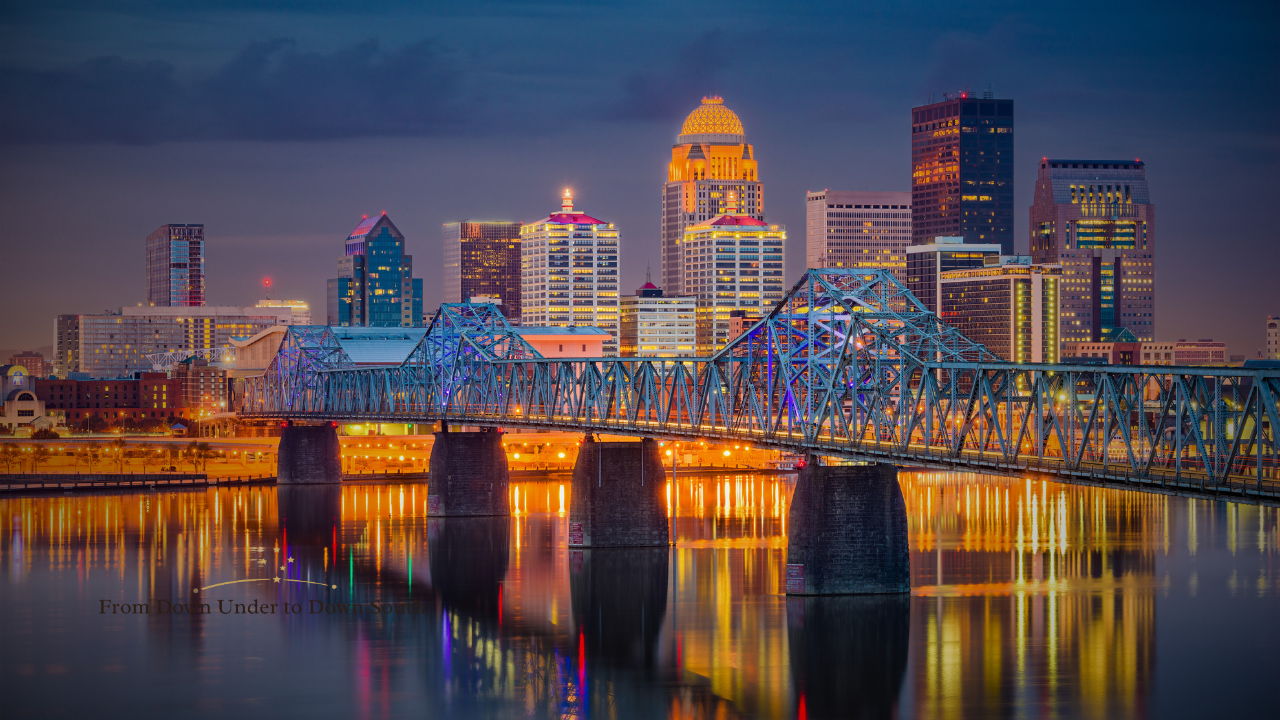
    Then there were the bridges over the Ohio River.

    I’ve always liked bridges.

    They make a place feel like it matters.

    Louisville has that solid feel to it—
    river, steel, history.

    It feels like a place shaped by doing things, not just talking about them.


    Owning Greatness

    The Muhammad Ali murals stood out straight away.

    Louisville doesn’t hide who came from there.

    It claims him.

    And I respect that.

    Australia can be a bit different—we admire people, but we also like bringing them back down to earth.

    America seems more comfortable simply saying:

    “This person was great.”

    There’s something refreshing in that.


    A Side Trip with Brianna

    While Georgia was tied up with competition, Brianna and I explored downtown.

    Those little side moments with your kids matter more as you get older.

    Less about where you are.
    More about being there together.


    Turning Culture Into Experience

    We stopped at the Louisville Slugger Museum & Factory.

    And it’s a very American idea.

    Take something simple—like a baseball bat—
    and turn it into something you can walk through.

    Even without growing up with baseball, I enjoyed it.


    College Sport — Still Hard to Process

    The scale of college sport still surprises me.

    Massive stadiums.
    Serious infrastructure.

    Back home, it exists.

    Here, in some places, it feels like something much bigger.


    Bourbon and Unexpected Conversations

    That night, I ended up at the hotel bar with another dance dad.

    And got an unexpected introduction to Kentucky bourbon.

    Not casually.

    Properly.

    I nodded through most of it, adding expert commentary like:

    “Yeah… that’s smooth.”

    Completely useless.

    Still appreciated.


    What I Noticed About People

    People here are generous with what they love.

    No gatekeeping.

    Just:

    “Here, try this.”
    “Let me tell you why this one matters.”

    That stays with you.


    The Moment That Actually Mattered

    But the real highlight was Georgia.

    She danced her best solo of the year.

    And placed seventh out of twenty.


    Parents see what sits behind a performance.

    The practice.
    The frustration.
    The doubt.

    And then one day, it clicks.

    Fifteen seconds in, I knew.

    She looked calm.
    Settled.
    Like herself.

    That’s the moment.


    Dance Competitions in America


    Not Trying to Be Someone Else

    Georgia dances lyrical.

    Slower. More controlled. More expressive.

    Often up against louder, faster routines.

    So placing felt even better.

    She wasn’t trying to be someone else.


    Cracker Barrel and a Strange Thought

    On the way home, we stopped at Cracker Barrel.

    Sitting on the porch, something crossed my mind.

    This feels like home.


    Which is a strange thought for someone born in Australia.

    But maybe home changes.

    Maybe it grows.


    Of Course We Stopped at Buc-ee’s

    And naturally, we stopped at Buc-ee’s.

    Because no road trip here feels complete without it.


    You can fuel the car, buy snacks, grab merchandise…

    …and somehow leave with more than you planned.

    Every time.


    Closing Reflection

    We went for dance.

    But we came home with more.

    That’s something I keep noticing about life here.

    You head somewhere for one reason…

    …and the place adds its own chapters.

    A conversation.
    A moment.
    A feeling you didn’t expect.

    That’s usually how the best weekends happen.

    Not through grand plans.

    Just ordinary things unfolding well.


    For more reflections like this, tune in to the weekly podcast.


    🔗 Internal Links (END BLOCK)

    You might also enjoy:


  • What It’s Like Living in America (Tornado Warnings, NASA & Daily Life)

    What It’s Like Living in America (Tornado Warnings, NASA & Daily Life)

    Living in America as an Australian comes with moments you don’t expect — from tornado warnings to standing under a NASA rocket.

    This week had two of them.

    One where we were standing underneath a rocket that took people to the Moon…
    …and another where we were sitting downstairs close to midnight, waiting out a tornado warning.

    And somehow… both of them felt normal.

    That’s probably the part I wouldn’t have expected when I first moved here.


    The Quiet Shift You Don’t Notice

    When you first arrive somewhere new, everything stands out.

    The way people speak.
    How things are done.
    The way everyday interactions happen.

    You notice all of it.

    You’re constantly comparing it to what you’re used to.

    And in those early months, you feel very aware that you’re somewhere different.

    But over time… that awareness softens.

    Not all at once. Just gradually.

    You stop questioning as much.
    Things that once felt unusual start to feel expected.
    And you don’t really notice the shift happening.

    It just sort of… creeps in.

    Until you get a week like this—where a few moments line up—and you suddenly see it again from the outside.

    Waiting Out a Tornado (Like It’s Just Part of the Week)

    We had our first tornado warning of the season the other night.

    Late. Around midnight.

    There’s something about that time of night that changes everything.

    The house is quiet.
    The day’s done.
    Kids are asleep.

    And then suddenly… you’re waking them up.

    Not in a panic—but not casually either.

    There’s a tone to it.

    “Alright… let’s head downstairs.”

    We’ve done it before. The girls know what’s going on. They know where to go.

    And that’s the part that would’ve surprised me the most years ago—how quickly something like that becomes familiar.

    We went down into the safe room.
    Turned on the live coverage.

    And that’s another thing about storms here…

    You don’t just hear about them—you watch them.

    In real time.

    You see the storm moving across the map.
    You hear street names.
    Nearby towns.
    You listen for anything close to you.

    And you just… wait.

    Not panicking.
    But not relaxed either.

    Just aware.

    Even our cat, Bluey, came down with us—walking between the girls like he was checking on everyone.

    That moment… sitting together… waiting…

    It slows everything down.

    And then it’s over.

    Back upstairs.
    Back into bed.
    House quiet again.

    Just another part of life here.


    Tennessee Weather Has No Interest in Easing You In

    What made it even stranger…

    Two days earlier, I was in shorts.

    Sunday — warm.
    Sunday night — tornado warning.
    Monday — snow and ice.

    And no one really reacts like it’s dramatic.

    It’s just… the weather.

    Tennessee doesn’t ease you into anything.
    It just changes its mind.

    And people here just adjust.


    The Word “Reckon” (And the Things That Quietly Overlap)

    Someone mentioned in the comments recently that the word “reckon” gets used a lot here in the South.

    That made me pause.

    Because back home in Australia, it’s just… normal.

    “I reckon…”

    You don’t think about it.

    And then hearing it here—in a completely different part of the world—used in a similar way…

    It’s one of those small moments where things unexpectedly line up.

    Where you realise…

    Not everything is as different as it first seemed.


    Standing Under a Rocket That Went to the Moon

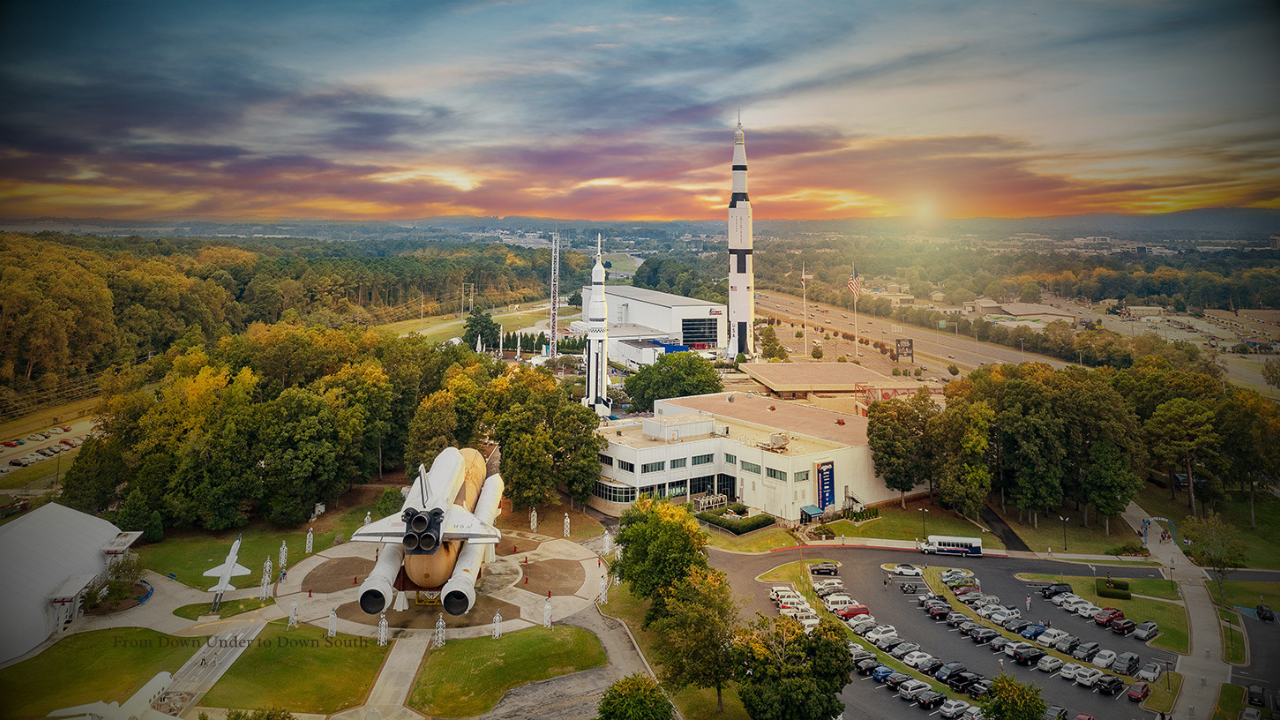
    A few days earlier, we’d taken a trip down to Huntsville, Alabama.

    To visit the U.S. Space & Rocket Center.

    You walk in… and there it is.

    A Saturn V rocket.

    And it’s hard to explain the scale of it until you’re standing underneath.

    It just keeps going.

    Section after section.
    Stage after stage.

    And you realise…

    This is what took people to the Moon.

    And around you?

    Families walking past.
    Kids running around.
    People stopping for photos.

    It’s not treated like something distant or untouchable.

    It’s just… there.

    Part of where you are.

    That’s something I’ve noticed living here—you don’t just learn about history…

    You live around it.

    Of Course There Was a Buc-ee’s Stop

    On the way home, we stopped at Buc-ee’s.

    Because you don’t not stop at Buc-ee’s.

    Teriyaki jerky again.

    Every time.

    If you want to try this, you can buy it from Amazon, you’ll also need some of their famous Beaver Nuggets to go with it.


    When Costco Flips on You

    We were in Costco the other day.

    And I realised something had flipped.

    Back in Canberra, we’d get excited about American products.

    Different brands.
    Different packaging.
    Things we didn’t normally see.

    Now?

    We’re in Tennessee…

    And it’s the Australian lamb that stands out.

    That’s what catches my eye.

    That’s what feels different.


    Watching Australia From the Other Side of the World

    Australia played Japan in the Women’s Asian Cup Final recently.

    6am start here in Nashville.

    And just trying to watch it…

    Subscriptions. Platforms. Apps.

    Back home, it would’ve just been on.

    No thought required.

    But I was up for it.

    Because those moments…

    They don’t change.

    The anthem.
    The teams walking out.

    It still hits the same.

    Maybe even more.


    What Changes… and What Doesn’t

    Living here changes a lot of things.

    What feels normal.
    What stands out.
    Things that feel familiar.

    But something I’ve noticed over time…

    The people I tend to connect with most here…

    Often aren’t from here either.

    Different countries. Different backgrounds.

    But there’s a shared understanding.

    They’ve had to learn a place… not just grow up inside it.

    And maybe that’s part of it.

    Because even as things shift…

    There are moments where you realise:

    That part of you hasn’t gone anywhere.

    It just shows up a bit differently now.


    Why American Goodbyes Feel Faster Than Australian Goodbyes

    Why Americans Say “You’re Welcome” So Often


    Final Thought

    What becomes normal… isn’t always what you expect.

    Sometimes it’s tornado warnings at midnight.

    Sometimes it’s standing under a rocket that went to the Moon.

    And sometimes…

    It’s just realising you didn’t notice the change happening at all.

    That was this week in America.


  • This Week in America: Ice, Cookies & Participation

    This Week in America: Ice, Cookies & Participation

    Some weeks pass quietly.
    Others seem to arrive with a bit more drama.

    This week in America was one of the dramatic ones.

    Not YouTube dramatic.

    Actually dramatic.

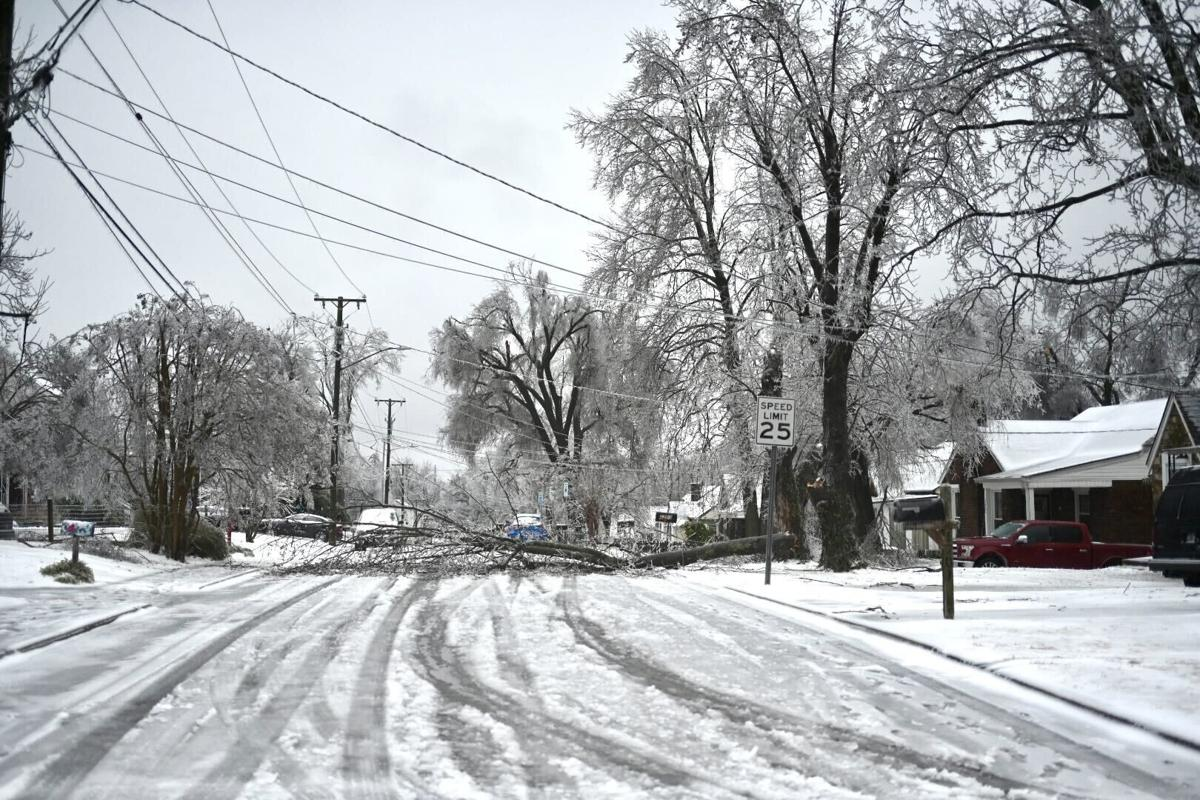
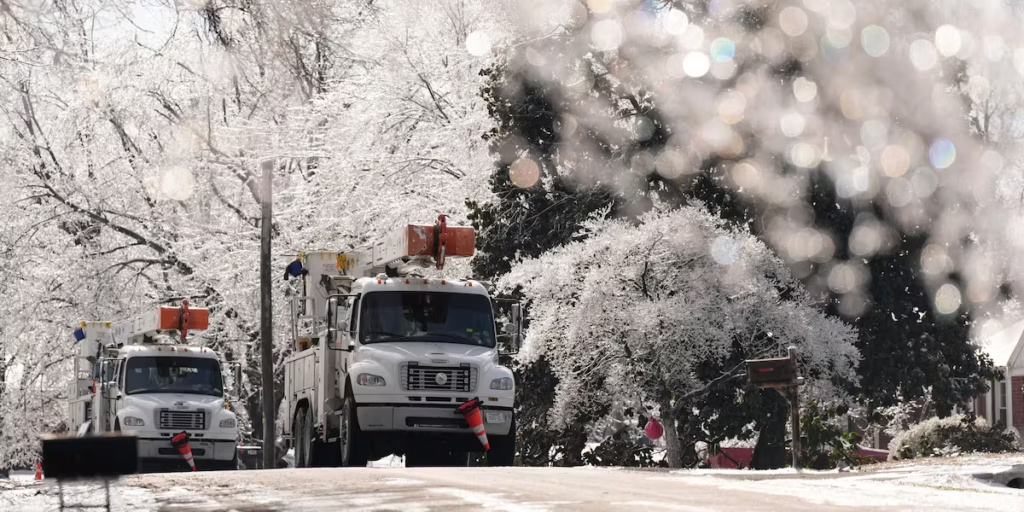
    An ice storm rolled through Tennessee. Schools closed. Power went out for thousands of people — some for more than a week. It even made the news back home in Australia.

    But living through something like that and watching it on television are two completely different experiences.

    Because when I think about the week now, it’s not really the headlines that stay with me.

    It’s my youngest daughter selling Girl Scout cookies outside Kroger.

    Sitting in front of the fire when the power went out.

    It’s filling out job applications late at night.

    That’s what the week actually felt like.

    ✈️ Planning travel between Australia & the US?
    :I usually compare flights and accommodation here with Expedia:


    Girl Scout Cookies Outside Kroger

    On Saturday, my youngest — Brianna — stood outside Kroger in full Girl Scout uniform trying to sell cookies to strangers.

    Thin Mints.
    Samoas.
    Tagalongs.

    There’s a folding table.
    A small square card reader.
    A roster system run by mums who sound a bit like army sergeants.

    Everyone has allocated supermarket time slots. Everything is scheduled and organised.

    And the interesting thing is — people just know what to do.

    No one looks confused.
    No one wonders why a kid is selling biscuits outside the supermarket.

    They’ve grown up with it.

    Some people buy two boxes without slowing down.
    Some stop and chat for a minute.
    You’ll hear “Good luck sweetheart,” as they tap their card, and keep walking.

    It’s a very American kind of scene.

    There’s an idea here that confidence is something you practise publicly.

    You walk up to strangers.
    Speak clearly.
    You handle rejection.
    Keep smiling.

    In Australia we did fundraisers too, of course.

    But we weren’t running what felt like a small retail operation outside Woolworths in full uniform.

    There’s something impressive about it.

    It’s community — but structured.

    Standing there with my accent, feeling slightly out of place but also very proud, I realised something.

    For Bri, this isn’t cultural.

    It’s just normal.

    She was born here. This is her country.

    She won’t remember it as “a very American experience.”

    She’ll just remember standing there and being brave.


    When the Ice Storm Hit

    Then the ice arrived.

    If you’ve never lived through an ice storm, it’s difficult to explain properly.

    Rain falls.

    But the moment it touches anything — trees, roads, power lines — it freezes instantly.

    Branches turn into glass sculptures.

    Honestly, it’s beautiful at first.

    The whole neighbourhood looks like it’s been coated in crystal.

    And then the trees start snapping.

    That’s the sound that stays with you.

    Sharp cracks in the night — like something under pressure finally giving way.

    You lie there half awake waiting for the next one, hoping none of the trees in the backyard end up on the roof.

    Then the snow arrived.

    Fresh snow always looks beautiful.

    White rooftops.
    Silent streets.
    Everything softened.

    The deer came back through the neighbourhood too, trotting down the middle of the road like they’d taken the place over again.

    Which, to be fair, they probably had.

    No cars.
    No engines.
    Just deer walking down suburban streets.

    Suburban Skiing

    At one point people were actually skiing down our road.

    Skiing. In the suburbs.

    Meanwhile I’m outside reminding the kids not to eat the yellow snow — which I’m fairly certain is universal parenting advice.

    But underneath the strange beauty of it all, the storm was serious.

    Schools closed for seven days.

    Seven.

    Some people lost power for ten days or more.

    Many homes had no heat.

    And sadly, there were deaths too. Not dramatic headline events — just quiet cold-related deaths. Elderly people found alone in freezing homes.

    That part still feels strange to me.

    Because winter in Australia just doesn’t carry that kind of risk.

    You rug up.
    Have a bit of a whinge.
    Put the jug on.
    Make a cuppa.

    Here — especially in the South where we’re not really built for extreme winter — things get exposed quickly.

    Branches snap.
    Power lines sag.
    Roads turn into ice rinks.

    And within about a day, the bread, milk and eggs disappear from the supermarket.

    I’m still not sure what everyone’s baking during these storms, but it must be something extraordinary. Maybe they are trying to replicate my ANZAC biscuits recipe!

    Every time.

    We lost power for two days.

    Two days without power is annoying, but we were lucky.

    We’ve got an open fireplace.

    So we layered up and managed fine.

    At one point I was outside cooking steaks on the barbecue in minus twelve while snow was falling around me.

    I reckon they tasted better for it.

    Maybe that’s just survival bias.

    The girls thought the whole thing was a bit of an adventure.

    But I kept thinking about the families who didn’t have the same setup.

    America often feels incredibly capable.

    Until weather hits.

    And then you see how quickly everything pauses.

    It’s not criticism.

    It’s just… bigger.

    Everything here feels bigger.


    The Quiet Part of the Week

    And then there’s the quieter side of the week.

    The part that doesn’t make headlines at all.

    Filling out job applications.

    Uploading resumes.

    Typing the same information into online portals that don’t talk to each other.

    America talks a lot about opportunity.

    And that’s fair — there is opportunity here.

    But it’s also very structured.

    Masters degrees required for minimum wage roles.
    Specific certifications required.
    Years of experience required.

    If the box isn’t ticked, the system simply keeps moving.

    Even things like being asked to identify your race on job applications stand out when you’re not used to it.

    It’s not cruel.

    It’s just the system.

    And as an immigrant, you notice those systems very quickly.

    Because work here ties into everything.

    Healthcare.
    Stability.
    Long-term plans.

    So you adapt.

    You build slowly.

    You look for another way in.

    It’s not dramatic.

    It’s just part of living here. I explore that more in this video titled When You Live Between Two Countries


    Participation

    Looking back at the week — the cookies, the ice storm, the job applications — they all seem to point to the same idea.

    America asks something of you.

    It asks kids to step forward.

    Families to prepare.

    Adults to compete.

    There is opportunity here.

    But you participate in it.

    Living here hasn’t made me less Australian.

    If anything, it’s made me more aware of the pace I grew up with.

    Things felt smaller.

    Less sharp around the edges.

    Here everything feels turned up a little.

    Not worse.

    Just louder.

    And watching Bri confidently asking strangers outside Kroger if they’d like to buy cookies, I realised something.

    She won’t see any of this as cultural analysis.

    She’ll just see it as life.


    Living Overseas

    Maybe that’s the real thing about living overseas.

    You adjust.

    Grow into it.

    You learn to stand steady when the ice comes.

    That was this week in America.


    ☕ Buy me a coffee:
    https://buymeacoffee.com/fromdownundertodownsouth

    📺 YouTube:
    https://www.youtube.com/@FromDownUndertoDownSouth

    📘 Facebook:
    https://www.facebook.com/profile.php?id=100068568677919

    🐦 X:
    https://x.com/aussiemika74

    📩 Business enquiries:
    michael@fromdownundertodownsouth.com

    Thanks for reading.
    Hoo roo maties.