Category: Essays

  • Why Living Overseas Changes How You Hear Accents

    Why Living Overseas Changes How You Hear Accents

    I didn’t sit down to make a video about accents because I thought it was clever content.

    I made it because something small kept happening — and I couldn’t un-notice it.

    After living in the United States for a while, I started having this tiny mental double-take when people spoke.

    Not all the time.

    Just enough to be noticeable.

    Someone would start talking and, for a split second, my brain would hesitate:

    British?
    Australian?
    American?
    Something else entirely?

    That pause never used to exist.

    Back home, accents were immediate. Obvious. You heard them before you processed the words.

    Somewhere along the way — quietly, without ceremony — that certainty faded.

    And once I noticed it, I couldn’t stop noticing it.

    That’s where this video came from.


    Why Accents Sound Different When You Live Overseas

    When you grow up in one country, your ear becomes calibrated.

    You don’t consciously analyse vowel shapes or cadence. You just know.

    Australian.
    Kiwi.
    British.
    American.

    Instant recognition.

    But living overseas does strange things to your internal reference points.

    You don’t lose them.

    They just stop being automatic.

    Your brain starts absorbing new rhythms. New inflections. Different pacing. Subtle shifts in tone. And over time, the sharp edges between categories soften.

    It’s not that accents disappear.

    It’s that your certainty does.

    There’s something mildly unsettling about that.

    Not dramatic.

    More a quiet, “Oh… that’s new.”

    ✈️ Planning travel between Australia & the US?
    :I usually compare flights and accommodation here with Expedia:


    The In-Between Space of Living Abroad

    Living overseas puts you in an in-between state.

    You’re not fully of one place anymore.

    But you’re not fully of the new place either.

    You begin to rely less on automatic cultural shortcuts — because the landscape has changed.

    Slang doesn’t land the same way.
    Humour hits at a slightly different tempo.
    Vowels stretch differently.

    Your brain has to work just a fraction harder to place things.

    That gentle disorientation shows up in surprising places.

    Accents are one of them.

    Goodbyes are another.

    I wrote about that shift here:

    👉 I’m Still Caught Off Guard by the American Goodbye

    In both cases, it’s not about right or wrong.

    It’s about timing.


    Why Australia and New Zealand Get Confused Overseas

    Part of what made me think about this more deeply was noticing how often Australia and New Zealand are confused internationally.

    That confusion isn’t random.

    When you’re outside a region long enough, subtle distinctions blur.

    I explored that dynamic in another episode here:

    👉 Why Everyone Confuses Australia and New Zealand

    From a distance, similarities become louder than differences.

    And when you’re immersed in a different dominant accent — in my case, American — the categories in your head start reorganising themselves.


    Why I Chose Observational Humour Instead of Explanation

    I could have turned this into a linguistics deep dive.

    There’s plenty written about accent adaptation, phonetic convergence, and how exposure reshapes perception. Even academic research from places like the University of Pennsylvania’s Linguistics Lab has shown how listeners recalibrate their perception of sound based on environment and frequency of exposure.
    https://www.ling.upenn.edu

    But that wasn’t what this reflection was about.

    This wasn’t a technical analysis of vowel shifts.

    It was about the feeling of your brain hesitating for half a second.

    Humour felt more honest than explanation.

    Not punchline humour.

    Observational humour.

    The kind that simply says:

    “Well… that’s interesting.”

    Laughing at the pause is easier than trying to fix it.

    It turns confusion into curiosity.

    Sometimes humour isn’t about making light of something.

    It’s about making room for it.


    Recording a Video With No Big Point

    I hesitated before recording this one.

    It’s shorter than my usual videos.
    There’s almost no B-roll.
    It’s mostly just me talking.

    No dramatic thesis.
    No list.
    There’s no neat conclusion.

    Just an observation and the feeling that came with it.

    But that’s also why I hit record.

    Because these are the moments that actually shape life overseas.

    Not the big culture shocks everyone expects:

    Healthcare.
    Politics.
    Driving on the “wrong” side of the road.

    It’s the subtle rewiring.

    The way your internal map changes quietly, without asking permission.


    When Accents Start to Blur, It Means Something

    Accents blurring together isn’t a problem to be fixed.

    It’s a signal.

    It means you’ve been somewhere long enough for your ear to adjust.

    Long enough for your categories to soften.

    Long enough for your brain to build a second reference system.

    That’s not loss.

    It’s adaptation.

    And maybe the most honest response to that isn’t analysis.

    It’s just a small smile and a raised eyebrow.

    If you’re curious, the video that came out of this reflection is here:

    👉 Why Americans Think All Accents Sound the Same

    Hoo roo, maties.

  • Red Rooster–Style Chicken Seasoning (A Taste of Home)

    Red Rooster–Style Chicken Seasoning (A Taste of Home)

    There’s a particular kind of homesickness that sneaks up on you when you’re living overseas. It’s not the big stuff — not the beaches or the accent or even the weather. It’s the small, weirdly specific things.

    Like Red Rooster

    When I was back in Australia over the summer, I didn’t realise just how much I’d missed it. The roast chicken. The chips. The sides. That unmistakable flavour that somehow feels both comforting and slightly indulgent at the same time. I only had it once on the trip — and yet here I am, months later, still thinking about it.

    So… I did what any homesick Aussie with a spice drawer and too much curiosity would do. I started digging.

    After trawling forums, old food blogs, and more than a few “this is definitely the recipe, trust me” posts, I landed on a seasoning blend that gets surprisingly close. Is it identical? No. Does it hit the emotional bullseye and make my kitchen smell like home? Absolutely.


    A Quick Bite of Red Rooster History 🍍🔥

    Before we get to the seasoning, a bit of context — because Red Rooster isn’t just fast food. It’s Australian fast food.

    In 1972, brothers Peter and Theo Kailis opened the first Red Rooster in Kelmscott, a suburb of Perth. Coming from a background in fishing, pearling, and seafood, opening a chicken shop was a sharp turn — but a brilliant one.

    They were inspired by a chicken shop on Wanneroo Road and deliberately set out to compete with American-style fast food chains by adopting standardised menus, branding, and marketing — even before many US giants had properly reached Western Australia.

    At the time, McDonald’s and KFC were only just establishing themselves on the east coast. Rotisserie chicken, meanwhile, became Red Rooster’s foundation — something that’s often been described as “definitely an Australian thing” when it comes to fast food.

    Then came the glorious oddities, like the Hawaiian Pack in the 1970s: rotisserie chicken, a deep-fried banana, and a pineapple ring. Iconic. Slightly unhinged. Perfect.

    In 2009, Red Rooster leaned fully into its cultural uniqueness with the campaign “They don’t get it in America”, featuring comedian Tom Gleeson wandering the US trying (and failing) to explain it. Honestly? Still true.


    My Red Rooster–Style Chicken Seasoning Recipe 🌶️✨

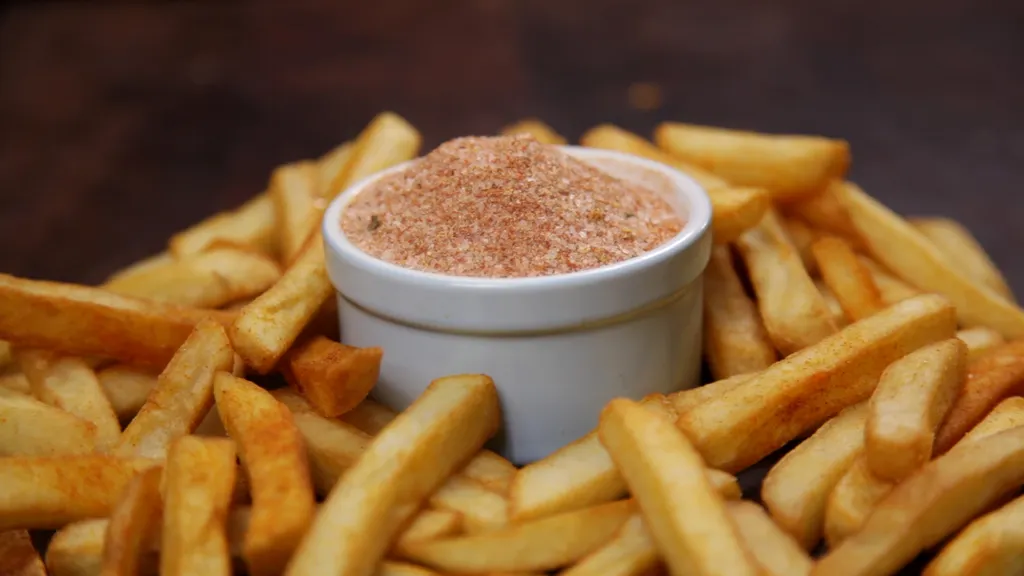
    This blend works beautifully on roast chicken, air-fried chicken pieces, or even sprinkled over chips before baking.

    Download the Recipe Card

    Ingredients

    • 1 ½ tsp paprika (sweet or smoked)

    • 1 tsp onion powder

    • 1 tsp garlic powder

    • 1 tsp Dried Thyme

    • ½ tsp black pepper

    • ½ tsp salt (adjust to taste)

    • ½ tsp Cayenne Pepper (optional for heat)

     
    • Method

    1. Mix all ingredients thoroughly in a small bowl.

    2. Store in an airtight container — it keeps well for weeks.

    3. To use:

      • Rub generously over a whole chicken with olive oil or melted butter, or

      • Sprinkle over chicken pieces or chips before roasting or air frying.

    For peak nostalgia, roast the chicken until the skin is properly golden and let it rest before carving. The smell alone does most of the emotional heavy lifting.

    I had a slight issue finding the dried thyme but Amazon carries it and I got it the next day. Here’s the link to it if you need it — Dried Thyme


    Why This One Hits Home ❤️

    This seasoning doesn’t just taste good — it feels right. It’s savoury without being aggressive, warm without being spicy, and comforting in that very specific way that reminds you of sitting in a Red Rooster booth with greasy fingers and zero regrets.

    Food has a funny way of collapsing distance. One minute you’re in an American kitchen, the next you’re back in Australia, holding a paper bag that’s gone translucent from hot chips.

    If you’re an Aussie abroad — or just someone who “gets it” — give this a go. It won’t replace the real thing… but on the right night, it comes pretty bloody close. You’ll need some chicken salt too, it’s hard to find in the US but you can get it from Amazon.

    Hoo roo, and happy roasting 🐔

    Make sure you check out my Little Rolls of Home — My Family’s Favourite Sausage Roll Recipe too!

  • Why People Keep Confusing Australia and New Zealand

    Why People Keep Confusing Australia and New Zealand

    I didn’t set out to make a video comparing Australia and New Zealand.

    It just… kept happening.

    Since moving to the United States, there’s a moment that repeats itself with almost comic reliability.

    Someone hears my accent.
    They smile politely.
    And they say:

    “Oh! You’re a Kiwi!”

    And look — it’s never meant badly.

    Quite the opposite.

    New Zealand has a strong reputation here. Friendly people. Stunning landscapes. Good rugby. I’ll happily take the compliment.

    So I usually say, “Australia.”

    There’s often a beat.

    Then:

    “Oh! Right… like New Zealand?”

    And that’s where the confusion lives.

    Not in malice.
    Not in ignorance.
    Just in proximity.


    Why Do People Confuse Australia and New Zealand?

    From the outside, it makes sense.

    Australia and New Zealand are geographically close.
    Historically linked.
    Culturally intertwined.

    We share sporting rivalries.
    Military history through the ANZAC legacy.
    Overlapping accents — well at least to international ears.

    But we are not interchangeable.

    And if you’ve spent meaningful time in either place, that becomes obvious very quickly.

    From thousands of miles away, though, nuance flattens.

    It’s human nature.

    The further you are from something, the more similarities you see — and the fewer distinctions.

    That’s what fascinated me.

    Need an Aussie flag? Grab one here!


    Living Across the Pacific Changes Your Perspective

    I’ve spent significant time in New Zealand. I could happily call it home.

    Kiwis are grounded. Direct. Quietly funny in a way I really appreciate.

    I’ve also lived in Samoa and travelled extensively around the Pacific. And once you’ve spent time in Polynesian cultures, you realise how often outsiders compress entire regions into a single vague “island” category.

    That flattening isn’t hostile.

    It’s distance at work.

    The more time you spend inside a region, the more layered it becomes:

    Different relationships to land.
    Colonial histories.
    Cultural rhythms.
    Different humour.

    But from afar, it blurs.

    That’s not a criticism.

    It’s just how perception works.

    I noticed something similar when I wrote about how accents start to shift over time:

    👉 Living Overseas and Losing Your Automatic Ear

    Distance softens edges.

    Exposure sharpens them.


    The Moment It Became a Video

    The idea didn’t arrive fully formed.

    It crept in through repetition:

    – Being mistaken for a Kiwi (again)
    – Seeing Australia and New Zealand described interchangeably in American media
    – Watching people struggle to hear the difference between accents
    – Realising comparison often replaces curiosity

    At some point, I realised I wasn’t annoyed.

    I was interested.

    Why does this happen so often?

    Why do we keep getting treated as a matched set?

    And what gets lost when two distinct places are reduced to “basically the same”?

    That’s when it stopped being a passing irritation and started becoming a story worth telling.


    It Wasn’t About Debate — It Was About Context

    The video wasn’t about deciding which country is “better.”

    It wasn’t about correcting people sharply or taking offence.

    It was about perspective.

    An Australian who’s spent time in New Zealand.
    Who’s lived in the Pacific.
    Who now navigates these assumptions from the other side of the world.

    There are jokes in it — about flags, vowels, sport, and the strange sibling-energy between Aussies and Kiwis.

    But there’s also respect.

    Shared history matters.
    The ANZAC legacy matters.
    Rivalry doesn’t cancel connection.

    If anything, slowing down to notice the differences actually deepens appreciation for both.


    Why Australia and New Zealand Feel Different Up Close

    From an American vantage point, the two countries can feel like variations on a theme.

    But up close, the distinctions become clearer.

    Australia’s size alone creates internal diversity — culturally and geographically.

    New Zealand’s relationship with Māori identity shapes its national story in a very specific way.

    Even accent differences — subtle though they may seem internationally — are obvious within the region.

    Linguists often talk about how accent perception depends heavily on exposure. Research from institutions like The University of Canterbury’s New Zealand Institute of Language, Brain and Behaviour has explored how vowel shifts and perception vary depending on listener familiarity.
    https://www.canterbury.ac.nz/nzilbb

    If you grow up hearing the difference, it’s immediate.

    If you don’t, it blends.

    That blending isn’t wrong.

    It’s contextual.


    Living Overseas Makes You Explain Things You Never Had To

    Before moving to the US, I never had to explain the difference between Australia and New Zealand.

    It was assumed knowledge.

    Distance changes that.

    When you live overseas long enough, you start seeing your own culture through someone else’s frame.

    And suddenly you’re explaining things you never consciously articulated before:

    Accent distinctions.
    Historical context.
    Regional identity.

    You become a translator of your own home.

    I’ve found that theme running through many of the videos on this channel — including:

    👉 An Australian Perspective on American Politeness and Cultural Differences

    It’s not about correcting people.

    It’s about widening the lens.


    Why I Told It Simply

    I kept the video short. Tight. Personal.

    I didn’t want it to feel like a lecture.

    Or a travel documentary.

    Or a cultural defence speech.

    I wanted it to feel like the conversation you’d have at a barbecue after someone says:

    “Wait — aren’t those basically the same place?”

    That’s why the format stayed simple.

    Talking head.
    Familiar setup.
    No spectacle.

    Observation works better when it’s quiet.

    Sometimes the most honest way to explain something is just to say:

    This keeps happening.
    Here’s why I think that is.


    The Bigger Thread: Identity From a Distance

    This video also sits inside a larger theme I keep coming back to:

    What happens when you live overseas long enough to see your own country from the outside?

    Distance sharpens some details.

    It blurs others.

    It forces you to articulate identity in ways you never had to before.

    And occasionally, it gives you a story worth sharing.

    If you’ve ever been mistaken for something you’re not — or watched your home simplified into a stereotype — you’ll probably recognise the feeling.

    Not defensive.

    Just aware.

    And yes — the confusion really does come up a lot.

    Hoo roo, maties.

    Catch the full YouTube video here 👉 Why Everyone Confuses Australia and New Zealand

  • Forget Bigfoot — These Australian Cryptids Will Give You Chills

    Forget Bigfoot — These Australian Cryptids Will Give You Chills

    Think Bigfoot is the scariest thing out there?

    Living in the United States, I’ve heard a lot about American cryptids — Mothman, the Jersey Devil, all of it.
    It got me thinking about the stories we grow up with in Australia… and how different they feel.

    So I made this.

    Because Australian cryptids and folklore have a different tone.
    Older in many cases.
    More tied to the land.
    And often a bit harder to separate from reality.

    From swamp-dwelling creatures to unexplained lights in the Outback, these aren’t just stories for entertainment. Many of them come from Indigenous storytelling, colonial history, and the real conditions of living in remote parts of Australia.

    In this video, I explore five of the most well-known Australian cryptids and legends — and why they still unsettle people today.

    Watch the video here


    What you’ll see:

    • The Bunyip — a creature connected to Australian wetlands and early settler accounts

    • The Min Min Lights — one of Australia’s most famous unexplained phenomena in the Outback

    • Lasseter’s Reef — a lost gold legend shaped by obsession and disappearance

    • The SS Maheno — a shipwreck on Fraser Island surrounded by ghost stories

    • The Yowie — often compared to Bigfoot, but with a very different presence in Australian folklore


    Why Australian cryptids feel different:

    A lot of it comes back to environment.

    Australia’s vast distances, isolated roads, and unpredictable landscapes shape the way these stories are told. The setting isn’t just background — it’s part of the story.

    There’s also a layering of history.
    Indigenous Dreamtime stories sit alongside colonial-era accounts, giving many of these legends a deeper cultural context.

    And in some cases, these stories weren’t just about mystery…
    They were tied to real dangers people faced.


    If you’re interested in cryptids, folklore, or cultural differences between Australia and the United States, this is a fascinating comparison.

    And if you grew up with any of these… you’ll know they tend to stay with you.

  • My Family’s Favourite Australian Sausage Roll Recipe (Made in the US)

    My Family’s Favourite Australian Sausage Roll Recipe (Made in the US)

    I get homesick for a lot of things about Australia.

    But nothing pulls at me quite like the smell of sausage rolls baking.

    It’s the smell of school fetes.
    Cricket teas.
    Birthday parties in suburban backyards.

    It’s the smell of standing around a trestle table with tomato sauce squeezed onto a paper plate.

    And now, it’s the smell that drifts through our kitchen in Nashville.

    Sausage rolls were one of the first things I learned to recreate properly in the United States — partly for the kids, partly for myself.

    And slowly, one American at a time, I’ve been converting people.


    Why This Australian Sausage Roll Recipe Works in the US

    One of the challenges of cooking Australian comfort food overseas is ingredient translation.

    You can’t always get the exact brands you grew up with.

    So this version keeps the spirit intact, while using ingredients that are easy to find in American supermarkets.

    It delivers:

    • Flaky, golden puff pastry
    • Juicy, well-seasoned pork filling
    • That unmistakable savoury depth (thank you, Worcestershire)
    • The kind of crisp bite that makes you go back for another

    It scales easily too — weeknight snack or full party platter.

    And yes, it absolutely belongs at a backyard gathering.


    Australian Sausage Rolls Recipe (US-Friendly Ingredients)

    Ingredients

    For the filling:

    • 1 pound Jimmy Dean Premium Pork Sausage
    • 1 package frozen puff pastry
    • 1 small onion, minced
    • ¾ cup Italian breadcrumbs
    • ⅓ cup milk
    • 1 teaspoon minced garlic
    • 1 tablespoon Worcestershire sauce
    • ½ teaspoon paprika
    • Salt and pepper, to taste

    For the egg wash:

    • 1 large egg
    • 1 tablespoon water

    Directions

    1. Preheat oven to 425°F (220°C).
    2. Unfold the puff pastry onto a lightly floured surface. Cut each square in half to create four long rectangles.
    3. In a large bowl (or food processor), combine:
    4. Mix until thoroughly combined.
    5. Divide the sausage mixture evenly into four sections and shape each into a long tube down the centre of each pastry rectangle.
    6. Roll the pastry over the sausage filling and pinch the seam closed.
    7. Cut each roll into four equal sections using a sharp knife.
    8. Line a baking tray with parchment paper and place the rolls seam-side down.
    9. Whisk together the egg and water. Brush each roll with the egg wash and lightly sprinkle paprika on top.
    10. Bake at 425°F for 5 minutes, then reduce heat to 350°F (175°C) and bake for an additional 30–35 minutes, until puffed and golden and the filling is cooked through.
    11. Let cool for 10 minutes before serving.

    And try not to eat three straight off the tray.


    How to Serve Australian Sausage Rolls

    Classic Aussie style:
    Tomato sauce (ketchup to Americans). If you can find HP Sauce, even better.

    Party version:
    Cut smaller for bite-sized pieces. Add mustard, BBQ sauce, or chutney for variety.

    Make-ahead tip:
    Bake in advance, then reheat at 350°F for 8–10 minutes to bring back the crisp pastry.

    They’re forgiving. And they travel well.


    Tips From a Homesick Aussie

    • Sausage quality matters. Pick pork you’d happily eat on its own. Beef or chicken works too — just adjust seasoning.
    • For extra authenticity, mix 1 teaspoon of Vegemite into the Worcestershire. It won’t taste like Vegemite — it just deepens the savoury flavour.
    • Puff pastry is key. Shortcrust works in a pinch, but you lose that flaky magic that makes sausage rolls what they are.

    Why My Kids Love Them

    They’re bite-sized.
    Easy to hold.
    Reliably delicious.

    I’ve done plain versions for little hands and seeded pastry “fancy” ones for adults at the same party.

    No one complains.

    They’re the kind of food that bridges two countries without trying too hard.


    Food as a Bridge Between Australia and America

    Living overseas has sharpened how I think about identity.

    Sometimes it’s accents.
    Sometimes it’s goodbyes.
    Or the difference between “chips” and “fries.”

    And sometimes it’s food.

    I’ve written before about how subtle cultural shifts creep up on you:

    👉 When Accents Start to Blur After Living Overseas

    Food does the opposite.

    It brings things back into focus.

    One tray of sausage rolls and suddenly you’re not in Tennessee anymore.

    You’re back at a school fete.

    Standing around in thongs (the footwear kind).

    You’re home.

    Even if just for an afternoon.

    Hoo roo, maties.

  • Australia’s Housing Crisis: Why Moving Home Isn’t So Simple

    Australia’s Housing Crisis: Why Moving Home Isn’t So Simple

    I recently released a video called:

    👉 I Want To Move Back To Australia… But The Housing Crisis Has Me Scared

    It’s a slightly different tone from some of my other videos.

    Less observational humour.
    More reality.

    Because this one isn’t about accents or goodbyes.

    It’s about the quiet tension that sits underneath a lot of expat conversations right now:

    “What if we moved home?”

    And more specifically:

    “Can we afford to?”


    Why Australia Still Feels Like Home

    If you’ve lived away from Australia for any length of time, you know the pull.

    It’s not just beaches or weather.

    It’s familiarity.

    Shorthand.

    It’s walking into a Bunnings on a Saturday and grabbing a snag without thinking about it.

    It’s not having to explain yourself.

    Home has a rhythm that lives in your nervous system.

    And when you’re overseas long enough, that rhythm starts to echo louder.

    For me, that’s been happening more recently.

    But every time I allow myself to think seriously about moving back, one issue rises above the rest:

    Housing.


    The Reality of Australia’s Housing Crisis

    Australia’s housing market isn’t just “a bit expensive.”

    It’s structurally strained.

    According to CoreLogic Australia, property values across major cities have surged significantly over the past decade, with Sydney and Melbourne consistently ranking among the least affordable housing markets relative to income.
    https://www.corelogic.com.au

    Rental markets have tightened as well. Vacancy rates in many areas have hovered near historic lows, driving up competition and prices — a trend widely reported by sources like ABC News Australia.
    https://www.abc.net.au/news

    This isn’t abstract data when you’re considering uprooting your life.

    It’s practical.

    It’s the difference between nostalgia and feasibility.


    Buying in Australia: The Numbers Are Confronting

    If you’ve looked at listings recently, you’ll know what I mean.

    Sydney and Melbourne come with eye-watering price tags.

    But even regional centres — places that once felt accessible — now carry serious financial weight.

    That shift changes the emotional equation.

    It’s not just:

    “Do we want to move back?”

    It becomes:

    “Are we willing to trade financial stability for proximity?”

    And that’s a harder question.


    Renting in Australia: Competitive and Uncertain

    Buying is one hurdle.

    Renting is another.

    In many cities, rental properties receive dozens — sometimes hundreds — of applications.

    It’s not unusual to hear stories of families attending packed open homes, competing for properties that feel smaller and more expensive than expected.

    That level of competition introduces uncertainty.

    And uncertainty is uncomfortable when you’re moving internationally with children.


    The Emotional Side of Moving Back to Australia

    This is the part that doesn’t show up in property listings.

    The emotional tension.

    I have a home in the United States.

    It’s stable. Predictable.

    The thought of leaving that to re-enter a market defined by scarcity and competition is confronting.

    At the same time, Australia is where my extended family is.

    It’s where parts of my identity were shaped.

    Not just geography.

    It’s belonging.

    Living overseas long enough changes how you see home. I’ve written about that shift in other contexts too — like noticing how accents begin to blur after years abroad:

    👉 When Accents Start to Blur After Living Overseas

    Distance doesn’t erase attachment.

    If anything, it clarifies it.

    But attachment doesn’t pay a mortgage.


    Why This Isn’t a Rant About Australia

    This video — and this reflection — isn’t about criticising Australia.

    Housing pressure is not uniquely Australian. Many developed nations are grappling with affordability challenges.

    It’s about acknowledging reality.

    For many expats, returning home used to feel like an emotional decision.

    Now it’s a financial one too.

    And that shift changes the conversation.


    Practical Considerations for Expats Thinking About Returning to Australia

    If you’re in a similar position, here are a few things I’ve been quietly considering:

    Research beyond the capitals.
    Regional areas may offer more flexibility, though they’re not immune to price growth.

    Consider a staged return.
    Short-term renting — if available — can provide breathing room before committing long-term.

    Run the numbers conservatively.
    Assume higher expenses than you expect. Housing rarely surprises on the downside.

    Separate nostalgia from logistics.
    Missing home is real. But practical stability matters too.


    The Bigger Question

    The housing crisis doesn’t just affect first-home buyers.

    It affects identity.

    Mobility.

    It affects whether “moving back” is a comforting thought or a viable plan.

    For me, it’s not settled.

    It’s an open question.

    One I’m thinking through carefully.

    If you’re wrestling with the same tension — between longing and practicality — you’re not alone.

    I go deeper into it in the video here:

    👉 Watch: I Want To Move Back To Australia… But The Housing Crisis Has Me Scared

    Sometimes the hardest part isn’t deciding where you want to live.

    It’s deciding what you’re willing to trade to live there.

    Hoo roo, maties.

  • An Aussie Expat’s Take on Culture Shock, Identity & Life in America

    An Aussie Expat’s Take on Culture Shock, Identity & Life in America

    The first time I ordered “chips” at a diner in the United States, I asked for a side with my burger.

    The waiter nodded.

    Walked off.

    Came back with a tiny packet of potato chips.

    I stared at the sad little bag while he cheerfully asked if I wanted ketchup for my “fries.”

    Everyone else was eating hot chips.

    I was holding something you’d pack in a kid’s lunchbox.

    And honestly — that tiny moment sums up why this whole project exists.

    Because living overseas isn’t defined by dramatic culture clashes.

    It’s defined by moments like that.

    Small.
    Harmless.
    Slightly confusing.

    And very funny in hindsight.


    From Nowra to Nashville

    I grew up in Nowra on the NSW South Coast.

    Later, I spent about 15 years in Canberra before packing up and moving to Nashville in 2018.

    Work was the official reason.

    Adventure was the unofficial one.

    And if I’m honest — so was curiosity.

    As a country music fan and musician, Nashville has always had a certain mythology. Road trips. Songwriters. Guitars in every bar. The whole thing.

    It’s changed a lot. Hot chicken joints, rooftop bars, bachelorette weekends.

    But the music’s still there.

    From country to indie to the odd metal show tucked into a corner somewhere.

    And that contrast — myth vs reality — became part of what I started noticing.


    Living Between Two Countries

    I live here with my Aussie wife and our two daughters.

    One was born in Australia.

    The other is a proper Southern belle — born right here in Nashville.

    Part of the move was about options.

    Two passports.
    Two systems.
    Two cultural lenses.

    Before Nashville, I’d also spent time living in Samoa and Fiji. The Pacific has shaped me in ways I probably didn’t understand at the time.

    Looking back, Nashville wasn’t a dramatic leap.

    It was just the next chapter.

    Living across multiple cultures has a quiet effect on you. I wrote more about that feeling in:

    👉 When Accents Start to Blur After Living Overseas

    It’s subtle.

    But it changes how you hear the world.


    Walking Away From a 24-Year Career

    In 2024, I stepped away from a 24-year career in finance.

    That wasn’t impulsive.

    It was gradual.

    Seventy-hour weeks.
    Long commutes.
    Missing small moments with the kids.

    At some point, I realised I was financially stable but time-poor.

    And time, especially with young kids, doesn’t compound.

    It just goes.

    So I shifted.

    Less corporate.
    More present.

    More storytelling.


    Why I Created “From Down Under to Down South”

    This channel and blog weren’t built to criticise America.

    Or romanticise Australia.

    They exist because living between cultures sharpens observation.

    You start noticing things you never noticed before:

    How Americans end conversations.
    Why Australia and New Zealand get confused.
    The way politeness lands differently.
    How goodbyes feel faster here.
    How home feels when you’re far from it.

    I’ve written about some of those moments here:

    👉 I’m Still Caught Off Guard by the American Goodbye

    👉 Why I Ended Up Making a Video About Australia and New Zealand

    These aren’t rants.

    They’re reflections.

    Calm ones.

    The kind you’d have over a barbecue or on a long drive.


    What Aussie Expat Culture Shock Actually Looks Like

    When people think of expat culture shock, they imagine big things:

    Healthcare systems.
    Politics.
    Driving on the other side of the road.

    But most of it is smaller.

    It’s vocabulary.

    Social timing.

    It’s ordering “chips” and getting crisps.

    Sociologists often describe culture shock as a gradual adjustment process rather than a dramatic event. The University of Queensland has written about how adaptation tends to unfold in subtle stages rather than one big moment.
    https://www.uq.edu.au

    That feels accurate.

    It’s not one shock.

    It’s a thousand micro-adjustments.

    And over time, those adjustments become stories.


    What You’ll Find Here

    When I’m not filming or recording the podcast, I’m:

    Being a dad.
    Dancing ballroom.
    Cooking — I’m a qualified chef, so the kitchen’s still my reset button.

    This project sits at the intersection of all of it:

    Family.
    Identity.
    Food.
    Humour.
    Cultural contrast.

    It’s about noticing.

    And sometimes laughing.

    And sometimes pausing.

    If you enjoy thoughtful, understated reflections on Aussie vs American life — without outrage or hype — you’ll probably feel at home here.

    You can watch the latest episodes here:

    👉 From Down Under to Down South on YouTube
    https://www.youtube.com/@FromDownUndertoDownSouth

    And if you’d like the occasional reflection in your inbox, there’s a free Aussie Slang Cheat Sheet waiting in the newsletter.

    Thanks for being here.

    Hoo roo, maties.