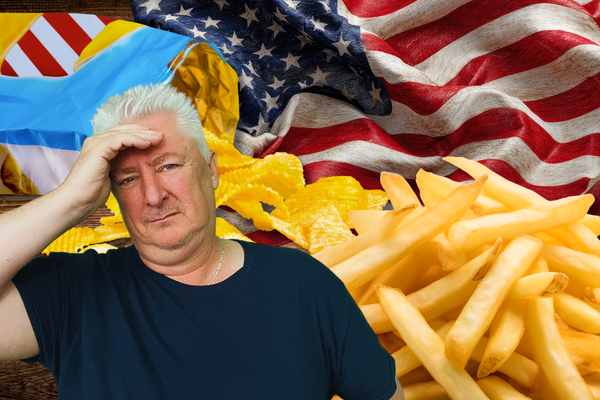
Back home, accents were immediate. Obvious. You heard them before you processed the words.
Somewhere along the way — quietly, without ceremony — that certainty faded.
And once I noticed it, I couldn’t stop noticing it.
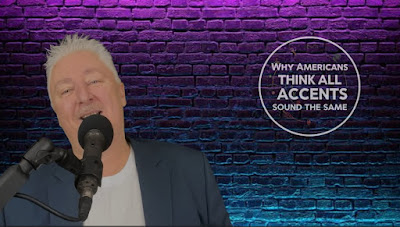
That’s where this video came from.
Why Accents Sound Different When You Live Overseas
When you grow up in one country, your ear becomes calibrated.
You don’t consciously analyse vowel shapes or cadence. You just know.
Australian. Kiwi. British. American.
Instant recognition.
But living overseas does strange things to your internal reference points.
You don’t lose them.
They just stop being automatic.
Your brain starts absorbing new rhythms. New inflections. Different pacing. Subtle shifts in tone. And over time, the sharp edges between categories soften.
From a distance, similarities become louder than differences.
And when you’re immersed in a different dominant accent — in my case, American — the categories in your head start reorganising themselves.
Why I Chose Observational Humour Instead of Explanation
I could have turned this into a linguistics deep dive.
There’s plenty written about accent adaptation, phonetic convergence, and how exposure reshapes perception. Even academic research from places like the University of Pennsylvania’s Linguistics Lab has shown how listeners recalibrate their perception of sound based on environment and frequency of exposure. https://www.ling.upenn.edu
But that wasn’t what this reflection was about.
This wasn’t a technical analysis of vowel shifts.
It was about the feeling of your brain hesitating for half a second.
Humour felt more honest than explanation.
Not punchline humour.
Observational humour.
The kind that simply says:
“Well… that’s interesting.”
Laughing at the pause is easier than trying to fix it.
It turns confusion into curiosity.
Sometimes humour isn’t about making light of something.
It’s about making room for it.
Recording a Video With No Big Point
I hesitated before recording this one.
It’s shorter than my usual videos. There’s almost no B-roll. It’s mostly just me talking.
No dramatic thesis. No list. There’s no neat conclusion.
Just an observation and the feeling that came with it.
But that’s also why I hit record.
Because these are the moments that actually shape life overseas.
Not the big culture shocks everyone expects:
Healthcare. Politics. Driving on the “wrong” side of the road.
It’s the subtle rewiring.
The way your internal map changes quietly, without asking permission.
When Accents Start to Blur, It Means Something
Accents blurring together isn’t a problem to be fixed.
It’s a signal.
It means you’ve been somewhere long enough for your ear to adjust.
Long enough for your categories to soften.
Long enough for your brain to build a second reference system.
That’s not loss.
It’s adaptation.
And maybe the most honest response to that isn’t analysis.
It’s just a small smile and a raised eyebrow.
If you’re curious, the video that came out of this reflection is here:
There’s a particular kind of homesickness that sneaks up on you when you’re living overseas. It’s not the big stuff — not the beaches or the accent or even the weather. It’s the small, weirdly specific things.
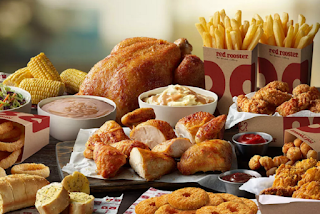
When I was back in Australia over the summer, I didn’t realise just how much I’d missed it. The roast chicken. The chips. The sides. That unmistakable flavour that somehow feels both comforting and slightly indulgent at the same time. I only had it once on the trip — and yet here I am, months later, still thinking about it.
So… I did what any homesick Aussie with a spice drawer and too much curiosity would do. I started digging.
After trawling forums, old food blogs, and more than a few “this is definitely the recipe, trust me” posts, I landed on a seasoning blend that gets surprisingly close. Is it identical? No. Does it hit the emotional bullseye and make my kitchen smell like home? Absolutely.
A Quick Bite of Red Rooster History 🍍🔥
Before we get to the seasoning, a bit of context — because Red Rooster isn’t just fast food. It’s Australian fast food.
In 1972, brothers Peter and Theo Kailis opened the first Red Rooster in Kelmscott, a suburb of Perth. Coming from a background in fishing, pearling, and seafood, opening a chicken shop was a sharp turn — but a brilliant one.
They were inspired by a chicken shop on Wanneroo Road and deliberately set out to compete with American-style fast food chains by adopting standardised menus, branding, and marketing — even before many US giants had properly reached Western Australia.
At the time, McDonald’s and KFC were only just establishing themselves on the east coast. Rotisserie chicken, meanwhile, became Red Rooster’s foundation — something that’s often been described as “definitely an Australian thing” when it comes to fast food.
Then came the glorious oddities, like the Hawaiian Pack in the 1970s: rotisserie chicken, a deep-fried banana, and a pineapple ring. Iconic. Slightly unhinged. Perfect.
In 2009, Red Rooster leaned fully into its cultural uniqueness with the campaign “They don’t get it in America”, featuring comedian Tom Gleeson wandering the US trying (and failing) to explain it. Honestly? Still true.
My Red Rooster–Style Chicken Seasoning Recipe 🌶️✨
This blend works beautifully on roast chicken, air-fried chicken pieces, or even sprinkled over chips before baking.
Store in an airtight container — it keeps well for weeks.
To use:
Rub generously over a whole chicken with olive oil or melted butter, or
Sprinkle over chicken pieces or chips before roasting or air frying.
For peak nostalgia, roast the chicken until the skin is properly golden and let it rest before carving. The smell alone does most of the emotional heavy lifting.
I had a slight issue finding the dried thyme but Amazon carries it and I got it the next day. Here’s the link to it if you need it — Dried Thyme
Why This One Hits Home ❤️
This seasoning doesn’t just taste good — it feels right. It’s savoury without being aggressive, warm without being spicy, and comforting in that very specific way that reminds you of sitting in a Red Rooster booth with greasy fingers and zero regrets.
Food has a funny way of collapsing distance. One minute you’re in an American kitchen, the next you’re back in Australia, holding a paper bag that’s gone translucent from hot chips.
If you’re an Aussie abroad — or just someone who “gets it” — give this a go. It won’t replace the real thing… but on the right night, it comes pretty bloody close. You’ll need some chicken salt too, it’s hard to find in the US but you can get it from Amazon.
Living Across the Pacific Changes Your Perspective
I’ve spent significant time in New Zealand. I could happily call it home.
Kiwis are grounded. Direct. Quietly funny in a way I really appreciate.
I’ve also lived in Samoa and travelled extensively around the Pacific. And once you’ve spent time in Polynesian cultures, you realise how often outsiders compress entire regions into a single vague “island” category.
That flattening isn’t hostile.
It’s distance at work.
The more time you spend inside a region, the more layered it becomes:
Different relationships to land. Colonial histories. Cultural rhythms. Different humour.
But from afar, it blurs.
That’s not a criticism.
It’s just how perception works.
I noticed something similar when I wrote about how accents start to shift over time:
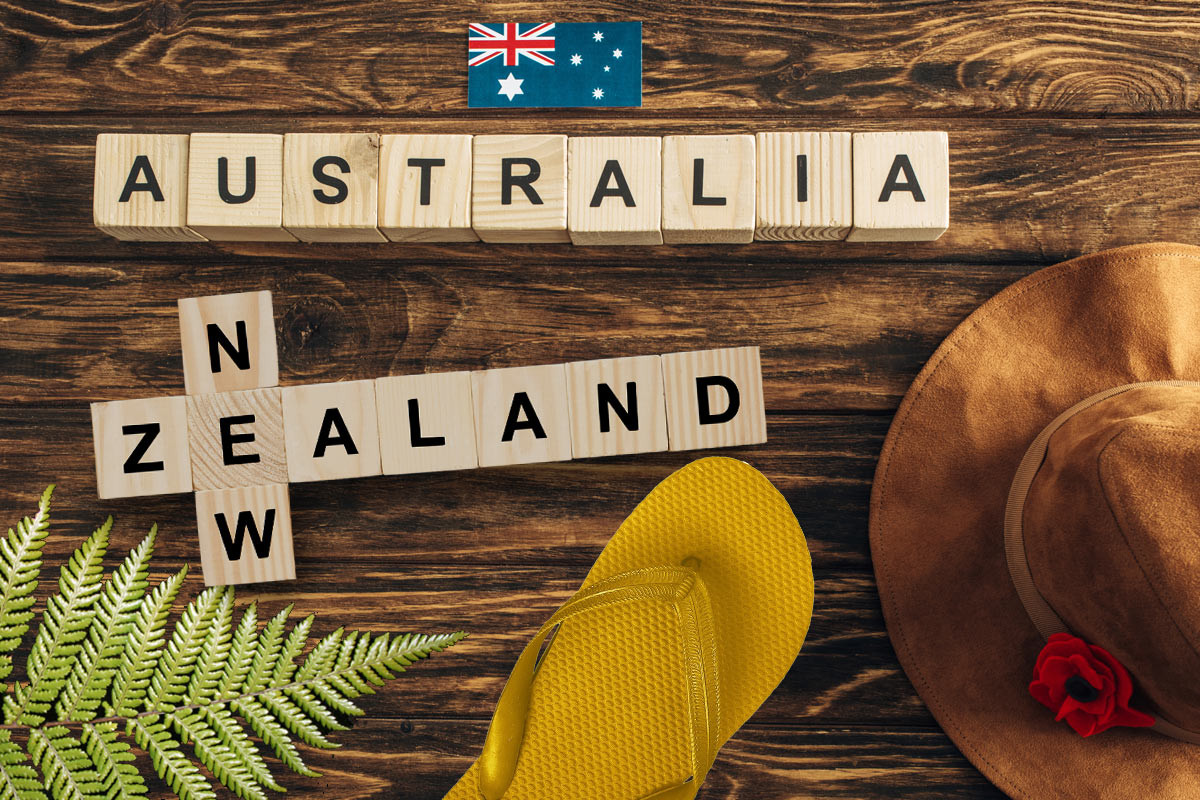
– Being mistaken for a Kiwi (again) – Seeing Australia and New Zealand described interchangeably in American media – Watching people struggle to hear the difference between accents – Realising comparison often replaces curiosity
At some point, I realised I wasn’t annoyed.
I was interested.
Why does this happen so often?
Why do we keep getting treated as a matched set?
And what gets lost when two distinct places are reduced to “basically the same”?
That’s when it stopped being a passing irritation and started becoming a story worth telling.
It Wasn’t About Debate — It Was About Context
The video wasn’t about deciding which country is “better.”
It wasn’t about correcting people sharply or taking offence.
It was about perspective.
An Australian who’s spent time in New Zealand. Who’s lived in the Pacific. Who now navigates these assumptions from the other side of the world.
There are jokes in it — about flags, vowels, sport, and the strange sibling-energy between Aussies and Kiwis.
But there’s also respect.
Shared history matters. The ANZAC legacy matters. Rivalry doesn’t cancel connection.
If anything, slowing down to notice the differences actually deepens appreciation for both.
Why Australia and New Zealand Feel Different Up Close
From an American vantage point, the two countries can feel like variations on a theme.
But up close, the distinctions become clearer.
Australia’s size alone creates internal diversity — culturally and geographically.
New Zealand’s relationship with Māori identity shapes its national story in a very specific way.
Even accent differences — subtle though they may seem internationally — are obvious within the region.
Linguists often talk about how accent perception depends heavily on exposure. Research from institutions like The University of Canterbury’s New Zealand Institute of Language, Brain and Behaviour has explored how vowel shifts and perception vary depending on listener familiarity. https://www.canterbury.ac.nz/nzilbb
If you grow up hearing the difference, it’s immediate.
If you don’t, it blends.
That blending isn’t wrong.
It’s contextual.
Living Overseas Makes You Explain Things You Never Had To
Before moving to the US, I never had to explain the difference between Australia and New Zealand.
It was assumed knowledge.
Distance changes that.
When you live overseas long enough, you start seeing your own culture through someone else’s frame.
And suddenly you’re explaining things you never consciously articulated before:
Australia, apparently deciding that our actual wildlife wasn’t enough to worry about, has the yowie, the bunyip and mysterious lights that follow people through the Outback.
This is a country, after all, where visitors already arrive concerned about snakes, spiders, crocodiles, sharks and various other things they’ve been assured will kill them within 20 minutes of leaving Sydney Airport.
Then we tell them there might also be a large hairy man wandering around the bush.
Welcome to Australia.
But Australian cryptids and legends are more interesting than simply being our versions of Bigfoot.
Some have histories stretching back through generations of Aboriginal storytelling. Others grew from the isolation and uncertainty of colonial Australia. Some have perfectly plausible scientific explanations.
Others remain just strange enough that people are still talking about them.
And then there’s the drop bear.
We’ll get to that.
Australia has plenty of real animals to worry about. Apparently we needed imaginary ones too.
What Is an Australian Cryptid?
A cryptid is an animal or creature whose existence has been claimed but hasn’t been established by science.
Bigfoot is probably the world’s most famous example.
Australia has plenty of candidates, although there’s an important distinction to make before we go wandering into the bush with a torch.
Not every Australian legend is a cryptid.
The yowie fits the definition fairly neatly. The bunyip is more complicated because stories associated with it have deep connections to Aboriginal cultures and shouldn’t simply be reduced to Australia’s version of a Western monster.
The Min Min Lights aren’t creatures at all.
Lasseter’s Reef is supposedly lost gold.
The SS Maheno is a very real shipwreck that acquired ghost stories.
What connects them isn’t taxonomy. It’s the Australian landscape.
Huge distances. Isolated roads. Waterholes. Dense bush. Desert stretching beyond the horizon. Places where, particularly before modern communications, you could be very much on your own.
Put a strange noise, an unexplained light or an enormous hairy silhouette into that landscape and Australia becomes very good at producing a story.
In Australia, the landscape is often as important to the legend as whatever is supposedly hiding in it.
The Yowie: Australia’s Answer to Bigfoot?
If an American asks me whether Australia has Bigfoot, the easiest answer is:
Sort of.
We have the yowie.
Modern descriptions generally portray the yowie as a large, hairy, human-like creature living in remote bushland, particularly along Australia’s east coast.
That sounds suspiciously familiar.
But calling the yowie simply “Australian Bigfoot” strips away much of what makes the story interesting.
Stories of hairy beings existed in Aboriginal traditions long before modern Bigfoot culture. ABC reporting on the history of the yowie has documented Aboriginal accounts of “hairy men” under different names, while researchers have also pointed out that the modern Western version of the yowie changed significantly over time.
By the late 19th century, newspaper accounts were describing mysterious hairy creatures. In 1893, for example, the Braidwood Dispatch reported an alleged encounter with a “hairy man” near Braidwood in New South Wales.
Then popular culture got involved.
As stories of the Yeti and Bigfoot became internationally famous during the 20th century, the yowie increasingly came to be described through the same enormous, ape-like template.
Today, alleged sightings continue.
Kilcoy in Queensland has embraced its association with the creature so enthusiastically that there’s a Yowie Park and a yowie statue. A reported encounter near the town in 1979 involved two students who claimed they’d seen a brown, hairy creature somewhere between two and three metres tall.
Which is quite large.
Large enough that if I encountered one while bushwalking, my scientific investigation would mostly involve running in the opposite direction.
The yowie has become Australia’s best-known cryptid, but its story is more complicated than simply calling it “Australian Bigfoot.”
The Bunyip Is Much Harder to Define
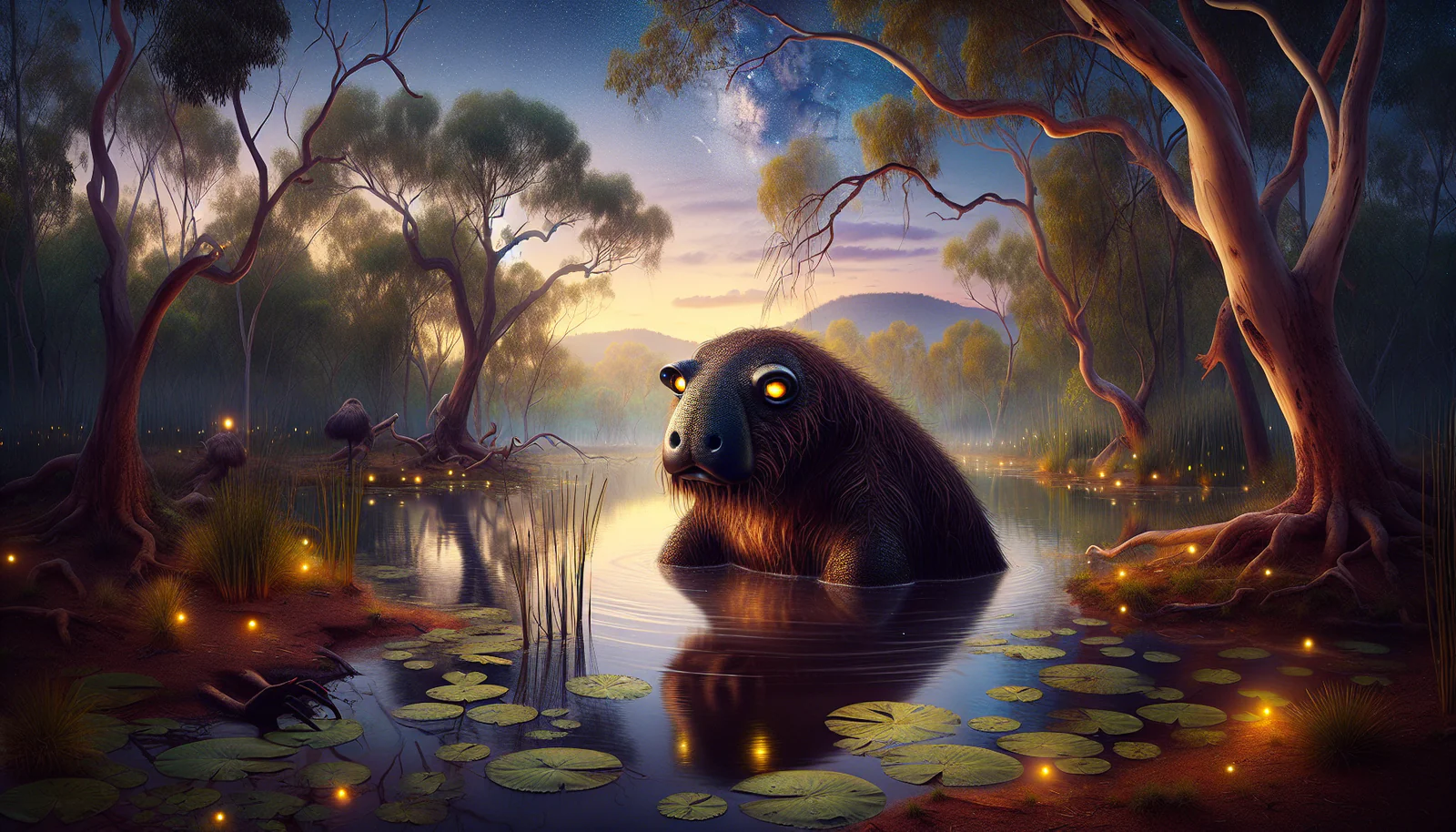
If the yowie is difficult to pin down, the bunyip is almost impossible.
Ask ten people what a bunyip looks like and you may receive eleven answers.
It has been described at different times with features resembling seals, dogs, horses, birds and various combinations that sound like somebody was assembling an animal without reading the instructions.
What remains remarkably consistent is water.
Bunyip stories became associated with swamps, rivers, billabongs and waterholes, and European settlers were fascinated by Aboriginal accounts of creatures inhabiting inland waters.
The fascination became so intense that in 1847 the Australian Museum actually displayed what was claimed to be a possible bunyip skull.
Spoiler alert: we don’t have a bunyip skeleton sitting in a museum today.
But treating the bunyip purely as a funny monster story misses something important.
Different Aboriginal cultures have their own distinct stories, names and beliefs associated with powerful beings connected to water and Country. The Australian Museum, for example, records Barkandji knowledge about Ngatyi, or Rainbow Serpents, which can take different forms including what Europeans called a bunyip. Those stories involve creation, Country, respect and places where people should not swim.
That is considerably more culturally significant than “we have a swamp monster.”
European Australia took those traditions, mixed them with colonial fears, newspaper reporting, unfamiliar animals and imagination, and eventually created the broad popular image we now call the bunyip.
Waterholes, rivers and billabongs feature heavily in stories that Europeans eventually grouped under the name “bunyip.”
Why Early Settlers Were Ready to Believe
Here’s the part I find particularly fascinating.
Imagine arriving in Australia from Europe during the 1800s.
You encounter a mammal with a duck’s bill that lays eggs.
Another animal has a pouch, enormous back legs and travels by bouncing.
There are lizards that look prehistoric, birds that stand taller than you expect and a furry animal that spends most of its life in trees eating leaves that are toxic to many other animals.
Then somebody tells you there’s another strange animal living in a waterhole.
How confident are you that this is the ridiculous one?
Australia had already demonstrated that European ideas about what an animal was supposed to look like weren’t particularly useful here.
That made the boundary between undiscovered animal and mythical creature rather blurry.
Even today, I think that’s part of the appeal of Australian cryptid stories.
You know the yowie probably isn’t going to walk out from behind a gum tree.
Probably.
The Min Min Lights: When Something Follows You Through the Outback
Then there are the Min Min Lights.
These aren’t cryptids because they aren’t creatures.
But leave them out of a collection of strange Australian mysteries and people will quite rightly complain.
Stories describe mysterious lights appearing over the horizon in remote Australia, sometimes seeming to move, hover or follow travellers.
They are particularly associated with western Queensland and the tiny town of Boulia, where the Min Min has become part of local identity.
There are also Aboriginal stories about unexplained lights that predate European settlement.
And unlike the yowie, we know people genuinely see something.
The question is what.
One particularly compelling scientific explanation came from University of Queensland neuroscientist Jack Pettigrew. His experiments suggested that certain Min Min sightings could be caused by a type of mirage in which temperature inversions bend distant light around the horizon.
Under the right conditions, a car light many kilometres away could appear as an unexplained floating light where no light should be.
Pettigrew even recreated the phenomenon experimentally.
Which explains a lot.
It also doesn’t make the experience of seeing one alone in the Outback at night sound any less creepy.
There is a vast difference between reading “atmospheric refraction” on your phone and standing beside an empty road at midnight while a mysterious light appears to follow you.
Min Min Lights have frightened travellers in remote Australia for generations, although atmospheric conditions may explain at least some sightings.
Lasseter’s Reef: The Australian Legend People Are Still Searching For
Australia’s mysteries aren’t limited to creatures.
Some involve treasure.
Harold Bell Lasseter claimed to know the location of an extraordinarily rich gold reef somewhere in Central Australia.
An expedition set out to find it in 1930.
It went badly.
Lasseter eventually became separated from the expedition and died in the desert in 1931. The fabulous reef he claimed to have found disappeared with him.
Or perhaps it never existed.
Either way, people are still looking.
Nearly a century later, prospectors and researchers continue arguing about whether Lasseter’s Reef was real and where it might have been. One modern searcher reportedly spent decades pursuing it, while another backer spent more than half a million dollars supporting the hunt.
That’s the extraordinary power of a good mystery.
You don’t necessarily need evidence.
Sometimes you just need enough uncertainty to prevent people from completely letting go.
There’s also something particularly Australian about Lasseter’s Reef.
The vastness of the country makes the story possible.
Hide a legendary gold reef in suburban Melbourne and someone will probably put a Bunnings on top of it by Thursday.
Hide it somewhere in Central Australia?
Now you’ve got a century-long mystery.
Lasseter’s supposedly fabulous gold reef has been missing for almost a century, assuming it existed in the first place.
The SS Maheno: A Real Wreck With Ghost Stories Attached
Some Australian legends begin with something completely real.
The SS Maheno is one of them.
The former ocean liner and First World War hospital ship was being towed to Japan for scrap when a cyclone broke the towline in 1935.
It washed ashore on K’gari, formerly Fraser Island, where its rusting remains still sit on the beach today.
I’ve always thought shipwrecks are creepy enough without adding ghosts.
The Maheno apparently disagrees.
Over the years, stories have attached themselves to the wreck, helped considerably by the fact that it looks exactly like somewhere a ghost should live.
Rusting metal.
Remote beach.
Waves crashing around the remains.
Decades of history slowly disappearing into the sand.
Whether you believe any paranormal stories is beside the point.
The Maheno shows how legends form around places.
Sometimes we encounter something dramatic and abandoned and apparently can’t resist giving it another story.
The SS Maheno has been sitting on the beach at K’gari since 1935. Apparently a shipwreck wasn’t atmospheric enough without ghost stories.
Then There Are Drop Bears
Now we come to one of Australia’s most dangerous animals.
The drop bear.
A larger, aggressive relative of the koala, the drop bear waits in eucalyptus trees before dropping onto unsuspecting victims from above.
International visitors are particularly vulnerable.
Fortunately, Australians have developed several effective precautions, including smearing Vegemite behind your ears.
There is just one minor complication.
None of this is true.
Drop bears are one of Australia’s great collective practical jokes.
We tell tourists about them.
We warn new arrivals.
Australians who have never met each other can somehow cooperate instantly in maintaining the story.
Even the Australian Museum has joined the joke with a wonderfully straight-faced description of Thylarctos plummetus.
I love the drop bear because it is completely different from the yowie or bunyip.
Nobody is genuinely hunting for one.
There isn’t an unexplained footprint being analysed somewhere.
It’s social folklore.
The fun isn’t believing in the creature.
The fun is convincing you to believe in it.
Preferably just before you go camping.
The terrifying drop bear in its natural habitat. Probably.
Why Australia Produces Such Good Legends
Living in America has made me think more about why the folklore of the two countries feels different.
America has enormous wilderness too, of course.
But Australian stories often seem inseparable from the landscape itself.
The bunyip needs the waterhole.
The Min Min needs the empty horizon.
The yowie needs the bush.
Lasseter’s Reef needs the desert.
Take away the environment and half the story disappears.
Perhaps that’s because distance has always been such a powerful part of Australian life.
Australia is enormous, while most of its population is concentrated around the coast. Travel inland and the scale changes quickly.
There are places where the next town isn’t just down the road.
It’s down the road.
For generations, people travelled through landscapes with no mobile phones, no GPS and very little help if something went wrong.
A light on the horizon mattered.
A strange noise outside the camp mattered.
A warning about a dangerous waterhole mattered.
Stories grew in places where nature was already quite capable of making people feel small.
Australia’s size and isolation have always been part of the country’s storytelling.
The Stories Tell Us More Than Whether the Creatures Exist
I don’t expect scientists to announce the discovery of a breeding population of yowies next week.
I am reasonably confident the drop bear threat level remains manageable.
But asking whether these stories are literally true isn’t necessarily the most interesting question.
Folklore tells us what people noticed.
What frightened them.
What places mattered.
What they couldn’t explain.
And sometimes what they thought would be absolutely hilarious to tell an unsuspecting tourist.
The stories also come from very different places and shouldn’t all be thrown into the same bucket.
Some have connections to ancient Aboriginal cultures and Country.
Some emerged from colonial encounters with a landscape Europeans didn’t understand.
Some are unexplained natural phenomena.
Some are modern legends.
One is basically an international conspiracy conducted by Australians against backpackers.
Together, though, they reveal something about Australia that lists of “10 deadly animals” never really capture.
Australia can feel mysterious.
Even when you’ve grown up there.
Maybe especially when you’ve grown up there.
Because somewhere beyond the last streetlight there’s always more bush.
More desert.
Another waterhole.
Another empty road.
And possibly a yowie.
Probably not.
But if you’re heading out there tonight, I wouldn’t completely rule it out.
If you’d rather hear me tell these stories, including some of the Australian legends that inspired this article, you can watch the original video below.
If you enjoy exploring the stranger corners of Australian culture with me, you can support From Down Under to Down South through Buy Me a Coffee. It helps me keep creating independent stories about Australia, America and the things you only notice when you’ve lived in both.
Breadcrumbs, milk, garlic, paprika, onion, Worcestershire sauce, Salt and pepper
Mix until thoroughly combined.
Divide the sausage mixture evenly into four sections and shape each into a long tube down the centre of each pastry rectangle.
Roll the pastry over the sausage filling and pinch the seam closed.
Cut each roll into four equal sections using a sharp knife.
Line a baking tray with parchment paper and place the rolls seam-side down.
Whisk together the egg and water. Brush each roll with the egg wash and lightly sprinkle paprika on top.
Bake at 425°F for 5 minutes, then reduce heat to 350°F (175°C) and bake for an additional 30–35 minutes, until puffed and golden and the filling is cooked through.
Let cool for 10 minutes before serving.
And try not to eat three straight off the tray.
How to Serve Australian Sausage Rolls
Classic Aussie style: Tomato sauce (ketchup to Americans). If you can find HP Sauce, even better.
Party version: Cut smaller for bite-sized pieces. Add mustard, BBQ sauce, or chutney for variety.
Make-ahead tip: Bake in advance, then reheat at 350°F for 8–10 minutes to bring back the crisp pastry.
They’re forgiving. And they travel well.
Tips From a Homesick Aussie
Sausage quality matters. Pick pork you’d happily eat on its own. Beef or chicken works too — just adjust seasoning.
For extra authenticity, mix 1 teaspoon of Vegemite into the Worcestershire. It won’t taste like Vegemite — it just deepens the savoury flavour.
Puff pastry is key. Shortcrust works in a pinch, but you lose that flaky magic that makes sausage rolls what they are.
Why My Kids Love Them
They’re bite-sized. Easy to hold. Reliably delicious.
I’ve done plain versions for little hands and seeded pastry “fancy” ones for adults at the same party.
No one complains.
They’re the kind of food that bridges two countries without trying too hard.
Food as a Bridge Between Australia and America
Living overseas has sharpened how I think about identity.
Sometimes it’s accents. Sometimes it’s goodbyes. Or the difference between “chips” and “fries.”
And sometimes it’s food.
I’ve written before about how subtle cultural shifts creep up on you:
It’s a slightly different tone from some of my other videos.
Less observational humour. More reality.
Because this one isn’t about accents or goodbyes.
It’s about the quiet tension that sits underneath a lot of expat conversations right now:
“What if we moved home?”
And more specifically:
“Can we afford to?”
Why Australia Still Feels Like Home
If you’ve lived away from Australia for any length of time, you know the pull.
It’s not just beaches or weather.
It’s familiarity.
Shorthand.
It’s walking into a Bunnings on a Saturday and grabbing a snag without thinking about it.
It’s not having to explain yourself.
Home has a rhythm that lives in your nervous system.
And when you’re overseas long enough, that rhythm starts to echo louder.
For me, that’s been happening more recently.
But every time I allow myself to think seriously about moving back, one issue rises above the rest:
Housing.
The Reality of Australia’s Housing Crisis
Australia’s housing market isn’t just “a bit expensive.”
It’s structurally strained.
According to CoreLogic Australia, property values across major cities have surged significantly over the past decade, with Sydney and Melbourne consistently ranking among the least affordable housing markets relative to income. https://www.corelogic.com.au
Rental markets have tightened as well. Vacancy rates in many areas have hovered near historic lows, driving up competition and prices — a trend widely reported by sources like ABC News Australia. https://www.abc.net.au/news
This isn’t abstract data when you’re considering uprooting your life.
It’s practical.
It’s the difference between nostalgia and feasibility.
Buying in Australia: The Numbers Are Confronting
If you’ve looked at listings recently, you’ll know what I mean.
Sydney and Melbourne come with eye-watering price tags.
But even regional centres — places that once felt accessible — now carry serious financial weight.
That shift changes the emotional equation.
It’s not just:
“Do we want to move back?”
It becomes:
“Are we willing to trade financial stability for proximity?”
And that’s a harder question.
Renting in Australia: Competitive and Uncertain
Buying is one hurdle.
Renting is another.
In many cities, rental properties receive dozens — sometimes hundreds — of applications.
It’s not unusual to hear stories of families attending packed open homes, competing for properties that feel smaller and more expensive than expected.
That level of competition introduces uncertainty.
And uncertainty is uncomfortable when you’re moving internationally with children.
The Emotional Side of Moving Back to Australia
This is the part that doesn’t show up in property listings.
The emotional tension.
I have a home in the United States.
It’s stable. Predictable.
The thought of leaving that to re-enter a market defined by scarcity and competition is confronting.
At the same time, Australia is where my extended family is.
It’s where parts of my identity were shaped.
Not just geography.
It’s belonging.
Living overseas long enough changes how you see home. I’ve written about that shift in other contexts too — like noticing how accents begin to blur after years abroad:
In 2024, I stepped away from a 24-year career in finance.
That wasn’t impulsive.
It was gradual.
Seventy-hour weeks. Long commutes. Missing small moments with the kids.
At some point, I realised I was financially stable but time-poor.
And time, especially with young kids, doesn’t compound.
It just goes.
So I shifted.
Less corporate. More present.
More storytelling.
Why I Created “From Down Under to Down South”
This channel and blog weren’t built to criticise America.
Or romanticise Australia.
They exist because living between cultures sharpens observation.
You start noticing things you never noticed before:
How Americans end conversations. Why Australia and New Zealand get confused. The way politeness lands differently. How goodbyes feel faster here. How home feels when you’re far from it.
The kind you’d have over a barbecue or on a long drive.
What Aussie Expat Culture Shock Actually Looks Like
When people think of expat culture shock, they imagine big things:
Healthcare systems. Politics. Driving on the other side of the road.
But most of it is smaller.
It’s vocabulary.
Social timing.
It’s ordering “chips” and getting crisps.
Sociologists often describe culture shock as a gradual adjustment process rather than a dramatic event. The University of Queensland has written about how adaptation tends to unfold in subtle stages rather than one big moment. https://www.uq.edu.au
That feels accurate.
It’s not one shock.
It’s a thousand micro-adjustments.
And over time, those adjustments become stories.
What You’ll Find Here
When I’m not filming or recording the podcast, I’m:
Being a dad. Dancing ballroom. Cooking — I’m a qualified chef, so the kitchen’s still my reset button.
This project sits at the intersection of all of it:
Family. Identity. Food. Humour. Cultural contrast.
It’s about noticing.
And sometimes laughing.
And sometimes pausing.
If you enjoy thoughtful, understated reflections on Aussie vs American life — without outrage or hype — you’ll probably feel at home here.