Personal stories, cultural observations and reflections on life between Australia and America. From family and everyday experiences to the unexpected differences between two countries, these essays explore what it means to build a life in America while keeping a connection to Australia.
There’s a particular kind of homesickness that sneaks up on you when you’re living overseas. It’s not the big stuff — not the beaches or the accent or even the weather. It’s the small, weirdly specific things.
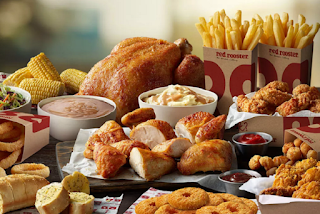
When I was back in Australia over the summer, I didn’t realise just how much I’d missed it. The roast chicken. The chips. The sides. That unmistakable flavour that somehow feels both comforting and slightly indulgent at the same time. I only had it once on the trip — and yet here I am, months later, still thinking about it.
So… I did what any homesick Aussie with a spice drawer and too much curiosity would do. I started digging.
After trawling forums, old food blogs, and more than a few “this is definitely the recipe, trust me” posts, I landed on a seasoning blend that gets surprisingly close. Is it identical? No. Does it hit the emotional bullseye and make my kitchen smell like home? Absolutely.
A Quick Bite of Red Rooster History 🍍🔥
Before we get to the seasoning, a bit of context — because Red Rooster isn’t just fast food. It’s Australian fast food.
In 1972, brothers Peter and Theo Kailis opened the first Red Rooster in Kelmscott, a suburb of Perth. Coming from a background in fishing, pearling, and seafood, opening a chicken shop was a sharp turn — but a brilliant one.
They were inspired by a chicken shop on Wanneroo Road and deliberately set out to compete with American-style fast food chains by adopting standardised menus, branding, and marketing — even before many US giants had properly reached Western Australia.
At the time, McDonald’s and KFC were only just establishing themselves on the east coast. Rotisserie chicken, meanwhile, became Red Rooster’s foundation — something that’s often been described as “definitely an Australian thing” when it comes to fast food.
Then came the glorious oddities, like the Hawaiian Pack in the 1970s: rotisserie chicken, a deep-fried banana, and a pineapple ring. Iconic. Slightly unhinged. Perfect.
In 2009, Red Rooster leaned fully into its cultural uniqueness with the campaign “They don’t get it in America”, featuring comedian Tom Gleeson wandering the US trying (and failing) to explain it. Honestly? Still true.
My Red Rooster–Style Chicken Seasoning Recipe 🌶️✨
This blend works beautifully on roast chicken, air-fried chicken pieces, or even sprinkled over chips before baking.
Store in an airtight container — it keeps well for weeks.
To use:
Rub generously over a whole chicken with olive oil or melted butter, or
Sprinkle over chicken pieces or chips before roasting or air frying.
For peak nostalgia, roast the chicken until the skin is properly golden and let it rest before carving. The smell alone does most of the emotional heavy lifting.
I had a slight issue finding the dried thyme but Amazon carries it and I got it the next day. Here’s the link to it if you need it — Dried Thyme
Why This One Hits Home ❤️
This seasoning doesn’t just taste good — it feels right. It’s savoury without being aggressive, warm without being spicy, and comforting in that very specific way that reminds you of sitting in a Red Rooster booth with greasy fingers and zero regrets.
Food has a funny way of collapsing distance. One minute you’re in an American kitchen, the next you’re back in Australia, holding a paper bag that’s gone translucent from hot chips.
If you’re an Aussie abroad — or just someone who “gets it” — give this a go. It won’t replace the real thing… but on the right night, it comes pretty bloody close. You’ll need some chicken salt too, it’s hard to find in the US but you can get it from Amazon.
I’ve lived in America for eight years, and there’s one conversation that still catches me off guard.
Someone hears my accent, smiles, and asks, “Are you from New Zealand?”
“No, Australia,” I reply.
“Oh, right. Same sort of place, though?”
And there it is. Two countries, separated by the Tasman Sea, reduced to one enormous patch of the Southern Hemisphere where everyone apparently sounds alike, plays rugby and has an unhealthy relationship with sheep.
I don’t take offence. In fact, I’ve spent enough time in New Zealand to understand why people make the connection. I love the country, I love its people, and I could happily live there.
But Australia and New Zealand are not the same place.
We have different histories, different landscapes, different national identities and, despite what American ears might suggest, different accents.
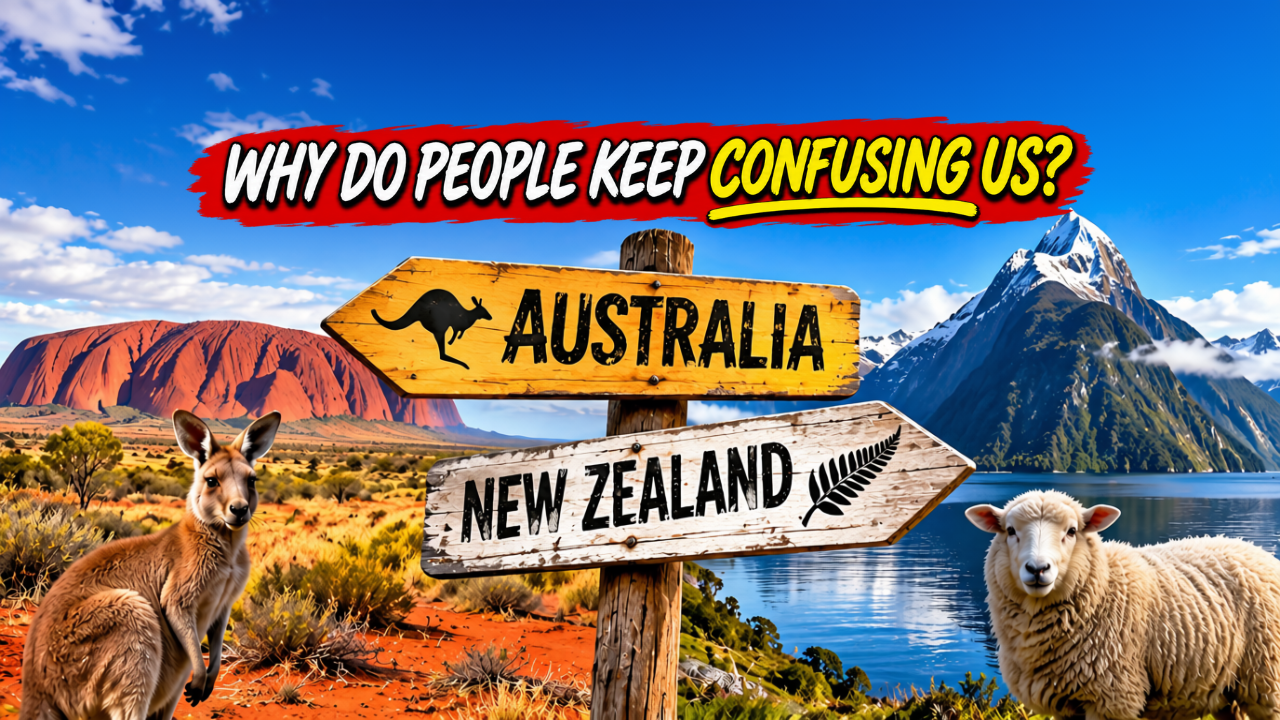
So why do people keep confusing us?
The answer is more interesting than you might think.
Why Do Americans Confuse Australia and New Zealand?
From the other side of the Pacific, Australia and New Zealand have plenty in common.
Both are English-speaking countries in the Southern Hemisphere. Both have strong historical ties to Britain, parliamentary democracies, sporting traditions and reputations for spectacular scenery.
We share a long history of migration, trade and military cooperation. Australians and New Zealanders can also live and work in each other’s countries under special arrangements, although the immigration rules aren’t entirely identical.
Then there are the accents.
To someone who has grown up in Australia or New Zealand, the difference can be immediately obvious. But to an American who rarely hears either accent, we can sound remarkably similar.
And that’s before someone starts talking about rugby, cricket or the strange collection of vowels we both seem determined to rearrange.
I suspect there’s another reason, too.
Geography.
When you live thousands of miles away, neighbouring countries can become mentally grouped together. We do it ourselves with other parts of the world.
But proximity doesn’t make two countries interchangeable.
Ask an Australian and a New Zealander whether they’re basically the same, and you might discover just how passionate people can become about a seemingly innocent question.
Australia and New Zealand: Two Very Different Countries
The first thing worth understanding is just how different these countries are geographically.
Australia is enormous. At approximately 7.7 million square kilometres, it’s the sixth-largest country in the world.
New Zealand covers around 268,000 square kilometres.
That makes Australia nearly 29 times larger.
But size isn’t the only difference.
Australia is famous for its deserts, vast cattle stations, tropical rainforests, eucalyptus forests, beaches and enormous stretches of relatively dry interior.
New Zealand is renowned for its dramatic mountains, glaciers, volcanic landscapes, fjords and lush green countryside.
Of course, neither country can be reduced to a postcard.
Australia has snowfields, temperate forests and green farming regions. New Zealand has cities, beaches, geothermal areas and landscapes that look nothing like the mountains featured in tourism advertisements.
Still, the contrast can be striking.
Drive across parts of inland Australia, and you can spend hours looking at an apparently endless horizon.
Drive through parts of New Zealand, and you might find yourself surrounded by mountains that look as though somebody borrowed them from a fantasy film.
Which, of course, somebody did.
New Zealand provided many of the spectacular landscapes used in The Lord of the Rings films.
Australia, meanwhile, seems to have developed an international reputation for being a place where practically everything is trying to kill you.
Both are exaggerations, but they do make for effective tourism marketing.
Can Australians and New Zealanders Really Hear the Difference in Our Accents?
Absolutely.
And this is probably where I have the most fun with Americans.
Australian and New Zealand English share historical roots, which explains many of their similarities. Both developed through the influence of British and Irish settlers, although their linguistic histories and subsequent development differ.
But the vowel sounds aren’t identical.
One of the classic jokes involves the way New Zealanders pronounce the word “fish.”
Australians often imitate it as “fush.”
Saying six pieces of fish and chips is a great way to spot a Kiwi
New Zealanders, naturally, have their own opinions about how Australians pronounce things.
And neither imitation is particularly accurate.
The differences involve genuine vowel shifts, not simply one country pronouncing words incorrectly.
Australian English also has its own regional and social variations, while New Zealand English has been shaped by influences including te reo Māori.
After years living in America, I’ve become more conscious of my own accent.
Americans sometimes hear things in my speech that Australians wouldn’t think twice about. And I’ve occasionally caught myself adjusting the way I pronounce something simply to make myself understood.
You start noticing aspects of your own culture that were once completely invisible to you.
And apparently, you also become the unofficial Australian representative responsible for explaining why you aren’t from Auckland.
Australia and New Zealand Share History, but Not the Same Identity
Our two countries have a relationship that goes well beyond accents and sporting rivalries.
Australia and New Zealand share significant historical connections, including their experiences of British colonisation and cooperation during major conflicts.
The ANZAC tradition is perhaps the most recognisable example.
ANZAC stands for Australian and New Zealand Army Corps, a name closely associated with the First World War and the Gallipoli campaign of 1915.
Every year, both countries commemorate ANZAC Day on April 25.
It’s an important part of our shared history, but it doesn’t mean our national stories are identical.
Australia’s First Nations peoples include Aboriginal and Torres Strait Islander peoples, with diverse cultures and histories extending back tens of thousands of years.
New Zealand’s Indigenous Māori people have their own histories, language, traditions and relationship with the land.
The Treaty of Waitangi, signed in 1840 between representatives of the British Crown and many Māori chiefs, remains central to New Zealand’s political and constitutional life.
Australia has a different constitutional history and different ongoing debates about Indigenous recognition, rights and reconciliation.
These distinctions matter.
They shape how each country understands its past, its institutions and its national identity.
It’s easy to overlook these differences when you’re looking at the region from thousands of miles away.
But spend time in either country, and they become impossible to ignore.
The Great Australia vs New Zealand Sporting Rivalry
Now, if you really want to see Australians and New Zealanders become competitive, mention sport.
Especially rugby.
New Zealand’s All Blacks are one of the most famous rugby union teams in the world.
Australia’s Wallabies have their own proud history, although I suspect a few Australian rugby supporters would prefer not to discuss certain recent results.
The rivalry extends beyond rugby union.
Cricket, netball and numerous other sports have provided generations of opportunities for Australians and New Zealanders to remind each other who supposedly does things better.
There’s a wonderful contradiction in the relationship.
We can spend an entire afternoon making fun of each other, yet there’s also considerable mutual respect.
The rivalry is real, but so is the connection.
It’s rather like having a sibling.
You might give them an absolute hiding over a game of backyard cricket, but you’re still likely to stand beside them when it matters.
And that’s part of what makes the relationship interesting.
We can be fiercely competitive without pretending our shared history and friendships don’t exist.
What I Learned Spending Time in New Zealand and the Pacific
My perspective isn’t based solely on growing up in Australia.
I’ve spent significant time in New Zealand, and I could genuinely see myself living there.
I’ve also lived in Fiji and Samoa and travelled extensively around the Pacific.
Those experiences changed how I think about the region.
From a distance, people sometimes imagine the Pacific as a collection of beautiful islands with broadly similar cultures.
But that overlooks enormous differences in language, history, customs, geography and identity.
Samoa is not Fiji. Tonga is not Tahiti. New Zealand is not Australia.
And while these places have connections, those connections shouldn’t erase what makes each one distinctive.
Living in Samoa also gave me a greater appreciation for the diversity of Pacific cultures and the importance of understanding places on their own terms.
It’s something I think about when Americans confuse Australia and New Zealand.
I don’t automatically assume they’re being disrespectful.
Most are simply making connections based on what they know.
And when you think about it, that’s how all of us understand unfamiliar places.
We start with similarities.
The interesting part comes when we become curious enough to discover the differences.
Do Australians and New Zealanders Actually Like Each Other?
Yes.
Despite the jokes, sporting rivalries and occasional arguments about who invented what, Australia and New Zealand have a remarkably close relationship.
Families move between the two countries. People travel back and forth for work, holidays and education. Businesses operate across the Tasman, and friendships regularly span both sides.
There are plenty of New Zealanders living in Australia and Australians living in New Zealand.
Of course, not everyone feels the same way, and the relationship isn’t without its disagreements.
But the idea that Australians and Kiwis genuinely dislike one another because of a few rugby matches is rather silly.
We simply enjoy giving each other a hard time.
And to be fair, both countries are quite good at it.
There is, however, one thing worth understanding.
New Zealanders generally don’t appreciate having their country treated as an extension of Australia.
And why should they?
New Zealand has its own identity, culture, achievements and history.
Australians wouldn’t appreciate being told we’re simply a larger version of New Zealand, either.
Although I suspect the Kiwis might enjoy that description considerably more than we would.
Both the Australian and New Zealand flags together
Why Living in America Has Changed How I See Australia
Before moving to the United States, I rarely had to explain the difference between Australia and New Zealand.
It was simply something everybody around me understood.
Now I find myself explaining all sorts of things that once seemed obvious.
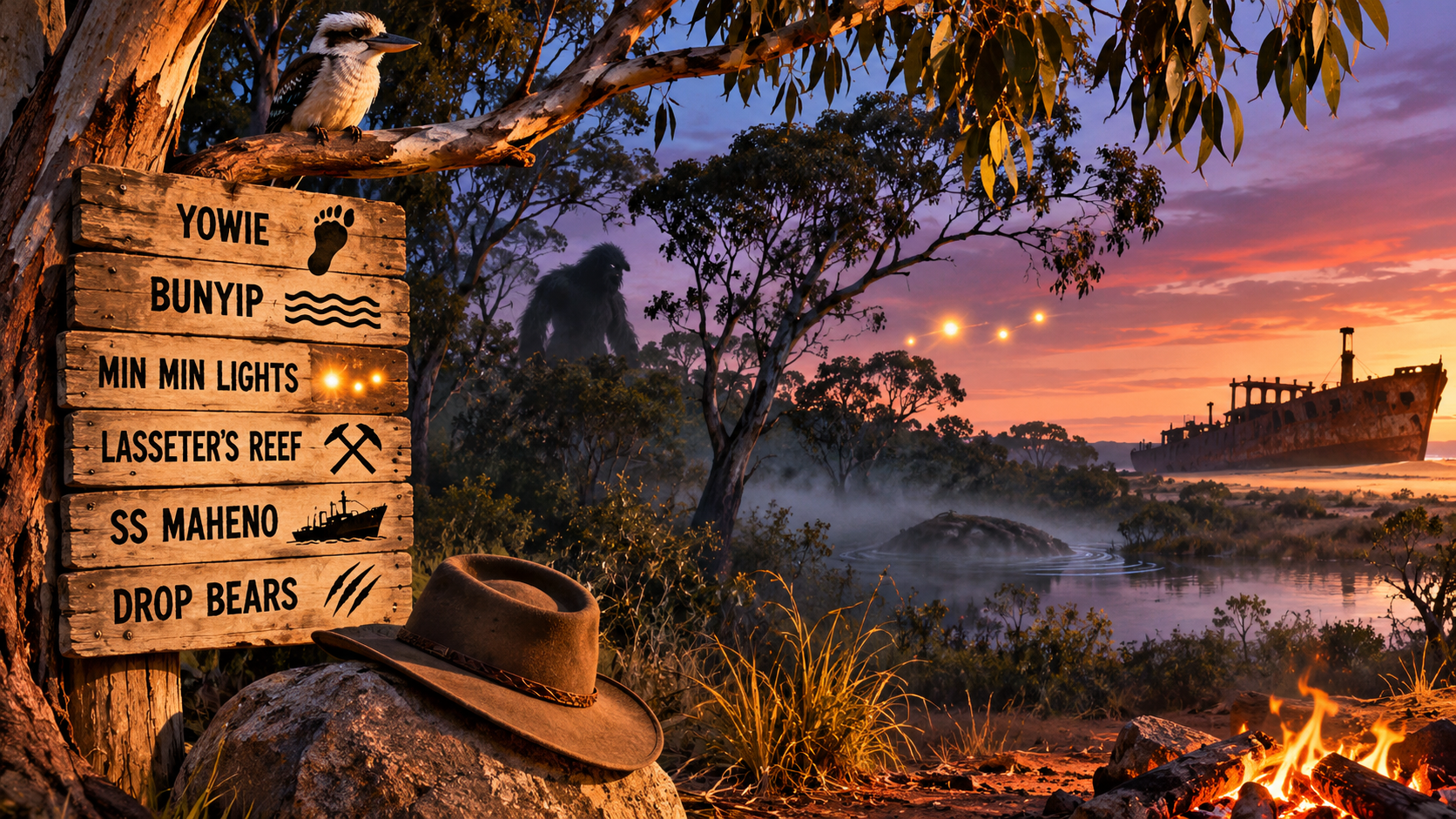
Australia, apparently deciding that our actual wildlife wasn’t enough to worry about, has the yowie, the bunyip and mysterious lights that follow people through the Outback.
This is a country, after all, where visitors already arrive concerned about snakes, spiders, crocodiles, sharks and various other things they’ve been assured will kill them within 20 minutes of leaving Sydney Airport.
Then we tell them there might also be a large hairy man wandering around the bush.
Welcome to Australia.
But Australian cryptids and legends are more interesting than simply being our versions of Bigfoot.
Some have histories stretching back through generations of Aboriginal storytelling. Others grew from the isolation and uncertainty of colonial Australia. Some have perfectly plausible scientific explanations.
Others remain just strange enough that people are still talking about them.
And then there’s the drop bear.
We’ll get to that.
Australia has plenty of real animals to worry about. Apparently we needed imaginary ones too.
What Is an Australian Cryptid?
A cryptid is an animal or creature whose existence has been claimed but hasn’t been established by science.
Bigfoot is probably the world’s most famous example.
Australia has plenty of candidates, although there’s an important distinction to make before we go wandering into the bush with a torch.
Not every Australian legend is a cryptid.
The yowie fits the definition fairly neatly. The bunyip is more complicated because stories associated with it have deep connections to Aboriginal cultures and shouldn’t simply be reduced to Australia’s version of a Western monster.
The Min Min Lights aren’t creatures at all.
Lasseter’s Reef is supposedly lost gold.
The SS Maheno is a very real shipwreck that acquired ghost stories.
What connects them isn’t taxonomy. It’s the Australian landscape.
Huge distances. Isolated roads. Waterholes. Dense bush. Desert stretching beyond the horizon. Places where, particularly before modern communications, you could be very much on your own.
Put a strange noise, an unexplained light or an enormous hairy silhouette into that landscape and Australia becomes very good at producing a story.
In Australia, the landscape is often as important to the legend as whatever is supposedly hiding in it.
The Yowie: Australia’s Answer to Bigfoot?
If an American asks me whether Australia has Bigfoot, the easiest answer is:
Sort of.
We have the yowie.
Modern descriptions generally portray the yowie as a large, hairy, human-like creature living in remote bushland, particularly along Australia’s east coast.
That sounds suspiciously familiar.
But calling the yowie simply “Australian Bigfoot” strips away much of what makes the story interesting.
Stories of hairy beings existed in Aboriginal traditions long before modern Bigfoot culture. ABC reporting on the history of the yowie has documented Aboriginal accounts of “hairy men” under different names, while researchers have also pointed out that the modern Western version of the yowie changed significantly over time.
By the late 19th century, newspaper accounts were describing mysterious hairy creatures. In 1893, for example, the Braidwood Dispatch reported an alleged encounter with a “hairy man” near Braidwood in New South Wales.
Then popular culture got involved.
As stories of the Yeti and Bigfoot became internationally famous during the 20th century, the yowie increasingly came to be described through the same enormous, ape-like template.
Today, alleged sightings continue.
Kilcoy in Queensland has embraced its association with the creature so enthusiastically that there’s a Yowie Park and a yowie statue. A reported encounter near the town in 1979 involved two students who claimed they’d seen a brown, hairy creature somewhere between two and three metres tall.
Which is quite large.
Large enough that if I encountered one while bushwalking, my scientific investigation would mostly involve running in the opposite direction.
The yowie has become Australia’s best-known cryptid, but its story is more complicated than simply calling it “Australian Bigfoot.”
The Bunyip Is Much Harder to Define
If the yowie is difficult to pin down, the bunyip is almost impossible.
Ask ten people what a bunyip looks like and you may receive eleven answers.
It has been described at different times with features resembling seals, dogs, horses, birds and various combinations that sound like somebody was assembling an animal without reading the instructions.
What remains remarkably consistent is water.
Bunyip stories became associated with swamps, rivers, billabongs and waterholes, and European settlers were fascinated by Aboriginal accounts of creatures inhabiting inland waters.
The fascination became so intense that in 1847 the Australian Museum actually displayed what was claimed to be a possible bunyip skull.
Spoiler alert: we don’t have a bunyip skeleton sitting in a museum today.
But treating the bunyip purely as a funny monster story misses something important.
Different Aboriginal cultures have their own distinct stories, names and beliefs associated with powerful beings connected to water and Country. The Australian Museum, for example, records Barkandji knowledge about Ngatyi, or Rainbow Serpents, which can take different forms including what Europeans called a bunyip. Those stories involve creation, Country, respect and places where people should not swim.
That is considerably more culturally significant than “we have a swamp monster.”
European Australia took those traditions, mixed them with colonial fears, newspaper reporting, unfamiliar animals and imagination, and eventually created the broad popular image we now call the bunyip.
Waterholes, rivers and billabongs feature heavily in stories that Europeans eventually grouped under the name “bunyip.”
Why Early Settlers Were Ready to Believe
Here’s the part I find particularly fascinating.
Imagine arriving in Australia from Europe during the 1800s.
You encounter a mammal with a duck’s bill that lays eggs.
Another animal has a pouch, enormous back legs and travels by bouncing.
There are lizards that look prehistoric, birds that stand taller than you expect and a furry animal that spends most of its life in trees eating leaves that are toxic to many other animals.
Then somebody tells you there’s another strange animal living in a waterhole.
How confident are you that this is the ridiculous one?
Australia had already demonstrated that European ideas about what an animal was supposed to look like weren’t particularly useful here.
That made the boundary between undiscovered animal and mythical creature rather blurry.
Even today, I think that’s part of the appeal of Australian cryptid stories.
You know the yowie probably isn’t going to walk out from behind a gum tree.
Probably.
The Min Min Lights: When Something Follows You Through the Outback
Then there are the Min Min Lights.
These aren’t cryptids because they aren’t creatures.
But leave them out of a collection of strange Australian mysteries and people will quite rightly complain.
Stories describe mysterious lights appearing over the horizon in remote Australia, sometimes seeming to move, hover or follow travellers.
They are particularly associated with western Queensland and the tiny town of Boulia, where the Min Min has become part of local identity.
There are also Aboriginal stories about unexplained lights that predate European settlement.
And unlike the yowie, we know people genuinely see something.
The question is what.
One particularly compelling scientific explanation came from University of Queensland neuroscientist Jack Pettigrew. His experiments suggested that certain Min Min sightings could be caused by a type of mirage in which temperature inversions bend distant light around the horizon.
Under the right conditions, a car light many kilometres away could appear as an unexplained floating light where no light should be.
Pettigrew even recreated the phenomenon experimentally.
Which explains a lot.
It also doesn’t make the experience of seeing one alone in the Outback at night sound any less creepy.
There is a vast difference between reading “atmospheric refraction” on your phone and standing beside an empty road at midnight while a mysterious light appears to follow you.
Min Min Lights have frightened travellers in remote Australia for generations, although atmospheric conditions may explain at least some sightings.
Lasseter’s Reef: The Australian Legend People Are Still Searching For
Australia’s mysteries aren’t limited to creatures.
Some involve treasure.
Harold Bell Lasseter claimed to know the location of an extraordinarily rich gold reef somewhere in Central Australia.
An expedition set out to find it in 1930.
It went badly.
Lasseter eventually became separated from the expedition and died in the desert in 1931. The fabulous reef he claimed to have found disappeared with him.
Or perhaps it never existed.
Either way, people are still looking.
Nearly a century later, prospectors and researchers continue arguing about whether Lasseter’s Reef was real and where it might have been. One modern searcher reportedly spent decades pursuing it, while another backer spent more than half a million dollars supporting the hunt.
That’s the extraordinary power of a good mystery.
You don’t necessarily need evidence.
Sometimes you just need enough uncertainty to prevent people from completely letting go.
There’s also something particularly Australian about Lasseter’s Reef.
The vastness of the country makes the story possible.
Hide a legendary gold reef in suburban Melbourne and someone will probably put a Bunnings on top of it by Thursday.
Hide it somewhere in Central Australia?
Now you’ve got a century-long mystery.
Lasseter’s supposedly fabulous gold reef has been missing for almost a century, assuming it existed in the first place.
The SS Maheno: A Real Wreck With Ghost Stories Attached
Some Australian legends begin with something completely real.
The SS Maheno is one of them.
The former ocean liner and First World War hospital ship was being towed to Japan for scrap when a cyclone broke the towline in 1935.
It washed ashore on K’gari, formerly Fraser Island, where its rusting remains still sit on the beach today.
I’ve always thought shipwrecks are creepy enough without adding ghosts.
The Maheno apparently disagrees.
Over the years, stories have attached themselves to the wreck, helped considerably by the fact that it looks exactly like somewhere a ghost should live.
Rusting metal.
Remote beach.
Waves crashing around the remains.
Decades of history slowly disappearing into the sand.
Whether you believe any paranormal stories is beside the point.
The Maheno shows how legends form around places.
Sometimes we encounter something dramatic and abandoned and apparently can’t resist giving it another story.
The SS Maheno has been sitting on the beach at K’gari since 1935. Apparently a shipwreck wasn’t atmospheric enough without ghost stories.
Then There Are Drop Bears
Now we come to one of Australia’s most dangerous animals.
The drop bear.
A larger, aggressive relative of the koala, the drop bear waits in eucalyptus trees before dropping onto unsuspecting victims from above.
International visitors are particularly vulnerable.
Fortunately, Australians have developed several effective precautions, including smearing Vegemite behind your ears.
Together, though, they reveal something about Australia that lists of “10 deadly animals” never really capture.
Australia can feel mysterious.
Even when you’ve grown up there.
Maybe especially when you’ve grown up there.
Because somewhere beyond the last streetlight there’s always more bush.
More desert.
Another waterhole.
Another empty road.
And possibly a yowie.
Probably not.
But if you’re heading out there tonight, I wouldn’t completely rule it out.
If you’d rather hear me tell these stories, including some of the Australian legends that inspired this article, you can watch the original video below.
If you enjoy exploring the stranger corners of Australian culture with me, you can support From Down Under to Down South through Buy Me a Coffee. It helps me keep creating independent stories about Australia, America and the things you only notice when you’ve lived in both.
There are certain smells that can transport you halfway around the world in an instant.
For me, it’s sausage rolls baking in the oven.
This Australian sausage rolls recipe is more than just a way to make golden, flaky pastry filled with savoury pork. It’s a little taste of home, a reminder of childhood in Australia, and one of the traditions I’ve brought with me to America.
Not some elaborate Sunday roast or expensive restaurant meal. Just good old-fashioned Australian sausage rolls, served hot with a generous squirt of tomato sauce.
In Australia, you could find them practically everywhere. Bakeries, school fetes, birthday parties, sporting events and the occasional petrol station where you probably shouldn’t have trusted the food warmer.
Here in Tennessee, they’re a different story.
Americans have plenty of great foods, but the humble Australian sausage roll hasn’t exactly conquered the United States. Most Americans I meet have never tried one, and when I explain what it is, they often assume I’m describing a pig in a blanket.
I’m not.
And as an Australian living in America, I consider it my responsibility to clear up that misunderstanding.
The Humble Sausage Roll Is an Australian Institution
If you grew up in Australia, chances are sausage rolls were part of your childhood.
They appeared at birthday parties, usually cut into smaller pieces so everyone could grab one. They were sold at school canteens, served at community gatherings and lined up alongside meat pies in bakery display cabinets.
Never fancy, but that was the point.
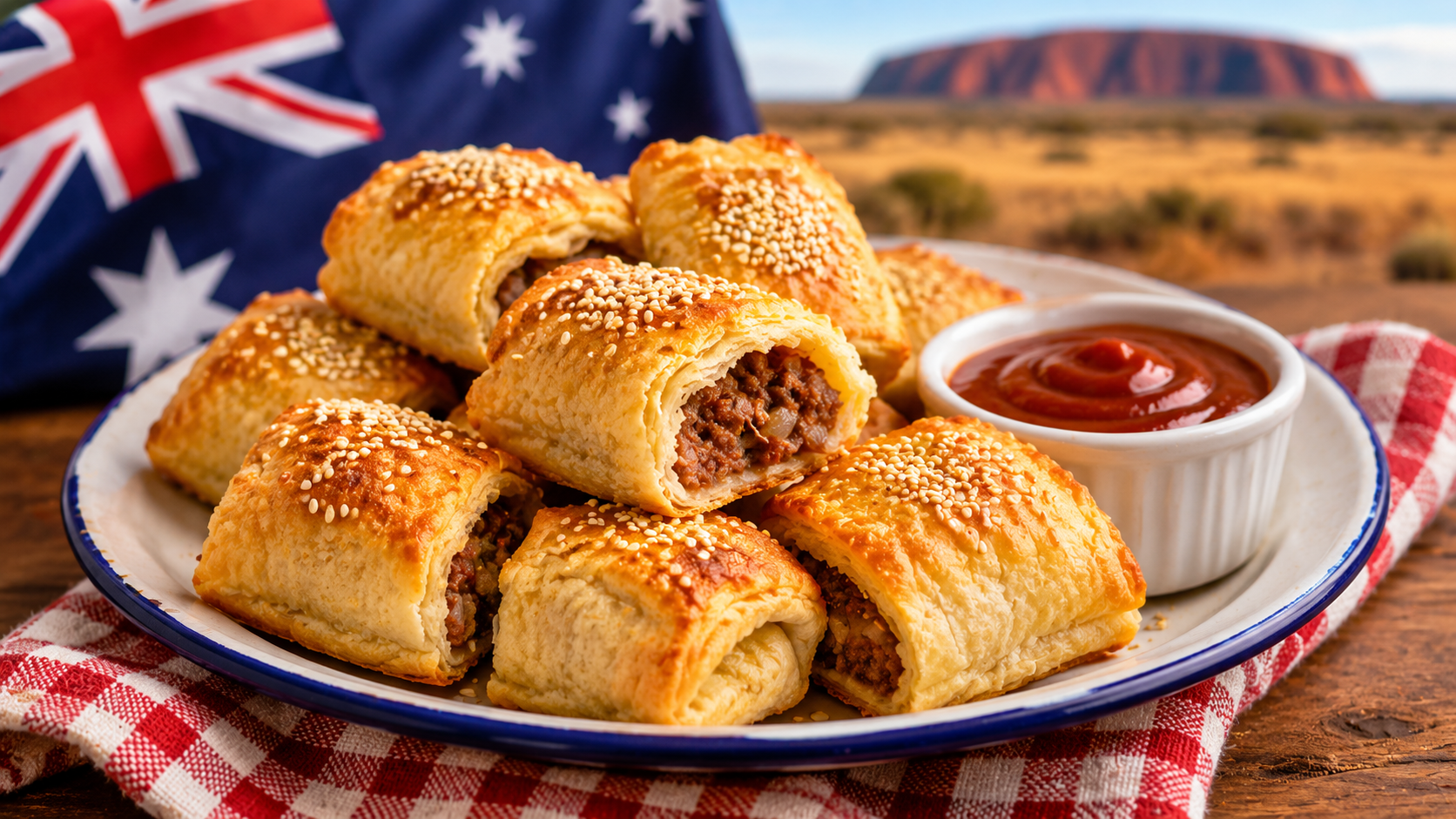
A proper Australian sausage roll is made with seasoned minced meat wrapped in flaky puff pastry and baked until golden brown. Traditionally, pork or a mixture of meats is used, although every bakery and household seems to have its own variation.
And then there’s the tomato sauce.
Americans call it ketchup, which is close enough for practical purposes, although Australians will happily argue about the differences.
The important thing is that a sausage roll without sauce feels like something has been forgotten.
For many Australians, it’s comfort food. Familiar, inexpensive and amazingly uncomplicated.
It’s also one of those foods you don’t think much about until you move somewhere that doesn’t have it.
It’s much the same with our Australian barbecue traditions. The food doesn’t need to be fancy to become part of our national identity.
What Happens When an Australian Craves Sausage Rolls in America?
When we moved to the United States, I discovered that recreating familiar Australian foods wasn’t always straightforward.
Some ingredients have different names. Others are sold in different forms. And certain Australian supermarket staples can be difficult to replace.
Sausage rolls presented an interesting challenge.
The puff pastry was easy enough to find. American supermarkets carry frozen pastry, although you might have to look around the freezer section.
The filling required a little more experimentation.
In Australia, sausage mince is a familiar ingredient. In America, the closest readily available equivalent is often ground pork or breakfast sausage.
I’ve faced a similar challenge recreating Red Rooster chicken seasoning in my American kitchen. Sometimes getting close to the flavour you remember is half the battle.
It works beautifully, although because American sausage is already seasoned, you need to be careful with how much additional salt you add.
The result is a sausage roll that reminds me of home without requiring a suitcase full of Australian groceries.
And, more importantly, my kids love them.
My Australian Sausage Roll Recipe Using American Ingredients
This is the recipe I make here in Tennessee. It’s straightforward, uses ingredients available in most American supermarkets and produces the kind of sausage rolls that disappear quickly once they’re out of the oven.
Preparation time: Approximately 20 minutes Cooking time: Approximately 35–40 minutes Makes: Approximately 16 sausage rolls
Ingredients
For the sausage filling:
1 pound (454 g) Jimmy Dean Premium Pork Sausage
1 package frozen puff pastry, thawed according to package directions
1 small onion, finely minced
¾ cup Italian breadcrumbs
⅓ cup milk
1 teaspoon minced garlic
1 tablespoon Worcestershire sauce
½ teaspoon paprika
Salt and black pepper, to taste
For the egg wash:
1 large egg
1 tablespoon water
To serve:
Australian tomato sauce or American ketchup
How to Make Australian Sausage Rolls
1. Prepare the oven and pastry
Preheat your oven to 425°F (220°C). Line a baking tray with parchment paper.
Unfold the thawed puff pastry onto a lightly floured surface. Cut the pastry sheets into four long rectangles in total.
Keep the pastry cool while preparing the filling so it remains easy to handle.
2. Make the sausage filling
In a large mixing bowl, combine the pork sausage, minced onion, breadcrumbs, milk, garlic, Worcestershire sauce and paprika.
Add a little salt and pepper, remembering that the American sausage is already seasoned.
Mix everything thoroughly until the ingredients are evenly combined.
3. Assemble the sausage rolls
Divide the filling into four equal portions.
Shape each portion into a long sausage along the centre of a pastry rectangle.
Fold the pastry over the filling, creating a long roll, and pinch the seam closed.
Place the seam underneath to help prevent the pastry opening during baking.
4. Cut into individual rolls
Using a sharp knife, cut each long roll into four equal pieces.
You should end up with approximately 16 sausage rolls.
Arrange them on the prepared baking tray, leaving a little space between each one.
5. Add the egg wash
Whisk together the egg and water.
Brush the tops of the sausage rolls with the mixture. This helps create that beautiful golden finish.
I also like to sprinkle a little paprika over the top.
6. Bake until golden
Bake at 425°F for the first 5 minutes.
Reduce the oven temperature to 350°F (175°C) and continue baking for approximately 30–35 minutes, until the pastry is puffed and golden and the pork filling reaches an internal temperature of 160°F (71°C).
If the pastry browns too quickly, loosely cover it with foil.
7. Allow them to cool
Let the sausage rolls rest for about 10 minutes before serving.
This is probably the most difficult step in the entire recipe.
Particularly when you’ve spent the previous half-hour smelling them.
A Few Tricks I’ve Learned Making Sausage Rolls in America
After making these more times than I can count, I’ve discovered a few things that make a difference.
Don’t underestimate the pastry. Good puff pastry is essential. You want something light and flaky that develops a crisp, golden exterior. Shortcrust pastry will work in an emergency, but it produces a very different result.
Be careful with American breakfast sausage. Unlike plain Australian sausage mince, American sausage can contain substantial seasoning. Taste preferences vary, so avoid automatically adding lots of extra salt.
A little Vegemite can work wonders. If you have some in the cupboard, try mixing a teaspoon into the Worcestershire sauce before adding it to the filling. It contributes a deeper savoury flavour without making the rolls taste noticeably like Vegemite.
Make them smaller for parties. Bite-sized sausage rolls are ideal for gatherings. They’re easy to serve and don’t require plates or cutlery.
Reheat them in the oven. If you’ve made them ahead, reheating at 350°F for around 8–10 minutes can help restore the crispness of the pastry. Make sure they’re heated thoroughly before serving.
If you’re planning a proper Australian-style spread, try making some homemade Australian chicken salt to serve with hot chips alongside your sausage rolls.
And one final piece of advice: make more than you think you’ll need.
I’ve rarely encountered leftover sausage rolls as a serious household problem.
Are Australian Sausage Rolls the Same as American Pigs in a Blanket?
This is probably the question I hear most often from Americans.
And I understand why.
Both involve meat wrapped in pastry, but they’re quite different foods.
American pigs in a blanket generally consist of small sausages or hot dogs wrapped in dough, often crescent-roll dough.
Australian sausage rolls use a seasoned minced-meat filling enclosed in puff pastry.
The filling is softer and more substantial, while the pastry is lighter and flakier.
They’re closer to a savoury pastry from a bakery than a miniature hot dog.
Both have their place, of course.
But if you’ve never tried a proper Australian sausage roll, you’re missing out on something rather special.
Why My Kids Love This Little Piece of Australia
One of the interesting things about raising children in another country is watching which traditions survive.
My kids are growing up surrounded by American food, American celebrations and American customs.
And that’s perfectly fine. America is their home.
But there are little pieces of Australia I still want them to know.
Some are cultural traditions. Some are expressions and stories. And some come straight out of our kitchen.
I’ve written before about loving two countries at once, and I think food is one of the simplest ways those two identities can coexist.
Sausage rolls are a big part of that.
They’re easy for the kids to eat, familiar enough not to seem unusual, and something we can make together.
I don’t expect them to attach the same childhood memories to sausage rolls that I do.
They haven’t grown up buying them at Australian school canteens or eating them at country sporting grounds.
Their memories will be different.
Perhaps they’ll remember the smell coming from our oven in Tennessee, or the times we made a tray for a family gathering.
And that’s rather nice when you think about it.
An Australian tradition doesn’t have to remain exactly as it was to become part of another generation’s childhood.
Food Has a Funny Way of Making Somewhere Feel Like Home
Living overseas changes your relationship with the place you came from.
Things that once seemed ordinary become surprisingly important.
You notice the expressions you no longer hear every day. The foods that aren’t available at the local supermarket. The little rituals you never realised were part of your identity.
And sometimes you find yourself spending an afternoon trying to recreate something you could once have bought from practically any bakery in Australia.
Not because sausage rolls are impossible to live without.
But because they represent something familiar.
For a little while, our kitchen in Nashville smells like an Australian bakery.
The kids wander in to see what’s cooking. Someone asks when they’ll be ready. And inevitably, a few disappear before we’ve even sat down to eat.
It’s a small thing, but living between two countries has taught me that small things can matter enormously.
I may have traded Australian bakeries for American supermarkets, but I haven’t had to leave every part of home behind.
Sometimes all it takes is a packet of puff pastry, a pound of pork sausage and a bottle of tomato sauce.
And if I can introduce a few more Americans to the joys of a proper Australian sausage roll along the way, all the better.
It’s a slightly different tone from some of my other videos.
Less observational humour. More reality.
Because this one isn’t about accents or goodbyes.
It’s about the quiet tension that sits underneath a lot of expat conversations right now:
“What if we moved home?”
And more specifically:
“Can we afford to?”
Why Australia Still Feels Like Home
If you’ve lived away from Australia for any length of time, you know the pull.
It’s not just beaches or weather.
It’s familiarity.
Shorthand.
It’s walking into a Bunnings on a Saturday and grabbing a snag without thinking about it.
It’s not having to explain yourself.
Home has a rhythm that lives in your nervous system.
And when you’re overseas long enough, that rhythm starts to echo louder.
For me, that’s been happening more recently.
But every time I allow myself to think seriously about moving back, one issue rises above the rest:
Housing.
The Reality of Australia’s Housing Crisis
Australia’s housing market isn’t just “a bit expensive.”
It’s structurally strained.
According to CoreLogic Australia, property values across major cities have surged significantly over the past decade, with Sydney and Melbourne consistently ranking among the least affordable housing markets relative to income. https://www.corelogic.com.au
Rental markets have tightened as well. Vacancy rates in many areas have hovered near historic lows, driving up competition and prices — a trend widely reported by sources like ABC News Australia. https://www.abc.net.au/news
This isn’t abstract data when you’re considering uprooting your life.
It’s practical.
It’s the difference between nostalgia and feasibility.
Buying in Australia: The Numbers Are Confronting
If you’ve looked at listings recently, you’ll know what I mean.
Sydney and Melbourne come with eye-watering price tags.
But even regional centres — places that once felt accessible — now carry serious financial weight.
That shift changes the emotional equation.
It’s not just:
“Do we want to move back?”
It becomes:
“Are we willing to trade financial stability for proximity?”
And that’s a harder question.
Renting in Australia: Competitive and Uncertain
Buying is one hurdle.
Renting is another.
In many cities, rental properties receive dozens — sometimes hundreds — of applications.
It’s not unusual to hear stories of families attending packed open homes, competing for properties that feel smaller and more expensive than expected.
That level of competition introduces uncertainty.
And uncertainty is uncomfortable when you’re moving internationally with children.
The Emotional Side of Moving Back to Australia
This is the part that doesn’t show up in property listings.
The emotional tension.
I have a home in the United States.
It’s stable. Predictable.
The thought of leaving that to re-enter a market defined by scarcity and competition is confronting.
At the same time, Australia is where my extended family is.
It’s where parts of my identity were shaped.
Not just geography.
It’s belonging.
Living overseas long enough changes how you see home. I’ve written about that shift in other contexts too — like noticing how accents begin to blur after years abroad:
In 2024, I stepped away from a 24-year career in finance.
That wasn’t impulsive.
It was gradual.
Seventy-hour weeks. Long commutes. Missing small moments with the kids.
At some point, I realised I was financially stable but time-poor.
And time, especially with young kids, doesn’t compound.
It just goes.
So I shifted.
Less corporate. More present.
More storytelling.
Why I Created “From Down Under to Down South”
This channel and blog weren’t built to criticise America.
Or romanticise Australia.
They exist because living between cultures sharpens observation.
You start noticing things you never noticed before:
How Americans end conversations. Why Australia and New Zealand get confused. The way politeness lands differently. How goodbyes feel faster here. How home feels when you’re far from it.
The kind you’d have over a barbecue or on a long drive.
What Aussie Expat Culture Shock Actually Looks Like
When people think of expat culture shock, they imagine big things:
Healthcare systems. Politics. Driving on the other side of the road.
But most of it is smaller.
It’s vocabulary.
Social timing.
It’s ordering “chips” and getting crisps.
Sociologists often describe culture shock as a gradual adjustment process rather than a dramatic event. The University of Queensland has written about how adaptation tends to unfold in subtle stages rather than one big moment. https://www.uq.edu.au
That feels accurate.
It’s not one shock.
It’s a thousand micro-adjustments.
And over time, those adjustments become stories.
What You’ll Find Here
When I’m not filming or recording the podcast, I’m:
Being a dad. Dancing ballroom. Cooking — I’m a qualified chef, so the kitchen’s still my reset button.
This project sits at the intersection of all of it:
Family. Identity. Food. Humour. Cultural contrast.
It’s about noticing.
And sometimes laughing.
And sometimes pausing.
If you enjoy thoughtful, understated reflections on Aussie vs American life — without outrage or hype — you’ll probably feel at home here.