Tag: American traditions

  • The Surprising Connection Between Halloween and Waffle House

    The Surprising Connection Between Halloween and Waffle House


    Last Saturday evening, I spent two hours walking around our neighbourhood here in Nashville.

    We covered precisely one block.

    Now, I know suburbs can be big here, but even by American standards, that’s not really an impressive distance.

    The problem wasn’t the walking. It was the talking.

    Kids lined up at a Tennessee house for trick or treating

    Every few houses, we’d run into somebody we knew. There were neighbours standing around fire pits, parents catching up with friends, children running from one decorated house to another, and people we’d never met striking up conversations as though we’d known each other for years.

    At one point, I found myself discussing the correct pronunciation of an Australian bird with an American dressed as an insurance salesman.

    Perfectly normal Halloween behaviour.

    By the time we finally got home, Georgia and Brianna had collected enough candy to stock a small convenience store.

    Two girls in Halloween costumes sit together on the living room floor with separate piles of trick-or-treat candy.
    Georgia and Brianna show off their Halloween candy haul after trick-or-treating.

    I was exhausted, the girls were delighted, and my attempt to collect the traditional Dad Tax had produced precisely two little boxes of Milk Duds.

    After two hours of walking that wasn’t a decent return on investment.

    But somewhere between the enormous skeletons, the fire pits and the conversation about emus, something hit me.

    There’s something fascinating about the way people interact here. Whether it’s neighbours gathering in their driveways on Halloween or complete strangers sitting alongside each other at a diner, everyday occasions can bring people together in ways you might not expect.

    And sometimes, the most unlikely places have more in common than you realise.


    Halloween: When the Whole Neighbourhood Comes Outside

    Growing up in Australia, Halloween wasn’t really part of our lives.

    We had Christmas, Easter, birthday parties and all the usual celebrations, but I entire neighbourhoods did not transform themselves into elaborate displays of skeletons, spiders and inflatable monsters. Trick or treaters were even very rare, if you got one you were winning.

    Halloween has become more popular in Australia over the years, but what I’ve experienced here in Tennessee is on another level.

    Some of our neighbours put an extraordinary amount of effort into decorating their houses.

    neighbourhood trick or treating on Halloween

    There are enormous spiders crawling across roofs, skeletons sitting on porches, fake graveyards covering front lawns, smoke machines and enough lights to make you wonder whether somebody’s accidentally confused Halloween with Christmas.

    But the decorations are only part of it.

    What I really enjoy is how the whole neighbourhood comes outside.

    People set up chairs in their driveways. Fire pits are burning. There are games for the kids, groups of parents chatting and, at some houses, even Jell-O shots for the adults.

    An excellent idea, I reckon.

    The kids get enough sugar to keep a dentist in business for the next decade, while the parents get something to help them survive another hour of walking.

    We saw hundreds of kids out this year, along with plenty of adults who’d dressed up too.

    The girls kept running into school friends. We stopped to talk with parents we knew, caught up with neighbours and met people who lived only a few doors away.

    I even met a bloke who’d recently moved into the house directly across the road from us. He’s ex-military, a really nice bloke, and somehow we’d managed to live opposite each other without properly meeting since he moved in.

    It took Halloween to finally introduce ourselves.

    That’s one of the things I find fascinating about occasions like this.

    You don’t need an invitation.

    Nobody has to organise anything weeks in advance.

    You don’t even need to know the people you’re talking to. You simply walk down the street, and there’s somebody standing beside a fire pit ready for a chat.

    House in Tennessee decorated for Halloween with skeletons and lights.
    Halloween in our Tennessee neighbourhood is about considerably more than collecting candy

    An Australian, an Emu and a Southern Accent

    One of my favourite encounters involved a bloke dressed as Doug from the Liberty Mutual insurance commercials.

    If you’ve seen the advertisements, you’ll know Doug is the guy who appears alongside LiMu Emu.

    Well, this bloke had the entire outfit, complete with an emu puppet.

    Naturally, as an Australian, I felt obliged to raise a matter of considerable national importance.

    The pronunciation of emu.

    In Australia, we say “ee-myoo.”

    In the commercials, it’s “ee-moo.”

    So there I was, standing in the middle of our Tennessee neighbourhood, giving an American dressed as an insurance salesman a lesson in Australian pronunciation.

    His explanation?

    “It’s because we’re Southern.”

    Fair enough, mate. Can’t argue with that.

    From Down Under to Down South podcast

    Why Is Talking Easier Than Getting Together?

    There’s something I’ve noticed over my eight years living in America.

    Striking up a conversation with a complete stranger can be remarkably easy.

    Somebody might start talking to you in the supermarket, at a petrol station, while waiting in a queue or simply because you’re both standing in the same place.

    My Australian accent certainly helps.

    I’ve lost count of how many conversations have started with somebody asking where I’m from.

    It’s something I’ve explored before when writing about why Americans talk to complete strangers, a habit that still fascinates me after eight years living here.

    Sometimes it’s a quick exchange.

    Other times, I find myself hearing somebody’s entire family history while I’m just trying to buy a loaf of bread.

    For those of us who aren’t quite as naturally gifted at starting conversations, there’s even a set of TableTopics conversation cards designed to get people talking. Although judging by some of my supermarket encounters, plenty of Americans could probably write their own.

    I’ve always enjoyed that side of American life.

    Of course, not everybody wants to have a conversation with a stranger, and there are plenty of places in Australia where people are just as friendly.

    But there’s a certain openness I’ve experienced here that still catches me by surprise.

    Halloween seems to bring that out in people.

    You don’t have to know your neighbours particularly well. There’s no need for an invitation, and nobody expects you to arrive with a plate of food.

    Just wander down the street, stop to admire somebody’s decorations, and before you know it, you’re having a conversation with someone you’ve never met.

    Sometimes that’s all it takes.

    A shared experience, a little curiosity and somebody willing to say hi.


    Waffle House: Where Strangers Share a Counter

    Of course, Halloween isn’t the only place Americans find themselves surrounded by people they don’t know.

    Sometimes it happens over a plate of hash browns at two in the morning.

    Which brings me to Waffle House.

    For anyone unfamiliar with the American South, Waffle House is something of an institution.

    It’s a diner chain known for being open around the clock, serving breakfast at practically any hour and attracting a rather interesting cross-section of American life.

    My first visit was during a late-night drive from Atlanta to Nashville with Nikki.

    We’d been travelling for hours when she decided she wanted something sweet.

    Then we spotted a Waffle House.

    Perfect, she thought.

    She was imagining waffles piled high with ice cream, chocolate sauce and all sorts of things.

    Unfortunately, Waffle House wasn’t quite the establishment she’d imagined. It was another of those surprising differences in American food that you don’t necessarily expect when you move here.

    There were waffles, certainly.

    But this was more of an eggs, bacon, hash browns and filtered coffee operation.

    Nikki was disappointed.

    I was fascinated.

    There’s something about the place that I find very American.

    If you’ve developed a bit of a soft spot for Waffle House, you can even bring a little of that unmistakable yellow-and-black glow into your own home with this Waffle House plug-in night light.

    You’ve got people finishing night shifts, families stopping during long drives, locals grabbing breakfast and the occasional character who looks as though they’ve had a considerably more interesting evening than you.

    Everyone’s there for the same basic reason.

    They want something to eat.

    But unlike many restaurants, Waffle House has that long counter running alongside the open kitchen.

    You can sit there watching the cooks work, listening to orders being called out, with complete strangers sitting just a few feet away.

    Strike up a conversation or just simply enjoy your breakfast.

    Either way, there’s something about that shared space that I rather like.

    Three customers sit at a Waffle House counter while employees prepare food and serve customers in the open kitchen.
    Customers sit at a Waffle House counter overlooking the busy open kitchen.

    The Great Waffle House Seating Debate

    Waffle House has an interesting rule about where people should sit.

    Its published house rules explain that booths are intended for two or more people, while customers dining alone are asked to consider sitting at the counter.

    The idea is straightforward.

    If you’re eating by yourself, leaving a booth available makes it easier for families and larger groups to find somewhere to sit.

    I can understand that.

    If the restaurant is packed and a family of four is waiting for a table, it seems reasonable to leave the booth for them.

    On the other hand, if the place is practically empty and I want to enjoy my breakfast in a booth, I can understand that too.

    I’m paying for my meal, after all.

    But I find the whole debate rather interesting.

    It’s not just about where you sit. It’s about the unwritten rules of sharing public spaces and how we accommodate one another.

    There’s a certain amount of give and take involved.

    Sometimes that means leaving a booth for a family. Other times, it might mean sitting beside a complete stranger at the counter.

    You don’t have to become best mates or even have have a chat.

    You just need somewhere to enjoy your breakfast.

    Preferably without having to negotiate a seating arrangement worthy of the United Nations.

    Empty Waffle House counter with red stools, menus and condiments overlooking an open kitchen.
    The distinctive counter seating and open kitchen inside a Waffle House restaurant.

    What Halloween and Waffle House Have in Common

    What connects a neighbourhood Halloween celebration with a Waffle House counter?

    On the surface, not much.

    One involves kids dressed as superheroes and parents trying to avoid stepping on plastic spiders.

    The other involves coffee, hash browns and the possibility of encountering somebody who’s been awake since yesterday.

    But both provide something important.

    A reason for people to be together without having to make elaborate arrangements.

    That’s what I’ve been thinking about since Halloween.

    A chat beside a fire pit doesn’t need a dinner reservation.

    Sitting next to somebody at a diner doesn’t mean you’ve committed yourself to becoming lifelong friends.

    You can simply enjoy the interaction for what it is.

    Of course, not every neighbourhood celebrates Halloween quite like ours, and not everybody wants to strike up a conversation over breakfast.

    But there’s something nice about these everyday American traditions.

    They give people a reason to be in the same place, even if they have absolutely nothing else in common.

    At Halloween, it’s the neighbourhood streets.

    At Waffle House, it’s the counter.

    Neither requires an invitation.

    And sometimes, that’s all you need.


    When Your Neighbours Stop Being Strangers

    One of the things I’ve noticed lately is that I’m starting to recognise more people around our neighbourhood and town.

    Not just the immediate neighbours whose names I know, but parents from school, people walking their dogs and familiar faces I pass when I’m out and about.

    It’s a gradual thing.

    When you first move somewhere, everybody is a stranger.

    Then you start recognising people.

    Eventually, somebody waves from across the street, and you realise you actually know who they are. It’s one of those little moments when America stops feeling like a foreign country

    You don’t necessarily need to be close friends with everybody to feel part of a community.

    Sometimes it’s enough to know that the bloke across the road is a decent person, or that there’s somebody nearby who’ll stop for a chat.

    Halloween gave us an evening full of those little encounters.

    Yes, the decorations were fantastic.

    Yes, the girls had a wonderful time and yes, there were Jell-O shots.

    But what I remember most is how many people we stopped and talked to.

    We spent two hours walking one block, and I wouldn’t have wanted to rush it.

    For one evening, our neighbourhood felt less like a collection of houses and more like a place where people actually knew one another.

    And while I don’t expect everyone to start inviting strangers into their homes or striking up conversations over hash browns, I do think there’s something to be said for making the most of those little opportunities to connect.

    Sometimes all it takes is stepping outside, saying hello and seeing where the conversation goes.

    Halloween-decorated tree with giant carnivorous plants, green skeletons, spiderwebs and purple lighting outside a neighbourhood home.
    Elaborate Halloween decorations transform a neighbourhood front yard into a spooky spectacle.

    Maybe We Just Need More Nights Like Halloween

    I don’t think the answer to getting people together is necessarily more organised events, more invitations or another group chat trying to find a Saturday when everybody is available.

    Sometimes we just need opportunities to be around one another.

    For anyone interested in why people gather and what makes those encounters meaningful, Priya Parker explores the subject in The Art of Gathering.

    A neighbourhood celebration.

    A local diner.

    A school event, or even one of those dance competitions where the parents have their own social circles

    A few chairs in somebody’s driveway.

    Places where conversation can happen without anybody feeling they have to make a big occasion out of it.

    That’s what I enjoyed about Halloween in our little corner of Tennessee.

    For a couple of hours, our neighbourhood felt like one big gathering.

    People who might normally exchange nothing more than a wave were standing around talking.

    Children were running between houses, parents were catching up, and a bloke dressed as an insurance salesman was explaining why Americans pronounce emu differently.

    You couldn’t organise an evening quite like that if you tried.

    And maybe that’s the point.

    Some of the best social occasions are the ones nobody really has to organise.

    Although next year, I will be taking a more active role in the collection of Milk Duds. Two boxes simply isn’t good enough.


  • Why Americans Never Really Leave School Behind

    Why Americans Never Really Leave School Behind


    There are certain things I expected to leave behind when I finished school.
    Homework. Exams. Being told what to wear. The occasional teacher who seemed personally offended by my existence.
    What I didn’t expect was to move to America decades later and discover that, for some people, school never really ends.
    Not the actual education, mind you. The identity.


    I’ve lived in the United States for eight years now, and one thing I’ve noticed is how often schools find their way into everyday conversations.
    Where did you go to high school? Which college did you attend? Who do you support?
    That last question can be particularly dangerous in Tennessee. Give the wrong answer and you may find yourself in a conversation about football that lasts considerably longer than you intended.

    At first, I thought this was simply another American cultural quirk.
    But the longer I’ve lived here, the more I’ve come to appreciate that the question of where someone went to school can be about considerably more than education.
    Sometimes it’s about finding a connection.
    Sometimes it’s about belonging.
    Maybe it’s about a football team that hasn’t won anything significant in years, but whose supporters remain convinced that next season will be different.
    And sometimes, whether we like it or not, it’s about social status.

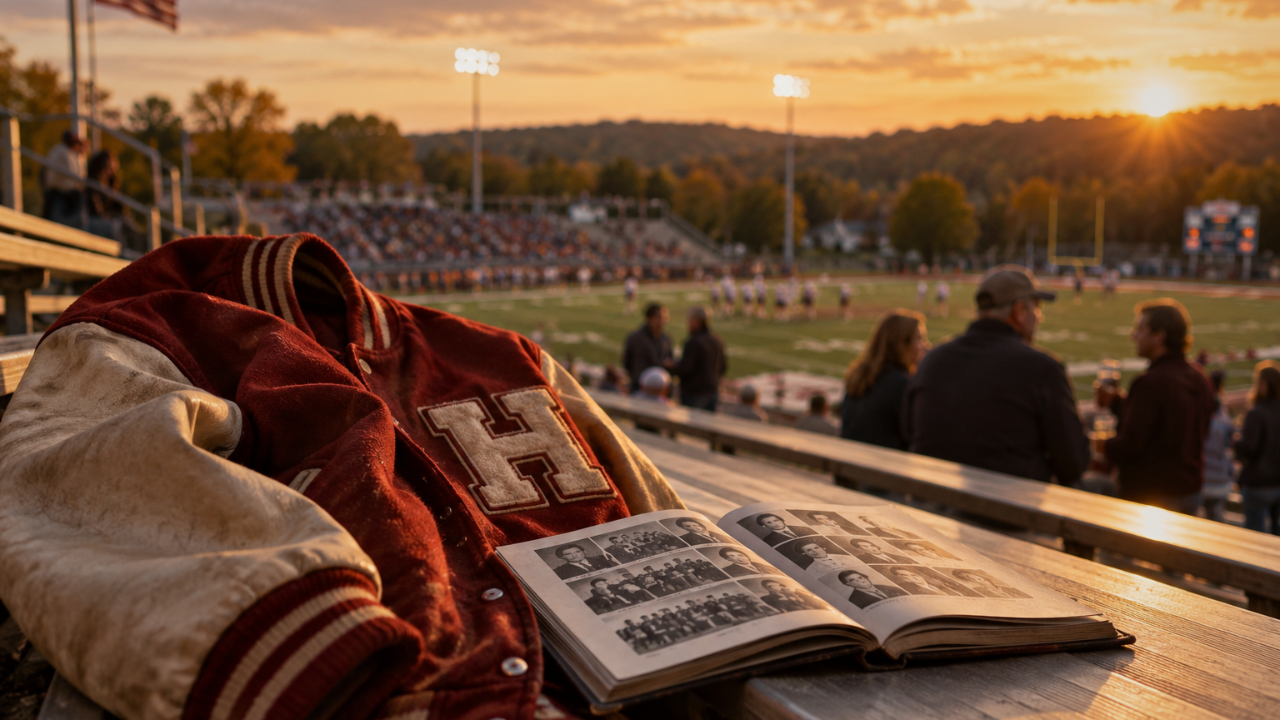
    For some American communities, school spirit continues long after graduation.

    The Question That Sounds Simple but Isn’t

    Imagine meeting someone at a party.
    You exchange names, establish that neither of you is particularly interested in discussing the weather, and then comes the question

    “Where did you go to school?”

    For an Australian, the answer might be a straightforward piece of biographical information.

    For an American, depending on where you live and who’s asking, it can open an entire conversation.

    The person might recognise the school. They might know someone who attended it. They might have played against its football team or discovered that your cousin married their old chemistry teacher.

    Suddenly, two strangers have something in common.

    One particularly interesting example is St. Louis, Missouri, where asking someone which high school they attended has long been recognised as a local conversational tradition.

    A 2007 feature in St. Louis Magazine explored how the question can reveal shared acquaintances, neighbourhood connections and aspects of someone’s background.

    Imagine that.

    You could be 52 years old, have a mortgage, two children, a career and a perfectly respectable collection of lawn maintenance equipment.

    Yet someone still wants to know where you were sitting during Year 10 biology.

    To be fair, I can understand the appeal.

    I’ve moved between countries and lived in enough different places to appreciate how valuable a familiar connection can be.

    When someone discovers that you grew up near the same place, knew the same people or experienced something similar, the conversation immediately changes.

    You stop being two strangers.

    You have a shared starting point.

    But there’s another side to the question, and it’s worth acknowledging.


    Sometimes Your School Says Something About Your Background

    Not every question about education is innocent curiosity.

    The name of a school can sometimes suggest where someone grew up, the financial circumstances of their family or the social circles they moved in.

    That doesn’t mean everyone asking is making those judgments.

    It means the information can carry social meaning beyond the classroom.

    In St. Louis, for example, discussions about the famous high school question have included both interpretations: people who see it as a way of finding mutual friends and people who believe it can be used to establish social standing.

    The distinction matters.

    Asking where someone went to school because you’re hoping to discover a mutual acquaintance is one thing.

    Deciding what sort of person they must be because of the answer is quite another.

    I find this especially interesting because schools can become shorthand for entire communities.

    A school name might tell a local person roughly which neighbourhood someone came from. It might suggest a particular sporting rivalry, a religious tradition or a family connection stretching back generations.

    Of course, none of that tells you whether the person standing in front of you is actually worth knowing.

    For that, you’re probably going to have to talk to them.

    An outrageous concept, I know.


    Then There’s College. That’s an Entirely Different Level.

    American college football supporters wearing university colours at a homecoming game.
    For many graduates, university loyalty becomes a lifelong connection.

    One of the things that surprised me about American university culture was how visible it remains outside the university itself.

    People wear college shirts to the supermarket.

    They put university stickers on their cars.

    They decorate their homes in school colours.

    They follow the sporting achievements of students who were probably born long after they graduated.

    Some even travel considerable distances to return to campus for homecoming celebrations.

    Now, Australian universities have alumni associations, sporting clubs and plenty of graduates who remain proud of their institutions.

    But the scale and visibility of American college identity, particularly around major sporting programs, feels quite different from what I grew up with.

    You don’t need to have attended the University of Tennessee to notice its presence around Nashville.

    Orange merchandise is everywhere.

    In parts of the South, college football isn’t simply something you watch.

    It’s something you inherit.

    Your parents supported a particular university. Their parents supported it. Now you’re expected to continue the tradition.

    You might attend an entirely different institution.

    You might never attend university at all.

    Doesn’t matter.

    Apparently, your football allegiance was settled before you were old enough to hold a spoon.

    And it’s important to recognise that the relationship between universities and their supporters isn’t limited to graduates.

    College teams can represent an entire state or region. For some supporters, the institution is part of their community identity rather than their personal educational history.

    That makes the question of which college someone supports quite different from asking which college they attended.

    One is about education.

    The other might be about family, geography and several generations of sporting disappointment.


    Why School Sports Matter So Much

    If you want to understand the continuing importance of schools in American communities, sport is a useful place to start.

    High school football in particular can bring together people who otherwise have little reason to gather in the same place.

    Parents, grandparents, former students, local business owners and neighbours turn up to support the same team.

    For some towns, Friday night football is a major community event.

    A September 2026 Associated Press report explored how high school football continues to provide a sense of unity, tradition and opportunity in communities such as Aliquippa, Pennsylvania.

    That community role helps explain why people can remain attached to their old school long after graduating.

    The school wasn’t just somewhere they attended classes.

    It was where they played sport, made friends, performed on stage, attended community events and developed relationships that might last for decades.

    The sporting connection is widespread, although certainly not universal.

    A Pew Research Center survey conducted in February 2022 found that 48% of American adults reported participating in organised competitive sports during high school, college or both.

    That doesn’t mean every former student remains interested in school sport.

    But it does demonstrate how many Americans have personal experience of the sporting side of education.

    And I can see why those memories endure.

    When a school is also a community gathering place, leaving the classroom doesn’t necessarily mean leaving the community behind.

    College marching band performing in Nashville
    American school traditions extend well beyond the players on the field

    Watching My Own Children Grow Up in the American School System

    This is where the subject becomes a little more personal for me.

    I’m an Australian raising two daughters in Tennessee.

    Their experience of school is already different from mine.

    I’m watching them grow up with traditions, terminology and expectations that weren’t necessarily part of my own childhood.

    Things like school spirit, mascots and the importance attached to particular school events are part of the world they’re learning to navigate.

    As a parent, I find myself paying attention to things I wouldn’t have given much thought to before.

    Which school will they attend?

    What opportunities will it offer?

    Will they find good friends?

    Will they feel comfortable there?

    Will it encourage their interests and help them discover what they’re capable of?

    Those questions aren’t uniquely American, of course.

    Parents everywhere worry about their children’s education.

    But living here has made me more conscious of the role a school can play in shaping a child’s wider social world.

    For my girls, school isn’t simply a building where they learn maths and English.

    It’s part of where they’re growing up.

    It’s where friendships develop, confidence can grow and memories are made.

    As a father, I hope those memories will be good ones.

    I also hope that, years from now, when someone asks them where they went to school, they’ll remember more than the name on the building.

    Marching band at Neyland Stadium in Knoxville Tennessee
    Raising my daughters in Tennessee has given me a different perspective on the role schools play in American life.

    The Part of American School Culture I Understand Better Now

    When I first arrived in America, I sometimes found the continuing attachment to schools a little strange.

    I couldn’t quite understand why a grown adult would be so emotionally invested in an institution they left 30 years ago.

    Particularly when the attachment involved shouting at a television because a 19-year-old missed a field goal.

    But after eight years here, I’ve started to see the bigger picture.

    A school can provide something that becomes increasingly valuable as we get older.

    Continuity.

    People move away. Careers change. Families grow. Neighbourhoods transform.

    The place where you spent your teenage years might be one of the few connections that remains.You can return for a reunion and encounter people who remember a version of you that your current friends have never met.

    You can watch a football game and feel connected to the town where you grew up.

    You can meet someone on the other side of the country, discover they attended the same university, and immediately have something to talk about.

    None of that requires believing your school was better than anyone else’s.

    It’s simply the comfort of belonging to something familiar.

    Of course, not everyone has happy memories of school.

    For some people, graduation was a welcome escape, and they have absolutely no desire to return.

    That’s worth remembering whenever we romanticise school spirit.

    A place that represents belonging for one person might represent exclusion for another.

    The value isn’t necessarily in the institution itself.

    It’s in the relationships and experiences people associate with it.


    Maybe the Question Isn’t Really About School at All

    I’ve come to think that asking someone where they went to school is often another version of a much more familiar question.

    Where are you from?

    Not necessarily geographically.

    Where did your story begin?

    What sort of community shaped you?

    Do we have anything in common?

    Americans have plenty of ways of answering those questions, and schools are just one of them.

    For some, it’s a university.

    For others, it’s a hometown, a church, a sporting club or the neighbourhood where they grew up.

    I still find it amusing that a person can spend four years at university and then devote the next 40 to wearing its merchandise.

    But I understand it a little better now.

    Perhaps that’s one of the things I’ve learned from living between two cultures.

    Sometimes the things that initially seem strange aren’t particularly strange at all.

    They’re simply familiar human needs expressed in unfamiliar ways.

    The desire to belong.

    The pleasure of finding a shared connection.

    The comfort of knowing that somewhere, even decades later, there’s a place that still feels a little bit like
    home.

    Although if someone asks me where I went to high school, they’re going to need a few minutes.

    Mine was in Australia.

    That tends to complicate the conversation.


    Enjoy seeing America through Australian eyes?

    From Down Under to Down South is an independent project exploring the little things that make life between two countries interesting. If you enjoy these stories and would like to support more of them, you can buy me a coffee. Thanks for being part of the community.