Tag: Australian expat

  • Apparently, I’m Old Now. The Evidence Is Becoming Difficult to Ignore

    Apparently, I’m Old Now. The Evidence Is Becoming Difficult to Ignore

    THIS WEEK IN AMERICA


    Nobody actually tells you when you get old.

    There is no letter.

    No government department quietly updates your status.

    Your children don’t gather around the kitchen table and explain that, after careful consideration, the family has decided you are no longer young.

    It happens much more subtly than that.

    One day you’re driving to get a haircut, flicking through radio stations, when you hear a Supertramp song.

    Excellent.

    Finally, somebody is playing some decent music.

    Then you hear the station call sign.

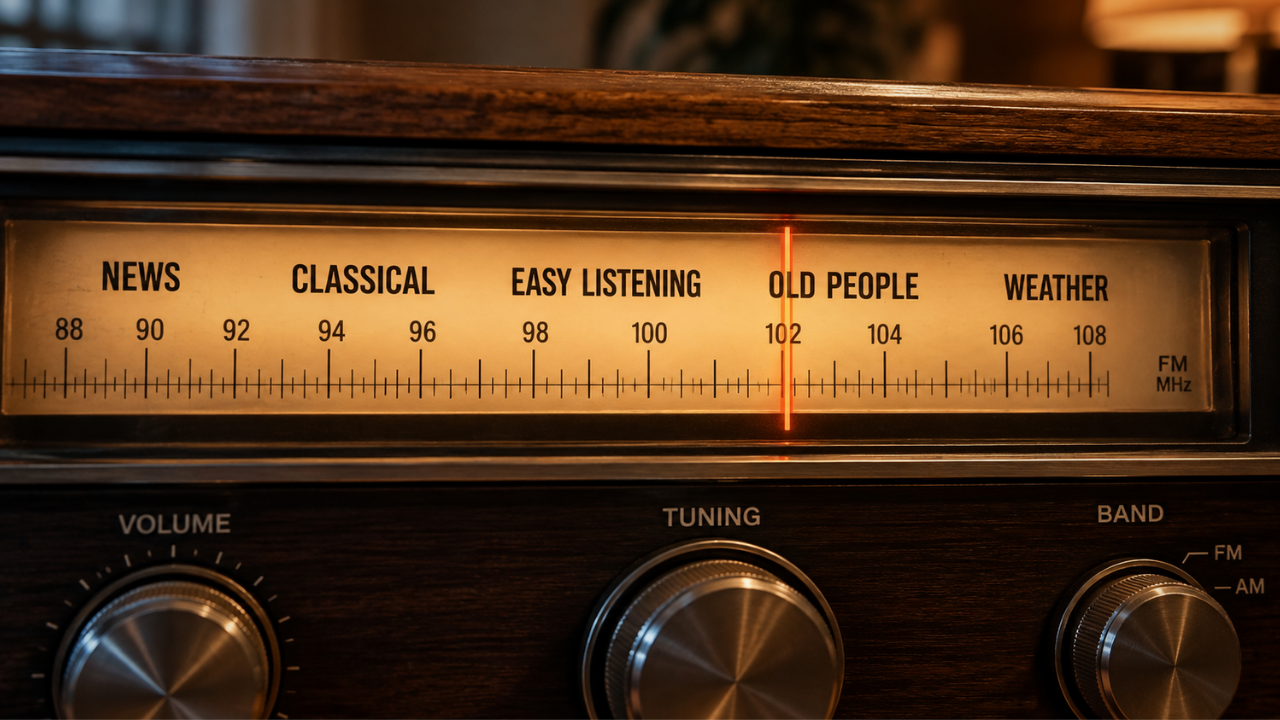
    Hippy Radio, playing your favourite golden oldies.

    I’m sorry. What?

    Apparently, while I was busy raising children, moving countries, paying bills and generally getting on with life, somebody moved the definition of “oldies.”

    Nobody consulted me.

    In my head, oldies are still songs from some distant historical period involving enormous wooden stereos, orange dining chairs and greenish carpet.

    I know this because we actually had the orange dining chairs and greenish carpet.

    But that’s beside the point.

    Supertramp is not oldies.

    At least it wasn’t until the radio informed me otherwise.

    Retro 1970s living room with wood paneling, plaid sofa, orange curtains and green shag carpet.
    In my head, this is still what the oldies station is supposed to look like.

    The strange thing about being 52 is that I don’t wander around feeling 52.

    I’m not entirely sure what 52 is supposed to feel like, but presumably this is it.

    Most mornings I still feel fundamentally like the same person I’ve always been. There isn’t some older bloke occupying my body and issuing instructions.

    Then the outside world provides evidence.

    Music is particularly ruthless about this.

    Songs you remember being released start appearing on classic stations. Albums from your youth have anniversary editions commemorating numbers of years that seem mathematically impossible.

    Eventually you hear a song and think, “I remember when this came out.”

    That sentence alone should probably come with reading glasses.

    The unsettling part isn’t really getting older.

    It’s watching things that still feel contemporary in your memory become nostalgia for everybody else.

    There is a difference.

    I don’t hear the music of my younger years and think, “Ah yes, a fascinating artifact from another era.”

    I hear it and think, “Turn it up.”

    The historical artifact, apparently, is me.


    Having young children was supposed to protect me

    So I thought I’d found a loophole.

    I have two young daughters, Georgia and Brianna, which means contemporary culture arrives in our house whether I request it or not.

    I know who Olivia Rodrigo and Ariana Grande are. You can even hear me occasionally playing some of their songs on piano or guitar while the girls sing.

    For brief periods, this creates the reassuring illusion that I remain culturally current.

    Then they start talking about Squishies.

    If you haven’t encountered Squishies, congratulations.

    They’re soft foam objects that you squeeze.

    Then you watch them slowly return to their original shape.

    That’s essentially the business model.

    Naturally, one Squishy is never enough. They appear to multiply around the house when nobody is looking.

    There are Squishies shaped like hamburgers, hot dogs and various other foods.

    There are even sticks of butter.

    Yep, a foam stick of butter.

    Thousands of years of human civilization brought us agriculture, democracy, antibiotics, air travel and the internet, eventually allowing us to reach our ultimate destination:

    squeezable butter that cannot be eaten.

    My daughters love them.

    This is one of the interesting things about being a parent at this age. You don’t completely lose touch with youth culture because youth culture keeps being dumped on your kitchen counter.

    You simply become an observer rather than a participant, or the one that pays for it each time you walk past Five Below.

    Colorful Squishy toys, including a stick of butter, hamburger, hot dog and other food shapes, arranged on a kitchen table.
    Thousands of years of human civilization, and somehow we arrived at a foam stick of butter.

    Then your childhood becomes ancient history

    The girls delivered another reminder recently when I decided to introduce them to Home and Away.

    For Americans unfamiliar with it, Home and Away is one of those Australian television programs that doesn’t really require an introduction if you grew up there.

    It began in 1988.

    When I was growing up, it was simply part of the landscape.

    Summer Bay. Alf Stewart. Teenagers experiencing an extraordinary number of personal crises for people living beside such a beautiful beach.

    It was there after school.

    It was there year after year.

    More importantly, it is still on television.

    So I thought I’d introduce my American daughters to this important piece of Australian culture.

    They weren’t impressed.

    It was, I was informed, “too old.”

    Too old?

    It’s still on!

    I wasn’t asking them to sit through a flickering black and white newsreel while somebody played a piano in the corner.

    This is a television show that is currently being made.

    Unfortunately, there is a flaw in my argument.

    When your father introduces you to a television program that began 38 years ago, you are entitled to ask questions.

    I don’t particularly care for that mathematics, but I acknowledge its existence.

    There’s something fascinating about showing your children the culture you grew up with.

    You’re not merely showing them a television program or playing them a song.

    You’re handing them a tiny piece of your own history.

    This mattered to me.

    This made me laugh.

    This was normal in my house.

    This is what Australia looked and sounded like when I was growing up.

    Then your child looks at it with absolutely none of the nostalgia attached and effectively says:

    “Yeah. Bit old.”

    Children are excellent at historical perspective.

    Home and Away title over an aerial view of an Australian beach and ocean.
    Home and Away has been on Australian television since 1988. Apparently that makes it “too old” for my daughters.

    Famous children should not be allowed to become adults

    There is another particularly aggressive way the universe reminds you how much time has passed.

    Children you remember from television become adults.

    I recently discovered Honey Boo Boo had turned 21.

    She can legally walk into a bar in America and order a drink.

    This is just not on!

    Certain people from television are supposed to remain permanently frozen at whatever age they were when we first encountered them.

    Macaulay Culkin should still be defending his house from burglars.

    Kevin Arnold should still be trying to work out what Winnie Cooper thinks of him.

    Honey Boo Boo should definitely not be old enough to order a cocktail.

    The problem isn’t that these people age.

    It’s what their aging reveals about us.

    If the child you remember watching on television is now a fully grown adult, all those years happened to you as well.

    Celebrity birthdays therefore become less like entertainment news and more like unsolicited medical information.

    I have decided not to investigate this phenomenon any further.


    Then I saw the other side of getting older

    Eventually, I arrived at the haircut that had started this entire crisis.

    Since moving to America, I’ve generally had my hair cut at Sport Clips.

    Even after eight years in the United States, I still appreciate how simply American the entire concept is.

    You get a haircut.

    You watch sport.

    Why should these activities have ever been separate?

    The only obvious flaw in the business model is the absence of a bar.

    At the location I visited, roughly a dozen televisions were showing sport, but none of them provided the main entertainment that afternoon.

    A young boy was having an absolutely spectacular tantrum because he did not want his hair cut.

    Not mild resistance.

    This child had taken a position.

    There would be no haircut.

    Negotiations had failed.

    Diplomatic relations had broken down.

    Scissors had apparently become an instrument of oppression.

    His poor grandmother was attempting something every parent eventually attempts: reasoning with a small person who has absolutely no interest in reason.

    I remember those years.

    You can present a three year old with a seven point argument, supporting documentation, photographic evidence and independent witnesses.

    They will listen carefully to the entire presentation.

    “No.”

    Watching this unfold, something occurred to me.

    My girls are past that stage.

    I don’t have to wrestle somebody into a haircut chair anymore.

    There’s no carrying a screaming child out of a shop while avoiding eye contact with everyone watching.

    I don’t have to cut food into precisely the correct shape only to discover that today’s correct shape is different from yesterday’s correct shape.

    I don’t have to negotiate with tiny terrorists over shoes.

    Suddenly, getting older didn’t seem quite so terrible.

    Georgia and Brianna posing in front of rockets at the U.S. Space & Rocket Center in Huntsville, Alabama.
    My girls are well past the haircut tantrum stage. These days, life with them looks a little more like this.

    Maybe we’re asking the wrong question about getting older

    We spend an extraordinary amount of energy trying not to get old.

    Buying products promising to make us look younger.

    Celebrating people who somehow don’t appear to age.

    We joke about aching backs, grey hair and needing to make the font bigger on our phones.

    I understand all of it.

    But sitting in that barber shop, watching a grandmother conduct peace negotiations over a haircut, I wondered whether we’ve made aging sound like something that simply takes things away.

    It gives you things too.

    Perspective is one of them.

    At 52, I know myself considerably better than I did at 22.

    I care much less about impressing people who aren’t particularly important to me.

    I’ve had different careers. Moved countries. Raised children. I’ve made good decisions and spectacularly questionable ones.

    I’ve accumulated enough life to know that many things that seem catastrophic while you’re living through them eventually become stories.

    Some even become funny stories.

    You also begin to understand how temporary the stages of life really are.

    When your children are tiny, it feels permanent.

    The sleepless nights feel permanent.

    The tantrums feel permanent.

    The toys covering the floor feel permanent.

    Then one afternoon you’re sitting in a barber shop watching somebody else negotiate with a screaming child and realize that part of your own life quietly ended without you noticing.

    There wasn’t a ceremony for that either.

    That’s the strange thing about getting older.

    We notice the things we’re losing because they’re obvious.

    The grey hair.

    The younger face.

    The ability to stand up from the floor without making a noise.

    We don’t always notice what we’re gaining at the same time.


    I don’t actually want to be 22 again

    This may be the greatest revelation of all.

    I’m not particularly interested in being young again.

    There are certainly things I’d happily borrow from my younger self. His metabolism would be useful.

    His knees wouldn’t hurt.

    He also had considerably less white hair.

    But would I actually trade places with him?

    Probably not.

    He hadn’t met my daughters.

    Hadn’t lived in America.

    He hadn’t experienced most of the things that eventually made him me.

    Getting older isn’t something happening instead of life.

    It is life.

    Perhaps the trick isn’t desperately trying to remain young.

    Perhaps it’s remaining interested.

    Keep listening to new music even if you still think the old stuff is better.

    Let your children explain whatever bizarre thing their generation has decided is important.

    Try new things.

    Pay attention.

    Keep being surprised.

    Keep finding things funny.

    Just don’t become the person who decides everything worthwhile happened during the twenty years when they happened to be young.

    I’ll accept 52.

    Even the white hair.

    I’ll accept that Home and Away began 38 years ago, although I reserve the right to complain about it.

    But Supertramp being classified as golden oldies?

    No.

    There are limits.

    If somebody wants to send me an official notification that I’m old, that’s fine.

    Just make sure they include the cardigan.

    I’ll probably need it.


    Prefer watching instead? This entire identity crisis began with a perfectly innocent drive to get a haircut.


    If you enjoy these stories about an Australian slowly trying to make sense of America, parenthood, getting older and whatever else life decides to throw at me, you can support From Down Under to Down South through Buy Me a Coffee. It helps keep the videos, articles and podcast coming, and I genuinely appreciate everyone who helps make this little corner of the internet possible.


  • The Plague Hath Arrived: And Still the Children Want Snacks

    The Plague Hath Arrived: And Still the Children Want Snacks

    Getting sick when you live overseas can make you realise just how much of your old support system you left behind. It’s not simply that your family lives far away. It’s that when something goes wrong, the people who would normally step in and help can’t physically be there.

    Our family discovered that the hard way recently when all four of us got COVID.

    At one point, my wife Nikki and I were both completely wiped out while our two daughters, aged ten and seven, were sick as well. When one parent gets sick, the other can usually pick up the slack. When both parents are sick at the same time, things get considerably more complicated.

    The kids still needed feeding and looking after. There was washing to do, food to organise and a house that somehow continued producing dirty dishes despite nobody having the energy to do anything.

    For the first time in eight years of living in America, I found myself seriously wondering: what are we actually supposed to do if we both get too sick to manage this?

    Cold and flu supplies with tissues, tea, medicine and cough drops on a kitchen table.
    At this point, our kitchen table was starting to look like a small pharmacy.

    Sick Children Have a Remarkable Ability to Recover When There’s Something to Fight About

    Thankfully, our girls are old enough to do some things for themselves. They can get a drink, find a snack and entertain themselves without constant supervision.

    They are not, however, old enough to look after two very sick parents.

    They also demonstrated a fascinating feature of childhood illness. One minute, one of them would be lying on the couch looking miserable and telling us how terrible she felt. Twenty minutes later, both girls would be running around like crazed squirrels fighting over the television remote.

    Apparently COVID symptoms can temporarily disappear when your sister changes the channel.

    Then the fight would end and one of them would return to the couch.

    “Dad, I don’t feel well.”

    Neither did I, but unlike them, I hadn’t just completed a 100 yard dash through the house.

    At one point their continued demands inspired me to write a Shakespearean proclamation for the household:

    A plague hath descended upon this house, and both Mother and Father lie stricken, weak of limb and weary of spirit. Yet the young heirs show no mercy.

    If thou hungerest, seek thee the pantry. If thou thirstest, journey forth unto the kitchen.

    Cry havoc, and let slip the children.

    It summed up the week surprisingly well.

    When Cooking Becomes Too Much Effort

    Food was one of the first things to fall apart.

    We relied on takeaway far more than we normally would because neither of us had the energy to cook. There’s a particular level of sickness where having ingredients in the fridge becomes irrelevant. Chicken and vegetables might technically constitute dinner, but only if someone has enough energy to turn them into dinner.

    We didn’t.

    Delivery drivers became our humanitarian aid workers. Leave the food at the front door, retreat to a safe distance and we’ll retrieve the supplies when able.

    I also managed to place an Instacart grocery order while exhausted and sleep deprived. When it arrived, I started unpacking things I had absolutely no memory of ordering.

    Scallion noodles?

    Apparently so.

    There were several other random purchases that made perfect sense to whichever version of me had been scrolling through Instacart at the time. It was like receiving a grocery order selected by a stranger, except the stranger was me.

    Packages of Momofuku soy and scallion noodles and tingly chili noodles from a mystery Instacart order while sick with COVID.
    Apparently COVID Michael decided we needed several packs of noodles. I have absolutely no memory of ordering them.

    Three Hours of Sleep Felt Like a Luxury Holiday

    Sleep became another problem. I went an extraordinary amount of time without getting any meaningful rest because every time I started drifting off, I would cough or wake up uncomfortable.

    Eventually I ordered sleep gummies from Amazon and paid extra for expedited same-day delivery.

    This was no longer casual online shopping. I needed those gummies.

    Amazon cancelled the delivery.

    Of all the packages to cancel, this felt personal.

    Eventually I remembered that we had some older sleep gummies in the house. They were out of date, which would normally have been enough for me to leave them alone. After that long without sleep, however, the expiration date started looking more like a suggestion.

    They worked.

    I slept for more than three hours in a row and woke up feeling as though I’d just returned from a two-week wellness retreat.

    COVID Cancelled Almost Everything Else

    Being sick gradually made our world smaller.

    The girls missed school.

    Georgia and Brianna missed dance classes.

    There wasn’t really a choice. Sending a child with COVID into a dance studio full of other children would have been a spectacularly bad idea.

    I had to cancel my own ballroom dancing too. There was absolutely no chance I had enough energy for that. I could barely foxtrot to the bathroom.

    Work became difficult for another reason: I had virtually no voice.

    A large part of what I do involves YouTube, podcasting and recording. My computer was sitting there, scripts were ready and there were things I wanted to make, but I couldn’t talk without coughing.

    It’s a strange frustration when you technically have everything you need to work except the physical ability to do it.

    Empty home recording setup with a microphone on a boom arm while illness prevented me from recording YouTube videos and podcasts.
    My microphone sat unused while COVID took away my voice and brought YouTube, podcasting and voice work to a temporary halt.

    Who Do You Call When Both Parents Are Sick?

    At the worst point, I found myself wondering whether there was some kind of government service for families in this situation.

    I genuinely didn’t know.

    What happens if both parents become too sick to properly care for their children? We weren’t at the point where we couldn’t look after ours, but lying there completely exhausted made me wonder what would happen if we got worse.

    Then I realised that if we were living in Canberra, I probably wouldn’t have been thinking about government departments at all.

    We would have called Nikki’s mum.

    She doesn’t live in Canberra, but I know she would have got in the car and driven there to help us.

    That one thought completely changed how I saw the week.

    The Invisible Support System You Leave Behind

    When people talk about emigrating, they usually understand that they’re leaving family and friends behind. You know you’ll miss birthdays and Christmases. You know you won’t be able to simply pop around for dinner.

    What I don’t think I fully understood was that I was also leaving behind a practical support system.

    It’s the person who can pick up your children when you can’t. Someone who brings dinner because they know you’re struggling. A grandparent who can watch the kids for a few hours while you sleep.

    It doesn’t take much.

    If Nikki’s mum had been able to come over, we wouldn’t have expected her to magically fix everything. Just having one healthy adult in the house would have made an enormous difference.

    Someone could deal with the girls while we slept, make some food or simply say, “Go to bed. I’ve got this.”

    After eight years in America, that was one of the rare occasions when the distance between here and Australia felt enormous.

    Family of four smiling together during a trip to Australia.
    Our family together in Australia — a reminder that although we’ve built our life in America, much of the family support network we left behind is still on the other side of the world.

    Technology Can’t Replace Being There

    Living overseas today is easier in many ways than it was a generation ago. We can video call family in Australia, send photos instantly and stay involved in each other’s lives from thousands of miles away.

    But there are limits.

    A video call can’t make dinner. It can’t collect your children from school, go to the shops or sit with the kids while both parents get some desperately needed sleep.

    There are moments when emotional closeness isn’t enough. You need someone physically close enough to show up.

    Friends can absolutely become part of that support network, but asking a friend to enter your COVID-infested house and take care of your sick children is quite an ask.

    Family can be different. Sometimes all you have to say is, “We need help.”

    Our Kids Miss That Proximity Too

    This experience also made me think about something I rarely consider: our daughters are growing up without grandparents nearby.

    They know their grandparents and love them, but they don’t have the everyday version of that relationship where you can simply go to Nan’s for the afternoon or a grandparent can unexpectedly pick you up from school.

    To them, that’s completely normal because it’s the only life they’ve known.

    During sickness though, I didn’t only wish someone could help Nikki and me. I wished there was another healthy adult nearby for the girls.

    They were sick too, despite occasionally transforming into crazed squirrels, and they still needed their parents.

    Unfortunately, their parents were operating at about four percent.


    I Wasn’t Homesick. I Missed Having Backup.

    That was probably the biggest realisation of the whole experience.

    I wasn’t lying in bed wishing we could move back to Australia. I wasn’t dreaming about Canberra, Australian food or the places I used to know.

    America is home. Our lives are here.

    What I missed was having backup.

    There’s a difference.

    You can love the life you’ve built overseas while recognising that there are things you gave up to build it. You can feel completely at home in your new country and still occasionally wish the people who would drop everything to help you lived a little closer.

    Most of the time, I don’t notice the 9,000 miles between us and Australia.

    This time I did.

    Getting sick reminded me that one of the hardest parts of living overseas isn’t necessarily missing home. Sometimes it’s discovering all the things you never realised home used to do for you.

    And I learned one other valuable lesson.

    Never place all your faith in same-day Amazon delivery during a plague.

  • Why Do Australians Say “Mate”? It Doesn’t Always Mean Friend

    Why Do Australians Say “Mate”? It Doesn’t Always Mean Friend

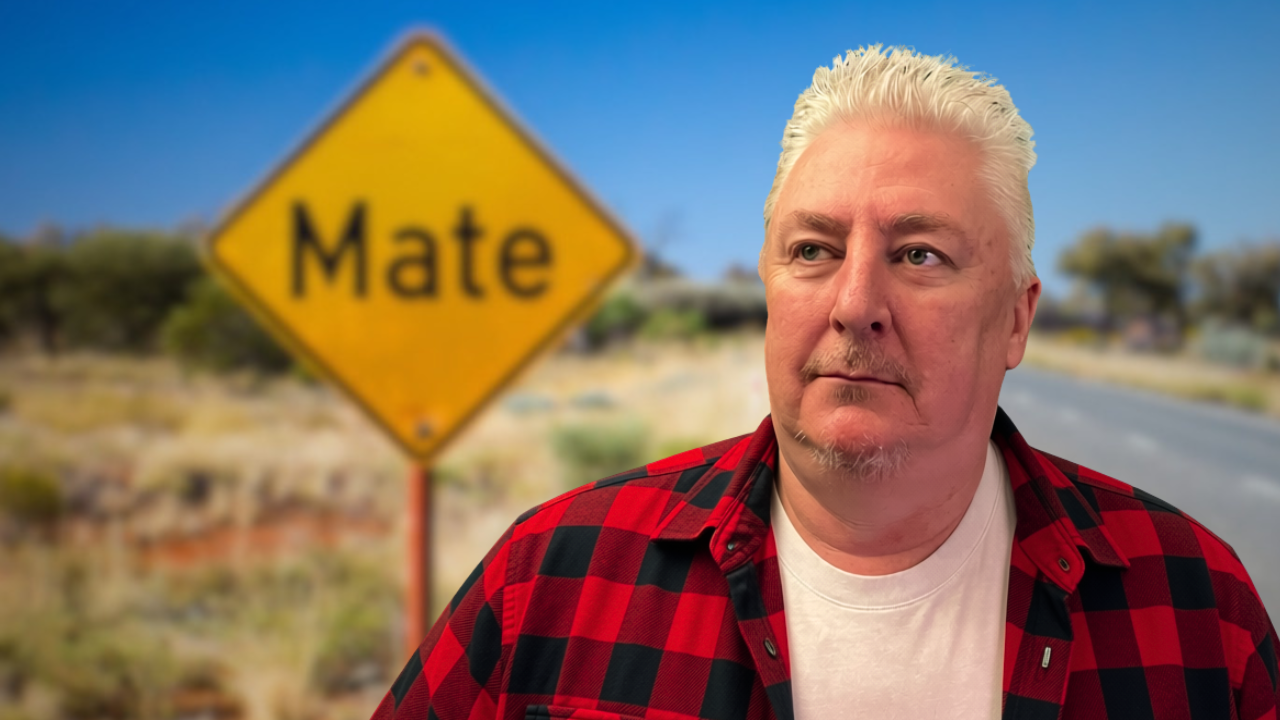
    Australians say mate because it’s more than just a word. It’s a greeting, a thank you, a sign of friendship, a warning, a term of affection, and sometimes all five at once.

    Eight years after moving to America, I still say it dozens of times a day.

    “Cheers, mate.”

    “Thanks, mate.”

    “No worries, mate.”

    “See ya, mate.”

    Now the people that know are plenty used to it by now but those that don’t always pause for a split second when they hear it. You can almost see them translating it in real time.

    Then it clicks.

    Oh right.

    He’s Australian.

    The funny thing is that I don’t even notice I’m saying it anymore.

    It’s one of those habits that survived the move. My accent has softened a little over the years. I’ve learned to say gas station instead of servo. I’ve stopped confusing cashiers by handing over exact change and expecting them to appreciate it.

    Why Living Overseas Changes How You Hear Accents

    But mate never left.


    Mate Doesn’t Mean What Americans Think It Means

    One of the biggest misconceptions is that Australians call everyone mate because we’re all best friends.

    That’s not really how it works.

    I’ve called complete strangers mate. Shop assistants have called me mate. Taxi drivers, tradies, neighbours, and random blokes I’ve met for thirty seconds have all used it.

    It’s less about friendship and more about familiarity.

    It’s a way of saying, “We’re alright. Let’s keep this simple.”

    One of my closest friends here in Tennessee is Mexican.

    Years ago she started saying mate back to me.

    These days I call her matey and she calls me mate.

    Neither of us are using it correctly anymore, but we’ve committed to it so heavily that there’s no turning back now.

    Australians drinking at the pub
    In Australia, “mate” is often less about friendship and more about familiarity and connection.

    Not Everyone Gets Called Mate

    Despite what Hollywood might suggest, Australians don’t call absolutely everyone mate.

    There are situations where it fits and situations where it doesn’t.

    When I worked in banking, I wasn’t walking into meetings with ambassadors and saying, “G’day mate.”

    That would have been a very short diplomatic meeting.

    In Australia, mate is often a social leveler.

    It works best when people are meeting as equals.

    Tradies use it.

    Country Australians use it.

    Blokes leaning on fences use it.

    People standing around a barbecue use it.

    It strips away a bit of formality and makes the conversation feel more relaxed.

    Things Americans Think Are Normal (That Still Confuse Me After 8 Years)

    That’s one reason Australians often sound more casual than we actually are.


    The Same Word Can Also Start an Argument

    Of course, Australians have found a way to make the word mean the complete opposite too.

    Tone matters.

    “Thanks, mate.”

    Friendly.

    “Good to see you, mate.”

    Friendly.

    “Listen here, mate…”

    Not friendly.

    Nobody in Australian history has ever heard the words “Listen here, mate” and thought something positive was about to follow.

    The same goes for:

    “Pull your head in, mate.”

    Or the classic Alf Stewart line from Home and Away:

    “You’re a bit of a drongo, mate.”

    Australians have somehow managed to turn one of our friendliest words into a warning system.

    It’s actually quite impressive when you think about it.


    Why I Still Say It

    I’ve lived in America long enough now that some Australian habits have faded.

    Others haven’t.

    Mate is one of the ones that stuck.

    Partly because it’s habit.

    Partly because it feels natural.

    But if I’m being honest, there’s probably another reason too.

    The person who used the word most in my life wasn’t a tradie, a farmer, or one of my mates at the pub.

    It was my mum.

    Every phone call started the same way.

    “Hi mate.”

    Or sometimes:

    “Love you, mate.”

    I was telling my daughters about that the other day.

    The Moment I Realised My Children Belong in America

    How normal it felt at the time.

    It was something I never thought twice about it.

    How I never imagined I’d miss hearing a single word so much.

    Looking back, I think that’s why Australians keep using it.

    Yes, it’s friendly.

    It’s a social leveler.

    Yes, it’s part of our culture.

    But it’s also a word that carries connection.

    It’s a word we use with friends, family, workmates, neighbours, and sometimes complete strangers.

    Somehow Australians found a way to squeeze friendship, affection, gratitude, sarcasm, and belonging into four letters.

    Not bad, mate.

  • The Moment I Realised My Children Belong in America

    The Moment I Realised My Children Belong in America

    One of the hardest parts of raising children overseas is realizing they may end up belonging somewhere different from you.

    Not because they’ve rejected where you came from.

    Not because they’ve forgotten their roots.

    But because their life happened somewhere else.

    After eight years in America, I’ve started to realize that’s exactly what’s happened with my daughters.

    And strangely enough, it happened without me noticing.


    What Raising Children Overseas Taught Me

    When we moved from Australia to America, I expected my life to change.

    I expected new roads.

    New customs.

    New ways of doing things.

    I expected to spend years learning the differences between the two countries.

    What I didn’t fully understand was that moving countries wouldn’t just change me.

    It would shape my children’s entire childhood.

    The friendships they would form.

    The confidence they would develop.

    The place they would eventually call home.

    Recently, that reality hit me harder than it ever has before.

    Daytona gave me more than a week of dance competitions. It gave me time to notice who my daughters are becoming.

    The Week That Made Me Notice

    We’d just come back from Daytona Beach.

    Like most dance trips, it was a blur of hotel rooms, elevators, airports, restaurants, competition schedules and far too little sleep.

    Parents were surviving on caffeine.

    Kids were surviving on excitement.

    Somewhere in the middle of all that, I found myself paying attention to my daughters in a different way.

    Not just watching them.

    Actually noticing them.

    The way they spoke to people.

    How they handled themselves.

    The way they moved through unfamiliar situations.

    And I kept finding myself thinking the same thing.

    I was never like that at their age.


    The Kid Behind The Couch

    When I was young, I was painfully shy.

    Visitors would come to our house and I’d disappear.

    Sometimes behind the couch.

    Sometimes into my bedroom.

    Anywhere that allowed me to avoid being noticed.

    Adults intimidated me.

    Groups overwhelmed me.

    Confidence wasn’t something that came naturally.

    It wasn’t until much later in life that I learned how to navigate those situations comfortably.

    Which is probably why my daughters stand out so much to me now.

    Because neither of them are that child.


    Watching Them Move Through The World

    Brianna will happily talk to almost anyone.

    She orders her own food.

    Asks questions.

    Investigates things she probably shouldn’t.

    She approaches the world as if it’s open until someone proves otherwise.

    Georgia is different.

    She’s quieter.

    More thoughtful.

    More sensitive.

    But she has her own confidence.

    She’ll walk up to a flight attendant and ask for help.

    Navigate an airport.

    Handle situations on her own.

    She’s not loud.

    She’s not pushy.

    Just simply capable.

    And that’s what struck me.

    Both of them are.

    In completely different ways.


    Watching them handle airports and travel on their own still catches me off guard.


    America Shaped Them Too

    When people move overseas, they expect the new country to shape them.

    You learn different customs.

    Different expressions.

    Different social rules.

    You learn that biscuits aren’t biscuits.

    That football sometimes involves very little foot.

    You learn that Americans consider a three-hour drive “close.”

    But eventually I realized something else.

    America wasn’t only shaping me.

    It was shaping my daughters too.


    Georgia Carries Two Homes

    Georgia was born in Australia.

    She still feels connected to that part of her story.

    She knows where she was born.

    Knows where her parents came from.

    She still spells “Mum” correctly, which I consider one of my greatest parenting achievements.

    But she has grown up here.

    Her school is here.

    Her friends are here.

    Dance life is here.

    And recently she started talking about her dream college.

    USC.

    The University of South Carolina.

    She’s only ten years old, so there is every chance she’ll change her mind another twenty times.

    But that’s not really the point.

    When she imagines her future, she imagines it here.


    Brianna Doesn’t Have The Same Question

    Brianna was born in America.

    And in many ways, America simply feels like home.

    Recently we watched Australia versus the USA on TV at the 2026 World Cup.

    When the Australian anthem played, Georgia and I stood up and sang along, hand over our hearts.

    When the American anthem played we did too, but Brianna absolutely lit up.

    She sang every word.

    Then started chanting “USA! USA!”

    Meanwhile I stood there having the complicated emotional experience of an Australian father watching his daughter enthusiastically support the opposition.

    That was probably the moment I should have figured it out.


    There has never been much doubt about where Brianna feels at home.

    Going Back Changed Something

    Last year we took the girls back to Australia.

    For Georgia especially, I think that trip changed something.

    She saw old friends.

    Old places.

    Parts of her earlier life.

    But she also discovered something many adults discover when they move away.

    Life doesn’t pause while you’re gone.

    People move on.

    Friendships evolve.

    Places change.

    And sometimes you realize the version of home you carried in your head no longer exists exactly the way you remember it.

    I think that trip made America feel even more like home for her.

    Not because Australia stopped mattering.

    But because she realized where her actual life was happening.


    The Quiet Realization

    As much as Nikki’s parents probably won’t enjoy reading this, I don’t think either of my daughters will move back to Australia.

    That feels strange to say out loud.

    It’s not sadness exactly.

    But it’s not nothing either.

    It’s pride mixed with a little grief.

    Because if you’re an immigrant parent, you want your children to belong.

    And then one day you realize they do.

    Just not necessarily in the place you expected.


    Pride and grief can sometimes exist in the same moment.

    We Didn’t Raise Copies Of Ourselves

    Nikki and I have always tried to let the girls become themselves.

    Not smaller versions of us.

    Not copies of our childhood.

    Their own people.

    Georgia’s dance dreams belong to her.

    Brianna’s interests belong to her.

    Our job isn’t to own those things.

    Our job is to support them.

    Guide them.

    Protect them.

    And occasionally pay ridiculous amounts of money for costumes covered in rhinestones.


    What America Gave Them

    America isn’t perfect.

    No country is.

    But one thing I’ve noticed is that American culture often encourages children to participate.

    To ask questions.

    Speak up.

    To feel like they belong in the room.

    And I think my daughters have absorbed some of that.

    Georgia absorbed it quietly.

    Brianna absorbed it like a bald eagle wearing glitter shoes.

    But they both absorbed it.

    And honestly, I’m grateful for that.


    Home Is More Complicated Than It Used To Be

    One daughter carries Australia within her identity.

    The other is deeply, proudly American.

    So how exactly am I supposed to turn that into a competition?

    I can’t.

    And I don’t want to.

    Australia shaped me.

    America shaped them.

    Both countries matter because both countries shaped the people I love most.


    Recommended Reading


    Home Isn’t Always One Place

    The biggest thing I’ve learned since moving overseas is that home isn’t always a country.

    Sometimes it’s a couch you used to hide behind.

    Sometimes it’s an airport gate.

    Maybe a dance studio.

    Or your daughter confidently ordering her own meal.

    Sometimes it’s hearing an anthem that isn’t yours somehow become part of your family story.

    And sometimes it’s standing there watching your children move through the world with a confidence you never had at their age.

    That’s what happened to me in Daytona.

    Not in one dramatic moment.

    Not during some life-changing conversation.

    Just in a hundred little moments.

    Georgia asking questions.

    Brianna talking to strangers.

    Both of them moving through the world with ease.

    And me finally realizing something I probably should have understood years ago.

    They’re not growing up overseas.

    They’re growing up at home.


    Some Great Reading About Home & Identity