Tag: expat life usa

  • This Week in America — A Kentucky Weekend: Dance, Derby & the Moments You Don’t Plan

    This Week in America — A Kentucky Weekend: Dance, Derby & the Moments You Don’t Plan

    We travelled to Louisville this week for a dance competition.

    That was the plan, at least.

    But I’ve noticed something about these weekends.

    They rarely stay as simple as the reason you go.


    The Drive In — When a City Takes Over

    We arrived just before the lead-up to the Kentucky Derby.

    And the city already felt like it was gearing up.

    Traffic backed up everywhere.
    Police on the roads.
    That quiet sense that something big was about to happen.

    We were still twenty minutes out and:

    • the GPS kept changing
    • the girls were asking how much longer every six minutes
    • Nikki had moved into that calm voice that means she’s not calm
    • and I was confidently choosing alternate routes despite having no idea where I was going

    Which, as a husband and father, is one of the more pointless confidence moves available.


    When a Place Has Its Own Identity

    We were there for dance.

    Louisville was there for Louisville.

    And I liked that.

    America does this well.

    When something matters locally, it doesn’t stay contained.
    It spills into the streets.

    You feel it—even if you’re not part of it.


    The Fort Knox Moment

    Driving through, we saw signs for Fort Knox.

    For most people here, that’s just another exit.

    For me growing up in Australia, it was one of those names that felt almost mythical—
    like Hollywood or Wall Street.

    Seeing it casually written on a highway sign made me laugh.

    Only in America does a dance weekend casually involve Fort Knox.


    A City with Weight

    Then there were the bridges over the Ohio River.

    I’ve always liked bridges.

    They make a place feel like it matters.

    Louisville has that solid feel to it—
    river, steel, history.

    It feels like a place shaped by doing things, not just talking about them.


    Owning Greatness

    The Muhammad Ali murals stood out straight away.

    Louisville doesn’t hide who came from there.

    It claims him.

    And I respect that.

    Australia can be a bit different—we admire people, but we also like bringing them back down to earth.

    America seems more comfortable simply saying:

    “This person was great.”

    There’s something refreshing in that.


    A Side Trip with Brianna

    While Georgia was tied up with competition, Brianna and I explored downtown.

    Those little side moments with your kids matter more as you get older.

    Less about where you are.
    More about being there together.


    Turning Culture Into Experience

    We stopped at the Louisville Slugger Museum & Factory.

    And it’s a very American idea.

    Take something simple—like a baseball bat—
    and turn it into something you can walk through.

    Even without growing up with baseball, I enjoyed it.


    College Sport — Still Hard to Process

    The scale of college sport still surprises me.

    Massive stadiums.
    Serious infrastructure.

    Back home, it exists.

    Here, in some places, it feels like something much bigger.


    Bourbon and Unexpected Conversations

    That night, I ended up at the hotel bar with another dance dad.

    And got an unexpected introduction to Kentucky bourbon.

    Not casually.

    Properly.

    I nodded through most of it, adding expert commentary like:

    “Yeah… that’s smooth.”

    Completely useless.

    Still appreciated.


    What I Noticed About People

    People here are generous with what they love.

    No gatekeeping.

    Just:

    “Here, try this.”
    “Let me tell you why this one matters.”

    That stays with you.


    The Moment That Actually Mattered

    But the real highlight was Georgia.

    She danced her best solo of the year.

    And placed seventh out of twenty.


    Parents see what sits behind a performance.

    The practice.
    The frustration.
    The doubt.

    And then one day, it clicks.

    Fifteen seconds in, I knew.

    She looked calm.
    Settled.
    Like herself.

    That’s the moment.


    Dance Competitions in America


    Not Trying to Be Someone Else

    Georgia dances lyrical.

    Slower. More controlled. More expressive.

    Often up against louder, faster routines.

    So placing felt even better.

    She wasn’t trying to be someone else.


    Cracker Barrel and a Strange Thought

    On the way home, we stopped at Cracker Barrel.

    Sitting on the porch, something crossed my mind.

    This feels like home.


    Which is a strange thought for someone born in Australia.

    But maybe home changes.

    Maybe it grows.


    Of Course We Stopped at Buc-ee’s

    And naturally, we stopped at Buc-ee’s.

    Because no road trip here feels complete without it.


    You can fuel the car, buy snacks, grab merchandise…

    …and somehow leave with more than you planned.

    Every time.


    Closing Reflection

    We went for dance.

    But we came home with more.

    That’s something I keep noticing about life here.

    You head somewhere for one reason…

    …and the place adds its own chapters.

    A conversation.
    A moment.
    A feeling you didn’t expect.

    That’s usually how the best weekends happen.

    Not through grand plans.

    Just ordinary things unfolding well.


    For more reflections like this, tune in to the weekly podcast.


    🔗 Internal Links (END BLOCK)

    You might also enjoy:


  • What Americans Always Ask Australians (And What They’re Really Getting At)

    What Americans Always Ask Australians (And What They’re Really Getting At)

    There’s a moment that happens pretty quickly when you move overseas.

    Someone hears your accent…
    pauses for half a second…
    and then decides to ask something.

    Not always the same thing.

    But close enough.

    After a while, you start to recognise the pattern —
    and not just the questions themselves,
    but it’s what’s sitting underneath them.

    Because it’s not really curiosity about Australia.

    It’s someone trying to work out…
    who you are.

    Where you fit.

    What’s different.
    What’s familiar.

    And I’ve realised over time —
    I’ve done exactly the same thing in reverse.


    The animal question always comes first

    It usually opens with some version of:

    “Doesn’t everything in Australia want to kill you?”

    Spiders. Snakes. Sharks.

    Sometimes all three in the same sentence.

    And the answer is… not really.

    We’re not navigating daily life like it’s a survival show.

    But there are small habits that probably sound strange if you didn’t grow up with them.

    Like checking your shoes before putting them on.

    Quick shake. Done.

    It’s not fear.
    It’s just… normal.

    What surprised me later was realising how relative that is.

    The first time I saw a bear here in Tennessee, I stopped and stared like it was something out of a documentary.

    Meanwhile, everyone else just… kept moving.


    The moment your accent stops working

    There’s a second phase that comes after the animal question.

    It’s quieter.

    Usually just one word:

    “Huh?”

    Drive-throughs are where it shows up the most.

    Something about the speaker, the speed, the expectation — it just doesn’t line up.

    You repeat yourself. Slow it down. Try again.

    Sometimes it clicks.

    Sometimes it doesn’t.

    And occasionally… it’s easier to change restaurants than change your accent.

    It’s not frustration, really.

    More like a reminder that language isn’t just words — it’s rhythm, tone, familiarity.


    Then come the questions that reveal assumptions

    Some questions aren’t really about information.

    They’re about what people have already been told.


    “Do you celebrate Thanksgiving?”

    We don’t have anything like it in Australia.

    But it’s become one of my favourite parts of living here.

    There’s something about the simplicity of it.

    No presents. No expectations.

    Just food, time, and people staying a little longer than usual.

    The conversations tend to drift a bit deeper.

    The pace softens.

    It feels… intentional.

    It’s one of those things you don’t realise you’re missing until you experience it.


    👉Read more: Is American Friendliness Real or Fake?

    👉 The Ultimate Thanksgiving Cookbook


    “Does the water spin the other way?”

    This one sits somewhere between science and myth.

    And for a moment, it actually made me question my own memory.

    Like… have I just never noticed this?

    But no.

    Water just goes down the drain.

    Same as everywhere else.

    I’ve found the easiest way to handle it is confidence.

    “It’s the Coriolis effect.”

    No explanation.

    Just enough certainty to move things along.


    “Do you speak English in Australia?”

    I usually say:

    “Nah, picked it up when I got here.”

    There’s always a brief pause while that lands.

    And then the realisation.

    But in fairness — it goes both ways.

    There are accents here I still struggle with.

    Moments where I’ve had to stop and think:

    “…that’s English, is it?”

    It’s not about intelligence.

    It’s just exposure.


    The question that’s really about you

    At some point, the tone shifts slightly.

    The question becomes more personal.

    “Why would you move here from Australia?”

    Sometimes I joke about the emu war.

    Sometimes I don’t.

    Because the real answer isn’t dramatic.

    I just wanted to experience something different.

    But living somewhere else does something you don’t expect.

    It makes you notice things you never paid attention to before.

    About the place you moved to.

    And about the place you came from.


    👉 Read more: This Week in America: Warmth, Friendship & Cultural Differences


    The version of Australia people carry in their head

    A lot of the questions come from a very specific picture of Australia.

    Hot. Flat. Beaches. Outback.

    So when you mention snow… it throws people.

    But it does snow.

    Not everywhere. Not often.

    But enough to shift that image slightly.

    Australia isn’t one thing.

    It’s just the version people have seen is usually the simplest one.


    And then there are the lines that never quite go away

    “Put a shrimp on the barbie.”

    It still comes up.

    Usually with a smile.

    And to be fair… I get it.

    Every country has those phrases that travel further than reality.

    I’ll normally just say:

    “We call them prawns.”

    And that’s usually enough.


    What I’ve come to realise

    After a while, the questions matter less.

    You stop hearing them as literal.

    And start hearing what they’re really about.

    Someone noticing something unfamiliar…
    and trying to make sense of it.

    The same way I’ve done here.

    Just in reverse.


    🎬 If you prefer watching this instead


    A quieter reflection

    If you enjoy these small moments — the things you don’t notice until you do —
    I talk about them more in my weekly podcast:

    👉 This Week in America

    It’s a bit looser.
    More like a conversation than a video.


    Final thought

    Living overseas doesn’t change who you are.

    It just removes the shortcuts.

    And suddenly, things you never questioned before…
    become visible.

    Thanks for reading. Hoo roo maties.


  • Representing Australia in Tennessee Felt Like Home

    Representing Australia in Tennessee Felt Like Home

    Some weeks don’t arrive with one big headline.

    They come as a collection of smaller moments. Things that seem ordinary while they’re happening, then linger afterward. A conversation here. A surprise there. Something familiar appearing in an unexpected place.

    That was this week for me.

    Not dramatic. Not life-changing.

    Just quietly revealing what it actually feels like to live in America as an Australian.


    The School Night That Brought Australia to Tennessee

    Recently, Georgia and I took part in her school’s very first international night.

    Around fifteen countries were represented. Booths from places like Uzbekistan, Samoa, Guatemala, India… and there we were for Australia.

    It felt a little surreal standing in a Tennessee school gym representing home.

    What We Brought to the Australian Booth

    We tried to keep it properly Australian:

    • Sausage rolls
    • Vegemite sandwiches
    • Fairy bread
    • Tim Tams
    • Violet Crumble

    Amazon has a great assortment of Aussie items these days in the US:

    Each child had a small passport and moved from country to country collecting stamps.

    It was a simple idea, but a brilliant one.

    They were learning about the world without it feeling like learning.

    That’s usually when education works best.


    Tim Tams Were the Stars of the Night

    The hall started off quiet.

    Then, almost without warning, it filled up.

    Families everywhere. Kids racing around with passports. Parents chatting. Music and movement in every direction.

    We ran out of food halfway through, which I took as a fairly strong sign we’d done alright.

    And yes — the Tim Tams disappeared at alarming speed.

    I may need to contact Arnott’s next year regarding sponsorship opportunities.


    Talking About Australia in the Middle of Tennessee

    What I enjoyed most wasn’t the food.

    It was simply standing there and talking about Australia.

    Some people had visited.
    Many wanted to go.
    Some wanted to discuss cricket.

    And that always catches me off guard a bit.

    You don’t expect to be having a cricket conversation in Tennessee.

    Yet there I was.

    That’s one of the lovely things about living overseas — home appears in strange places.


    The Unexpected Samoan Moment

    At one point I ended up speaking some Samoan with the neighbouring booth.

    That took me back instantly to the years I lived there.

    Funny how language works like that.

    You can go years without using something… then suddenly it returns as if it had only been waiting quietly in the corner.

    They were so excited they called their father over because there was “this guy here” who had lived there and could speak the language.

    For a moment, Tennessee disappeared.

    I was somewhere else entirely.


    Identity Carries Weight

    Our booth sat next to Belgium.

    The couple running it weren’t actually Belgian.

    She was from Belarus, but with everything happening in the world, she didn’t feel comfortable representing that nationality publicly right now.

    So they chose Belgium.

    That stayed with me.

    Because where you’re from can carry more emotional weight than people realise. Sometimes pride. Sometimes pain. Even complexity.

    Identity isn’t always simple.


    Bluey, Bingo and Vegemite Reactions

    Georgia disappeared quickly once her friends arrived, which felt extremely on-brand for a child whose father was left doing passport duties for hundreds of children.

    We also had Bluey and Bingo there.

    That may have been the most popular part of the entire booth.

    And surprisingly, plenty of people liked the Vegemite.

    Though not everyone.

    There were still a few faces that suggested immediate regret, followed by a quiet search for the nearest bin.


    What It Felt Like

    I walked away thinking how much I enjoyed representing Australia.

    Not just missing it.

    Not just talking about it.

    But sharing it.

    There’s something grounding about that when you live overseas.


    Georgia’s Sleepover and a New Normal

    Not long after that, Georgia had a sleepover.

    There was:

    • an American girl
    • a Polish girl
    • a Spanish girl
    • and our Aussie girl

    All just hanging out together as if it were the most normal thing in the world.

    Because to them, it is.

    No labels. No special meaning.

    Just friends.

    When I was growing up in Australia, you noticed where people were from more. Not negatively — it was simply more visible.

    For this generation, diversity often isn’t something they comment on.

    They’re just growing up inside it.

    And there’s something genuinely beautiful about that.


    Easter in America Still Feels Different

    Another reminder of cultural difference came through Easter.

    Back home in Australia, Easter often feels like the country collectively slows down.

    Good Friday. Easter Monday. Shops closed. A pause in rhythm.

    Here in America, much of life keeps moving.

    Banks open. Businesses open. Things rolling on.

    For a place where faith can be very visible publicly, that contrast still feels interesting to me.

    Sometimes what stands out most in another country is what doesn’t happen.


    The Ice-in-Drinks Theory

    A podcast listener messaged me after I mentioned how much ice Americans use in drinks.

    They said:

    “It’s basically a scam.”

    And once that idea enters your mind, it’s hard to ignore.

    You take a few sips. Look down.

    And realise you’re mostly holding frozen optimism.


    The America You See vs The America You Live

    People back home sometimes ask how we can live here.

    Because the America shown in the news can feel intense, loud and relentless.

    But day-to-day life is mostly school runs, groceries, dance classes, errands, dinner, routines.

    Normal life.

    That’s probably the hardest thing to explain from a distance.

    Not that difficult things never happen.

    Just that everyday life rarely looks like headlines.


    Final Thought

    Living overseas has taught me that countries are never fully understood through headlines, stereotypes, or internet arguments.

    They’re understood through ordinary moments.

    School nights. Snack tables. Children laughing. Unexpected conversations. Shared routines.

    Quiet things.

    And often, those quiet things mean the most.


    Related Reads

    Why Are Americans So Polite? An Australian Explains the Cultural Difference
    Why American Goodbyes Feel Faster Than Australian Goodbyes


    Thanks for reading. Hoo roo maties.


  • When School Starts to Feel Like HR (An Aussie Perspective)

    When School Starts to Feel Like HR (An Aussie Perspective)

    This week, something happened that made me pause.

    Not because it was dramatic.
    And not because anyone had done anything wrong.

    It was just… one of those moments where two different systems quietly collided.


    The Email

    Earlier this week, I received an email from Georgia’s school.

    The subject line was about attendance.

    Apparently, she’s had five unexcused absences this year—and because of that, I now have to attend a meeting with the principal and the school counsellor.

    The interesting part is… I don’t actually know what the five absences are yet.

    That comes later. In a letter. From the state.

    The email itself didn’t explain anything. It just said we’d crossed a threshold—and now a conversation needs to happen.

    And when I read it, my first reaction wasn’t confusion.

    It was recognition.


    I Knew This System Immediately

    I spent 25 years working in banking.

    And almost instantly, I knew exactly what I was looking at.

    This wasn’t really a school system.

    It was an HR system.

    Track the events.
    Log them.
    Wait for the threshold.

    Then trigger the process.

    • Informal conversation
    • Formal conversation
    • Documentation

    Except this time… the “employee” is ten years old.

    And if you’ve ever worked inside structured systems like that, you’ll recognise the feeling straight away — that moment where you stop and go, ah… I know exactly how this is going to play out.

    This Is Something I’ve Noticed More Over Time

    This wasn’t the first time I’d had that feeling.

    It’s something I’ve noticed more and more the longer I’ve lived in America — the way everyday situations are quietly shaped by systems underneath.

    Because it’s the same underlying pattern — structure first, human interpretation second.

    If you’ve seen that video, you’ll recognise it here too.


    What Actually Counts as “Absent”?

    Now I do know a couple of the days they’re probably referring to.

    One of them was when I picked Georgia up early so we could drive five hours to a dance competition.

    If you’re a dance parent, you’ll recognise that rhythm immediately.

    Long drives. Early starts. Costumes packed the night before.

    If you’re in that world, this is actually one of the best things we’ve ended up relying on for comp weekends:

    Because none of that fits neatly into a school system.

    But the system doesn’t see any of that.

    That absence wasn’t excused.


    The Five-Minute Absence

    Another one?

    She arrived about five minutes late one morning.

    At her school, if you’re late, you don’t just walk into class—you check in through the front office.

    And once that happens…

    It’s logged.

    Now that five-minute delay sits in the same column as a full-day absence.

    Not because it’s the same thing.

    But because the system records entries—not meaning.


    Where It Starts to Feel… Mechanical

    And this is the part that stood out.

    The system isn’t designed to interpret context.

    It’s designed to record events.

    • Late arrival → logged
    • Early departure → logged
    • Absence → logged

    Once the number hits a certain point…

    The process activates.

    That’s when the email arrives.

    That’s when the meeting gets scheduled.

    And suddenly something that feels like normal life…

    Feels procedural.


    I’ve Seen This Before — In a Completely Different Way

    Earlier this year, I applied for a role with Child Protective Services.

    It was something I genuinely felt drawn to.

    After years in banking — dealing with fraud, scams, and vulnerable customers — it felt like a natural extension of that work.

    The idea of helping protect children felt meaningful.

    I went through the process.

    And I was offered the job.

    But there was one problem.

    I don’t have a university degree.


    When Systems Ask a Different Question

    It didn’t matter what I’d done.

    It didn’t matter the experience.

    Because the system wasn’t asking:

    “What has he done?”

    It was asking:

    “What box does he tick?”

    And once again…

    I recognised the structure immediately.


    This Is What Living Between Systems Feels Like

    This is something that becomes clearer the longer you live between countries.

    Not the obvious differences.

    The subtle ones.

    Because this is exactly what that feels like.

    Not big cultural shocks.

    Just small, revealing moments.


    It’s Not About Right or Wrong

    To be fair—these systems exist for good reasons.

    Schools need to track attendance.

    There are real situations where children are missing school for serious reasons.

    Structure helps identify those situations.

    The same way hiring requirements create consistency.

    It’s not broken.

    It’s just… structured.


    But It Creates These Moments

    Because every now and then…

    The system and real life don’t quite line up.

    A five-hour drive to a dance competition becomes an attendance issue.

    A five-minute delay becomes an absence.

    And normal life starts to feel like it’s being processed.


    If You’ve Noticed This Too

    This is one of those patterns that keeps showing up in different ways.

    👉 You’ll see the same idea here:
    American Goodbyes

    👉 And here:
    American Politness

    Different situations.

    Same underlying structure.


    A Quick Note

    If you enjoy these kinds of reflections — the small, in-between moments that don’t usually get talked about —

    you can support the channel here:

    👉 https://buymeacoffee.com/fromdownundertodownsouth


    One of Those “Ah… I See” Moments

    Nothing dramatic happened this week.

    No one got in trouble.

    It was just the system…

    Doing exactly what it was designed to do.

    Recording events.
    Triggering processes.
    Asking for a conversation.

    And every now and then—

    You see that system clearly enough…

    That it makes you stop.

    And think.


    👉 If you prefer listening instead of reading, the full podcast lives here:
    https://fromdownundertodownsouth.com/listen/


  • This Week in America: Warmth, Friendship & Cultural Differences (An Aussie Perspective)

    This Week in America: Warmth, Friendship & Cultural Differences (An Aussie Perspective)

    There’s a sentence I’ve heard a lot since moving to the United States:

    “We should do this again.”

    On the surface, it means exactly what it sounds like.
    And yet… I don’t take it at face value anymore.

    Not because I think people are insincere.
    But because I’ve learned that warmth and investment aren’t always the same thing.

    And that’s taken me a while to understand.

    When you first move overseas, you take things at face value. You don’t yet understand the rhythm. You don’t know what’s invitation, what’s politeness, and what’s simply social atmosphere.

    Even now, I sometimes catch myself wondering if I’ve misread something—whether I’ve misunderstood cultural nuance, or whether I’m just navigating ordinary human dynamics that exist anywhere.

    Living overseas has a way of making you replay moments. You notice tone. Follow-through. The space between words and action.

    And this week, a few moments lined up in a way that made me realise something about how I’ve changed.

    ✈️ Planning travel between Australia & the US?
    :I usually compare flights and accommodation here with Expedia:


    The Hotel Months

    When we first moved to America, we lived in a hotel room for a few weeks.

    Our furniture was somewhere on a container ship between Canberra and Nashville. It sounds adventurous when you say it quickly. In reality, it’s just inconvenient.

    We were buying beds and couches online, trying to time deliveries with an arrival date we couldn’t fully control. Everything felt temporary.

    We ate out every night—not as a treat, but because we didn’t own plates.

    And I remember sitting there one night—takeaway containers on the desk, Georgia tired, Nikki exhausted—and thinking:

    Surely someone will reach out.

    Not out of entitlement. But because in my mind, we weren’t strangers. We’d known people here for years. Shared meals. Conversations. Enough that they factored into our decision to choose Nashville.

    I found myself checking my phone—not obsessively, just… expectantly.

    Week one passed.
    Week two.

    Nothing.

    No dinner invitation.
    No “How are you settling?”
    No “You must be sick of hotel food—come over.”

    It wasn’t dramatic. There wasn’t a falling out. It was just… silence.

    One Sunday afternoon stands out. Sundays feel different when you’re displaced. Back in Australia, they often meant something—family lunches, barbecues, someone dropping by unannounced.

    Here, it was just another quiet afternoon in a hotel room.

    I remember wondering if I should reach out first. But something in me didn’t want to manufacture it. In my mind, if something is solid, it doesn’t need prompting.

    That was probably naïve. But it was honest.

    What made it uncomfortable wasn’t the silence itself. It was realising I’d built part of our confidence about moving on something that wasn’t as firm as I believed.

    Not anger—just exposure.

    Back in Australia, when we left, people showed up. Farewell dinners. Friends helping pack. Someone bringing food. Someone taking Georgia out for the afternoon so we could get things done.

    There’s an instinct—at least in my experience—that when someone is in transition, you move toward it.

    I assumed that would translate.

    It didn’t.

    And that doesn’t make anyone wrong.
    It just meant I’d mistaken familiarity for obligation… and history for depth.

    Dance Competitions in America


    The Industry Layer

    After I started working here, I found myself at a few social gatherings connected to the music industry.

    At first, I found it fascinating. But then I began noticing something subtle.

    When people asked what I did and I said I was in banking and finance… the energy shifted.

    Still polite. Still friendly.
    But curiosity dropped.

    I wasn’t in the industry. I couldn’t open doors.

    It wasn’t dramatic—just a slight shift in attention. A pivot toward someone else.

    And I found myself asking: is this unique to Nashville, or just more visible here?

    Because every city has its orbit. In Canberra, it’s politics. In Sydney, it’s finance.

    But when you’re outside the orbit, you feel it.

    And I realised something about myself in those rooms—I don’t thrive in environments where relationships are closely tied to usefulness.

    I come from a culture where connection is built through shared time, shared inconvenience, shared history.

    That doesn’t make one better than the other.
    But you feel the difference.


    The Dance Hallway

    I noticed a similar rhythm again this week at Georgia’s dance studio.

    We’ve been there six years. Same hallway and competitions. Same parents.

    And sometimes I walk in, and a small group of parents are standing there… and they look straight through me.

    Not aggressively. Just neutrally.

    For a moment, it feels personal.

    Then I catch myself and ask: is this cultural nuance, or just adult social structure?

    Australia has cliques too. But I think back to netball courts, footy clubs, dance studios I grew up in. If you stood beside the same people for six years, chances are you’d end up at each other’s houses at some point.

    Here, repetition doesn’t always dissolve boundaries.

    Dance friends can remain dance friends.

    And that’s not wrong. It’s just different.

    As a dad, I notice it—not because I need inclusion, but because kids learn what belonging looks like by watching adults.

    And sometimes I wonder—does Georgia feel this differently? Or is this just normal to her?

    Then I remind myself—she’s confident, she’s happy, she has strong friendships.

    So maybe what I’m feeling is more about my own cultural translation than her reality.

    That’s humbling.


    The Steady Southerners

    And then there’s another kind of warmth I’ve experienced here.

    The quieter kind.

    When my mum passed away, a couple from East Tennessee didn’t make speeches. They brought roses for us to plant in the garden.

    Something living. Something ongoing.

    They check in and ask about the girls. They follow through.

    Recently, when I asked if he’d be a referee for me, there was no hesitation.

    But what stands out isn’t any single act—it’s the consistency.

    No performance. No positioning. Just steadiness.

    And interestingly, that kind of warmth feels more like home than anything else I’ve experienced here.

    It reminds me of regional Australia.

    Not the cities—the country towns.

    Where loyalty isn’t declared. It’s demonstrated.


    The Shift

    So this week wasn’t really about disappointment.

    It was about fluency.

    Australia taught me to expect initiative.
    America has taught me to read context.

    And somewhere between those two, I’ve stopped assuming warmth will turn into action.

    That’s the shift.

    Because once you realise warmth and investment aren’t the same thing, you have a choice.

    You can become guarded.
    Or you can become deliberate.

    I’ve started initiating more intentionally.

    When I value someone, I don’t assume they know.
    If I appreciate someone, I don’t leave it implied.
    If I want something to continue, I don’t leave it floating in a sentence like:

    “We should do this again.”

    Recently, I caught myself about to say exactly that—and instead I said:

    “Are you free next Thursday evening?”

    It felt slightly unnatural. But it clarified everything.

    Because now it wasn’t vague. It was real.

    And what I’ve noticed is this:

    When you initiate clearly, you see who responds.
    Who reciprocates.
    Who leans back in.

    That’s when warmth becomes mutual.
    That’s when steadiness reveals itself.


    A Small Realisation

    This week wasn’t about people being flaky.

    It was about no longer taking social energy at face value.

    It was about watching what follows.

    And more importantly… becoming someone who follows through.

    Because that’s the only part I can control.

    And when I find warmth and consistency in the same person—

    That’s when I feel at home.

    You can listen to “This Week in America” on your favourite podcast player like Spotify.

  • Things Americans Think Are Normal (That Still Confuse Me After 8 Years)

    Things Americans Think Are Normal (That Still Confuse Me After 8 Years)

    Ever stop and think that something you do every single day — something that feels completely normal — might look completely bizarre to someone from the outside?

    After eight years of living in the United States, I can tell you:

    American life is full of habits like that.

    I live here.
    I love living here.

    But there are still moments when I pause and think:

    “Wow… Americans don’t even realise how American that is.”

    None of these are criticisms.

    They’re observations.

    And they’re the kinds of things you only notice when you didn’t grow up with them. You can watch the YouTube version of this article here –> American Normal


    Root Beer: Dessert or Cough Syrup?

    Let’s start gently.

    Root beer.

    Nothing feels more American than a cold root beer on a warm day — especially as a float, with vanilla ice cream melting into the foam.

    My kids love it. They’ve grown up here. It’s normal to them.

    But I can’t help thinking about their mates back in Australia.

    If you handed them a root beer at a birthday party, there’d be a moment of hesitation:

    “Why does this taste like dessert… and cough syrup at the same time?”

    Outside North America, root beer isn’t universal. Order one in Australia and you might get an actual beer — or a confused look.

    It’s one of those cultural flavours that Americans grow up with and never question.

    Which is fascinating, when you think about it.


    Sugary Breakfasts: When Morning Feels Like Dessert

    American breakfasts can be surprisingly sweet.

    Pancakes stacked high and drenched in syrup.
    Sugary cereals in bright boxes.
    Donuts that feel closer to cake than breakfast.

    This becomes very real when we host sleepovers.

    Our kids are easy.

    Smoothies.
    Vegemite on toast.
    Weet-Bix if we can get it.

    But when American kids stay over, we genuinely stress about breakfast.

    Not because they’re difficult.

    Just because expectations are different.

    They’ll politely scan what’s on offer… then glance around the kitchen as if a neon cereal might materialise.

    It’s not wrong.

    It’s cultural.

    And it starts early.


    Tipping Culture in America: The Mental Maths Exam

    Tipping in the US is basically a second language.

    When I first moved here, it scrambled my brain.

    Back in Australia, tipping is optional.

    Here, it’s expected — and calculated in real time while the receipt is still warm.

    Fifteen percent.
    Eighteen percent.
    Twenty percent.

    You’re doing mental maths under pressure like it’s a test you didn’t revise for.

    Eventually, it makes sense.

    Tipping is tied directly to how service staff earn a living. It shapes behaviour. It builds friendliness into the system.

    Now I tip without thinking.

    But occasionally that small Australian voice still pops up and says:

    “Are we sure this coffee needed emotional support?”


    American Toilets: High Water, High Power

    If you’re visiting the US, you’ll notice this almost immediately.

    The water level in American toilets is high.

    And the flush?

    Decisive.

    There’s no half-flush option. No gentle setting.

    It’s all or nothing.

    The first time you experience it, it’s… memorable.

    It works. Efficiently.

    But it’s one of those tiny differences that sticks in your mind when you’ve grown up elsewhere.


    Pharmacies That Sell Everything

    In Australia, a chemist sells medical things.

    Bandages.
    Pain relief.
    Cold and flu tablets.

    In the United States?

    You can also buy:

    Pokémon cards.
    Wine.
    Snacks.
    Cigarettes.
    Groceries.

    There’s something uniquely American about being able to buy cigarettes and nicotine patches in the same aisle.

    And yes, the drive-through pharmacy is incredibly convenient.

    Even if it feels slightly surreal the first time.


    Ice, Soda, and Bottomless Refills

    Americans are generous with drinks.

    Especially soda.

    In many countries, you add a few ice cubes to cool the drink.

    In the US, the cup is filled with ice first.

    Then soda is poured into whatever space remains.

    Which raises a question I still haven’t fully answered:

    Are refills bottomless because you’re technically only getting one soda to begin with?

    You refill.

    Mostly ice.

    It feels generous.

    It sounds generous.

    And somehow you still leave holding a cup heavier than your meal.


    Talking to Strangers: Casual Connection

    One thing Americans do exceptionally well is talk to strangers.

    Airports.
    Supermarkets.
    Waiting rooms.

    You can start with “Where are you from?” and end ten minutes later knowing someone’s life story.

    When I first arrived, this caught me off guard.

    In Australia, conversations with strangers are usually lighter. Shorter.

    Here, curiosity runs deeper.

    In the South especially, friendliness isn’t performative. It’s normal.

    I’ve written about other cultural timing differences too — including how American goodbyes feel surprisingly abrupt compared to Australian ones:

    👉 I’m Still Caught Off Guard by the American Goodbye

    It’s all rhythm.

    Different beats.

    Same human intention.


    “So… What Do You Do?”

    If you attend a gathering in the US, you’ll hear this quickly:

    “So… what do you do?”

    The first few times I was asked that, I hesitated.

    Not because I didn’t have an answer.

    But because back home, that question usually comes later.

    In Australia, you might talk about where you’re from. The weather. Sport.

    Here, work often comes first.

    It’s not judgment.

    It’s orientation.

    Work is closely tied to identity in American culture.

    Once I understood that, the question felt less intrusive and more like context-seeking.


    The Magic of Noticing

    After eight years, I’ve adapted to most of these things.

    Some still confuse me.

    Some I’ve grown to love.

    Some I quietly laugh at.

    But that’s the magic of living somewhere that isn’t where you’re from.

    You never stop noticing.

    And noticing keeps life interesting.

    If you enjoyed this reflection, you might also like:

    👉 Why Americans Think All Accents Sound the Same

    👉 An Australian Perspective on American Politeness and Cultural Differences

    Because sometimes the most interesting cultural differences aren’t dramatic.

    They’re everyday.

    And after eight years… I’m still noticing.

    Hoo roo maties.

  • An Aussie Expat’s Take on Culture Shock, Identity & Life in America

    An Aussie Expat’s Take on Culture Shock, Identity & Life in America

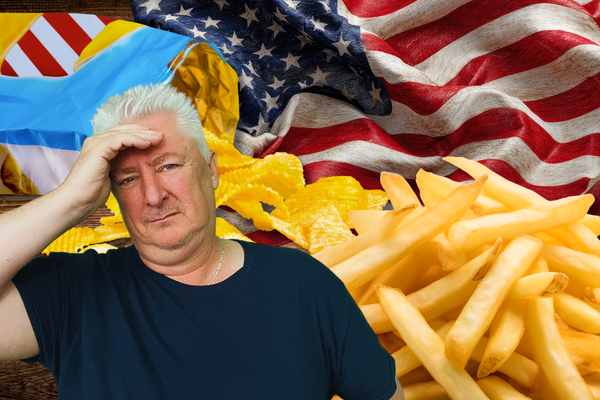
    The first time I ordered “chips” at a diner in the United States, I asked for a side with my burger.

    The waiter nodded.

    Walked off.

    Came back with a tiny packet of potato chips.

    I stared at the sad little bag while he cheerfully asked if I wanted ketchup for my “fries.”

    Everyone else was eating hot chips.

    I was holding something you’d pack in a kid’s lunchbox.

    And honestly — that tiny moment sums up why this whole project exists.

    Because living overseas isn’t defined by dramatic culture clashes.

    It’s defined by moments like that.

    Small.
    Harmless.
    Slightly confusing.

    And very funny in hindsight.


    From Nowra to Nashville

    I grew up in Nowra on the NSW South Coast.

    Later, I spent about 15 years in Canberra before packing up and moving to Nashville in 2018.

    Work was the official reason.

    Adventure was the unofficial one.

    And if I’m honest — so was curiosity.

    As a country music fan and musician, Nashville has always had a certain mythology. Road trips. Songwriters. Guitars in every bar. The whole thing.

    It’s changed a lot. Hot chicken joints, rooftop bars, bachelorette weekends.

    But the music’s still there.

    From country to indie to the odd metal show tucked into a corner somewhere.

    And that contrast — myth vs reality — became part of what I started noticing.


    Living Between Two Countries

    I live here with my Aussie wife and our two daughters.

    One was born in Australia.

    The other is a proper Southern belle — born right here in Nashville.

    Part of the move was about options.

    Two passports.
    Two systems.
    Two cultural lenses.

    Before Nashville, I’d also spent time living in Samoa and Fiji. The Pacific has shaped me in ways I probably didn’t understand at the time.

    Looking back, Nashville wasn’t a dramatic leap.

    It was just the next chapter.

    Living across multiple cultures has a quiet effect on you. I wrote more about that feeling in:

    👉 When Accents Start to Blur After Living Overseas

    It’s subtle.

    But it changes how you hear the world.


    Walking Away From a 24-Year Career

    In 2024, I stepped away from a 24-year career in finance.

    That wasn’t impulsive.

    It was gradual.

    Seventy-hour weeks.
    Long commutes.
    Missing small moments with the kids.

    At some point, I realised I was financially stable but time-poor.

    And time, especially with young kids, doesn’t compound.

    It just goes.

    So I shifted.

    Less corporate.
    More present.

    More storytelling.


    Why I Created “From Down Under to Down South”

    This channel and blog weren’t built to criticise America.

    Or romanticise Australia.

    They exist because living between cultures sharpens observation.

    You start noticing things you never noticed before:

    How Americans end conversations.
    Why Australia and New Zealand get confused.
    The way politeness lands differently.
    How goodbyes feel faster here.
    How home feels when you’re far from it.

    I’ve written about some of those moments here:

    👉 I’m Still Caught Off Guard by the American Goodbye

    👉 Why I Ended Up Making a Video About Australia and New Zealand

    These aren’t rants.

    They’re reflections.

    Calm ones.

    The kind you’d have over a barbecue or on a long drive.


    What Aussie Expat Culture Shock Actually Looks Like

    When people think of expat culture shock, they imagine big things:

    Healthcare systems.
    Politics.
    Driving on the other side of the road.

    But most of it is smaller.

    It’s vocabulary.

    Social timing.

    It’s ordering “chips” and getting crisps.

    Sociologists often describe culture shock as a gradual adjustment process rather than a dramatic event. The University of Queensland has written about how adaptation tends to unfold in subtle stages rather than one big moment.
    https://www.uq.edu.au

    That feels accurate.

    It’s not one shock.

    It’s a thousand micro-adjustments.

    And over time, those adjustments become stories.


    What You’ll Find Here

    When I’m not filming or recording the podcast, I’m:

    Being a dad.
    Dancing ballroom.
    Cooking — I’m a qualified chef, so the kitchen’s still my reset button.

    This project sits at the intersection of all of it:

    Family.
    Identity.
    Food.
    Humour.
    Cultural contrast.

    It’s about noticing.

    And sometimes laughing.

    And sometimes pausing.

    If you enjoy thoughtful, understated reflections on Aussie vs American life — without outrage or hype — you’ll probably feel at home here.

    You can watch the latest episodes here:

    👉 From Down Under to Down South on YouTube
    https://www.youtube.com/@FromDownUndertoDownSouth

    And if you’d like the occasional reflection in your inbox, there’s a free Aussie Slang Cheat Sheet waiting in the newsletter.

    Thanks for being here.

    Hoo roo, maties.