AUSTRALIAN EYES ON AMERICA
When we bought our house in Tennessee, I thought I understood what homeownership meant.
You buy the house. Pay the mortgage. Maintain the property. And, within reason, you get to decide what happens on your own patch of land.
Apparently, I’d overlooked the part where somebody else gets a say in where you keep your rubbish bin.
I’d never heard of a Homeowners Association, or HOA, before buying our American home. I didn’t even realise the house belonged to one.
Our realtor hadn’t explained it to me. It wasn’t until we were sitting at closing, signing what felt like an endless collection of documents, that the closing attorney started going through some of the HOA information.
I can’t say I fully understood what it meant.
In fact, it wasn’t until after we’d moved in and I received the association’s bylaws that I began to appreciate what we’d bought into.
There were rules about parking, landscaping, exterior colours, boats, trailers, and where rubbish bins could be stored.
And then I came across one that stopped me in my tracks.

I wasn’t allowed to hang my washing outside.
As an Australian, I found that extraordinary.
I’d grown up in a country where hanging your washing on the line was about as normal as making a cup of tea. Sunshine and fresh air were perfectly good reasons to avoid using a clothes dryer.
Now I was living in Tennessee, where summer temperatures could make you feel as though you’d climbed inside the dryer yourself, and apparently I wasn’t supposed to take advantage of it.
I’d bought a house in the land of the free. I just wasn’t entirely sure what I was free to do with it.
It’s funny how some of the little things Australians miss after moving to America are things you never gave a second thought to back home. Hanging washing on the line was certainly one of them.
What Exactly Is an HOA, and Why Does America Have So Many?
For anyone unfamiliar with the concept, a Homeowners Association is an organisation that governs a residential community.
When you purchase a property in a neighbourhood governed by an HOA, you generally become a member of that association. Membership is typically tied to ownership of the property, rather than something you can simply cancel because you disagree with the rules.
The association collects fees, maintains shared facilities and enforces restrictions contained in the community’s governing documents.
Those restrictions can cover everything from the colour of your house to whether you’re allowed to park a boat in your driveway.
HOAs are often established by developers when new neighbourhoods are built. They provide a way to maintain shared spaces, establish neighbourhood standards and pay for certain services without leaving every responsibility to local government.
And they’re remarkably common.

According to the Foundation for Community Association Research, approximately 78.1 million Americans lived in community associations in 2025, spread across an estimated 373,000 associations. Those figures include HOAs, condominium associations and housing cooperatives.
That’s a substantial part of American residential life.
Yet I’d managed to arrive in Tennessee, buy a house and move my family into one without properly understanding what it was.
In Australia, we have strata schemes, bodies corporate and community-title developments that perform similar functions. Particularly in apartment buildings, townhouse complexes and some planned estates, owners can be subject to collective rules and shared fees.
But that wasn’t the model I had in mind when buying an ordinary detached suburban home.
I was accustomed to local councils having rules about what homeowners could and couldn’t do.
I wasn’t expecting another organisation to have its own rulebook. And I certainly wasn’t expecting it to send me a bill for breaking one.
The Great Tennessee Rubbish Bin Dispute

Not long after moving into our house, I received a fine from the HOA.
My offence?
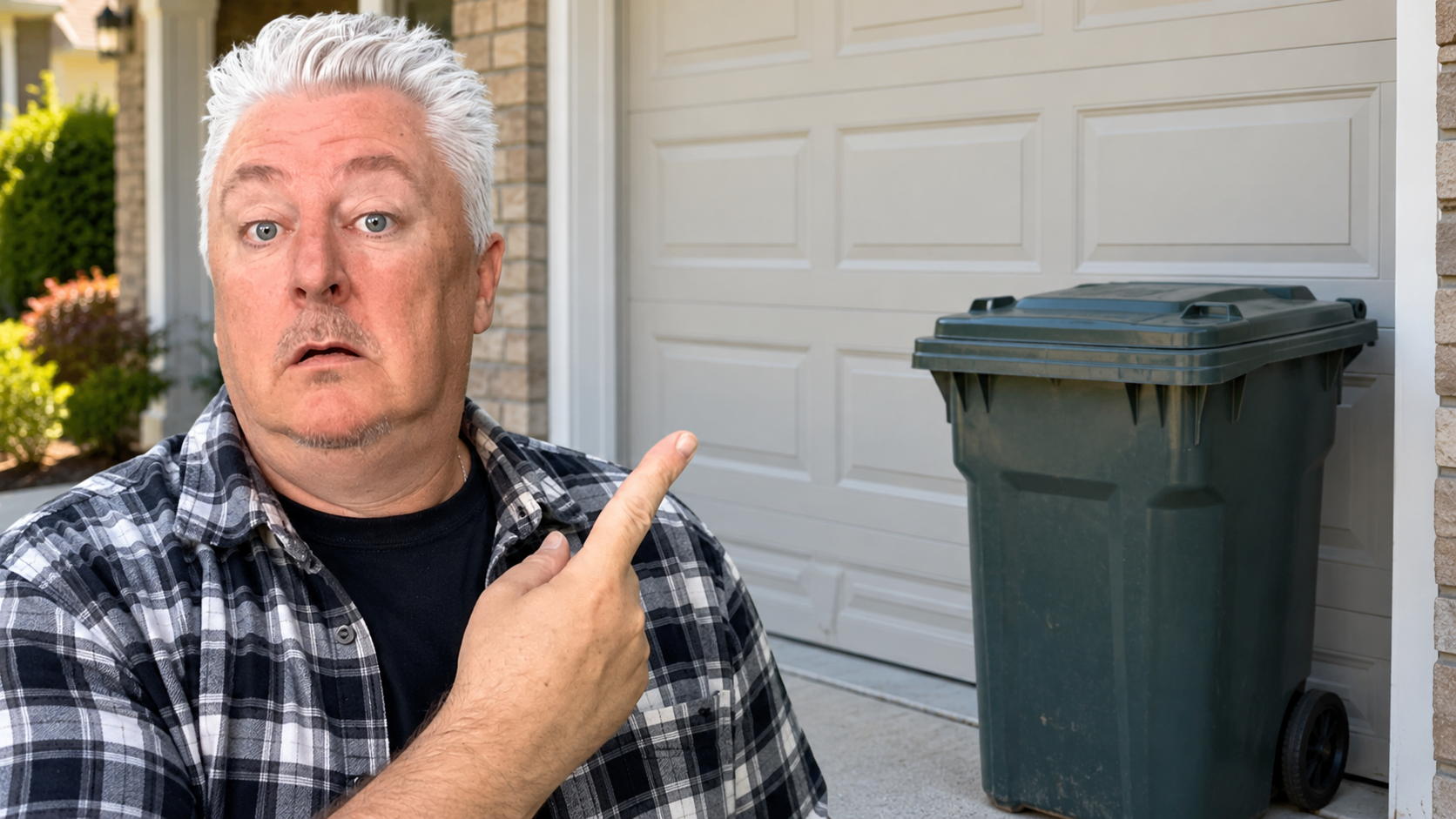
Leaving the rubbish bin somewhere it could be seen from the front of the property.
The fine was, from memory, around $50.
Now, I understand that nobody particularly wants to look at rubbish bins. They’re not exactly an attractive landscaping feature.
But we had a practical problem.
Because of the shape of our block and the way the house was built, there wasn’t a suitable place out the front to hide it.
We also had a three-year-old who was still being toilet trained and a newborn baby.
Which meant nappies.
Lots and lots of nappies.
And if you’ve ever experienced a Tennessee summer, you’ll understand why I wasn’t particularly enthusiastic about keeping a bin full of dirty nappies inside the garage.
The smell would have been horrendous.
So I wrote to the HOA explaining the situation.
I wasn’t trying to be difficult. I explained the layout of the property, the circumstances with our young children, and why storing the bin elsewhere wasn’t practical.
Honestly, I thought it was a perfectly reasonable explanation.
They never replied.
They didn’t waive the fine, either.
So I continued leaving the bin where it was.
Eventually, another fine arrived.
I wrote again.
Once again, no response.
At that point, I wasn’t entirely sure what else I was supposed to do. I had explained the problem twice, received no guidance and still needed somewhere to put the rubbish.
So the bin stayed.
And here’s the remarkable part.
Nearly eight years later, it’s still in the same place.
I haven’t received another fine.
I don’t know whether somebody decided it wasn’t worth pursuing, whether enforcement priorities changed, or whether my bin simply stopped attracting attention.
Nobody ever told me.
But after two fines and two unanswered emails, the great rubbish bin dispute appears to have ended in an unofficial stalemate.
The bin hasn’t moved. Neither have I.
Of course, there are more diplomatic ways to deal with this problem. Outdoor privacy screens and bin enclosures can keep rubbish bins out of sight without bringing them into the garage. Just make sure your HOA approves the enclosure first. Knowing my luck, I’d need permission to hide the bin I wasn’t allowed to leave visible in the first place.
Apparently, Even My Deck Colour Needs Permission
The rubbish bin wasn’t the only surprise waiting in the HOA bylaws.
There were restrictions on parking vehicles on the street for extended periods. You couldn’t park on your lawn. Boats and trailers couldn’t simply be left in the driveway.
I could understand the reasoning behind some of those rules.
Nobody particularly wants a neighbourhood where every second front yard resembles a used-car dealership.
But other restrictions seemed rather excessive.

If I wanted to change the colour of my deck, technically I needed HOA approval.
Even though the deck was at the back of the house, where it wasn’t visible from the street.
Want to remove a tree from the front yard?
Approval.
Want to plant a different tree?
Potentially more approval.
There were rules governing the exterior appearance of the house, too.
Now, I understand the argument for maintaining neighbourhood standards. A community where everyone takes reasonable care of their properties is generally a more pleasant place to live.
But I struggled with the idea that purchasing a home didn’t necessarily give me the freedom to make relatively ordinary decisions about it.
And then came the mould warning.
One winter, Tennessee experienced a severe ice storm. We were stuck at home for about a week, unable to get out, and lost power for several days.
It was a miserable experience.
Somewhere in the middle of all that, I received an email from the HOA telling me there was mould on the side of my house that needed to be removed.
I wasn’t entirely sure how they expected me to tackle that particular maintenance job.
We couldn’t even get out of the house.
Power was out.
Everything was covered in ice.
And apparently the exterior siding needed attention.
For anyone who’s received a similar warning, there are exterior house-wash products designed to remove mould and mildew from siding. They’re probably worth looking into before the HOA sends another letter. Although I’d suggest waiting until you’re no longer trapped inside your house by an ice storm before getting started.
I don’t object to maintaining my property. But there are moments when a little common sense would be appreciated. Removing mould from the side of a house during an ice storm didn’t strike me as an especially sensible priority.
Why Americans Put Up With HOA Rules
For all my frustrations, there’s another side to the story.
Our HOA costs $30 a month.
That’s $360 a year.
We don’t have a fancy neighbourhood swimming pool, clubhouse or enormous collection of recreational facilities.
We have a children’s playground, a basketball court and a landscaped entrance. Our fees help support those shared areas and other association expenses.
Nothing spectacular.
But our neighbourhood is well maintained.
It’s an older development, and most of the properties are kept in reasonably good condition. That’s worth something.

The argument I often hear in favour of HOAs is that they prevent properties from falling into disrepair.
They can stop people leaving abandoned vehicles on their lawns, require basic exterior maintenance and establish standards that help keep a neighbourhood looking presentable.
Supporters also argue that consistent standards can help protect property values.
There’s a reasonable argument in all of that.
And plenty of Americans seem comfortable with the arrangement. A 2026 survey commissioned by the Foundation for Community Association Research found that 86% of 3,000 surveyed community association residents described their experience as positive or neutral.
It’s worth noting that neutral isn’t the same as enthusiastic, and the survey was sponsored by an organisation connected to the community association industry.
Nevertheless, it suggests that living under an HOA isn’t universally regarded as the dreadful experience some online horror stories might have you believe.
The fees also vary enormously. According to the U.S. Census Bureau, the median monthly HOA or condominium fee among paying owner-occupied households was $135 in 2024. Approximately three million households paid more than $500 a month.
Compared with those figures, our $30 monthly fee is relatively modest.
And I can see the benefit of having a mechanism to maintain shared areas and encourage homeowners to look after their properties.
What I question is where reasonable neighbourhood standards end and unnecessary interference begins.
Keeping an abandoned car off the front lawn?
Fair enough.
Telling a family with a newborn that they can’t leave their rubbish bin somewhere practical? I’m less convinced.
Then I Did Something Unexpected. I Joined the HOA Board.
Well, sort of.
After spending time being frustrated by HOA restrictions, I eventually found myself interested in becoming involved in the association.
And it wasn’t because I’d suddenly developed a passion for policing rubbish bins.
We were experiencing a different problem in the neighbourhood.
Large corporate investors were purchasing properties and turning them into rentals.
There was considerable turnover, with new people regularly moving in and out, and I felt we were beginning to lose some of the sense of community that comes from having neighbours who stay for years.
It wasn’t about believing renters were bad neighbours.
It was about the changing character of a neighbourhood where people had previously put down roots.
Talking with other homeowners, we began discussing whether the HOA could introduce a rule requiring someone who purchased a house to live in it for 12 months before renting it out.
The idea was to discourage investors from purchasing properties solely to put tenants into them immediately.

And I wanted to understand how the HOA worked and whether homeowners could influence those decisions.
So I put my hand up for a position and was elected as a board alternate.
Unfortunately, my work commitments at the bank meant I couldn’t give the role the time it deserved, and I eventually had to resign.
I’d already discovered that starting over at 49 in a new country came with enough challenges of its own, but looking back, there’s an irony in the whole thing.
Here I was, the Australian who didn’t like being told what to do with his own property, supporting a proposal that would place another restriction on what homeowners could do with theirs.
And yet I don’t think the two positions are necessarily incompatible.
There’s a difference between rules that exist simply to control appearances and rules intended to protect the long-term character of a community.
Of course, deciding where that line should be drawn is where things become complicated. There’s also a legal dimension. Tennessee law protects certain existing homeowners’ rights to use their properties as long-term rentals when an HOA subsequently introduces restrictions that prohibit or effectively prohibit that use.
So changing rental rules isn’t necessarily as straightforward as holding a vote and telling everyone what to do.
And that, I suppose, is the difficulty with HOAs.
Everybody wants a say in what happens in their neighbourhood. Not everybody wants their neighbours having a say in what happens on their own property.
What I Wish I’d Known Before Buying a House With an HOA
If there’s one thing I would do differently, it would be understanding the HOA before purchasing the house.
Not after moving in.
Not while sitting at closing with a pile of paperwork in front of me.
Before signing the contract.
An HOA isn’t simply a monthly fee that helps pay for a playground or maintain some flower beds.
It can be a legally significant part of owning the property.
Depending on the association’s governing documents and applicable state law, homeowners may face restrictions on exterior alterations, parking, landscaping, rentals, maintenance and the use of their property.
Some associations also have the authority to issue fines and pursue unpaid amounts through collection procedures.
The exact powers and protections vary by state and by association. There isn’t one universal set of HOA rules across America.
If I were buying in an HOA community today, these are the questions I’d want answered first:
- What are the actual rules? I’d want the declaration, covenants, bylaws and architectural guidelines, not just a summary.
- What will it cost? Monthly or annual fees are only part of the picture. I’d also ask about reserves, planned projects and possible special assessments.
- What can I change? I’d check the approval process for decks, fences, landscaping, house colours and other improvements.
- How are violations handled? I’d want to know about warnings, fines, hearings, appeals and collection procedures.
- Are there rental restrictions? Even if I never intended to rent the house out, those restrictions could affect future options and potential buyers.
- How well is the association managed? I’d ask for relevant financial statements, budgets and meeting records where available.
And I’d read the documents before making a final commitment, with appropriate professional advice where necessary.
Not all HOA restrictions are unreasonable. Not all associations are poorly managed. And not every homeowner will have the same priorities.
But it’s much better to discover that your dream house comes with restrictions before you’ve bought it.
Because once you’re living there, deciding you don’t like the rules doesn’t necessarily mean you can ignore them.
My rubbish bin might have escaped further attention. I wouldn’t recommend treating that as a legal strategy.
Eight Years Later, I Know Exactly What Sort of House I Want Next

Nearly eight years after buying our house in Tennessee, I have a much better understanding of how HOAs work.
I can appreciate some of the benefits.
Our neighbourhood is maintained. We have shared facilities. There are standards that encourage people to take care of their properties.
And when corporate investment began changing the character of the neighbourhood, I found myself wanting the HOA to play a more active role.
So I can’t pretend the entire concept is without merit.
But I still find some of the restrictions difficult to understand.
I don’t particularly want to ask permission to change the colour of my deck.
I don’t want to be told that hanging washing outside is unacceptable.
And I certainly don’t want another argument about where I keep the rubbish bin.
The experience has also made me think about what homeownership means.
In Australia, I grew up with a fairly straightforward understanding of having your own place. There were rules, of course, and local councils had their say.
But the idea that a neighbourhood association could regulate so many ordinary aspects of life on my property was something I simply hadn’t encountered.
One thing I’ve learned about living between two countries is that you can appreciate what each has to offer without agreeing with everything about either.
America has taught me that owning a home and having complete control over it aren’t necessarily the same thing.
Perhaps that’s the compromise people make when they choose to live in a planned community.
You give up a little individual freedom in exchange for shared standards and the hope of a better-maintained neighbourhood.
For some people, that’s an excellent arrangement.
For me?
If I ever buy another house, I know exactly what I’m looking for.
Somewhere well away from everyone else.
Plenty of land. Plenty of privacy. No neighbours looking over the fence.
And absolutely no HOA. Just me, my house, and the freedom to leave my rubbish bin wherever I like.
If you’ve enjoyed this Australian perspective on American life, you’ll find more stories about the little cultural surprises of living between two countries here at From Down Under to Down South. And if you’d like to help support the stories and research behind the site, you can always buy me a coffee.
