Tag: parenting in america

  • The Hidden Cost of Competitive Dance in America

    The Hidden Cost of Competitive Dance in America

    There is a point in every parent’s life when you realise your child’s hobby has developed its own economy.

    I think we reached that point somewhere between the dance costumes, competition fees, hotel rooms and my wife working an eight hour shift at Bridgestone Arena while I sat in a car outside a dance studio doing work on my phone.

    Our ten year old daughter Georgia dances competitively.

    Seven routines this year.

    Our seven year old, Brianna, has gone back to dance too and has already announced that she would like to try out for the competition team next year.

    Because apparently we looked at our current family schedule and thought it lacked ambition.

    The funny thing is, none of this feels particularly unusual anymore.

    Afternoons are spent driving to the studio.

    Groceries happen while somebody is dancing.

    Work gets done from the car.

    Weekends disappear into competitions.

    Family trips get built around nationals.

    Money quietly moves from one part of the family budget to another.

    Somewhere along the way I realised there is an enormous economy sitting underneath American kids’ activities that you barely notice until your own family becomes part of it.

    And I don’t just mean money.

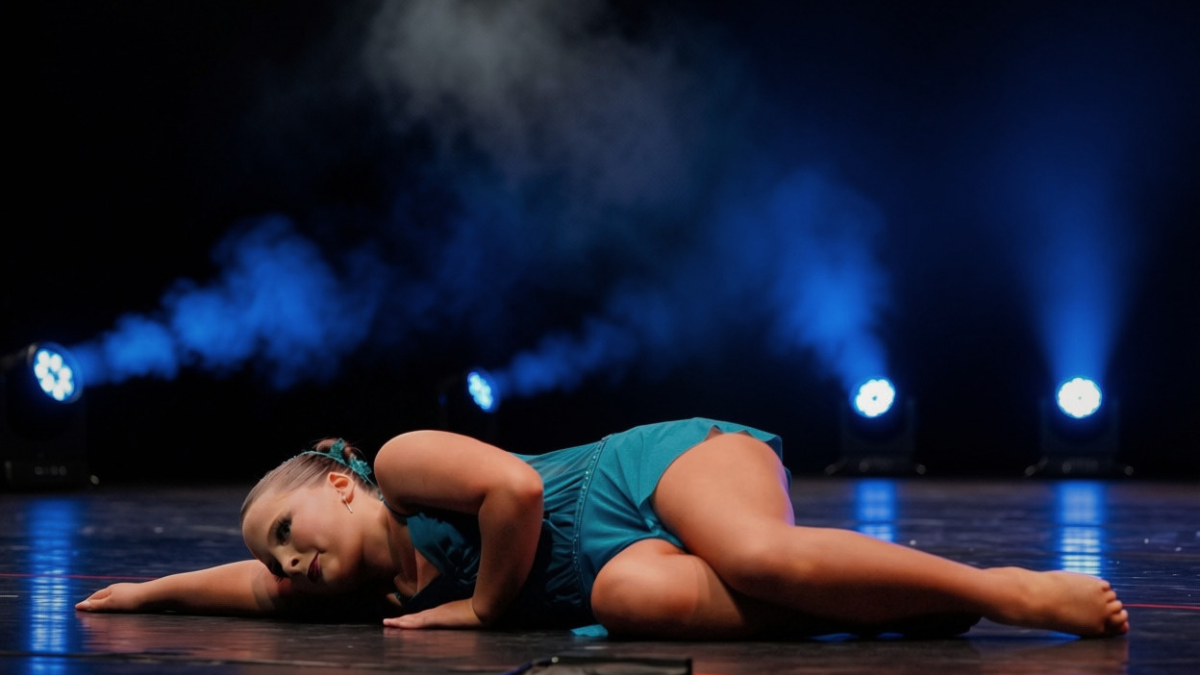
    Young competitive dancer performing alone under dramatic stage lighting at a dance competition
    What you see is a few minutes onstage. What you don’t see is the family economy of time, travel, work and money that helped get her there.

    It Starts Out So Innocently

    Georgia started ballet when she was two years old in Australia.

    She loved dance from the moment she put on her first ballet shoes.

    Back then, dance was relatively simple.

    You went to class.

    You learned your routine.

    There was an end of year recital.

    Parents watched.

    Everyone went home.

    Competitive dance is a different universe.

    Georgia is now in her fourth year on company, and the older she gets, the greater the commitment becomes.

    Tuition is higher.

    There are competition entry fees.

    Costumes.

    Choreography fees.

    Solo lessons.

    Travel.

    Hotels.

    Food.

    Then there are seven competition dances, which means seven routines have to somehow make their way from a studio in Tennessee onto stages around the Southeast.

    We regularly travel to Kentucky and Georgia for competitions. Nationals this year was in Daytona Beach, Florida.

    We were there for seven days.

    One day without dance.

    We called it a family holiday. Technically, I think that counts.


    The Three Minutes You See Aren’t the Expensive Part

    A competition routine might last a few minutes.

    Getting a child onto that stage can consume an entire weekend.

    For us, a typical competition begins on Friday.

    If we’re heading somewhere like Atlanta, Georgia may have to leave school early so we can get there that evening. At the moment her elementary school doesn’t consider dance competition an excused absence, which is something that will become more complicated as she gets older and Friday night performances become more common.

    We arrive Friday evening, check into the hotel, find dinner and get to bed.

    The preparation has already started.

    Georgia may have done her fake tan a couple of days earlier, or sometimes before we leave on Friday.

    If she has an early Saturday performance, Nikki can be up at 4 a.m. doing hair and makeup.

    Four.

    In the morning.

    I grew up dancing ballroom in Australia and somehow I don’t remember Bankstown RSL requiring this level of preparation.

    Then you arrive at the competition.

    Some of these events are extraordinary.

    Huge stages.

    Professional lighting.

    Multiple cameras.

    Some of the bigger ones feel less like the dance competitions I remember growing up and more like television productions.

    It is genuinely impressive.

    You can then spend anywhere from 8 a.m. until 9 p.m. there.

    At one competition in Atlanta last year, it was so crowded that Brianna and I couldn’t even find somewhere to sit and watch Georgia.

    We had already checked out of the hotel.

    So after driving all the way from Tennessee to Atlanta to watch our daughter dance, we went back to the car…

    and watched her on an iPhone. Parenting is magnificent.

    Large competitive dance stage with theatrical lighting and cameras during a dance competition.
    Some of the larger competitions feel closer to television productions than the dance competitions I remember growing up with in Australia.

    Then There Is the Cost Nobody Puts on an Invoice

    This is the part I hadn’t really thought about before becoming a dance parent.

    Time.

    A 30 minute dance class does not take 30 minutes.

    There is the drive there.

    The wait.

    The drive home.

    Multiply that across two children and several days a week and suddenly large pieces of your family life are being organised around a dance studio.

    I deliberately schedule my own ballroom lessons while the girls are at school.

    Afternoons are largely theirs.

    If one of them only has a 30 minute or one hour class, sometimes there isn’t much point driving home, so I stay in the car and work.

    Other times I do the groceries while they’re dancing.

    You become surprisingly good at this.

    Dance class at 5:00.

    Groceries at 5:07.

    Back at the studio at 5:56.

    Child retrieved.

    Nobody forgotten.

    Successful evening.

    The car becomes an office, waiting room, transport department and occasionally somewhere to eat dinner. A portable charger has become essential equipment for this dance dad when I’m working from the car.

    Nobody sends you an invoice for any of that.

    But it still costs something. Time is part of the hidden economy too.


    Sometimes Hockey Pays for Ballet

    This may be my favourite part of the whole strange system.

    Nikki is the only member of our immediate family who doesn’t dance.

    So naturally, she has been dragged into the dance economy anyway.

    She works concession stands at Bridgestone Arena in Nashville through a fundraising arrangement that allows parents to work events to help raise money toward their children’s activities.

    She’s the only parent from our studio doing it, but she works alongside dance mums from other studios.

    The shifts are long.

    Usually around eight hours.

    There is a small set amount, but most of what the group receives comes from tips that are shared among the people working. Nikki will typically generate around $120 to $150 from a night, with checks made out to the dance studio.

    That means somebody can walk into Bridgestone Arena to see a Predators game or a country concert, buy something from the concession stand and leave a tip.

    A little piece of that money eventually helps pay for a child’s dance.

    Last week Nikki worked the Brooks & Dunn concert.

    Now the Nashville Predators are back.

    So in our house, hockey season is also dance fundraising season.

    Country music pays for ballet.

    Hockey pays for tap lessons.

    America has some fascinating economic systems. Similar nonprofit concession fundraising arrangements operate elsewhere in Tennessee, where registered organizations staff arena concession stands and funds can be applied toward participants’ fees and other activity costs.

    Bridgestone Arena in downtown Nashville, where parents can work event concessions to help fund children's activities.
    In our family, a night working concessions at Bridgestone can help pay the next dance bill.

    Not Every Family Experiences the Cost the Same Way

    There is another side of competitive dance that I’ve become increasingly aware of.

    Some of the families around us appear considerably better off than we are.

    You see the houses.

    The cars.

    The travel.

    Some live in homes that, by our standards, look like mansions.

    I don’t know their finances, and appearances certainly don’t tell you everything.

    But I do know ours.

    There have been times when I’ve looked at what is coming up and wondered how we’re going to afford all of it.

    So far, we always have.

    We have never sat Georgia down and told her she might have to stop dancing because we can’t pay for it.

    I hope we never have to.

    But it has made me realise something.

    When people talk about opportunities for children, we often focus on whether the opportunity exists.

    I’ve written before about something else I’ve come to admire in America: the willingness to encourage children to imagine what might be possible.

    But encouragement is only part of it.

    Someone still has to get the child there.

    Pay the entry fee.

    Buy the costume.

    Book the hotel.

    Be available at 4 a.m. to do the hair.

    Someone has to sit in the car. Someone has to make the whole thing work.


    Because This Isn’t Just a Hobby to Her

    This is the part that matters.

    If Georgia were miserable, none of this would make sense.

    She isn’t.

    Dance is her passion.

    She started ballet at two and she’s now ten. She’s been on company for four years.

    I regularly give her the opportunity to try something else.

    Her response is usually some variation of:

    Dad, are you serious?

    This is all she wants to do.

    If we told her tomorrow that school had been cancelled permanently but dance was still on, I suspect we’d barely finish the sentence before she was in the car.

    She lights up when she dances.

    She already talks about going to college and eventually becoming a dance teacher.

    There are genuine pathways from dance into higher education in America. Universities including USC’s Glorya Kaufman School of Dance offer competitive talent based dance scholarships, while other universities offer scholarship opportunities tied to dance majors and auditions. USC Glorya Kaufman School of Dance

    She’s ten.

    Nobody knows where any of this will lead.

    She may become a dance teacher.

    She may pursue something completely different.

    Life has plenty of time to work that out.

    Right now, our job is simply to give her the opportunity to find out.

    I’ve already had moments when I’ve realised just how much Georgia’s dreams are being shaped by growing up here rather than in the Australia where she was born.

    Georgia preparing to dance during her fourth year on a competitive dance company.
    She started ballet at two in Australia. Eight years later, dance is still the thing she wants to do more than anything else.

    Apparently One Competitive Dancer Isn’t Enough

    Then there’s Brianna.

    She returned to dance this year and is taking jazz, hip hop and ballet.

    She now wants to try out for company next year.

    This should probably terrify us.

    Instead, our reasoning has become:

    Well, she’s already at the competitions anyway.

    There would be overlap.

    The second child is cheaper.

    We’re already paying for the hotel.

    What could possibly go wrong?

    There is something slightly alarming about reaching the point where adding a second competitive dancer starts sounding like an efficiency measure.

    But that’s how embedded this world has become in our family.

    It isn’t something we occasionally attend anymore.

    It is part of the rhythm of our lives.


    Nationals Is a Holiday. Sort Of.

    This year nationals took us to Daytona.

    We were there for seven days and, thanks to some flight credits I needed to use, we flew rather than drove.

    We spent plenty of time at the beach.

    We ate out.

    A lot.

    That last part belongs firmly in the expense column.

    We had a great time and absolutely treated the trip as a family holiday.

    But out of seven days, we had exactly one day with no dance.

    That pretty much sums it up.

    Even the family holiday gets absorbed into the machinery.

    Dance first.

    Beach around it.

    Family trip to Daytona Beach during a week away for a national dance competition.
    We turned nationals in Daytona into our family holiday. Out of seven days, one was completely dance free.

    Then She Walks Onto the Stage

    After all of that, there is the actual dancing.

    I don’t get particularly nervous watching Georgia in group routines.

    The smaller groups, with five or so dancers, are fun.

    The enormous team productions can become a completely different challenge.

    Sometimes there are so many dancers moving on and off stage that if you don’t already know where Georgia is supposed to be, finding your own child becomes part of the entertainment.

    Then there’s her solo.

    That’s different.

    I get nervous.

    Really nervous.

    I feel like I watch the entire thing holding my breath.

    For those few minutes there is nowhere for her to disappear.

    It’s just her.

    And perhaps that’s when the hidden economy becomes visible to me.

    Not the dollars.

    Not the hotel.

    Not the petrol.

    Not the hours in the car.

    All the things behind it.

    The lessons.

    The rehearsals.

    The 4 a.m. makeup.

    Mum working at Bridgestone.

    Dad working from the car.

    The trips to Kentucky and Georgia.

    The week in Daytona.

    The costumes.

    The school juggling.

    All of it leads to one little girl standing alone under the lights doing the thing she loves. Suddenly, it doesn’t feel particularly complicated.


    What I’d Tell Another Parent

    If somebody with a five year old who loves dance asked me whether their child should try out for a competition team, I wouldn’t tell them not to.

    I’d tell them to understand the commitment.

    Because the child isn’t the only person joining the team.

    The family is.

    Competitive activities don’t simply occupy a line on the family calendar.

    Eventually they start rearranging the calendar around themselves.

    That doesn’t make them bad.

    It doesn’t make the money wasted.

    It simply means parents should understand what they’re saying yes to.

    Because if the child really loves it, you may be saying yes for quite a while.


    I Don’t Think There Was Ever Much Doubt

    Sometimes I think back to Georgia putting on her first ballet shoes in Australia.

    She was two.

    It would be tempting to say I never imagined that tiny ballet class would eventually lead to enormous American competition stages, seven routines, interstate travel, national competitions and an entire family economy operating behind her.

    But that wouldn’t really be true.

    She loved dance from the moment she put those shoes on.

    I don’t think there was ever much doubt we’d end up somewhere like this.

    The stages got bigger.

    The commitment got bigger.

    The bills definitely got bigger.

    But the reason we’re doing it hasn’t really changed at all.

    She loves to dance. Sometimes an entire family economy grows around something as simple as that.

    Georgia wearing her first ballet shoes at age two in Australia.
    It started with ballet at two years old in Australia. The scale has changed. Her love of dance hasn’t.

    Enjoy From Down Under to Down South?

    If you enjoy these stories about the parts of American life you don’t always see from the outside, you can support From Down Under to Down South through Buy Me a Coffee. Every coffee helps me keep writing, recording the podcast and sharing what life in America looks like through Australian eyes.


  • The Small Things Australians Miss After Moving to America

    The Small Things Australians Miss After Moving to America

    You think the big things will be what you miss when you move overseas.

    Family. Friends. Familiar places.

    And you do miss those things.

    But honestly… some of the strongest homesickness hits come from standing in an American supermarket looking for chicken salt.

    Or opening a packet of “Australian-style” lollies and realising they just don’t taste right.

    I’ve lived in America for around eight years now, and over time I’ve realised that home slowly becomes a collection of tiny things.

    Little routines. Familiar foods. Smells. Phrases.

    Small comforts that quietly remind you who you are.


    Australian food care packages for expat overseas
    A typical care package from Australia never lasts long in our house.

    Vegemite Becomes a Survival Item

    We go through a lot of Vegemite in our house.

    We normally keep four or five jars in the cupboard at any given time.
    I have it most mornings on toast, and both of our girls love it too. Nikki’s mum sends it to us in bulk from Australia, so at any given moment there are usually four or five jars sitting in the cupboard like emergency supplies.

    If we ever got down to one jar, I’d probably start rationing it.

    Americans are fascinated by Vegemite too. Whenever friends come over, it eventually turns into:
    “Alright then… let’s see you try it.”

    The reactions are usually dramatic. But for Australians overseas, Vegemite isn’t really about the taste anymore. It’s familiarity. It’s routine. It’s sitting at the kitchen table in the morning feeling, for a few minutes at least, like you’re back home again.

    I talked more about the strange experience of keeping an Australian identity while living overseas in this article:


    Allens snake lollies

    Australian Road Trips Just Feel Different

    One of the things I never expected to miss was Australian road trip culture.

    Growing up, road trips for us usually meant driving from Canberra to the coast, or inland to see Nikki’s family in Griffith. And before every trip, there was always the same ritual.

    Fill up the car.

    Go into the servo.

    Buy a bag of Allen’s snakes, maybe some other lollies, and drinks for the drive.

    There was something oddly comforting about it.

    Now, in America, we’ve replaced that ritual with Buc-ee’s stops.

    And honestly? Buc-ee’s is incredible.

    Australia has absolutely nothing like it.

    But even now, grabbing nuts or lunch at Buc-ee’s still doesn’t quite hit the same emotional note as buying a bag of snakes before heading down the highway in Australia.

    Part of that is because the lollies here just aren’t the same. The snakes are too sweet. Even the Cadbury chocolate tastes different because the version sold here is British Cadbury, not Australian Cadbury. You don’t realise how specific your memories are until you try to recreate them somewhere else.

    Every now and then we’ll order a mixed Australian lolly box online just because we are feeling homesick.

    • I’ve spoken before about how living overseas slowly changes the way you think, sound and even remember home, the below video is a great example of that.

    Care Packages Mean More Than You’d Think

    Care packages from Australia hit differently when you live overseas.

    Nikki’s mum sends boxes over for us and the girls, usually packed with Australian food, little gifts, chocolates, random surprises… and somehow it always feels bigger than just “stuff.”

    australian care package sent to expat overseas

    One year my old workplace in Australia sent us a huge Christmas box filled with Australian snacks, games, soccer balls, all sorts of things.

    It honestly felt like someone had posted a piece of Australia directly to our front door.

    And for the girls, it’s not even necessarily the food they love most.

    It’s knowing that Nanna packed it.

    That connection matters.

    I will admit though that they always beat me to the Caramello Koalas, they barely last a few days.


    Australian Bakeries Overseas Are Usually Disappointing

    This might upset a few people, but Australian bakeries overseas are almost always disappointing.

    We’ve been to Australian bakeries in America — including one in Atlanta that’s pretty good — but it’s still not quite the same.

    There’s also an Australian-owned café near us in Tennessee that sells meat pies and sausage rolls.

    Again… not even close to home.

    The funny thing is, the first thing I want when I land back in Australia isn’t anything fancy.

    It’s a bakery stop.

    A sausage roll.

    A meat pie.

    A vanilla slice.

    And an iced coffee Dare.

    That’s home.

    I make my own sausage rolls here now because sometimes it’s easier than trying to recreate the feeling through substitutes. We buy Jamaican meat pies and chicken pasties occasionally too, and while they’re definitely not Australian pies, they scratch a similar itch. Close enough becomes an important concept when you live overseas.


    Smells Become Emotional Time Machines

    Smell might actually be the strongest trigger of all.

    The bush after rain.

    Gum trees.

    The ocean.

    Jervis Bay National Park Australia

    Sunscreen.

    That hot Australian air right before a storm rolls in.

    Sometimes you’ll randomly smell something in America that takes you straight back to Australia for half a second before reality catches up again.

    It’s strange how powerful that can be. Even thinking about it now makes me a bit homesick.


    Watching Your Kids Grow Up Between Two Cultures

    One of the strangest parts of living overseas long term is watching your kids slowly become a blend of both countries.

    We still celebrate Australia Day at home, although having a barbecue in January is a bit harder when there’s snow outside in Tennessee.

    I try teaching the girls Aussie slang too.

    “How’s it goin’ mate.”
    “Yeah nah.”
    “No worries.”

    And Georgia especially will switch between Australian and American words or accents depending on who she’s talking to.

    It’s fascinating to watch.

    Because in some ways, that’s exactly what living overseas feels like yourself. You slowly become a mix of places.


    The Small Things Matter More Than You Expect

    I think that’s the biggest surprise about moving overseas.

    Home stops being one giant thing.

    It becomes little things.

    A jar of Vegemite in the cupboard.

    A care package from family.

    A bag of snakes before a road trip.

    A bakery stop after a long flight.

    A phrase your kids still say with an Australian accent.

    Tiny things that remind you who you were before life got complicated.

    And maybe that’s why Australians overseas hold onto those small comforts so tightly. Because sometimes the smallest things are the ones that make a place feel like home again.


    If you enjoy these Australia vs America reflections, I also talk about them regularly over on the podcast and YouTube channel:

  • When School Starts to Feel Like HR (An Aussie Perspective)

    When School Starts to Feel Like HR (An Aussie Perspective)

    This week, something happened that made me pause.

    Not because it was dramatic.
    And not because anyone had done anything wrong.

    It was just… one of those moments where two different systems quietly collided.


    The Email

    Earlier this week, I received an email from Georgia’s school.

    The subject line was about attendance.

    Apparently, she’s had five unexcused absences this year—and because of that, I now have to attend a meeting with the principal and the school counsellor.

    The interesting part is… I don’t actually know what the five absences are yet.

    That comes later. In a letter. From the state.

    The email itself didn’t explain anything. It just said we’d crossed a threshold—and now a conversation needs to happen.

    And when I read it, my first reaction wasn’t confusion.

    It was recognition.


    I Knew This System Immediately

    I spent 25 years working in banking.

    And almost instantly, I knew exactly what I was looking at.

    This wasn’t really a school system.

    It was an HR system.

    Track the events.
    Log them.
    Wait for the threshold.

    Then trigger the process.

    • Informal conversation
    • Formal conversation
    • Documentation

    Except this time… the “employee” is ten years old.

    And if you’ve ever worked inside structured systems like that, you’ll recognise the feeling straight away — that moment where you stop and go, ah… I know exactly how this is going to play out.

    This Is Something I’ve Noticed More Over Time

    This wasn’t the first time I’d had that feeling.

    It’s something I’ve noticed more and more the longer I’ve lived in America — the way everyday situations are quietly shaped by systems underneath.

    Because it’s the same underlying pattern — structure first, human interpretation second.

    If you’ve seen that video, you’ll recognise it here too.


    What Actually Counts as “Absent”?

    Now I do know a couple of the days they’re probably referring to.

    One of them was when I picked Georgia up early so we could drive five hours to a dance competition.

    If you’re a dance parent, you’ll recognise that rhythm immediately.

    Long drives. Early starts. Costumes packed the night before.

    If you’re in that world, this is actually one of the best things we’ve ended up relying on for comp weekends:

    Because none of that fits neatly into a school system.

    But the system doesn’t see any of that.

    That absence wasn’t excused.


    The Five-Minute Absence

    Another one?

    She arrived about five minutes late one morning.

    At her school, if you’re late, you don’t just walk into class—you check in through the front office.

    And once that happens…

    It’s logged.

    Now that five-minute delay sits in the same column as a full-day absence.

    Not because it’s the same thing.

    But because the system records entries—not meaning.


    Where It Starts to Feel… Mechanical

    And this is the part that stood out.

    The system isn’t designed to interpret context.

    It’s designed to record events.

    • Late arrival → logged
    • Early departure → logged
    • Absence → logged

    Once the number hits a certain point…

    The process activates.

    That’s when the email arrives.

    That’s when the meeting gets scheduled.

    And suddenly something that feels like normal life…

    Feels procedural.


    I’ve Seen This Before — In a Completely Different Way

    Earlier this year, I applied for a role with Child Protective Services.

    It was something I genuinely felt drawn to.

    After years in banking — dealing with fraud, scams, and vulnerable customers — it felt like a natural extension of that work.

    The idea of helping protect children felt meaningful.

    I went through the process.

    And I was offered the job.

    But there was one problem.

    I don’t have a university degree.


    When Systems Ask a Different Question

    It didn’t matter what I’d done.

    It didn’t matter the experience.

    Because the system wasn’t asking:

    “What has he done?”

    It was asking:

    “What box does he tick?”

    And once again…

    I recognised the structure immediately.


    This Is What Living Between Systems Feels Like

    This is something that becomes clearer the longer you live between countries.

    Not the obvious differences.

    The subtle ones.

    Because this is exactly what that feels like.

    Not big cultural shocks.

    Just small, revealing moments.


    It’s Not About Right or Wrong

    To be fair—these systems exist for good reasons.

    Schools need to track attendance.

    There are real situations where children are missing school for serious reasons.

    Structure helps identify those situations.

    The same way hiring requirements create consistency.

    It’s not broken.

    It’s just… structured.


    But It Creates These Moments

    Because every now and then…

    The system and real life don’t quite line up.

    A five-hour drive to a dance competition becomes an attendance issue.

    A five-minute delay becomes an absence.

    And normal life starts to feel like it’s being processed.


    If You’ve Noticed This Too

    This is one of those patterns that keeps showing up in different ways.

    👉 You’ll see the same idea here:
    American Goodbyes

    👉 And here:
    American Politness

    Different situations.

    Same underlying structure.


    A Quick Note

    If you enjoy these kinds of reflections — the small, in-between moments that don’t usually get talked about —

    you can support the channel here:

    👉 https://buymeacoffee.com/fromdownundertodownsouth


    One of Those “Ah… I See” Moments

    Nothing dramatic happened this week.

    No one got in trouble.

    It was just the system…

    Doing exactly what it was designed to do.

    Recording events.
    Triggering processes.
    Asking for a conversation.

    And every now and then—

    You see that system clearly enough…

    That it makes you stop.

    And think.


    👉 If you prefer listening instead of reading, the full podcast lives here:
    https://fromdownundertodownsouth.com/listen/