Tag: Parenting

  • I Want My Girls Safe Online. What Happens to Our Privacy?

    I Want My Girls Safe Online. What Happens to Our Privacy?


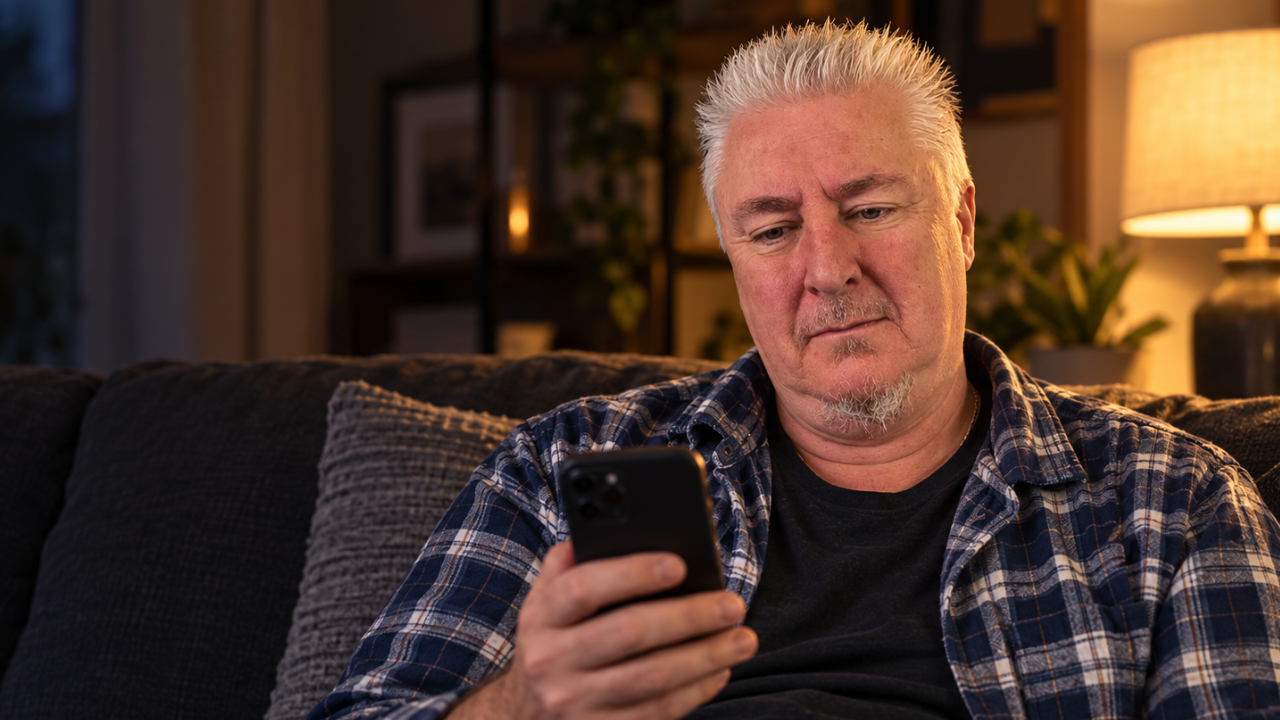
    I’ve been trying to understand Australia’s proposed digital duty of care, and I keep coming back to one fairly simple thought: I want my girls to be safe online.

    The less simple question is what we should do to make that happen.

    I’m an Australian dad living in the United States. I’ve watched this discussion develop in both countries, and I can see why people come at it from different directions. But I’m not writing this because I’ve landed on a firm position. I haven’t. I’m trying to work out what the proposal would actually mean for families like mine, and what questions I’d want answered before deciding whether it’s a good idea.


    What does “duty of care” mean online?

    “Digital duty of care” sounds like something I’d have to sign before being allowed into a meeting.

    As I understand it, Australia wants online platforms to take more responsibility for the harm their services can cause. That means looking at how the platforms work, including the algorithms that decide what keeps turning up in our feeds, rather than waiting for someone to report a problem after it’s happened. The proposal would also give people more choice about those feeds.

    I can see why that appeals to parents. I’d like to know the people running these platforms have thought about what happens when a child uses them. But I’m still trying to understand what they would actually be required to do. If my daughter is being bullied, I want the platform to act. Beyond cases like that, who decides what counts as harm, and what would acting on it look like?

    For now, this is still a proposal. The Australian Government’s exposure draft and consultation material describe a new responsibility for online services to manage risks and prevent serious harms. The government says the framework is meant to improve safety while protecting freedom of expression. Those aims sound compatible in a sentence. The difficult work is deciding how they fit together when a real case lands in front of a platform.


    The part I understand as a dad

    It’s hard to monitor what your children see online every minute of every day. My girls are still young, and I can already imagine how much harder that will become as they get older and want more privacy and independence.

    If stronger safeguards help protect my girls from bullying and harmful material, I’m all for them. Kids shouldn’t have to manage every online risk alone just because the internet is difficult to regulate.

    I worry about AI-generated and manipulated images, too. Someone could take an ordinary photo of one of my girls and alter it to make it look as if she’d done something she never did. I would hate for that to happen. Once someone shares a manipulated image, getting it back under control can be nearly impossible.

    In a case like that, I’d want the image removed, the person responsible to face consequences, and the platform to face financial penalties if it failed to respond properly. That feels clear to me. Where I get stuck is deciding what rules should apply to material that upsets or harms people but isn’t obviously illegal. Who decides what crosses the line? How do we give platforms enough responsibility to act without asking them to remove anything that might attract criticism? Those questions are not an argument against protecting children. They’re part of working out what protection should look like.


    Why the debate sounds different across the Pacific

    Living in America has made me more aware of how quickly questions about government power and free speech enter the conversation here. The US administration’s response to Australia’s proposal focused on the risk of censorship and the effects the rules could have on American technology companies. Australia’s proposal, by contrast, starts with the responsibility of online services to take reasonable steps against foreseeable harms.

    That’s a difference in emphasis, rather than a neat split where one country cares about safety and the other doesn’t. People in both places worry about children and value free expression. But in my experience, Australians are often more comfortable asking what rules might help, while Americans are quicker to ask who gets to make those rules and how far they could reach. I understand both questions. I don’t want a platform shrugging off serious harm. But I also don’t want a broad or unclear standard to become a reason for lawful speech to disappear. I’m not sure there’s a simple line that resolves that tension for every situation.

    A man sits beside a phone and photographs of Australian and American neighbourhoods.
    Living between Australia and America can make the same online safety question sound quite different.

    Age checks bring privacy into it

    The question gets more personal when the proposed solution involves proving who you are, or how old you are.

    Here in Tennessee, state law requires age verification for certain websites with material considered harmful to minors. I understand the aim: children shouldn’t be accessing adult material. But I still find myself asking what information a user has to provide, who handles it, and what happens to it afterwards. People have challenged the Tennessee law in court, too. The argument over where to draw the line is far from settled.

    When I walk into a shop to buy alcohol, someone checks my ID and lets me go. As far as I know, they don’t record my details or keep a list of what I’ve bought. What is the online equivalent? Can a service confirm that I’m an adult without storing my identity or keeping a record of what I visit?

    That distinction matters to me. I could be comfortable with age verification if it genuinely confirmed age without retaining identity or browsing history. I’m less comfortable with the idea of handing over personal information without understanding who can see it or how long it stays around.

    I already get spam calls and adverts that seem to know an unsettling amount about my interests. I don’t know where every detail comes from, and I’m not claiming my phone reads my mind. But the experience does leave me wondering how much information is collected as we move through everyday life online. And then there’s the question I keep coming back to: twenty years ago, most of us weren’t asked to prove our age before using the internet. The online world has changed, and children can now encounter things that were much harder to reach. That’s a real difference. Still, I want to understand why a particular check is needed, whether it will work, and what information it will create before I decide I’m comfortable with it.

    A hand holds a phone beside a leather wallet on a living-room table, with the screen and ID details hidden.
    An online age check raises a question I don’t have to ask when I show my ID at a shop: who keeps the information afterwards?

    I’m still working it out

    I don’t want the government telling me how to raise my children or what they should believe. I do think government has a role when children are neglected or seriously harmed. Between those two statements sits a lot of difficult territory, especially when a platform’s design can influence what a child sees without a parent knowing it’s happening.

    I want my girls protected from bullying, exploitation and manipulated images. Platforms to take responsibility when their systems contribute to serious harm. I also want parents to remain parents, and I want people to have privacy online.

    I can’t yet say exactly how all of that should be balanced. So I’m trying to understand the proposal before deciding what I think of it: what risks it is meant to address, what platforms would have to do, who decides when they’ve done enough, and what information users may be asked to give up along the way.


    If you enjoy these personal observations about life between Australia and America, you can support From Down Under to Down South through Buy Me a Coffee.

  • Dance Dads Have a Clique. I Didn’t Make the Cut.

    Dance Dads Have a Clique. I Didn’t Make the Cut.


    I recently discovered that I have failed to join the dance dads.

    Apparently there is a group.

    There may be a committee.

    There could be membership requirements.

    I wouldn’t know.

    Nobody sent me the paperwork.

    My daughter Georgia has been dancing at the same studio for six years now, including four years on the competition team.

    I know most of the teachers. I know many of the parents. I know the kids. I know which competition venues have decent coffee, which ones have terrible parking and roughly how many rhinestones can fall off a costume before somebody declares an emergency.

    But somehow, after all these years, I remain an independent contractor. A freelance dance dad.


    I should have noticed the dance dads years ago

    The evidence was there from the beginning.

    At competitions, a group of dads would help build the sets. They’d carry everything onto the stage, assemble whatever needed assembling and then, when the job was done, take a little bow before running offstage to applause.

    It was like a very specialised Broadway production where nobody actually danced.

    I was never asked to join them.

    I wasn’t offended.

    At first I didn’t think much about it.

    But over the years, I started noticing the same dads together elsewhere.

    At practices, they’d stand around talking in a circle.

    At competitions, they’d sit together.

    Sometimes they’d go out for dinner afterwards.

    There was clearly a social structure here that I had somehow missed.

    The dance mums had their groups too, of course. I’d noticed those.

    I just assumed the dads operated differently.

    Turn up.

    Find somewhere to sit.

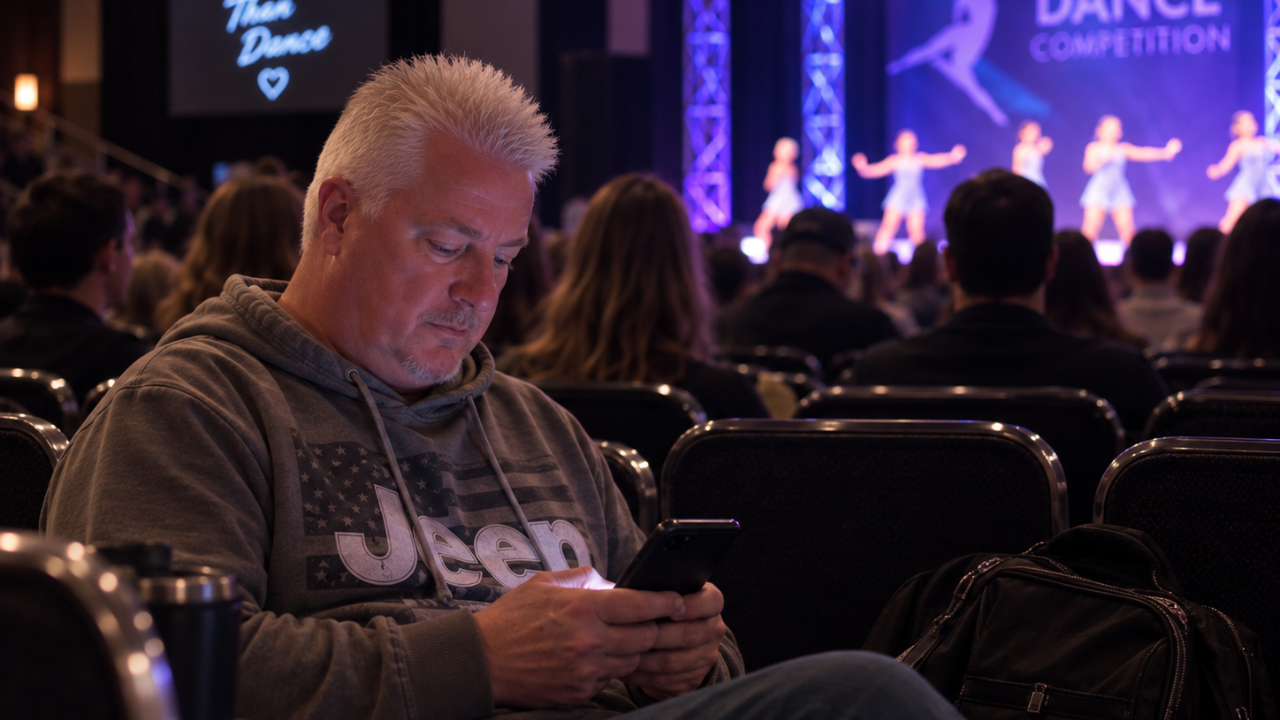
    Look at phone.

    Move costume bag when instructed.

    Ask when we’re leaving. Apparently I had underestimated the complexity of dance fatherhood.

    Parents and families gathered at a children's dance competition.
    Dance competitions have their own little communities. Some of us are apparently non playing members

    Then one of the dads confirmed my suspicions

    Recently, I was standing outside the studio waiting for Georgia.

    One of the dance dads walked out.

    I’ve known him for several years. Not well, but certainly well enough that we’re not strangers.

    He looked straight at me.

    I said hello and asked how he was.

    I got a quick good, how are you?

    Then he proceeded to enthusiastically talk to seemingly everyone else within a fifty metre radius.

    People walking past.

    Other parents.

    People sitting in their cars.

    Had somebody driven past slowly enough, I suspect he would have leaned through the passenger window.

    It was like watching a politician work a rope line.

    And I stood there thinking:

    Well.

    Nice catching up.

    To be fair, perhaps I’m being unfair.

    Because there is another possibility I have been forced to consider. Maybe they think I’m the snob.


    This is where my argument begins to fall apart

    I don’t approach groups.

    Ever.

    If I walk into the dance studio and six dads are standing in a closed circle talking, there is absolutely no chance I am walking over and inserting myself into the middle.

    None.

    They could be discussing how to divide a winning Powerball ticket and I’d probably stand twenty feet away looking at my phone.

    Part of it is probably shyness.

    I’m much better one on one than I am in groups, particularly with people I don’t know well.

    Part of it may simply be habit.

    And part of it is that I often walk into the studio without my glasses and can’t actually tell who anybody is.

    It’s difficult to confidently greet someone when there’s a reasonable possibility you’re about to introduce yourself to a coat rack.

    So I sit down.

    I pull out my phone.

    I answer emails.

    I work on the website.

    I check YouTube.

    I watch Georgia or Brianna through the window.

    From my perspective, I’m giving everyone else their space.

    • Somewhere along the way I’ve also learned that a portable phone charger is less an accessory at a dance competition and more emergency equipment. These things can run all day.

    From their perspective, perhaps there’s an Australian bloke sitting in the corner staring at his phone who never comes over and talks to anyone. This investigation is becoming increasingly inconvenient.


    I don’t actually dislike talking to people

    That’s the strange part.

    If one of the dads comes over and talks to me, I’m perfectly happy.

    It has happened occasionally.

    At Nationals over the summer, I ended up having a great conversation with another dad about soccer and the World Cup.

    He’d had a couple of drinks, which may have assisted international diplomacy.

    But it was easy.

    Natural.

    Two dads talking about football.

    I’ve had similar conversations with other parents over the years.

    The confusing part comes afterwards.

    Sometimes you’ll have a really good one on one conversation with somebody. You think you’ve finally broken through that awkward stage.

    Then the next time you see them, they’re back with their usual group and it’s as though the conversation never happened.

    Hello again, coat rack.

    That’s when the whole thing can start to feel slightly performative.

    Warm and friendly when you’re one on one.

    Different when the group reappears. And that’s probably why I’ve become even less inclined to push myself into it.

    Young competitive dancer performing onstage at a dance competition.
    The kids somehow manage to make friends while competing against each other. The adults have developed a more complicated system.

    The kids may actually be better at this than we are

    Georgia has her best friend at dance.

    Like most childhood best friendships, it can occasionally resemble Days of Our Lives.

    They’re inseparable.

    Then they’re not.

    Then they are again.

    The other girls her age seem to operate similarly. They have close friendships and often pair off rather than moving around as one enormous group.

    Meanwhile, some of us adults seem to have recreated high school in the lobby.

    The children are learning choreography.

    We’re apparently still working out where we’re allowed to sit at lunch.

    And that, I’ve realised, might be part of why I find these situations uncomfortable.


    Just tell me where I’m supposed to sit

    At competitions, we’re often sitting by ourselves or with Georgia’s best friend’s mum and another parent we know.

    I’ve watched other dance studios arrive and seemingly have this sorted.

    Their families sit together.

    They have a section.

    They cheer together.

    Some even have team chants.

    You can see immediately that they’re there as a studio.

    I actually think I’d enjoy that.

    Which surprised me when I thought about it.

    Because my problem isn’t necessarily being around everybody.

    My problem is the bit beforehand.

    Walking into a room and trying to work out where you belong.

    I don’t want to walk up to a row of people and ask whether a seat is free, only to hear:

    Sorry, someone’s sitting there.

    Suddenly I’m back on the school bus trying to work out where I’m allowed to sit.

    I’m 52.

    I don’t need that kind of pressure.

    Give me assigned seating.

    Put my name on a chair. I will happily participate.

    • I’ve spent enough hours in dance venues now that I’m beginning to think a decent stadium seat cushion should be issued when your child joins the competition team.

    Apparently I require organised socialising

    There was an awards night at Nationals over the summer.

    Families were invited.

    I didn’t go.

    I stayed with Brianna in the hotel room instead.

    Maybe I should have gone.

    But I could already picture myself walking into the area, looking around at all the established groups and trying to work out where to stand.

    No thanks.

    Yet if the studio announced tomorrow that all the families were sitting together at the next competition, I’d genuinely look forward to it.

    So apparently my social requirements are:

    I would like to be included.

    I do not wish to ask to be included.

    Please provide clear instructions.

    Assigned seating preferred. Refreshments appreciated.

    Daytona Beach Florida
    Daytona Beach, dance dad life does include some travel perks.

    The really annoying part is that I’m perfectly sociable elsewhere

    I dance too.

    Ballroom.

    And at my ballroom studio, I feel completely at home.

    From the beginning, people said hello when I walked through the door.

    They remembered my name.

    They talked to me.

    It was welcoming.

    Now I can walk in and feel like I belong there.

    Same bloke.

    Same personality.

    Same reluctance to charge into a group of strangers.

    The difference is that somewhere along the way, I was given enough little signals that said:

    You’re part of this place.

    That’s all it took.

    At Georgia’s studio, after five or six years, I know almost everybody.

    I always say hello to the teachers by name.

    Sometimes I wonder whether they know mine.

    Although, in fairness, it is a children’s dance studio.

    They’re there for Georgia.

    I’m essentially transport. Transport with a credit card.


    Put me in my own house and I’m completely different

    Here’s another piece of evidence against my claim that everyone else is responsible.

    We’ve hosted plenty of birthday parties for the girls.

    When people come into my house, I’m a host.

    I talk to them.

    I make them feel welcome.

    If I see another dad standing by himself, I’ll go over and talk to him.

    I don’t want someone standing alone wondering whether anybody wants them there.

    Because I know exactly what that feels like.

    Once I’ve spent time with someone, things become much easier.

    There are dads I’ve got to know through the girls’ friendships, birthday parties and school events. I can walk up to them now, say hello, sit down and have a chat.

    It just takes me time.

    Apparently quite a lot of time. Possibly several financial years.


    Phones probably aren’t helping any of us

    There is also a modern complication.

    The phone.

    If I’m sitting alone at dance, my phone gives me somewhere to go.

    I can work.

    I can read something.

    I can scroll.

    I can look extremely busy while accomplishing absolutely nothing.

    Twenty years ago, if you were sitting alone waiting for your child to finish an activity, eventually you probably had to look up.

    Someone else looked up.

    You talked.

    Now we can spend two hours sitting six feet apart without ever acknowledging that another human being exists.

    The phone makes being alone easier.

    It also makes being alone look intentional.

    Someone might look at me and think:

    He’s busy. I’ll leave him alone.

    Meanwhile I’m looking at the group across the room thinking:

    They obviously don’t want me over there.

    Excellent.

    Everybody has successfully respected everybody else’s desire to do something none of us actually wanted.

    Phone and dance bag while waiting at a children's dance studio.
    The modern dance dad survival kit. A phone, somewhere to sit and several hours to kill.

    Maybe I’ve been watching the wrong people

    This is the part I hadn’t really considered until recently.

    I’ve spent years noticing the group.

    Dads standing together.

    Parents sitting together.

    People going out afterwards.

    Maybe I should start looking for the other person.

    The dad sitting twenty feet away on his phone.

    The mum standing by herself waiting for rehearsal to finish.

    The parent who walked into the room, saw the established groups and quietly found a chair.

    Because maybe they’re not antisocial either.

    Maybe they’re doing exactly what I’m doing.

    Waiting for someone else to go first.

    I’m still not walking into the middle of that closed circle.

    Let’s not get ridiculous.

    But perhaps next time I see another parent sitting alone, I’ll say hello.

    One person I can handle.

    Give me another five or six years and I may even help build a set.

    Just don’t expect me to take a bow.

    Actually, that’s not true.

    I’m a ballroom dancer. Of course I’ll take the bow.


    If you enjoy these stories about family, dance and the strange little things I notice while living in America, you can support From Down Under to Down South through Buy Me a Coffee.

    It helps me keep writing, filming and podcasting. And, apparently, gives me something productive to do on my phone while all the other dance dads are talking to each other.

  • Apparently, I’m Old Now. The Evidence Is Becoming Difficult to Ignore

    Apparently, I’m Old Now. The Evidence Is Becoming Difficult to Ignore

    THIS WEEK IN AMERICA


    Nobody actually tells you when you get old.

    There is no letter.

    No government department quietly updates your status.

    Your children don’t gather around the kitchen table and explain that, after careful consideration, the family has decided you are no longer young.

    It happens much more subtly than that.

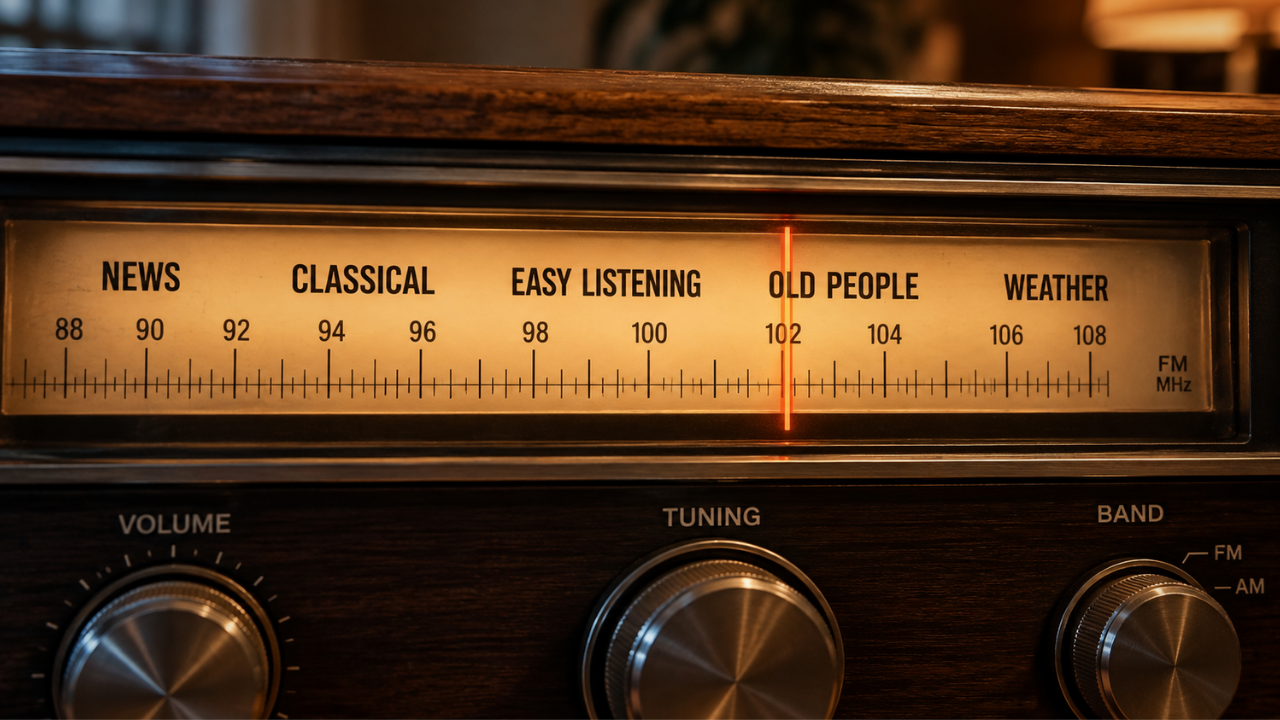
    One day you’re driving to get a haircut, flicking through radio stations, when you hear a Supertramp song.

    Excellent.

    Finally, somebody is playing some decent music.

    Then you hear the station call sign.

    Hippy Radio, playing your favourite golden oldies.

    I’m sorry. What?

    Apparently, while I was busy raising children, moving countries, paying bills and generally getting on with life, somebody moved the definition of “oldies.”

    Nobody consulted me.

    In my head, oldies are still songs from some distant historical period involving enormous wooden stereos, orange dining chairs and greenish carpet.

    I know this because we actually had the orange dining chairs and greenish carpet.

    But that’s beside the point.

    Supertramp is not oldies.

    At least it wasn’t until the radio informed me otherwise.

    Retro 1970s living room with wood paneling, plaid sofa, orange curtains and green shag carpet.
    In my head, this is still what the oldies station is supposed to look like.

    The strange thing about being 52 is that I don’t wander around feeling 52.

    I’m not entirely sure what 52 is supposed to feel like, but presumably this is it.

    Most mornings I still feel fundamentally like the same person I’ve always been. There isn’t some older bloke occupying my body and issuing instructions.

    Then the outside world provides evidence.

    Music is particularly ruthless about this.

    Songs you remember being released start appearing on classic stations. Albums from your youth have anniversary editions commemorating numbers of years that seem mathematically impossible.

    Eventually you hear a song and think, “I remember when this came out.”

    That sentence alone should probably come with reading glasses.

    The unsettling part isn’t really getting older.

    It’s watching things that still feel contemporary in your memory become nostalgia for everybody else.

    There is a difference.

    I don’t hear the music of my younger years and think, “Ah yes, a fascinating artifact from another era.”

    I hear it and think, “Turn it up.”

    The historical artifact, apparently, is me.


    Having young children was supposed to protect me

    So I thought I’d found a loophole.

    I have two young daughters, Georgia and Brianna, which means contemporary culture arrives in our house whether I request it or not.

    I know who Olivia Rodrigo and Ariana Grande are. You can even hear me occasionally playing some of their songs on piano or guitar while the girls sing.

    For brief periods, this creates the reassuring illusion that I remain culturally current.

    Then they start talking about Squishies.

    If you haven’t encountered Squishies, congratulations.

    They’re soft foam objects that you squeeze.

    Then you watch them slowly return to their original shape.

    That’s essentially the business model.

    Naturally, one Squishy is never enough. They appear to multiply around the house when nobody is looking.

    There are Squishies shaped like hamburgers, hot dogs and various other foods.

    There are even sticks of butter.

    Yep, a foam stick of butter.

    Thousands of years of human civilization brought us agriculture, democracy, antibiotics, air travel and the internet, eventually allowing us to reach our ultimate destination:

    squeezable butter that cannot be eaten.

    My daughters love them.

    This is one of the interesting things about being a parent at this age. You don’t completely lose touch with youth culture because youth culture keeps being dumped on your kitchen counter.

    You simply become an observer rather than a participant, or the one that pays for it each time you walk past Five Below.

    Colorful Squishy toys, including a stick of butter, hamburger, hot dog and other food shapes, arranged on a kitchen table.
    Thousands of years of human civilization, and somehow we arrived at a foam stick of butter.

    Then your childhood becomes ancient history

    The girls delivered another reminder recently when I decided to introduce them to Home and Away.

    For Americans unfamiliar with it, Home and Away is one of those Australian television programs that doesn’t really require an introduction if you grew up there.

    It began in 1988.

    When I was growing up, it was simply part of the landscape.

    Summer Bay. Alf Stewart. Teenagers experiencing an extraordinary number of personal crises for people living beside such a beautiful beach.

    It was there after school.

    It was there year after year.

    More importantly, it is still on television.

    So I thought I’d introduce my American daughters to this important piece of Australian culture.

    They weren’t impressed.

    It was, I was informed, “too old.”

    Too old?

    It’s still on!

    I wasn’t asking them to sit through a flickering black and white newsreel while somebody played a piano in the corner.

    This is a television show that is currently being made.

    Unfortunately, there is a flaw in my argument.

    When your father introduces you to a television program that began 38 years ago, you are entitled to ask questions.

    I don’t particularly care for that mathematics, but I acknowledge its existence.

    There’s something fascinating about showing your children the culture you grew up with.

    You’re not merely showing them a television program or playing them a song.

    You’re handing them a tiny piece of your own history.

    This mattered to me.

    This made me laugh.

    This was normal in my house.

    This is what Australia looked and sounded like when I was growing up.

    Then your child looks at it with absolutely none of the nostalgia attached and effectively says:

    “Yeah. Bit old.”

    Children are excellent at historical perspective.

    Home and Away title over an aerial view of an Australian beach and ocean.
    Home and Away has been on Australian television since 1988. Apparently that makes it “too old” for my daughters.

    Famous children should not be allowed to become adults

    There is another particularly aggressive way the universe reminds you how much time has passed.

    Children you remember from television become adults.

    I recently discovered Honey Boo Boo had turned 21.

    She can legally walk into a bar in America and order a drink.

    This is just not on!

    Certain people from television are supposed to remain permanently frozen at whatever age they were when we first encountered them.

    Macaulay Culkin should still be defending his house from burglars.

    Kevin Arnold should still be trying to work out what Winnie Cooper thinks of him.

    Honey Boo Boo should definitely not be old enough to order a cocktail.

    The problem isn’t that these people age.

    It’s what their aging reveals about us.

    If the child you remember watching on television is now a fully grown adult, all those years happened to you as well.

    Celebrity birthdays therefore become less like entertainment news and more like unsolicited medical information.

    I have decided not to investigate this phenomenon any further.


    Then I saw the other side of getting older

    Eventually, I arrived at the haircut that had started this entire crisis.

    Since moving to America, I’ve generally had my hair cut at Sport Clips.

    Even after eight years in the United States, I still appreciate how simply American the entire concept is.

    You get a haircut.

    You watch sport.

    Why should these activities have ever been separate?

    The only obvious flaw in the business model is the absence of a bar.

    At the location I visited, roughly a dozen televisions were showing sport, but none of them provided the main entertainment that afternoon.

    A young boy was having an absolutely spectacular tantrum because he did not want his hair cut.

    Not mild resistance.

    This child had taken a position.

    There would be no haircut.

    Negotiations had failed.

    Diplomatic relations had broken down.

    Scissors had apparently become an instrument of oppression.

    His poor grandmother was attempting something every parent eventually attempts: reasoning with a small person who has absolutely no interest in reason.

    I remember those years.

    You can present a three year old with a seven point argument, supporting documentation, photographic evidence and independent witnesses.

    They will listen carefully to the entire presentation.

    “No.”

    Watching this unfold, something occurred to me.

    My girls are past that stage.

    I don’t have to wrestle somebody into a haircut chair anymore.

    There’s no carrying a screaming child out of a shop while avoiding eye contact with everyone watching.

    I don’t have to cut food into precisely the correct shape only to discover that today’s correct shape is different from yesterday’s correct shape.

    I don’t have to negotiate with tiny terrorists over shoes.

    Suddenly, getting older didn’t seem quite so terrible.

    Georgia and Brianna posing in front of rockets at the U.S. Space & Rocket Center in Huntsville, Alabama.
    My girls are well past the haircut tantrum stage. These days, life with them looks a little more like this.

    Maybe we’re asking the wrong question about getting older

    We spend an extraordinary amount of energy trying not to get old.

    Buying products promising to make us look younger.

    Celebrating people who somehow don’t appear to age.

    We joke about aching backs, grey hair and needing to make the font bigger on our phones.

    I understand all of it.

    But sitting in that barber shop, watching a grandmother conduct peace negotiations over a haircut, I wondered whether we’ve made aging sound like something that simply takes things away.

    It gives you things too.

    Perspective is one of them.

    At 52, I know myself considerably better than I did at 22.

    I care much less about impressing people who aren’t particularly important to me.

    I’ve had different careers. Moved countries. Raised children. I’ve made good decisions and spectacularly questionable ones.

    I’ve accumulated enough life to know that many things that seem catastrophic while you’re living through them eventually become stories.

    Some even become funny stories.

    You also begin to understand how temporary the stages of life really are.

    When your children are tiny, it feels permanent.

    The sleepless nights feel permanent.

    The tantrums feel permanent.

    The toys covering the floor feel permanent.

    Then one afternoon you’re sitting in a barber shop watching somebody else negotiate with a screaming child and realize that part of your own life quietly ended without you noticing.

    There wasn’t a ceremony for that either.

    That’s the strange thing about getting older.

    We notice the things we’re losing because they’re obvious.

    The grey hair.

    The younger face.

    The ability to stand up from the floor without making a noise.

    We don’t always notice what we’re gaining at the same time.


    I don’t actually want to be 22 again

    This may be the greatest revelation of all.

    I’m not particularly interested in being young again.

    There are certainly things I’d happily borrow from my younger self. His metabolism would be useful.

    His knees wouldn’t hurt.

    He also had considerably less white hair.

    But would I actually trade places with him?

    Probably not.

    He hadn’t met my daughters.

    Hadn’t lived in America.

    He hadn’t experienced most of the things that eventually made him me.

    Getting older isn’t something happening instead of life.

    It is life.

    Perhaps the trick isn’t desperately trying to remain young.

    Perhaps it’s remaining interested.

    Keep listening to new music even if you still think the old stuff is better.

    Let your children explain whatever bizarre thing their generation has decided is important.

    Try new things.

    Pay attention.

    Keep being surprised.

    Keep finding things funny.

    Just don’t become the person who decides everything worthwhile happened during the twenty years when they happened to be young.

    I’ll accept 52.

    Even the white hair.

    I’ll accept that Home and Away began 38 years ago, although I reserve the right to complain about it.

    But Supertramp being classified as golden oldies?

    No.

    There are limits.

    If somebody wants to send me an official notification that I’m old, that’s fine.

    Just make sure they include the cardigan.

    I’ll probably need it.


    Prefer watching instead? This entire identity crisis began with a perfectly innocent drive to get a haircut.


    If you enjoy these stories about an Australian slowly trying to make sense of America, parenthood, getting older and whatever else life decides to throw at me, you can support From Down Under to Down South through Buy Me a Coffee. It helps keep the videos, articles and podcast coming, and I genuinely appreciate everyone who helps make this little corner of the internet possible.

  • The Moment I Realised My Children Belong in America

    The Moment I Realised My Children Belong in America

    One of the hardest parts of raising children overseas is realizing they may end up belonging somewhere different from you.

    Not because they’ve rejected where you came from.

    Not because they’ve forgotten their roots.

    But because their life happened somewhere else.

    After eight years in America, I’ve started to realize that’s exactly what’s happened with my daughters.

    And strangely enough, it happened without me noticing.


    What Raising Children Overseas Taught Me

    When we moved from Australia to America, I expected my life to change.

    I expected new roads.

    New customs.

    New ways of doing things.

    I expected to spend years learning the differences between the two countries.

    What I didn’t fully understand was that moving countries wouldn’t just change me.

    It would shape my children’s entire childhood.

    The friendships they would form.

    The confidence they would develop.

    The place they would eventually call home.

    Recently, that reality hit me harder than it ever has before.

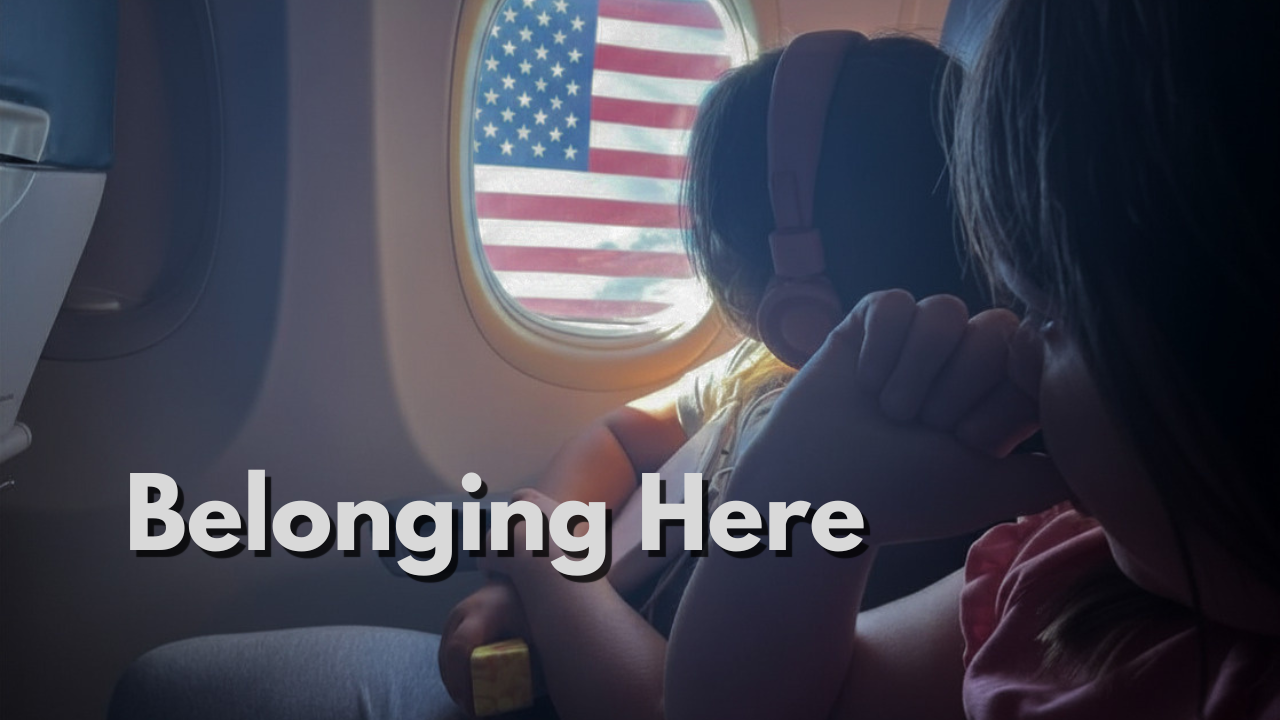
    Daytona gave me more than a week of dance competitions. It gave me time to notice who my daughters are becoming.

    The Week That Made Me Notice

    We’d just come back from Daytona Beach.

    Like most dance trips, it was a blur of hotel rooms, elevators, airports, restaurants, competition schedules and far too little sleep.

    Parents were surviving on caffeine.

    Kids were surviving on excitement.

    Somewhere in the middle of all that, I found myself paying attention to my daughters in a different way.

    Not just watching them.

    Actually noticing them.

    The way they spoke to people.

    How they handled themselves.

    The way they moved through unfamiliar situations.

    And I kept finding myself thinking the same thing.

    I was never like that at their age.


    The Kid Behind The Couch

    When I was young, I was painfully shy.

    Visitors would come to our house and I’d disappear.

    Sometimes behind the couch.

    Sometimes into my bedroom.

    Anywhere that allowed me to avoid being noticed.

    Adults intimidated me.

    Groups overwhelmed me.

    Confidence wasn’t something that came naturally.

    It wasn’t until much later in life that I learned how to navigate those situations comfortably.

    Which is probably why my daughters stand out so much to me now.

    Because neither of them are that child.


    Watching Them Move Through The World

    Brianna will happily talk to almost anyone.

    She orders her own food.

    Asks questions.

    Investigates things she probably shouldn’t.

    She approaches the world as if it’s open until someone proves otherwise.

    Georgia is different.

    She’s quieter.

    More thoughtful.

    More sensitive.

    But she has her own confidence.

    She’ll walk up to a flight attendant and ask for help.

    Navigate an airport.

    Handle situations on her own.

    She’s not loud.

    She’s not pushy.

    Just simply capable.

    And that’s what struck me.

    Both of them are.

    In completely different ways.


    Watching them handle airports and travel on their own still catches me off guard.


    America Shaped Them Too

    When people move overseas, they expect the new country to shape them.

    You learn different customs.

    Different expressions.

    Different social rules.

    You learn that biscuits aren’t biscuits.

    That football sometimes involves very little foot.

    You learn that Americans consider a three-hour drive “close.”

    But eventually I realized something else.

    America wasn’t only shaping me.

    It was shaping my daughters too.


    Georgia Carries Two Homes

    Georgia was born in Australia.

    She still feels connected to that part of her story.

    She knows where she was born.

    Knows where her parents came from.

    She still spells “Mum” correctly, which I consider one of my greatest parenting achievements.

    But she has grown up here.

    Her school is here.

    Her friends are here.

    Dance life is here.

    And recently she started talking about her dream college.

    USC.

    The University of South Carolina.

    She’s only ten years old, so there is every chance she’ll change her mind another twenty times.

    But that’s not really the point.

    When she imagines her future, she imagines it here.


    Brianna Doesn’t Have The Same Question

    Brianna was born in America.

    And in many ways, America simply feels like home.

    Recently we watched Australia versus the USA on TV at the 2026 World Cup.

    When the Australian anthem played, Georgia and I stood up and sang along, hand over our hearts.

    When the American anthem played we did too, but Brianna absolutely lit up.

    She sang every word.

    Then started chanting “USA! USA!”

    Meanwhile I stood there having the complicated emotional experience of an Australian father watching his daughter enthusiastically support the opposition.

    That was probably the moment I should have figured it out.


    There has never been much doubt about where Brianna feels at home.

    Going Back Changed Something

    Last year we took the girls back to Australia.

    For Georgia especially, I think that trip changed something.

    She saw old friends.

    Old places.

    Parts of her earlier life.

    But she also discovered something many adults discover when they move away.

    Life doesn’t pause while you’re gone.

    People move on.

    Friendships evolve.

    Places change.

    And sometimes you realize the version of home you carried in your head no longer exists exactly the way you remember it.

    I think that trip made America feel even more like home for her.

    Not because Australia stopped mattering.

    But because she realized where her actual life was happening.


    The Quiet Realization

    As much as Nikki’s parents probably won’t enjoy reading this, I don’t think either of my daughters will move back to Australia.

    That feels strange to say out loud.

    It’s not sadness exactly.

    But it’s not nothing either.

    It’s pride mixed with a little grief.

    Because if you’re an immigrant parent, you want your children to belong.

    And then one day you realize they do.

    Just not necessarily in the place you expected.


    Pride and grief can sometimes exist in the same moment.

    We Didn’t Raise Copies Of Ourselves

    Nikki and I have always tried to let the girls become themselves.

    Not smaller versions of us.

    Not copies of our childhood.

    Their own people.

    Georgia’s dance dreams belong to her.

    Brianna’s interests belong to her.

    Our job isn’t to own those things.

    Our job is to support them.

    Guide them.

    Protect them.

    And occasionally pay ridiculous amounts of money for costumes covered in rhinestones.


    What America Gave Them

    America isn’t perfect.

    No country is.

    But one thing I’ve noticed is that American culture often encourages children to participate.

    To ask questions.

    Speak up.

    To feel like they belong in the room.

    And I think my daughters have absorbed some of that.

    Georgia absorbed it quietly.

    Brianna absorbed it like a bald eagle wearing glitter shoes.

    But they both absorbed it.

    And honestly, I’m grateful for that.


    Home Is More Complicated Than It Used To Be

    One daughter carries Australia within her identity.

    The other is deeply, proudly American.

    So how exactly am I supposed to turn that into a competition?

    I can’t.

    And I don’t want to.

    Australia shaped me.

    America shaped them.

    Both countries matter because both countries shaped the people I love most.


    Recommended Reading


    Home Isn’t Always One Place

    The biggest thing I’ve learned since moving overseas is that home isn’t always a country.

    Sometimes it’s a couch you used to hide behind.

    Sometimes it’s an airport gate.

    Maybe a dance studio.

    Or your daughter confidently ordering her own meal.

    Sometimes it’s hearing an anthem that isn’t yours somehow become part of your family story.

    And sometimes it’s standing there watching your children move through the world with a confidence you never had at their age.

    That’s what happened to me in Daytona.

    Not in one dramatic moment.

    Not during some life-changing conversation.

    Just in a hundred little moments.

    Georgia asking questions.

    Brianna talking to strangers.

    Both of them moving through the world with ease.

    And me finally realizing something I probably should have understood years ago.

    They’re not growing up overseas.

    They’re growing up at home.


    Some Great Reading About Home & Identity