Category: This Week in America

  • The Hidden Cost of Competitive Dance in America

    The Hidden Cost of Competitive Dance in America

    There is a point in every parent’s life when you realise your child’s hobby has developed its own economy.

    I think we reached that point somewhere between the dance costumes, competition fees, hotel rooms and my wife working an eight hour shift at Bridgestone Arena while I sat in a car outside a dance studio doing work on my phone.

    Our ten year old daughter Georgia dances competitively.

    Seven routines this year.

    Our seven year old, Brianna, has gone back to dance too and has already announced that she would like to try out for the competition team next year.

    Because apparently we looked at our current family schedule and thought it lacked ambition.

    The funny thing is, none of this feels particularly unusual anymore.

    Afternoons are spent driving to the studio.

    Groceries happen while somebody is dancing.

    Work gets done from the car.

    Weekends disappear into competitions.

    Family trips get built around nationals.

    Money quietly moves from one part of the family budget to another.

    Somewhere along the way I realised there is an enormous economy sitting underneath American kids’ activities that you barely notice until your own family becomes part of it.

    And I don’t just mean money.

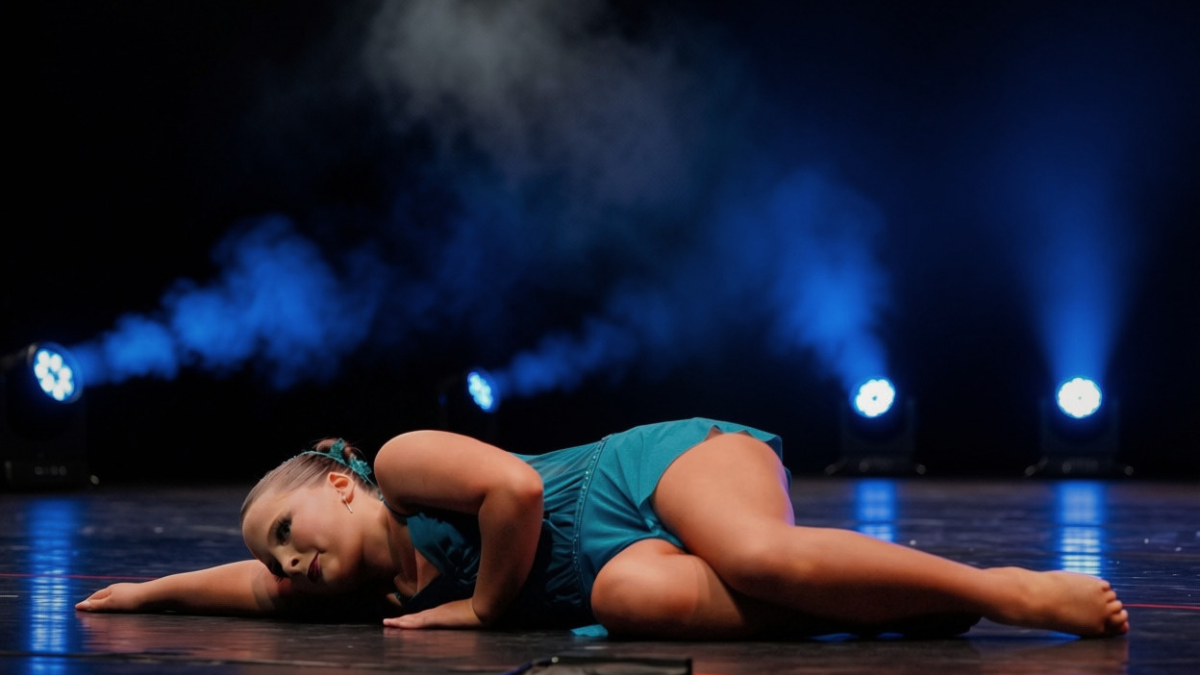
    Young competitive dancer performing alone under dramatic stage lighting at a dance competition
    What you see is a few minutes onstage. What you don’t see is the family economy of time, travel, work and money that helped get her there.

    It Starts Out So Innocently

    Georgia started ballet when she was two years old in Australia.

    She loved dance from the moment she put on her first ballet shoes.

    Back then, dance was relatively simple.

    You went to class.

    You learned your routine.

    There was an end of year recital.

    Parents watched.

    Everyone went home.

    Competitive dance is a different universe.

    Georgia is now in her fourth year on company, and the older she gets, the greater the commitment becomes.

    Tuition is higher.

    There are competition entry fees.

    Costumes.

    Choreography fees.

    Solo lessons.

    Travel.

    Hotels.

    Food.

    Then there are seven competition dances, which means seven routines have to somehow make their way from a studio in Tennessee onto stages around the Southeast.

    We regularly travel to Kentucky and Georgia for competitions. Nationals this year was in Daytona Beach, Florida.

    We were there for seven days.

    One day without dance.

    We called it a family holiday. Technically, I think that counts.


    The Three Minutes You See Aren’t the Expensive Part

    A competition routine might last a few minutes.

    Getting a child onto that stage can consume an entire weekend.

    For us, a typical competition begins on Friday.

    If we’re heading somewhere like Atlanta, Georgia may have to leave school early so we can get there that evening. At the moment her elementary school doesn’t consider dance competition an excused absence, which is something that will become more complicated as she gets older and Friday night performances become more common.

    We arrive Friday evening, check into the hotel, find dinner and get to bed.

    The preparation has already started.

    Georgia may have done her fake tan a couple of days earlier, or sometimes before we leave on Friday.

    If she has an early Saturday performance, Nikki can be up at 4 a.m. doing hair and makeup.

    Four.

    In the morning.

    I grew up dancing ballroom in Australia and somehow I don’t remember Bankstown RSL requiring this level of preparation.

    Then you arrive at the competition.

    Some of these events are extraordinary.

    Huge stages.

    Professional lighting.

    Multiple cameras.

    Some of the bigger ones feel less like the dance competitions I remember growing up and more like television productions.

    It is genuinely impressive.

    You can then spend anywhere from 8 a.m. until 9 p.m. there.

    At one competition in Atlanta last year, it was so crowded that Brianna and I couldn’t even find somewhere to sit and watch Georgia.

    We had already checked out of the hotel.

    So after driving all the way from Tennessee to Atlanta to watch our daughter dance, we went back to the car…

    and watched her on an iPhone. Parenting is magnificent.

    Large competitive dance stage with theatrical lighting and cameras during a dance competition.
    Some of the larger competitions feel closer to television productions than the dance competitions I remember growing up with in Australia.

    Then There Is the Cost Nobody Puts on an Invoice

    This is the part I hadn’t really thought about before becoming a dance parent.

    Time.

    A 30 minute dance class does not take 30 minutes.

    There is the drive there.

    The wait.

    The drive home.

    Multiply that across two children and several days a week and suddenly large pieces of your family life are being organised around a dance studio.

    I deliberately schedule my own ballroom lessons while the girls are at school.

    Afternoons are largely theirs.

    If one of them only has a 30 minute or one hour class, sometimes there isn’t much point driving home, so I stay in the car and work.

    Other times I do the groceries while they’re dancing.

    You become surprisingly good at this.

    Dance class at 5:00.

    Groceries at 5:07.

    Back at the studio at 5:56.

    Child retrieved.

    Nobody forgotten.

    Successful evening.

    The car becomes an office, waiting room, transport department and occasionally somewhere to eat dinner. A portable charger has become essential equipment for this dance dad when I’m working from the car.

    Nobody sends you an invoice for any of that.

    But it still costs something. Time is part of the hidden economy too.


    Sometimes Hockey Pays for Ballet

    This may be my favourite part of the whole strange system.

    Nikki is the only member of our immediate family who doesn’t dance.

    So naturally, she has been dragged into the dance economy anyway.

    She works concession stands at Bridgestone Arena in Nashville through a fundraising arrangement that allows parents to work events to help raise money toward their children’s activities.

    She’s the only parent from our studio doing it, but she works alongside dance mums from other studios.

    The shifts are long.

    Usually around eight hours.

    There is a small set amount, but most of what the group receives comes from tips that are shared among the people working. Nikki will typically generate around $120 to $150 from a night, with checks made out to the dance studio.

    That means somebody can walk into Bridgestone Arena to see a Predators game or a country concert, buy something from the concession stand and leave a tip.

    A little piece of that money eventually helps pay for a child’s dance.

    Last week Nikki worked the Brooks & Dunn concert.

    Now the Nashville Predators are back.

    So in our house, hockey season is also dance fundraising season.

    Country music pays for ballet.

    Hockey pays for tap lessons.

    America has some fascinating economic systems. Similar nonprofit concession fundraising arrangements operate elsewhere in Tennessee, where registered organizations staff arena concession stands and funds can be applied toward participants’ fees and other activity costs.

    Bridgestone Arena in downtown Nashville, where parents can work event concessions to help fund children's activities.
    In our family, a night working concessions at Bridgestone can help pay the next dance bill.

    Not Every Family Experiences the Cost the Same Way

    There is another side of competitive dance that I’ve become increasingly aware of.

    Some of the families around us appear considerably better off than we are.

    You see the houses.

    The cars.

    The travel.

    Some live in homes that, by our standards, look like mansions.

    I don’t know their finances, and appearances certainly don’t tell you everything.

    But I do know ours.

    There have been times when I’ve looked at what is coming up and wondered how we’re going to afford all of it.

    So far, we always have.

    We have never sat Georgia down and told her she might have to stop dancing because we can’t pay for it.

    I hope we never have to.

    But it has made me realise something.

    When people talk about opportunities for children, we often focus on whether the opportunity exists.

    I’ve written before about something else I’ve come to admire in America: the willingness to encourage children to imagine what might be possible.

    But encouragement is only part of it.

    Someone still has to get the child there.

    Pay the entry fee.

    Buy the costume.

    Book the hotel.

    Be available at 4 a.m. to do the hair.

    Someone has to sit in the car. Someone has to make the whole thing work.


    Because This Isn’t Just a Hobby to Her

    This is the part that matters.

    If Georgia were miserable, none of this would make sense.

    She isn’t.

    Dance is her passion.

    She started ballet at two and she’s now ten. She’s been on company for four years.

    I regularly give her the opportunity to try something else.

    Her response is usually some variation of:

    Dad, are you serious?

    This is all she wants to do.

    If we told her tomorrow that school had been cancelled permanently but dance was still on, I suspect we’d barely finish the sentence before she was in the car.

    She lights up when she dances.

    She already talks about going to college and eventually becoming a dance teacher.

    There are genuine pathways from dance into higher education in America. Universities including USC’s Glorya Kaufman School of Dance offer competitive talent based dance scholarships, while other universities offer scholarship opportunities tied to dance majors and auditions. USC Glorya Kaufman School of Dance

    She’s ten.

    Nobody knows where any of this will lead.

    She may become a dance teacher.

    She may pursue something completely different.

    Life has plenty of time to work that out.

    Right now, our job is simply to give her the opportunity to find out.

    I’ve already had moments when I’ve realised just how much Georgia’s dreams are being shaped by growing up here rather than in the Australia where she was born.

    Georgia preparing to dance during her fourth year on a competitive dance company.
    She started ballet at two in Australia. Eight years later, dance is still the thing she wants to do more than anything else.

    Apparently One Competitive Dancer Isn’t Enough

    Then there’s Brianna.

    She returned to dance this year and is taking jazz, hip hop and ballet.

    She now wants to try out for company next year.

    This should probably terrify us.

    Instead, our reasoning has become:

    Well, she’s already at the competitions anyway.

    There would be overlap.

    The second child is cheaper.

    We’re already paying for the hotel.

    What could possibly go wrong?

    There is something slightly alarming about reaching the point where adding a second competitive dancer starts sounding like an efficiency measure.

    But that’s how embedded this world has become in our family.

    It isn’t something we occasionally attend anymore.

    It is part of the rhythm of our lives.


    Nationals Is a Holiday. Sort Of.

    This year nationals took us to Daytona.

    We were there for seven days and, thanks to some flight credits I needed to use, we flew rather than drove.

    We spent plenty of time at the beach.

    We ate out.

    A lot.

    That last part belongs firmly in the expense column.

    We had a great time and absolutely treated the trip as a family holiday.

    But out of seven days, we had exactly one day with no dance.

    That pretty much sums it up.

    Even the family holiday gets absorbed into the machinery.

    Dance first.

    Beach around it.

    Family trip to Daytona Beach during a week away for a national dance competition.
    We turned nationals in Daytona into our family holiday. Out of seven days, one was completely dance free.

    Then She Walks Onto the Stage

    After all of that, there is the actual dancing.

    I don’t get particularly nervous watching Georgia in group routines.

    The smaller groups, with five or so dancers, are fun.

    The enormous team productions can become a completely different challenge.

    Sometimes there are so many dancers moving on and off stage that if you don’t already know where Georgia is supposed to be, finding your own child becomes part of the entertainment.

    Then there’s her solo.

    That’s different.

    I get nervous.

    Really nervous.

    I feel like I watch the entire thing holding my breath.

    For those few minutes there is nowhere for her to disappear.

    It’s just her.

    And perhaps that’s when the hidden economy becomes visible to me.

    Not the dollars.

    Not the hotel.

    Not the petrol.

    Not the hours in the car.

    All the things behind it.

    The lessons.

    The rehearsals.

    The 4 a.m. makeup.

    Mum working at Bridgestone.

    Dad working from the car.

    The trips to Kentucky and Georgia.

    The week in Daytona.

    The costumes.

    The school juggling.

    All of it leads to one little girl standing alone under the lights doing the thing she loves. Suddenly, it doesn’t feel particularly complicated.


    What I’d Tell Another Parent

    If somebody with a five year old who loves dance asked me whether their child should try out for a competition team, I wouldn’t tell them not to.

    I’d tell them to understand the commitment.

    Because the child isn’t the only person joining the team.

    The family is.

    Competitive activities don’t simply occupy a line on the family calendar.

    Eventually they start rearranging the calendar around themselves.

    That doesn’t make them bad.

    It doesn’t make the money wasted.

    It simply means parents should understand what they’re saying yes to.

    Because if the child really loves it, you may be saying yes for quite a while.


    I Don’t Think There Was Ever Much Doubt

    Sometimes I think back to Georgia putting on her first ballet shoes in Australia.

    She was two.

    It would be tempting to say I never imagined that tiny ballet class would eventually lead to enormous American competition stages, seven routines, interstate travel, national competitions and an entire family economy operating behind her.

    But that wouldn’t really be true.

    She loved dance from the moment she put those shoes on.

    I don’t think there was ever much doubt we’d end up somewhere like this.

    The stages got bigger.

    The commitment got bigger.

    The bills definitely got bigger.

    But the reason we’re doing it hasn’t really changed at all.

    She loves to dance. Sometimes an entire family economy grows around something as simple as that.

    Georgia wearing her first ballet shoes at age two in Australia.
    It started with ballet at two years old in Australia. The scale has changed. Her love of dance hasn’t.

    Enjoy From Down Under to Down South?

    If you enjoy these stories about the parts of American life you don’t always see from the outside, you can support From Down Under to Down South through Buy Me a Coffee. Every coffee helps me keep writing, recording the podcast and sharing what life in America looks like through Australian eyes.

  • Dance Dads Have a Clique. I Didn’t Make the Cut.

    Dance Dads Have a Clique. I Didn’t Make the Cut.


    I recently discovered that I have failed to join the dance dads.

    Apparently there is a group.

    There may be a committee.

    There could be membership requirements.

    I wouldn’t know.

    Nobody sent me the paperwork.

    My daughter Georgia has been dancing at the same studio for six years now, including four years on the competition team.

    I know most of the teachers. I know many of the parents. I know the kids. I know which competition venues have decent coffee, which ones have terrible parking and roughly how many rhinestones can fall off a costume before somebody declares an emergency.

    But somehow, after all these years, I remain an independent contractor. A freelance dance dad.


    I should have noticed the dance dads years ago

    The evidence was there from the beginning.

    At competitions, a group of dads would help build the sets. They’d carry everything onto the stage, assemble whatever needed assembling and then, when the job was done, take a little bow before running offstage to applause.

    It was like a very specialised Broadway production where nobody actually danced.

    I was never asked to join them.

    I wasn’t offended.

    At first I didn’t think much about it.

    But over the years, I started noticing the same dads together elsewhere.

    At practices, they’d stand around talking in a circle.

    At competitions, they’d sit together.

    Sometimes they’d go out for dinner afterwards.

    There was clearly a social structure here that I had somehow missed.

    The dance mums had their groups too, of course. I’d noticed those.

    I just assumed the dads operated differently.

    Turn up.

    Find somewhere to sit.

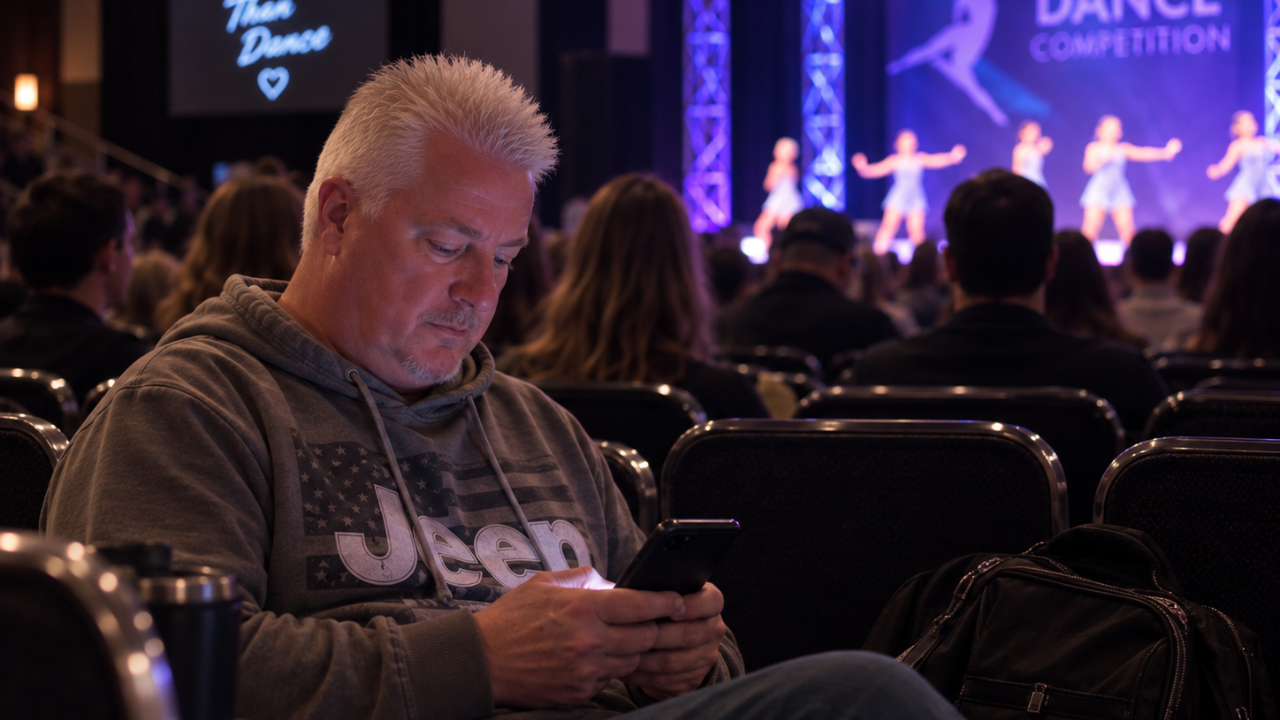
    Look at phone.

    Move costume bag when instructed.

    Ask when we’re leaving. Apparently I had underestimated the complexity of dance fatherhood.

    Parents and families gathered at a children's dance competition.
    Dance competitions have their own little communities. Some of us are apparently non playing members

    Then one of the dads confirmed my suspicions

    Recently, I was standing outside the studio waiting for Georgia.

    One of the dance dads walked out.

    I’ve known him for several years. Not well, but certainly well enough that we’re not strangers.

    He looked straight at me.

    I said hello and asked how he was.

    I got a quick good, how are you?

    Then he proceeded to enthusiastically talk to seemingly everyone else within a fifty metre radius.

    People walking past.

    Other parents.

    People sitting in their cars.

    Had somebody driven past slowly enough, I suspect he would have leaned through the passenger window.

    It was like watching a politician work a rope line.

    And I stood there thinking:

    Well.

    Nice catching up.

    To be fair, perhaps I’m being unfair.

    Because there is another possibility I have been forced to consider. Maybe they think I’m the snob.


    This is where my argument begins to fall apart

    I don’t approach groups.

    Ever.

    If I walk into the dance studio and six dads are standing in a closed circle talking, there is absolutely no chance I am walking over and inserting myself into the middle.

    None.

    They could be discussing how to divide a winning Powerball ticket and I’d probably stand twenty feet away looking at my phone.

    Part of it is probably shyness.

    I’m much better one on one than I am in groups, particularly with people I don’t know well.

    Part of it may simply be habit.

    And part of it is that I often walk into the studio without my glasses and can’t actually tell who anybody is.

    It’s difficult to confidently greet someone when there’s a reasonable possibility you’re about to introduce yourself to a coat rack.

    So I sit down.

    I pull out my phone.

    I answer emails.

    I work on the website.

    I check YouTube.

    I watch Georgia or Brianna through the window.

    From my perspective, I’m giving everyone else their space.

    • Somewhere along the way I’ve also learned that a portable phone charger is less an accessory at a dance competition and more emergency equipment. These things can run all day.

    From their perspective, perhaps there’s an Australian bloke sitting in the corner staring at his phone who never comes over and talks to anyone. This investigation is becoming increasingly inconvenient.


    I don’t actually dislike talking to people

    That’s the strange part.

    If one of the dads comes over and talks to me, I’m perfectly happy.

    It has happened occasionally.

    At Nationals over the summer, I ended up having a great conversation with another dad about soccer and the World Cup.

    He’d had a couple of drinks, which may have assisted international diplomacy.

    But it was easy.

    Natural.

    Two dads talking about football.

    I’ve had similar conversations with other parents over the years.

    The confusing part comes afterwards.

    Sometimes you’ll have a really good one on one conversation with somebody. You think you’ve finally broken through that awkward stage.

    Then the next time you see them, they’re back with their usual group and it’s as though the conversation never happened.

    Hello again, coat rack.

    That’s when the whole thing can start to feel slightly performative.

    Warm and friendly when you’re one on one.

    Different when the group reappears. And that’s probably why I’ve become even less inclined to push myself into it.

    Young competitive dancer performing onstage at a dance competition.
    The kids somehow manage to make friends while competing against each other. The adults have developed a more complicated system.

    The kids may actually be better at this than we are

    Georgia has her best friend at dance.

    Like most childhood best friendships, it can occasionally resemble Days of Our Lives.

    They’re inseparable.

    Then they’re not.

    Then they are again.

    The other girls her age seem to operate similarly. They have close friendships and often pair off rather than moving around as one enormous group.

    Meanwhile, some of us adults seem to have recreated high school in the lobby.

    The children are learning choreography.

    We’re apparently still working out where we’re allowed to sit at lunch.

    And that, I’ve realised, might be part of why I find these situations uncomfortable.


    Just tell me where I’m supposed to sit

    At competitions, we’re often sitting by ourselves or with Georgia’s best friend’s mum and another parent we know.

    I’ve watched other dance studios arrive and seemingly have this sorted.

    Their families sit together.

    They have a section.

    They cheer together.

    Some even have team chants.

    You can see immediately that they’re there as a studio.

    I actually think I’d enjoy that.

    Which surprised me when I thought about it.

    Because my problem isn’t necessarily being around everybody.

    My problem is the bit beforehand.

    Walking into a room and trying to work out where you belong.

    I don’t want to walk up to a row of people and ask whether a seat is free, only to hear:

    Sorry, someone’s sitting there.

    Suddenly I’m back on the school bus trying to work out where I’m allowed to sit.

    I’m 52.

    I don’t need that kind of pressure.

    Give me assigned seating.

    Put my name on a chair. I will happily participate.

    • I’ve spent enough hours in dance venues now that I’m beginning to think a decent stadium seat cushion should be issued when your child joins the competition team.

    Apparently I require organised socialising

    There was an awards night at Nationals over the summer.

    Families were invited.

    I didn’t go.

    I stayed with Brianna in the hotel room instead.

    Maybe I should have gone.

    But I could already picture myself walking into the area, looking around at all the established groups and trying to work out where to stand.

    No thanks.

    Yet if the studio announced tomorrow that all the families were sitting together at the next competition, I’d genuinely look forward to it.

    So apparently my social requirements are:

    I would like to be included.

    I do not wish to ask to be included.

    Please provide clear instructions.

    Assigned seating preferred. Refreshments appreciated.

    Daytona Beach Florida
    Daytona Beach, dance dad life does include some travel perks.

    The really annoying part is that I’m perfectly sociable elsewhere

    I dance too.

    Ballroom.

    And at my ballroom studio, I feel completely at home.

    From the beginning, people said hello when I walked through the door.

    They remembered my name.

    They talked to me.

    It was welcoming.

    Now I can walk in and feel like I belong there.

    Same bloke.

    Same personality.

    Same reluctance to charge into a group of strangers.

    The difference is that somewhere along the way, I was given enough little signals that said:

    You’re part of this place.

    That’s all it took.

    At Georgia’s studio, after five or six years, I know almost everybody.

    I always say hello to the teachers by name.

    Sometimes I wonder whether they know mine.

    Although, in fairness, it is a children’s dance studio.

    They’re there for Georgia.

    I’m essentially transport. Transport with a credit card.


    Put me in my own house and I’m completely different

    Here’s another piece of evidence against my claim that everyone else is responsible.

    We’ve hosted plenty of birthday parties for the girls.

    When people come into my house, I’m a host.

    I talk to them.

    I make them feel welcome.

    If I see another dad standing by himself, I’ll go over and talk to him.

    I don’t want someone standing alone wondering whether anybody wants them there.

    Because I know exactly what that feels like.

    Once I’ve spent time with someone, things become much easier.

    There are dads I’ve got to know through the girls’ friendships, birthday parties and school events. I can walk up to them now, say hello, sit down and have a chat.

    It just takes me time.

    Apparently quite a lot of time. Possibly several financial years.


    Phones probably aren’t helping any of us

    There is also a modern complication.

    The phone.

    If I’m sitting alone at dance, my phone gives me somewhere to go.

    I can work.

    I can read something.

    I can scroll.

    I can look extremely busy while accomplishing absolutely nothing.

    Twenty years ago, if you were sitting alone waiting for your child to finish an activity, eventually you probably had to look up.

    Someone else looked up.

    You talked.

    Now we can spend two hours sitting six feet apart without ever acknowledging that another human being exists.

    The phone makes being alone easier.

    It also makes being alone look intentional.

    Someone might look at me and think:

    He’s busy. I’ll leave him alone.

    Meanwhile I’m looking at the group across the room thinking:

    They obviously don’t want me over there.

    Excellent.

    Everybody has successfully respected everybody else’s desire to do something none of us actually wanted.

    Phone and dance bag while waiting at a children's dance studio.
    The modern dance dad survival kit. A phone, somewhere to sit and several hours to kill.

    Maybe I’ve been watching the wrong people

    This is the part I hadn’t really considered until recently.

    I’ve spent years noticing the group.

    Dads standing together.

    Parents sitting together.

    People going out afterwards.

    Maybe I should start looking for the other person.

    The dad sitting twenty feet away on his phone.

    The mum standing by herself waiting for rehearsal to finish.

    The parent who walked into the room, saw the established groups and quietly found a chair.

    Because maybe they’re not antisocial either.

    Maybe they’re doing exactly what I’m doing.

    Waiting for someone else to go first.

    I’m still not walking into the middle of that closed circle.

    Let’s not get ridiculous.

    But perhaps next time I see another parent sitting alone, I’ll say hello.

    One person I can handle.

    Give me another five or six years and I may even help build a set.

    Just don’t expect me to take a bow.

    Actually, that’s not true.

    I’m a ballroom dancer. Of course I’ll take the bow.


    If you enjoy these stories about family, dance and the strange little things I notice while living in America, you can support From Down Under to Down South through Buy Me a Coffee.

    It helps me keep writing, filming and podcasting. And, apparently, gives me something productive to do on my phone while all the other dance dads are talking to each other.

  • My Daughter Got Braces. I Nearly Ended Up in the Hospital.

    My Daughter Got Braces. I Nearly Ended Up in the Hospital.

    Some fathers hold their daughter’s hand at the orthodontist. I’m the father who needs someone to check his pulse.

    My ten-year-old daughter, Georgia, got braces recently.

    She handled the whole thing remarkably well. A little discomfort, a few adjustments to what she could eat, and the beginning of that wonderful childhood experience where you discover that even a slice of bread can be surprisingly difficult to chew.

    I know. I had braces myself when I was younger.

    Naturally, as her father, I wanted to be there to support her.

    Unfortunately, there was a slight problem.

    I have a habit of fainting in medical establishments.

    Doctors, dentists, hospitals, needles. Sometimes I don’t even need any of those things to happen. Simply being in the building can be enough.

    So when Georgia went to have her braces fitted, my wife Nikki took her.

    I stayed home.

    Not exactly the sort of fatherly heroism they make Father’s Day cards about, but there was a very good reason for it.

    The last time I went to Georgia’s orthodontist, I ended up on the floor.

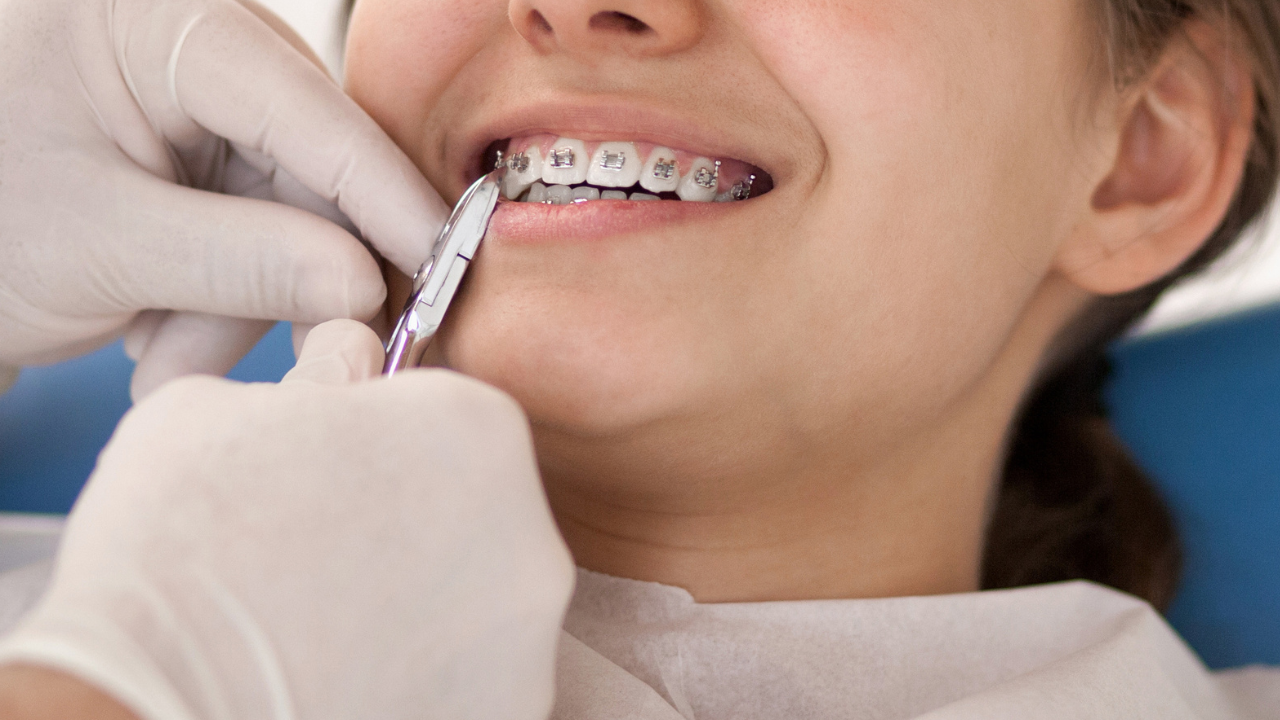
    Having braces fitted at the dentist
    Georgia handled getting braces considerably better than her father handled looking at an X-ray.

    The orthodontist appointment that went terribly wrong

    About a year ago, we took Georgia to the orthodontist to discuss getting braces.

    It was a consultation.

    Nobody was having a tooth pulled. Nobody was being drilled. There were no needles, no blood, and absolutely no reason for a grown man to require medical assistance.

    The orthodontist was showing us an X-ray of Georgia’s mouth.

    I remember looking at the screen.

    There were her teeth. There was her jaw. Everything was perfectly normal.

    Then my body apparently decided we’d seen enough.

    The next thing I knew, I was on the floor.

    The staff were wonderful. Cold towels appeared. Someone brought me a hydration drink. Everyone made sure I was all right.

    Meanwhile, my daughter’s orthodontic consultation had somehow become an unscheduled medical appointment for her father.

    It wasn’t exactly the impression I’d hoped to make.

    Apparently, it was memorable, though.

    When Georgia returned to get her braces fitted a year later, the staff still remembered me.

    Not necessarily as Mike. More as the father who’d collapsed during the consultation.

    Wonderful.

    You spend years trying to teach your children how to behave in public, and then you become the family member everyone remembers for lying on the floor. At least Georgia has a story to tell.

    Waiting area of an orthodontic practice with chairs and reception desk.
    A perfectly ordinary orthodontic appointment. Unless you’re me.

    I’ve always called it white coat syndrome. That’s not quite right.

    For years, I’ve referred to this little problem as white coat syndrome.

    It sounds reasonably respectable, doesn’t it?

    A medical condition. Something you can explain without admitting that an X-ray of your daughter’s teeth has just knocked you unconscious.

    But I’ve since learned there’s an important distinction.

    White coat hypertension is when someone’s blood pressure is elevated in a medical setting but normal outside it. 

    What I’m describing is consistent with something called a vasovagal response, although only a clinician can establish the cause of an individual’s fainting.

    Essentially, the nervous system can overreact to certain triggers, causing blood pressure and sometimes heart rate to drop suddenly. If that reduces blood flow to the brain enough, the person can faint.

    Blood, needles, medical instruments and emotional stress are among the recognised triggers. 

    In my case, apparently, the list also includes sitting quietly in an examination room and looking at dental X-rays.

    It’s quite an impressive range.

    The frustrating thing is that I can know perfectly well that I’m safe.

    I can understand that nobody is about to hurt me. I can tell myself there’s nothing to worry about.

    My nervous system doesn’t seem particularly interested in my opinion. It has already decided to shut the entire operation down.


    The time my sister fell off a horse and I needed five stitches

    If you think the orthodontist story is ridiculous, I can do better.

    Years ago, when I was living in Australia, my sister fell off a horse.

    She ended up in hospital, so naturally I went to visit her.

    A fairly normal thing for a brother to do.

    I wasn’t injured. I hadn’t been anywhere near the horse. My involvement in the entire incident was limited to being a concerned family member.

    At some point, I went down to the hospital cafeteria to get something to eat.

    The next thing I knew, I was on the floor.

    I’d fainted, struck my head against a door on the way down and split my chin open.

    Five stitches.

    My sister had fallen off a horse, and I’d somehow managed to sustain an injury serious enough to require stitches simply by visiting her.

    She was the patient.

    I was supposed to be the visitor.

    The hospital ended up getting two patients for the price of one. I’m not sure what the medical term for that is, but from a family perspective, it’s bloody embarrassing.

    Emergency department sign
    Five stitches, courtesy of a horse I never even rode.

    Apparently, an empty examination room is dangerous too

    You might reasonably assume that my problem is limited to seeing something unpleasant.

    Blood. Needles. Medical procedures.

    That would make sense.

    Unfortunately, I’ve managed to faint while sitting alone in an examination room.

    I went to see my doctor here in America. They showed me into a room and left me waiting.

    Nothing happened.

    Nobody examined me. Nobody produced a needle. There wasn’t even an X-ray to look at.

    I was simply sitting there.

    Then I fainted.

    Imagine being the doctor returning to the room.

    You’ve left a patient sitting quietly on the examination table, and when you come back, he’s disappeared.

    Until you look down.

    There he is.

    On the floor.

    Again.

    At this point, I suspect medical practices should have a separate checkbox on their patient intake forms.

    Reason for visit: Routine appointment. Additional requirements: Please ensure patient remains upright.


    My elaborate strategy for surviving a blood test

    Blood tests are particularly entertaining.

    Over the years, I’ve developed an entire routine.

    First, I absolutely cannot look at what’s happening.

    Second, I get my phone out.

    Third, I start talking to the nurse.

    It doesn’t matter what we discuss.

    The weather. Football. Australia. What they had for breakfast. Their plans for retirement.

    I’ll happily listen to a detailed account of someone’s kitchen renovation if it keeps my mind occupied.

    In fact, the more mundane the conversation, the better.

    The nurse probably thinks she’s having a pleasant chat with a friendly Australian.

    What she doesn’t realise is that she’s also performing the important secondary role of keeping the Australian conscious.

    Unfortunately, even this strategy isn’t foolproof.

    I’ve fainted during blood tests despite doing everything I can to distract myself.

    I’ve learned that the sensible approach is to warn medical staff before anything begins, rather than hoping I can bluff my way through it.

    There are practical precautions worth discussing with a healthcare professional, too. For people prone to vasovagal fainting, lying down when warning symptoms appear can help prevent a fall. Some people may also benefit from physical counter-pressure techniques, provided they have enough warning and have been shown how to use them appropriately. 

    Given that I’ve already managed to injure myself during one episode, avoiding another spectacular encounter with the floor seems a worthwhile objective. Recurring fainting also deserves medical evaluation rather than simply assuming every episode has the same cause.

    Blood test whilst looking at a phone
    My blood test survival strategy involves a phone, a very talkative nurse and absolutely no eye contact with the needle.

    Here’s the strange part.

    I was there when both my daughters were born.

    This is the bit I genuinely cannot explain.

    I was in the delivery room when Georgia was born.

    I was also there when Brianna arrived.

    Actual childbirth.

    An enormously significant medical event involving rather more than a dental X-ray.

    When Georgia was being born, I felt a little faint for a while, but I managed to stay upright. Once she arrived, I was fine.

    I was there for Brianna’s birth as well.

    Yet apparently, a perfectly harmless image of Georgia’s teeth is enough to send me crashing to the floor.

    I have no idea why those experiences were so different.

    Perhaps being focused on what was happening helped. Perhaps the circumstances were different enough that my body reacted differently.

    I’m not going to pretend I know.

    All I can tell you is that I can apparently cope with the birth of a human being.

    But show me a dental X-ray, and all bets are off.

    My body has some very peculiar standards.

    The hardest part isn’t actually the fainting I can laugh about all of this now.

    The hospital incident, the orthodontist, the empty examination room. They’re ridiculous stories, and I suspect I’ll be telling them for years.

    • Want to hear me tell this story, along with the week’s other American absurdities? Listen to the full episode of This Week in America.

    But there is another side to it.

    When you’re a parent, you want to be there for your children.

    You want to be the reassuring one. The person who sits beside them when they’re nervous and tells them everything will be all right.

    Getting braces might not sound like a particularly significant event in the grand scheme of things, but when you’re ten years old, it’s a big deal.

    Georgia was facing something new. Something that would be uncomfortable for a while and would change the way she looked and ate.

    I wanted to be there.

    Instead, I had to acknowledge that my presence might create a completely unnecessary distraction.

    I didn’t want her appointment becoming another episode of Dad Needs Medical Attention.

    So Nikki took her.

    Georgia got her braces.

    Everything went smoothly.

    There was no drama, no emergency, and no grown man requiring cold towels.

    Sometimes being a sensible parent means recognising that you’re not necessarily the right person for every situation. Even if the reason is that you can’t be trusted around an orthodontic X-ray.

    Father and daughter holding hands
    Georgia got her braces. Dad managed to stay conscious. Everybody wins.

    So, how did the braces go?

    Georgia handled them beautifully.

    She’s adjusting to the discomfort, learning what she can and can’t eat, and getting on with life.

    I’m proud of her.

    As for me, I successfully survived the entire appointment by remaining several miles away from the orthodontist.

    It’s not a particularly impressive achievement, but given my previous performance at that establishment, I’ll take it.

    I do hope that one day I’ll be able to walk into a doctor’s office, sit down, have a perfectly ordinary appointment and leave through the front door without anyone needing to check my pulse.

    Until then, I’ll keep warning the staff, taking the necessary precautions and trying to avoid any further injuries.

    Although I suspect the orthodontist will remember me for quite some time.

    Georgia might eventually get her braces off. I’m not entirely sure I’ll ever live down the X-ray.


    For further reading, I recommend this book by Dr Mara Vale


    Help Support the Stories

    From Australian slang to the little cultural differences you only notice after moving overseas, there’s always something new to discover.

    If you enjoy these stories, you can support From Down Under to Down South on Buy Me a Coffee . Every coffee helps keep the stories coming.

  • Apparently, I’m Old Now. The Evidence Is Becoming Difficult to Ignore

    Apparently, I’m Old Now. The Evidence Is Becoming Difficult to Ignore

    THIS WEEK IN AMERICA


    Nobody actually tells you when you get old.

    There is no letter.

    No government department quietly updates your status.

    Your children don’t gather around the kitchen table and explain that, after careful consideration, the family has decided you are no longer young.

    It happens much more subtly than that.

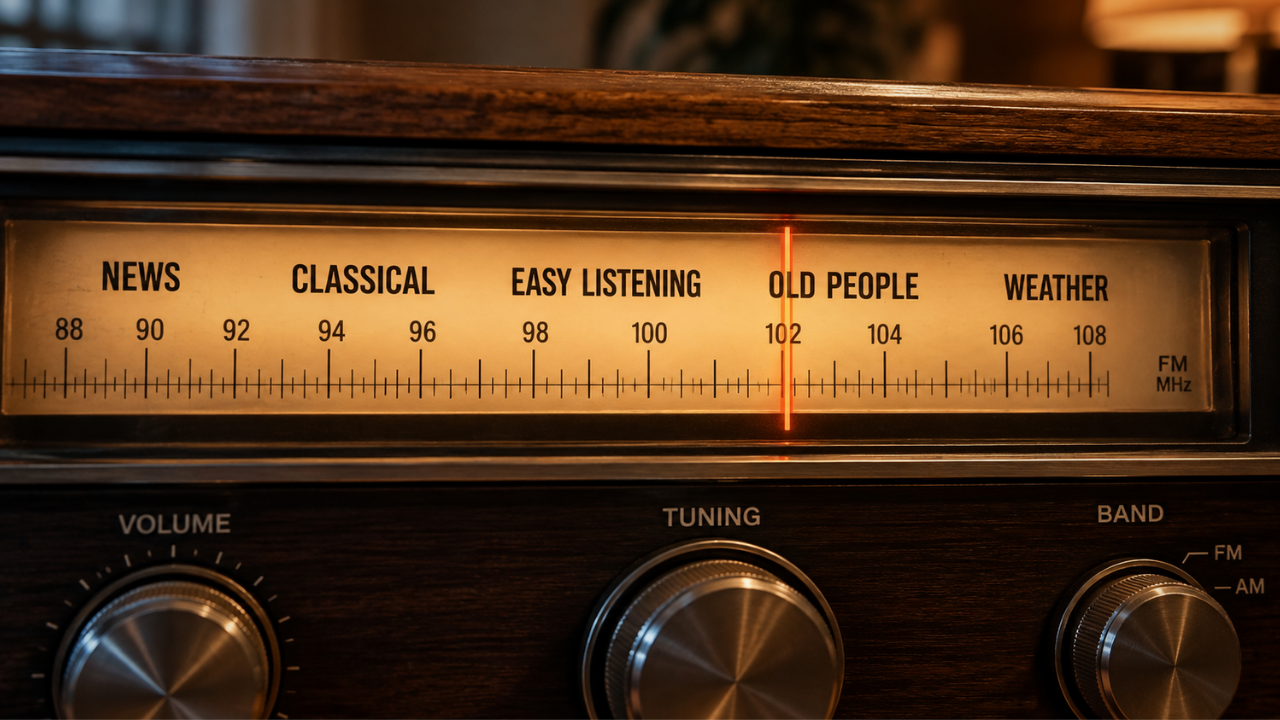
    One day you’re driving to get a haircut, flicking through radio stations, when you hear a Supertramp song.

    Excellent.

    Finally, somebody is playing some decent music.

    Then you hear the station call sign.

    Hippy Radio, playing your favourite golden oldies.

    I’m sorry. What?

    Apparently, while I was busy raising children, moving countries, paying bills and generally getting on with life, somebody moved the definition of “oldies.”

    Nobody consulted me.

    In my head, oldies are still songs from some distant historical period involving enormous wooden stereos, orange dining chairs and greenish carpet.

    I know this because we actually had the orange dining chairs and greenish carpet.

    But that’s beside the point.

    Supertramp is not oldies.

    At least it wasn’t until the radio informed me otherwise.

    Retro 1970s living room with wood paneling, plaid sofa, orange curtains and green shag carpet.
    In my head, this is still what the oldies station is supposed to look like.

    The strange thing about being 52 is that I don’t wander around feeling 52.

    I’m not entirely sure what 52 is supposed to feel like, but presumably this is it.

    Most mornings I still feel fundamentally like the same person I’ve always been. There isn’t some older bloke occupying my body and issuing instructions.

    Then the outside world provides evidence.

    Music is particularly ruthless about this.

    Songs you remember being released start appearing on classic stations. Albums from your youth have anniversary editions commemorating numbers of years that seem mathematically impossible.

    Eventually you hear a song and think, “I remember when this came out.”

    That sentence alone should probably come with reading glasses.

    The unsettling part isn’t really getting older.

    It’s watching things that still feel contemporary in your memory become nostalgia for everybody else.

    There is a difference.

    I don’t hear the music of my younger years and think, “Ah yes, a fascinating artifact from another era.”

    I hear it and think, “Turn it up.”

    The historical artifact, apparently, is me.


    Having young children was supposed to protect me

    So I thought I’d found a loophole.

    I have two young daughters, Georgia and Brianna, which means contemporary culture arrives in our house whether I request it or not.

    I know who Olivia Rodrigo and Ariana Grande are. You can even hear me occasionally playing some of their songs on piano or guitar while the girls sing.

    For brief periods, this creates the reassuring illusion that I remain culturally current.

    Then they start talking about Squishies.

    If you haven’t encountered Squishies, congratulations.

    They’re soft foam objects that you squeeze.

    Then you watch them slowly return to their original shape.

    That’s essentially the business model.

    Naturally, one Squishy is never enough. They appear to multiply around the house when nobody is looking.

    There are Squishies shaped like hamburgers, hot dogs and various other foods.

    There are even sticks of butter.

    Yep, a foam stick of butter.

    Thousands of years of human civilization brought us agriculture, democracy, antibiotics, air travel and the internet, eventually allowing us to reach our ultimate destination:

    squeezable butter that cannot be eaten.

    My daughters love them.

    This is one of the interesting things about being a parent at this age. You don’t completely lose touch with youth culture because youth culture keeps being dumped on your kitchen counter.

    You simply become an observer rather than a participant, or the one that pays for it each time you walk past Five Below.

    Colorful Squishy toys, including a stick of butter, hamburger, hot dog and other food shapes, arranged on a kitchen table.
    Thousands of years of human civilization, and somehow we arrived at a foam stick of butter.

    Then your childhood becomes ancient history

    The girls delivered another reminder recently when I decided to introduce them to Home and Away.

    For Americans unfamiliar with it, Home and Away is one of those Australian television programs that doesn’t really require an introduction if you grew up there.

    It began in 1988.

    When I was growing up, it was simply part of the landscape.

    Summer Bay. Alf Stewart. Teenagers experiencing an extraordinary number of personal crises for people living beside such a beautiful beach.

    It was there after school.

    It was there year after year.

    More importantly, it is still on television.

    So I thought I’d introduce my American daughters to this important piece of Australian culture.

    They weren’t impressed.

    It was, I was informed, “too old.”

    Too old?

    It’s still on!

    I wasn’t asking them to sit through a flickering black and white newsreel while somebody played a piano in the corner.

    This is a television show that is currently being made.

    Unfortunately, there is a flaw in my argument.

    When your father introduces you to a television program that began 38 years ago, you are entitled to ask questions.

    I don’t particularly care for that mathematics, but I acknowledge its existence.

    There’s something fascinating about showing your children the culture you grew up with.

    You’re not merely showing them a television program or playing them a song.

    You’re handing them a tiny piece of your own history.

    This mattered to me.

    This made me laugh.

    This was normal in my house.

    This is what Australia looked and sounded like when I was growing up.

    Then your child looks at it with absolutely none of the nostalgia attached and effectively says:

    “Yeah. Bit old.”

    Children are excellent at historical perspective.

    Home and Away title over an aerial view of an Australian beach and ocean.
    Home and Away has been on Australian television since 1988. Apparently that makes it “too old” for my daughters.

    Famous children should not be allowed to become adults

    There is another particularly aggressive way the universe reminds you how much time has passed.

    Children you remember from television become adults.

    I recently discovered Honey Boo Boo had turned 21.

    She can legally walk into a bar in America and order a drink.

    This is just not on!

    Certain people from television are supposed to remain permanently frozen at whatever age they were when we first encountered them.

    Macaulay Culkin should still be defending his house from burglars.

    Kevin Arnold should still be trying to work out what Winnie Cooper thinks of him.

    Honey Boo Boo should definitely not be old enough to order a cocktail.

    The problem isn’t that these people age.

    It’s what their aging reveals about us.

    If the child you remember watching on television is now a fully grown adult, all those years happened to you as well.

    Celebrity birthdays therefore become less like entertainment news and more like unsolicited medical information.

    I have decided not to investigate this phenomenon any further.


    Then I saw the other side of getting older

    Eventually, I arrived at the haircut that had started this entire crisis.

    Since moving to America, I’ve generally had my hair cut at Sport Clips.

    Even after eight years in the United States, I still appreciate how simply American the entire concept is.

    You get a haircut.

    You watch sport.

    Why should these activities have ever been separate?

    The only obvious flaw in the business model is the absence of a bar.

    At the location I visited, roughly a dozen televisions were showing sport, but none of them provided the main entertainment that afternoon.

    A young boy was having an absolutely spectacular tantrum because he did not want his hair cut.

    Not mild resistance.

    This child had taken a position.

    There would be no haircut.

    Negotiations had failed.

    Diplomatic relations had broken down.

    Scissors had apparently become an instrument of oppression.

    His poor grandmother was attempting something every parent eventually attempts: reasoning with a small person who has absolutely no interest in reason.

    I remember those years.

    You can present a three year old with a seven point argument, supporting documentation, photographic evidence and independent witnesses.

    They will listen carefully to the entire presentation.

    “No.”

    Watching this unfold, something occurred to me.

    My girls are past that stage.

    I don’t have to wrestle somebody into a haircut chair anymore.

    There’s no carrying a screaming child out of a shop while avoiding eye contact with everyone watching.

    I don’t have to cut food into precisely the correct shape only to discover that today’s correct shape is different from yesterday’s correct shape.

    I don’t have to negotiate with tiny terrorists over shoes.

    Suddenly, getting older didn’t seem quite so terrible.

    Georgia and Brianna posing in front of rockets at the U.S. Space & Rocket Center in Huntsville, Alabama.
    My girls are well past the haircut tantrum stage. These days, life with them looks a little more like this.

    Maybe we’re asking the wrong question about getting older

    We spend an extraordinary amount of energy trying not to get old.

    Buying products promising to make us look younger.

    Celebrating people who somehow don’t appear to age.

    We joke about aching backs, grey hair and needing to make the font bigger on our phones.

    I understand all of it.

    But sitting in that barber shop, watching a grandmother conduct peace negotiations over a haircut, I wondered whether we’ve made aging sound like something that simply takes things away.

    It gives you things too.

    Perspective is one of them.

    At 52, I know myself considerably better than I did at 22.

    I care much less about impressing people who aren’t particularly important to me.

    I’ve had different careers. Moved countries. Raised children. I’ve made good decisions and spectacularly questionable ones.

    I’ve accumulated enough life to know that many things that seem catastrophic while you’re living through them eventually become stories.

    Some even become funny stories.

    You also begin to understand how temporary the stages of life really are.

    When your children are tiny, it feels permanent.

    The sleepless nights feel permanent.

    The tantrums feel permanent.

    The toys covering the floor feel permanent.

    Then one afternoon you’re sitting in a barber shop watching somebody else negotiate with a screaming child and realize that part of your own life quietly ended without you noticing.

    There wasn’t a ceremony for that either.

    That’s the strange thing about getting older.

    We notice the things we’re losing because they’re obvious.

    The grey hair.

    The younger face.

    The ability to stand up from the floor without making a noise.

    We don’t always notice what we’re gaining at the same time.


    I don’t actually want to be 22 again

    This may be the greatest revelation of all.

    I’m not particularly interested in being young again.

    There are certainly things I’d happily borrow from my younger self. His metabolism would be useful.

    His knees wouldn’t hurt.

    He also had considerably less white hair.

    But would I actually trade places with him?

    Probably not.

    He hadn’t met my daughters.

    Hadn’t lived in America.

    He hadn’t experienced most of the things that eventually made him me.

    Getting older isn’t something happening instead of life.

    It is life.

    Perhaps the trick isn’t desperately trying to remain young.

    Perhaps it’s remaining interested.

    Keep listening to new music even if you still think the old stuff is better.

    Let your children explain whatever bizarre thing their generation has decided is important.

    Try new things.

    Pay attention.

    Keep being surprised.

    Keep finding things funny.

    Just don’t become the person who decides everything worthwhile happened during the twenty years when they happened to be young.

    I’ll accept 52.

    Even the white hair.

    I’ll accept that Home and Away began 38 years ago, although I reserve the right to complain about it.

    But Supertramp being classified as golden oldies?

    No.

    There are limits.

    If somebody wants to send me an official notification that I’m old, that’s fine.

    Just make sure they include the cardigan.

    I’ll probably need it.


    Prefer watching instead? This entire identity crisis began with a perfectly innocent drive to get a haircut.


    If you enjoy these stories about an Australian slowly trying to make sense of America, parenthood, getting older and whatever else life decides to throw at me, you can support From Down Under to Down South through Buy Me a Coffee. It helps keep the videos, articles and podcast coming, and I genuinely appreciate everyone who helps make this little corner of the internet possible.

  • What Tennessee Lost When Dolly Parton Died

    What Tennessee Lost When Dolly Parton Died

    THIS WEEK IN AMERICA

    There are famous people whose deaths you hear about.

    Then there are the ones you feel.

    Dolly Parton died on August 25, and here in Tennessee, you could feel it almost immediately.

    It wasn’t simply another celebrity death appearing on television screens and social media feeds. People were crying. Flowers appeared outside her home. Schools found their own ways to remember her. Radio stations played her music. Conversations that normally had nothing to do with country music somehow ended up being about Dolly.

    I cried too.

    That surprised me a little.

    I knew she’d been unwell. Only days earlier I’d watched an interview with her. She still looked happy. She still sounded like Dolly. There was nothing about it that made me think I was watching one of the final interviews she would ever give.

    Then she was gone.

    Over the next few days, I watched Tennessee react to losing someone who had been part of this state for generations.

    And I began to understand that people here weren’t simply mourning a famous country singer.

    They were mourning something much closer to home.

    Our family at Dollywood in Pigeon Forge, Tennessee, with the Smoky Mountains in the background.
    A family trip to Dollywood in Pigeon Forge. Living in Tennessee changed the way I came to understand Dolly Parton and her connection to this part of the state.

    Dolly Was Different in Tennessee

    I grew up in Australia, so Dolly Parton existed in my life long before Tennessee did.

    She was already one of those people who seemed permanently famous.

    The hair.

    The rhinestones.

    The voice.

    The jokes.

    The songs everybody somehow knew, even if they claimed they didn’t listen to country music.

    But living in Tennessee changed the way I saw her.

    Celebrity looks different when you live close enough to see the fingerprints someone has left behind.

    I’ve been to Dollywood several times. What always struck me about the place wasn’t simply that Dolly Parton owned a theme park.

    Plenty of famous people can put their name on something.

    Dollywood feels connected to the place that made her.

    There are craftsmen, music, old Appalachian traditions, reminders of mountain life and pieces of a culture that could very easily have been polished away in the name of creating something newer and shinier.

    Dolly became one of the most recognisable women on Earth without ever appearing remotely embarrassed by the mountains she came from.

    Quite the opposite.

    She took them with her.

    I think that’s one of the things I came to admire most about her.

    Success didn’t seem to require pretending she had come from somewhere else.

    I’ve even been eyeing a Dolly Parton TIME cover poster for the wall of my studio. Eight years ago, I’m not sure that would ever have occurred to me. Now it feels strangely appropriate.


    The Dolly Parton You Heard About Around Town

    Living around Nashville also means occasionally meeting people whose worlds have crossed with people you’ve only ever seen on television.

    Over the years I’ve met several people who knew Dolly.

    One woman had worked as her videographer.

    When Dolly came up in conversation, she described someone remarkably similar to the public version the rest of us knew.

    Funny.

    Sassy.

    Energetic.

    Caring.

    That always stayed with me because celebrity reputations often become considerably less impressive the closer you get to them.

    Dolly’s seemed to work the other way.

    There’s even an antique store not far from where we live where the owner has a photograph of herself with her. Apparently she used to drop in and browse.

    That image of Dolly somehow feels more Tennessee to me than a red carpet ever could.

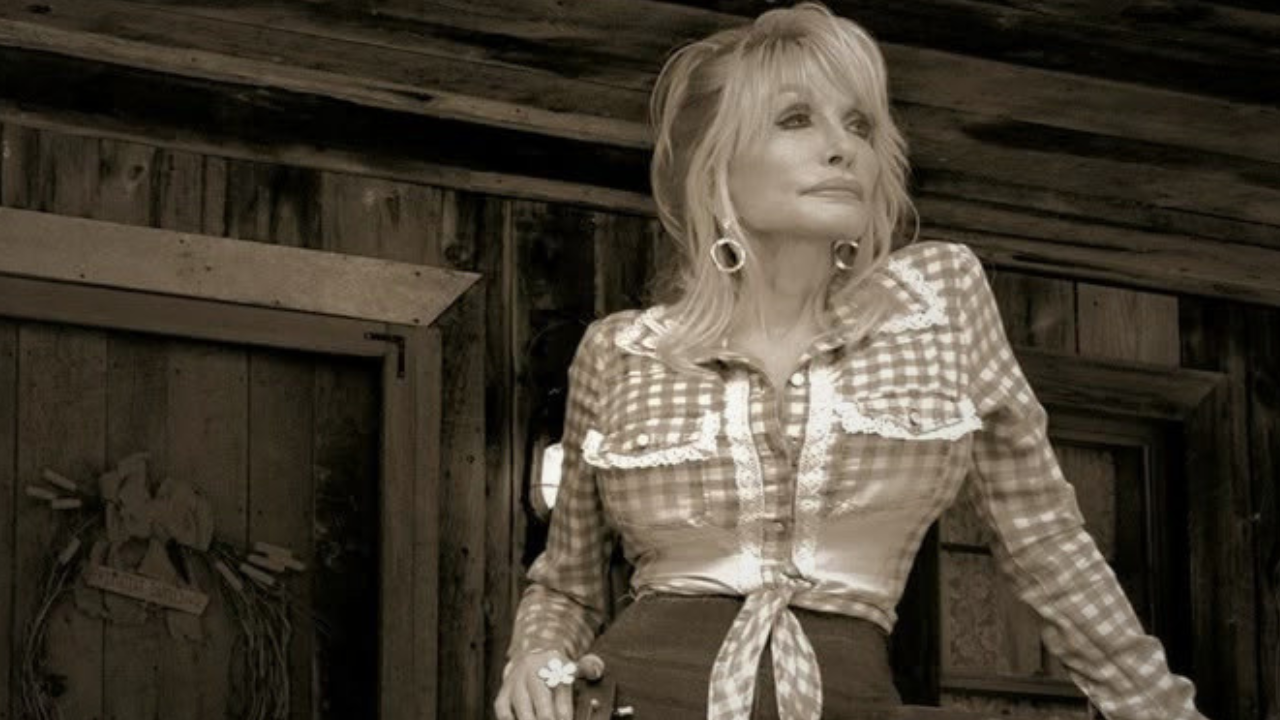
    Dolly Parton, international superstar, wandering around an antique store.

    Yep.

    That really fits.

    A few years ago, when I was working as a bank manager in Franklin, Tennessee, I saw another side of her that I’ve never forgotten.

    Occasionally, checks would appear.

    They had Dolly Parton’s signature on them.

    Sometimes they were for $10,000.

    Sometimes $20,000.

    They were going to ordinary families who were struggling.

    There wasn’t a television crew standing beside them.

    Or an oversized novelty check.

    There wasn’t a press conference explaining what a wonderful person Dolly Parton was.

    Someone needed help.

    She helped.

    Working in banking meant I obviously couldn’t go home and start telling everybody whose accounts I’d seen. But I remember looking at those checks and thinking about how extraordinary it would be to have reached a point in life where you could quietly alter the course of someone else’s life.

    More importantly, it made me think about what I was doing with mine.

    That’s a fairly impressive legacy for a piece of paper.

    Carnton historic home in Franklin, Tennessee.
    Carnton in Franklin, Tennessee. It was while working as a bank manager in Franklin that I caught a small glimpse of Dolly Parton’s quiet generosity.

    Tennessee Didn’t Mourn Her Like a Celebrity

    In the days after Dolly died, I began noticing something interesting about the way Tennessee responded.

    There were certainly the expected tributes.

    Pink.

    Boots.

    Sparkles.

    Music.

    But there was something underneath all of that.

    Schools across Middle Tennessee encouraged children to wear pink or western clothes, bring books and perform acts of kindness. At Gladeville Middle School, students were invited to take part in a “What Would Dolly Do?” kindness challenge.

    At my daughters’ school, the principal spoke to the children over the loudspeaker.

    She asked them to honour Dolly through kindness.

    Not by listening to one of her records.

    Not by finding the biggest blonde wig in Tennessee.

    Kindness.

    Of everything they could have chosen to represent her, that’s what they chose.

    Meanwhile, mourners gathered outside Dolly’s Brentwood home in such numbers that flowers, signs and balloons accumulated around the property and police eventually had to manage traffic in the area.

    This wasn’t simply Tennessee saying goodbye to someone famous.

    It felt much more like people saying goodbye to someone they believed belonged to them.

    Or perhaps someone they believed they belonged to.

    There’s a difference.

    Tennessee tribute to Dolly Parton following her death in August 2026.
    Dolly Parton’s house in Brentwood Tennessee

    Then I Started Thinking About Mum

    My mum loved Dolly.

    She had her albums.

    One of my earliest memories of Dolly Parton’s music is Coat of Many Colors.

    I remember hearing it as a boy in Australia.

    More specifically, I remember Mum singing it.

    There were times when we didn’t have much money either.

    Mum worked hard. She loved horses, the country and life on the land. Given the opportunity, I think she would happily have disappeared onto a property somewhere with several horses and reappeared only when somebody reminded her she had children.

    There were parts of Dolly’s story that I think Mum understood instinctively.

    So when Dolly died, all those old memories suddenly came rushing back.

    My mum died four years ago.

    Grief does something strange after enough time has passed.

    It stops occupying the whole room.

    You learn to live around it.

    Days go by.

    Then weeks.

    You work. Take the kids to school. You complain about the electricity bill. You wonder why nobody in the house except you appears capable of replacing an empty toilet roll.

    Life resumes its normal nonsense.

    Then something completely unexpected opens a door you didn’t know was still there.

    A song.

    A smell.

    A photograph.

    Or apparently, the death of Dolly Parton.

    Suddenly I wasn’t only thinking about the woman Tennessee had lost.

    I was thinking about the woman I’d lost too.

    My mum helping her granddaughter Georgia sit on her horse in Australia.
    Mum helping Georgia onto a horse. She loved horses, the country and life on the land. I think there were parts of Dolly’s story she understood.

    A Song Somehow Travelled 9,000 Miles With Me

    The strange part is where life eventually took me.

    Imagine explaining this to the little Australian boy listening to his mum singing Coat of Many Colors.

    One day you’ll move to America.

    Not just America.

    Tennessee.

    You’ll visit the Smoky Mountains that Dolly sang about.

    Go to Dollywood.

    You’ll meet people who knew her.

    Even see small evidence of things she did for people when nobody was watching.

    Then decades after first hearing those songs on the other side of the world, you’ll be living just outside Nashville when Tennessee wakes to the news that Dolly Parton is gone.

    Life is ridiculous sometimes.

    We talk about migration in terms of places.

    I moved from Australia to America.

    That’s geographically true.

    But I’m increasingly convinced that when you move countries, you don’t leave one life behind and start another.

    You carry bits of the old one with you.

    Songs.

    Expressions.

    Memories.

    People.

    Most of the time they sit quietly in the background.

    Then something happens in your new home that suddenly reaches all the way back into your old one.

    For me, Dolly Parton became one of those bridges.

    A woman from the mountains of East Tennessee was part of my childhood in Australia because my mum loved her music.

    Decades later, East Tennessee became part of my own life.

    I don’t know that I could have written a more unlikely circle if I’d tried.


    I talked about that strange connection between Dolly, Tennessee and Mum on This Week in America. You can hear the original story below.


    Maybe That’s Why Dolly Meant So Much

    I’ve joked for years that if aliens ever arrive and demand to meet someone who represents humanity, we shouldn’t send a politician.

    Send Dolly Parton.

    Give her twenty minutes.

    We’ll probably be fine.

    It’s a joke, obviously.

    Mostly.

    But there’s a reason it works.

    Dolly managed something that’s becoming increasingly difficult.

    People who disagreed about almost everything seemed capable of liking her.

    She had her own beliefs, but she never seemed interested in turning every interaction into a test of whether you shared them.

    Dolly was deeply rooted in her faith and her culture without expecting everybody else to be exactly like her. She could make fun of herself without diminishing herself, and become extraordinarily successful without pretending she’d achieved it alone.

    Perhaps most remarkably, after making enormous amounts of money, she still seemed to notice people who didn’t have much.

    That’s much rarer than a good singing voice.

    Her Imagination Library has also put hundreds of millions of free books into the hands of children, an extraordinary extension of something Tennessee families had known about her for decades: she cared deeply about where she came from and believed success carried some responsibility to give something back.

    Dollywood has already announced that it intends to preserve that philosophy as it develops tributes to her legacy, including places for reflection and new experiences built around dreaming, storytelling and kindness.

    That seems right.

    Because I don’t think Dolly Parton’s most important legacy is Jolene.

    Or 9 to 5.

    Or even I Will Always Love You.

    It’s certainly not the wigs.

    Although, fair play, that’s a fairly substantial body of work on its own.

    I think her real legacy is much simpler.

    She came from very little.

    Achieved almost everything.

    She never seemed to become embarrassed by the people or the place she came from.

    And somewhere along the way, she made a lot of people want to be a little kinder.

    That’s not bad for one life.


    Goodbye, Dolly

    Tennessee feels a little different without her.

    I imagine it will for quite some time.

    For me, though, her death will always be connected to something more personal.

    I’ll think about Mum singing Dolly’s songs in Australia.

    About growing up without much money.

    I’ll think about horses and country life and those records playing when I was a boy.

    About the absurd route that eventually brought me from there to here.

    And perhaps that’s one of the gifts music gives us.

    It attaches itself to people.

    We think we’re remembering a song when we’re actually remembering a kitchen, a car, a childhood, a parent or a version of ourselves that disappeared years ago.

    Dolly Parton belonged to Tennessee.

    But somehow, a little piece of her belonged to my mum too.

    I hope wherever they both are, Mum finally gets to see the concert.

    Knowing Mum, she’ll probably want decent seats.

    Gatlinburg, Tennessee, at sunset in the Great Smoky Mountains.
    Gatlinburg, Tennessee, at sunset. Somehow the mountains Dolly sang about became part of my life too.

    If you enjoy these stories about life in America through Australian eyes, you can help support From Down Under to Down South with a coffee. Every coffee helps me keep writing, recording and sharing the stories I find along the way. Thank you for being here.