THIS WEEK IN AMERICA
Some fathers hold their daughter’s hand at the orthodontist. I’m the father who needs someone to check his pulse.
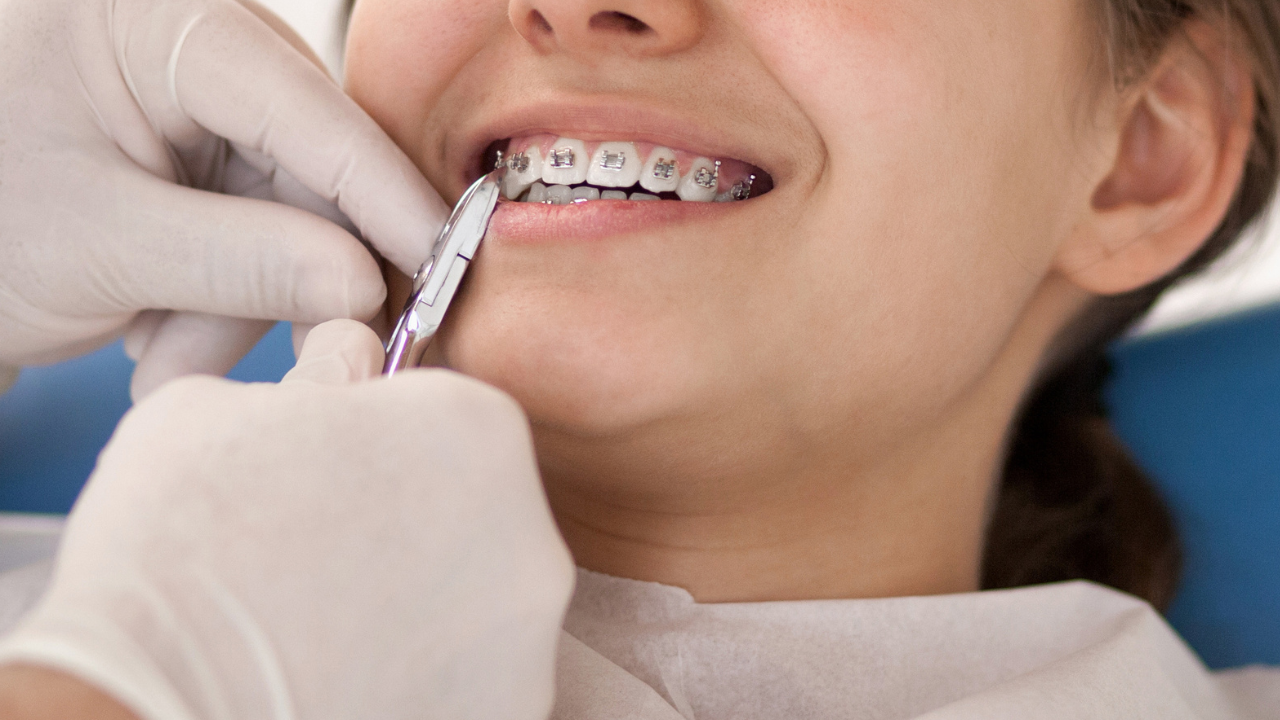
My ten-year-old daughter, Georgia, got braces recently.
She handled the whole thing remarkably well. A little discomfort, a few adjustments to what she could eat, and the beginning of that wonderful childhood experience where you discover that even a slice of bread can be surprisingly difficult to chew.
I know. I had braces myself when I was younger.
Naturally, as her father, I wanted to be there to support her.
Unfortunately, there was a slight problem.
I have a habit of fainting in medical establishments.
Doctors, dentists, hospitals, needles. Sometimes I don’t even need any of those things to happen. Simply being in the building can be enough.
So when Georgia went to have her braces fitted, my wife Nikki took her.
I stayed home.
Not exactly the sort of fatherly heroism they make Father’s Day cards about, but there was a very good reason for it.
The last time I went to Georgia’s orthodontist, I ended up on the floor.

The orthodontist appointment that went terribly wrong
About a year ago, we took Georgia to the orthodontist to discuss getting braces.
It was a consultation.
Nobody was having a tooth pulled. Nobody was being drilled. There were no needles, no blood, and absolutely no reason for a grown man to require medical assistance.
The orthodontist was showing us an X-ray of Georgia’s mouth.
I remember looking at the screen.
There were her teeth. There was her jaw. Everything was perfectly normal.
Then my body apparently decided we’d seen enough.
The next thing I knew, I was on the floor.
The staff were wonderful. Cold towels appeared. Someone brought me a hydration drink. Everyone made sure I was all right.
Meanwhile, my daughter’s orthodontic consultation had somehow become an unscheduled medical appointment for her father.
It wasn’t exactly the impression I’d hoped to make.
Apparently, it was memorable, though.
When Georgia returned to get her braces fitted a year later, the staff still remembered me.
Not necessarily as Mike. More as the father who’d collapsed during the consultation.
Wonderful.
You spend years trying to teach your children how to behave in public, and then you become the family member everyone remembers for lying on the floor. At least Georgia has a story to tell.

I’ve always called it white coat syndrome. That’s not quite right.
For years, I’ve referred to this little problem as white coat syndrome.
It sounds reasonably respectable, doesn’t it?
A medical condition. Something you can explain without admitting that an X-ray of your daughter’s teeth has just knocked you unconscious.
But I’ve since learned there’s an important distinction.
White coat hypertension is when someone’s blood pressure is elevated in a medical setting but normal outside it.
What I’m describing is consistent with something called a vasovagal response, although only a clinician can establish the cause of an individual’s fainting.
Essentially, the nervous system can overreact to certain triggers, causing blood pressure and sometimes heart rate to drop suddenly. If that reduces blood flow to the brain enough, the person can faint.
Blood, needles, medical instruments and emotional stress are among the recognised triggers.
In my case, apparently, the list also includes sitting quietly in an examination room and looking at dental X-rays.
It’s quite an impressive range.
The frustrating thing is that I can know perfectly well that I’m safe.
I can understand that nobody is about to hurt me. I can tell myself there’s nothing to worry about.
My nervous system doesn’t seem particularly interested in my opinion. It has already decided to shut the entire operation down.
The time my sister fell off a horse and I needed five stitches
If you think the orthodontist story is ridiculous, I can do better.
Years ago, when I was living in Australia, my sister fell off a horse.
She ended up in hospital, so naturally I went to visit her.
A fairly normal thing for a brother to do.
I wasn’t injured. I hadn’t been anywhere near the horse. My involvement in the entire incident was limited to being a concerned family member.
At some point, I went down to the hospital cafeteria to get something to eat.
The next thing I knew, I was on the floor.
I’d fainted, struck my head against a door on the way down and split my chin open.
Five stitches.
My sister had fallen off a horse, and I’d somehow managed to sustain an injury serious enough to require stitches simply by visiting her.
She was the patient.
I was supposed to be the visitor.
The hospital ended up getting two patients for the price of one. I’m not sure what the medical term for that is, but from a family perspective, it’s bloody embarrassing.

Apparently, an empty examination room is dangerous too
You might reasonably assume that my problem is limited to seeing something unpleasant.
Blood. Needles. Medical procedures.
That would make sense.
Unfortunately, I’ve managed to faint while sitting alone in an examination room.
I went to see my doctor here in America. They showed me into a room and left me waiting.
Nothing happened.
Nobody examined me. Nobody produced a needle. There wasn’t even an X-ray to look at.
I was simply sitting there.
Then I fainted.
Imagine being the doctor returning to the room.
You’ve left a patient sitting quietly on the examination table, and when you come back, he’s disappeared.
Until you look down.
There he is.
On the floor.
Again.
At this point, I suspect medical practices should have a separate checkbox on their patient intake forms.
Reason for visit: Routine appointment. Additional requirements: Please ensure patient remains upright.
My elaborate strategy for surviving a blood test
Blood tests are particularly entertaining.
Over the years, I’ve developed an entire routine.
First, I absolutely cannot look at what’s happening.
Second, I get my phone out.
Third, I start talking to the nurse.
It doesn’t matter what we discuss.
The weather. Football. Australia. What they had for breakfast. Their plans for retirement.
I’ll happily listen to a detailed account of someone’s kitchen renovation if it keeps my mind occupied.
In fact, the more mundane the conversation, the better.
The nurse probably thinks she’s having a pleasant chat with a friendly Australian.
What she doesn’t realise is that she’s also performing the important secondary role of keeping the Australian conscious.
Unfortunately, even this strategy isn’t foolproof.
I’ve fainted during blood tests despite doing everything I can to distract myself.
I’ve learned that the sensible approach is to warn medical staff before anything begins, rather than hoping I can bluff my way through it.
There are practical precautions worth discussing with a healthcare professional, too. For people prone to vasovagal fainting, lying down when warning symptoms appear can help prevent a fall. Some people may also benefit from physical counter-pressure techniques, provided they have enough warning and have been shown how to use them appropriately.
Given that I’ve already managed to injure myself during one episode, avoiding another spectacular encounter with the floor seems a worthwhile objective. Recurring fainting also deserves medical evaluation rather than simply assuming every episode has the same cause.

Here’s the strange part.
I was there when both my daughters were born.
This is the bit I genuinely cannot explain.
I was in the delivery room when Georgia was born.
I was also there when Brianna arrived.
Actual childbirth.
An enormously significant medical event involving rather more than a dental X-ray.
When Georgia was being born, I felt a little faint for a while, but I managed to stay upright. Once she arrived, I was fine.
I was there for Brianna’s birth as well.
Yet apparently, a perfectly harmless image of Georgia’s teeth is enough to send me crashing to the floor.
I have no idea why those experiences were so different.
Perhaps being focused on what was happening helped. Perhaps the circumstances were different enough that my body reacted differently.
I’m not going to pretend I know.
All I can tell you is that I can apparently cope with the birth of a human being.
But show me a dental X-ray, and all bets are off.
My body has some very peculiar standards.
The hardest part isn’t actually the fainting I can laugh about all of this now.
The hospital incident, the orthodontist, the empty examination room. They’re ridiculous stories, and I suspect I’ll be telling them for years.
- Want to hear me tell this story, along with the week’s other American absurdities? Listen to the full episode of This Week in America.
But there is another side to it.
When you’re a parent, you want to be there for your children.
You want to be the reassuring one. The person who sits beside them when they’re nervous and tells them everything will be all right.
Getting braces might not sound like a particularly significant event in the grand scheme of things, but when you’re ten years old, it’s a big deal.
Georgia was facing something new. Something that would be uncomfortable for a while and would change the way she looked and ate.
I wanted to be there.
Instead, I had to acknowledge that my presence might create a completely unnecessary distraction.
I didn’t want her appointment becoming another episode of Dad Needs Medical Attention.
So Nikki took her.
Georgia got her braces.
Everything went smoothly.
There was no drama, no emergency, and no grown man requiring cold towels.
Sometimes being a sensible parent means recognising that you’re not necessarily the right person for every situation. Even if the reason is that you can’t be trusted around an orthodontic X-ray.

So, how did the braces go?
Georgia handled them beautifully.
She’s adjusting to the discomfort, learning what she can and can’t eat, and getting on with life.
I’m proud of her.
As for me, I successfully survived the entire appointment by remaining several miles away from the orthodontist.
It’s not a particularly impressive achievement, but given my previous performance at that establishment, I’ll take it.
I do hope that one day I’ll be able to walk into a doctor’s office, sit down, have a perfectly ordinary appointment and leave through the front door without anyone needing to check my pulse.
Until then, I’ll keep warning the staff, taking the necessary precautions and trying to avoid any further injuries.
Although I suspect the orthodontist will remember me for quite some time.
Georgia might eventually get her braces off. I’m not entirely sure I’ll ever live down the X-ray.
For further reading, I recommend this book by Dr Mara Vale
Help Support the Stories
From Australian slang to the little cultural differences you only notice after moving overseas, there’s always something new to discover.
If you enjoy these stories, you can support From Down Under to Down South on Buy Me a Coffee . Every coffee helps keep the stories coming.
