Tag: australian in america

  • What Tennessee Lost When Dolly Parton Died

    What Tennessee Lost When Dolly Parton Died

    THIS WEEK IN AMERICA

    There are famous people whose deaths you hear about.

    Then there are the ones you feel.

    Dolly Parton died on August 25, and here in Tennessee, you could feel it almost immediately.

    It wasn’t simply another celebrity death appearing on television screens and social media feeds. People were crying. Flowers appeared outside her home. Schools found their own ways to remember her. Radio stations played her music. Conversations that normally had nothing to do with country music somehow ended up being about Dolly.

    I cried too.

    That surprised me a little.

    I knew she’d been unwell. Only days earlier I’d watched an interview with her. She still looked happy. She still sounded like Dolly. There was nothing about it that made me think I was watching one of the final interviews she would ever give.

    Then she was gone.

    Over the next few days, I watched Tennessee react to losing someone who had been part of this state for generations.

    And I began to understand that people here weren’t simply mourning a famous country singer.

    They were mourning something much closer to home.

    Our family at Dollywood in Pigeon Forge, Tennessee, with the Smoky Mountains in the background.
    A family trip to Dollywood in Pigeon Forge. Living in Tennessee changed the way I came to understand Dolly Parton and her connection to this part of the state.

    Dolly Was Different in Tennessee

    I grew up in Australia, so Dolly Parton existed in my life long before Tennessee did.

    She was already one of those people who seemed permanently famous.

    The hair.

    The rhinestones.

    The voice.

    The jokes.

    The songs everybody somehow knew, even if they claimed they didn’t listen to country music.

    But living in Tennessee changed the way I saw her.

    Celebrity looks different when you live close enough to see the fingerprints someone has left behind.

    I’ve been to Dollywood several times. What always struck me about the place wasn’t simply that Dolly Parton owned a theme park.

    Plenty of famous people can put their name on something.

    Dollywood feels connected to the place that made her.

    There are craftsmen, music, old Appalachian traditions, reminders of mountain life and pieces of a culture that could very easily have been polished away in the name of creating something newer and shinier.

    Dolly became one of the most recognisable women on Earth without ever appearing remotely embarrassed by the mountains she came from.

    Quite the opposite.

    She took them with her.

    I think that’s one of the things I came to admire most about her.

    Success didn’t seem to require pretending she had come from somewhere else.

    I’ve even been eyeing a Dolly Parton TIME cover poster for the wall of my studio. Eight years ago, I’m not sure that would ever have occurred to me. Now it feels strangely appropriate.


    The Dolly Parton You Heard About Around Town

    Living around Nashville also means occasionally meeting people whose worlds have crossed with people you’ve only ever seen on television.

    Over the years I’ve met several people who knew Dolly.

    One woman had worked as her videographer.

    When Dolly came up in conversation, she described someone remarkably similar to the public version the rest of us knew.

    Funny.

    Sassy.

    Energetic.

    Caring.

    That always stayed with me because celebrity reputations often become considerably less impressive the closer you get to them.

    Dolly’s seemed to work the other way.

    There’s even an antique store not far from where we live where the owner has a photograph of herself with her. Apparently she used to drop in and browse.

    That image of Dolly somehow feels more Tennessee to me than a red carpet ever could.

    Dolly Parton, international superstar, wandering around an antique store.

    Yep.

    That really fits.

    A few years ago, when I was working as a bank manager in Franklin, Tennessee, I saw another side of her that I’ve never forgotten.

    Occasionally, checks would appear.

    They had Dolly Parton’s signature on them.

    Sometimes they were for $10,000.

    Sometimes $20,000.

    They were going to ordinary families who were struggling.

    There wasn’t a television crew standing beside them.

    Or an oversized novelty check.

    There wasn’t a press conference explaining what a wonderful person Dolly Parton was.

    Someone needed help.

    She helped.

    Working in banking meant I obviously couldn’t go home and start telling everybody whose accounts I’d seen. But I remember looking at those checks and thinking about how extraordinary it would be to have reached a point in life where you could quietly alter the course of someone else’s life.

    More importantly, it made me think about what I was doing with mine.

    That’s a fairly impressive legacy for a piece of paper.

    Carnton historic home in Franklin, Tennessee.
    Carnton in Franklin, Tennessee. It was while working as a bank manager in Franklin that I caught a small glimpse of Dolly Parton’s quiet generosity.

    Tennessee Didn’t Mourn Her Like a Celebrity

    In the days after Dolly died, I began noticing something interesting about the way Tennessee responded.

    There were certainly the expected tributes.

    Pink.

    Boots.

    Sparkles.

    Music.

    But there was something underneath all of that.

    Schools across Middle Tennessee encouraged children to wear pink or western clothes, bring books and perform acts of kindness. At Gladeville Middle School, students were invited to take part in a “What Would Dolly Do?” kindness challenge.

    At my daughters’ school, the principal spoke to the children over the loudspeaker.

    She asked them to honour Dolly through kindness.

    Not by listening to one of her records.

    Not by finding the biggest blonde wig in Tennessee.

    Kindness.

    Of everything they could have chosen to represent her, that’s what they chose.

    Meanwhile, mourners gathered outside Dolly’s Brentwood home in such numbers that flowers, signs and balloons accumulated around the property and police eventually had to manage traffic in the area.

    This wasn’t simply Tennessee saying goodbye to someone famous.

    It felt much more like people saying goodbye to someone they believed belonged to them.

    Or perhaps someone they believed they belonged to.

    There’s a difference.

    Tennessee tribute to Dolly Parton following her death in August 2026.
    Dolly Parton’s house in Brentwood Tennessee

    Then I Started Thinking About Mum

    My mum loved Dolly.

    She had her albums.

    One of my earliest memories of Dolly Parton’s music is Coat of Many Colors.

    I remember hearing it as a boy in Australia.

    More specifically, I remember Mum singing it.

    There were times when we didn’t have much money either.

    Mum worked hard. She loved horses, the country and life on the land. Given the opportunity, I think she would happily have disappeared onto a property somewhere with several horses and reappeared only when somebody reminded her she had children.

    There were parts of Dolly’s story that I think Mum understood instinctively.

    So when Dolly died, all those old memories suddenly came rushing back.

    My mum died four years ago.

    Grief does something strange after enough time has passed.

    It stops occupying the whole room.

    You learn to live around it.

    Days go by.

    Then weeks.

    You work. Take the kids to school. You complain about the electricity bill. You wonder why nobody in the house except you appears capable of replacing an empty toilet roll.

    Life resumes its normal nonsense.

    Then something completely unexpected opens a door you didn’t know was still there.

    A song.

    A smell.

    A photograph.

    Or apparently, the death of Dolly Parton.

    Suddenly I wasn’t only thinking about the woman Tennessee had lost.

    I was thinking about the woman I’d lost too.

    My mum helping her granddaughter Georgia sit on her horse in Australia.
    Mum helping Georgia onto a horse. She loved horses, the country and life on the land. I think there were parts of Dolly’s story she understood.

    A Song Somehow Travelled 9,000 Miles With Me

    The strange part is where life eventually took me.

    Imagine explaining this to the little Australian boy listening to his mum singing Coat of Many Colors.

    One day you’ll move to America.

    Not just America.

    Tennessee.

    You’ll visit the Smoky Mountains that Dolly sang about.

    Go to Dollywood.

    You’ll meet people who knew her.

    Even see small evidence of things she did for people when nobody was watching.

    Then decades after first hearing those songs on the other side of the world, you’ll be living just outside Nashville when Tennessee wakes to the news that Dolly Parton is gone.

    Life is ridiculous sometimes.

    We talk about migration in terms of places.

    I moved from Australia to America.

    That’s geographically true.

    But I’m increasingly convinced that when you move countries, you don’t leave one life behind and start another.

    You carry bits of the old one with you.

    Songs.

    Expressions.

    Memories.

    People.

    Most of the time they sit quietly in the background.

    Then something happens in your new home that suddenly reaches all the way back into your old one.

    For me, Dolly Parton became one of those bridges.

    A woman from the mountains of East Tennessee was part of my childhood in Australia because my mum loved her music.

    Decades later, East Tennessee became part of my own life.

    I don’t know that I could have written a more unlikely circle if I’d tried.


    I talked about that strange connection between Dolly, Tennessee and Mum on This Week in America. You can hear the original story below.


    Maybe That’s Why Dolly Meant So Much

    I’ve joked for years that if aliens ever arrive and demand to meet someone who represents humanity, we shouldn’t send a politician.

    Send Dolly Parton.

    Give her twenty minutes.

    We’ll probably be fine.

    It’s a joke, obviously.

    Mostly.

    But there’s a reason it works.

    Dolly managed something that’s becoming increasingly difficult.

    People who disagreed about almost everything seemed capable of liking her.

    She had her own beliefs, but she never seemed interested in turning every interaction into a test of whether you shared them.

    Dolly was deeply rooted in her faith and her culture without expecting everybody else to be exactly like her. She could make fun of herself without diminishing herself, and become extraordinarily successful without pretending she’d achieved it alone.

    Perhaps most remarkably, after making enormous amounts of money, she still seemed to notice people who didn’t have much.

    That’s much rarer than a good singing voice.

    Her Imagination Library has also put hundreds of millions of free books into the hands of children, an extraordinary extension of something Tennessee families had known about her for decades: she cared deeply about where she came from and believed success carried some responsibility to give something back.

    Dollywood has already announced that it intends to preserve that philosophy as it develops tributes to her legacy, including places for reflection and new experiences built around dreaming, storytelling and kindness.

    That seems right.

    Because I don’t think Dolly Parton’s most important legacy is Jolene.

    Or 9 to 5.

    Or even I Will Always Love You.

    It’s certainly not the wigs.

    Although, fair play, that’s a fairly substantial body of work on its own.

    I think her real legacy is much simpler.

    She came from very little.

    Achieved almost everything.

    She never seemed to become embarrassed by the people or the place she came from.

    And somewhere along the way, she made a lot of people want to be a little kinder.

    That’s not bad for one life.


    Goodbye, Dolly

    Tennessee feels a little different without her.

    I imagine it will for quite some time.

    For me, though, her death will always be connected to something more personal.

    I’ll think about Mum singing Dolly’s songs in Australia.

    About growing up without much money.

    I’ll think about horses and country life and those records playing when I was a boy.

    About the absurd route that eventually brought me from there to here.

    And perhaps that’s one of the gifts music gives us.

    It attaches itself to people.

    We think we’re remembering a song when we’re actually remembering a kitchen, a car, a childhood, a parent or a version of ourselves that disappeared years ago.

    Dolly Parton belonged to Tennessee.

    But somehow, a little piece of her belonged to my mum too.

    I hope wherever they both are, Mum finally gets to see the concert.

    Knowing Mum, she’ll probably want decent seats.

    Gatlinburg, Tennessee, at sunset in the Great Smoky Mountains.
    Gatlinburg, Tennessee, at sunset. Somehow the mountains Dolly sang about became part of my life too.

    If you enjoy these stories about life in America through Australian eyes, you can help support From Down Under to Down South with a coffee. Every coffee helps me keep writing, recording and sharing the stories I find along the way. Thank you for being here.


  • The Plague Hath Arrived: And Still the Children Want Snacks

    The Plague Hath Arrived: And Still the Children Want Snacks

    Getting sick when you live overseas can make you realise just how much of your old support system you left behind. It’s not simply that your family lives far away. It’s that when something goes wrong, the people who would normally step in and help can’t physically be there.

    Our family discovered that the hard way recently when all four of us got COVID.

    At one point, my wife Nikki and I were both completely wiped out while our two daughters, aged ten and seven, were sick as well. When one parent gets sick, the other can usually pick up the slack. When both parents are sick at the same time, things get considerably more complicated.

    The kids still needed feeding and looking after. There was washing to do, food to organise and a house that somehow continued producing dirty dishes despite nobody having the energy to do anything.

    For the first time in eight years of living in America, I found myself seriously wondering: what are we actually supposed to do if we both get too sick to manage this?

    Cold and flu supplies with tissues, tea, medicine and cough drops on a kitchen table.
    At this point, our kitchen table was starting to look like a small pharmacy.

    Sick Children Have a Remarkable Ability to Recover When There’s Something to Fight About

    Thankfully, our girls are old enough to do some things for themselves. They can get a drink, find a snack and entertain themselves without constant supervision.

    They are not, however, old enough to look after two very sick parents.

    They also demonstrated a fascinating feature of childhood illness. One minute, one of them would be lying on the couch looking miserable and telling us how terrible she felt. Twenty minutes later, both girls would be running around like crazed squirrels fighting over the television remote.

    Apparently COVID symptoms can temporarily disappear when your sister changes the channel.

    Then the fight would end and one of them would return to the couch.

    “Dad, I don’t feel well.”

    Neither did I, but unlike them, I hadn’t just completed a 100 yard dash through the house.

    At one point their continued demands inspired me to write a Shakespearean proclamation for the household:

    A plague hath descended upon this house, and both Mother and Father lie stricken, weak of limb and weary of spirit. Yet the young heirs show no mercy.

    If thou hungerest, seek thee the pantry. If thou thirstest, journey forth unto the kitchen.

    Cry havoc, and let slip the children.

    It summed up the week surprisingly well.

    When Cooking Becomes Too Much Effort

    Food was one of the first things to fall apart.

    We relied on takeaway far more than we normally would because neither of us had the energy to cook. There’s a particular level of sickness where having ingredients in the fridge becomes irrelevant. Chicken and vegetables might technically constitute dinner, but only if someone has enough energy to turn them into dinner.

    We didn’t.

    Delivery drivers became our humanitarian aid workers. Leave the food at the front door, retreat to a safe distance and we’ll retrieve the supplies when able.

    I also managed to place an Instacart grocery order while exhausted and sleep deprived. When it arrived, I started unpacking things I had absolutely no memory of ordering.

    Scallion noodles?

    Apparently so.

    There were several other random purchases that made perfect sense to whichever version of me had been scrolling through Instacart at the time. It was like receiving a grocery order selected by a stranger, except the stranger was me.

    Packages of Momofuku soy and scallion noodles and tingly chili noodles from a mystery Instacart order while sick with COVID.
    Apparently COVID Michael decided we needed several packs of noodles. I have absolutely no memory of ordering them.

    Three Hours of Sleep Felt Like a Luxury Holiday

    Sleep became another problem. I went an extraordinary amount of time without getting any meaningful rest because every time I started drifting off, I would cough or wake up uncomfortable.

    Eventually I ordered sleep gummies from Amazon and paid extra for expedited same-day delivery.

    This was no longer casual online shopping. I needed those gummies.

    Amazon cancelled the delivery.

    Of all the packages to cancel, this felt personal.

    Eventually I remembered that we had some older sleep gummies in the house. They were out of date, which would normally have been enough for me to leave them alone. After that long without sleep, however, the expiration date started looking more like a suggestion.

    They worked.

    I slept for more than three hours in a row and woke up feeling as though I’d just returned from a two-week wellness retreat.

    COVID Cancelled Almost Everything Else

    Being sick gradually made our world smaller.

    The girls missed school.

    Georgia and Brianna missed dance classes.

    There wasn’t really a choice. Sending a child with COVID into a dance studio full of other children would have been a spectacularly bad idea.

    I had to cancel my own ballroom dancing too. There was absolutely no chance I had enough energy for that. I could barely foxtrot to the bathroom.

    Work became difficult for another reason: I had virtually no voice.

    A large part of what I do involves YouTube, podcasting and recording. My computer was sitting there, scripts were ready and there were things I wanted to make, but I couldn’t talk without coughing.

    It’s a strange frustration when you technically have everything you need to work except the physical ability to do it.

    Empty home recording setup with a microphone on a boom arm while illness prevented me from recording YouTube videos and podcasts.
    My microphone sat unused while COVID took away my voice and brought YouTube, podcasting and voice work to a temporary halt.

    Who Do You Call When Both Parents Are Sick?

    At the worst point, I found myself wondering whether there was some kind of government service for families in this situation.

    I genuinely didn’t know.

    What happens if both parents become too sick to properly care for their children? We weren’t at the point where we couldn’t look after ours, but lying there completely exhausted made me wonder what would happen if we got worse.

    Then I realised that if we were living in Canberra, I probably wouldn’t have been thinking about government departments at all.

    We would have called Nikki’s mum.

    She doesn’t live in Canberra, but I know she would have got in the car and driven there to help us.

    That one thought completely changed how I saw the week.

    The Invisible Support System You Leave Behind

    When people talk about emigrating, they usually understand that they’re leaving family and friends behind. You know you’ll miss birthdays and Christmases. You know you won’t be able to simply pop around for dinner.

    What I don’t think I fully understood was that I was also leaving behind a practical support system.

    It’s the person who can pick up your children when you can’t. Someone who brings dinner because they know you’re struggling. A grandparent who can watch the kids for a few hours while you sleep.

    It doesn’t take much.

    If Nikki’s mum had been able to come over, we wouldn’t have expected her to magically fix everything. Just having one healthy adult in the house would have made an enormous difference.

    Someone could deal with the girls while we slept, make some food or simply say, “Go to bed. I’ve got this.”

    After eight years in America, that was one of the rare occasions when the distance between here and Australia felt enormous.

    Family of four smiling together during a trip to Australia.
    Our family together in Australia — a reminder that although we’ve built our life in America, much of the family support network we left behind is still on the other side of the world.

    Technology Can’t Replace Being There

    Living overseas today is easier in many ways than it was a generation ago. We can video call family in Australia, send photos instantly and stay involved in each other’s lives from thousands of miles away.

    But there are limits.

    A video call can’t make dinner. It can’t collect your children from school, go to the shops or sit with the kids while both parents get some desperately needed sleep.

    There are moments when emotional closeness isn’t enough. You need someone physically close enough to show up.

    Friends can absolutely become part of that support network, but asking a friend to enter your COVID-infested house and take care of your sick children is quite an ask.

    Family can be different. Sometimes all you have to say is, “We need help.”

    Our Kids Miss That Proximity Too

    This experience also made me think about something I rarely consider: our daughters are growing up without grandparents nearby.

    They know their grandparents and love them, but they don’t have the everyday version of that relationship where you can simply go to Nan’s for the afternoon or a grandparent can unexpectedly pick you up from school.

    To them, that’s completely normal because it’s the only life they’ve known.

    During sickness though, I didn’t only wish someone could help Nikki and me. I wished there was another healthy adult nearby for the girls.

    They were sick too, despite occasionally transforming into crazed squirrels, and they still needed their parents.

    Unfortunately, their parents were operating at about four percent.


    I Wasn’t Homesick. I Missed Having Backup.

    That was probably the biggest realisation of the whole experience.

    I wasn’t lying in bed wishing we could move back to Australia. I wasn’t dreaming about Canberra, Australian food or the places I used to know.

    America is home. Our lives are here.

    What I missed was having backup.

    There’s a difference.

    You can love the life you’ve built overseas while recognising that there are things you gave up to build it. You can feel completely at home in your new country and still occasionally wish the people who would drop everything to help you lived a little closer.

    Most of the time, I don’t notice the 9,000 miles between us and Australia.

    This time I did.

    Getting sick reminded me that one of the hardest parts of living overseas isn’t necessarily missing home. Sometimes it’s discovering all the things you never realised home used to do for you.

    And I learned one other valuable lesson.

    Never place all your faith in same-day Amazon delivery during a plague.

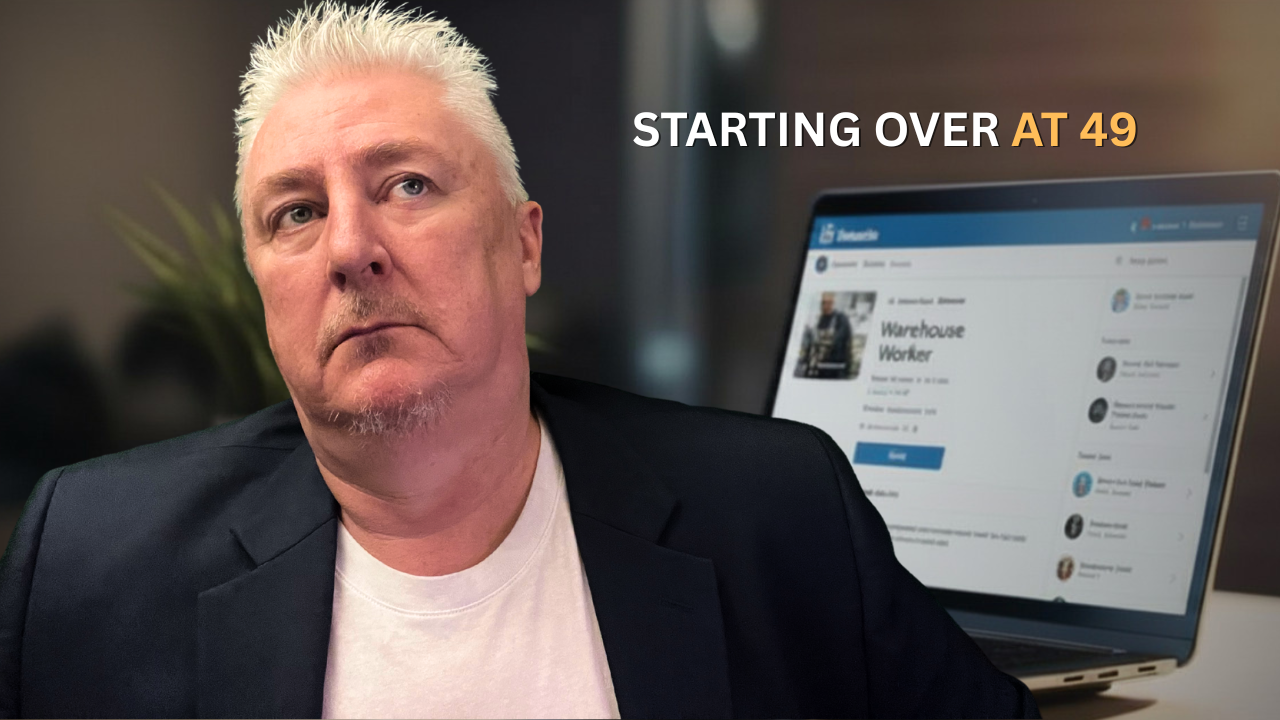
  • Starting Over at 49 Was Harder Than I Expected

    Starting Over at 49 Was Harder Than I Expected

    In the past three years, I’ve applied for more than 2500 jobs.

    That number sounds made up.

    Honestly, if somebody had told me a few years ago that a former regional banking manager with 24 years of experience would end up applying for Amazon warehouse jobs, driving for Uber, uploading résumés at midnight and getting rejected from roles he could probably do blindfolded… I would’ve assumed they’d taken a wrong turn somewhere.

    But here we are.

    And somewhere between application number 700 and application number 1800, I realised modern job searching has become its own form of psychological warfare.

    Upload your résumé.

    Now manually type your résumé back into smaller boxes.

    Write a cover letter.

    Now answer personality questions designed to determine whether you’re passionate enough about moving cardboard boxes.

    Then hear absolutely nothing ever again.

    I suspect I may now hold the unofficial world record for hearing nothing from HR departments.

    The strange part is… I wasn’t always “starting over.”

    I’ve actually done this before.


    Apparently I Have a Habit of Reinventing Myself

    When I left high school in Australia, I completed a four-year chef’s apprenticeship.

    Young Australian chef early in his hospitality career before later transitioning into banking and eventually media and storytelling.
    Before banking, there was hospitality, kitchens, Samoa, and another life altogether.

    I eventually became a sous chef and then landed an executive chef role in Samoa. Later I moved into hotel management in Fiji.

    Then I came back to Australia and realised something uncomfortable:

    I didn’t want to do it anymore.

    So I started again.

    I got a job as a bank teller.

    That somehow turned into a 24-year banking career.

    Over time I worked my way up through management until eventually I became a regional banking manager.

    Australian regional banking manager during his corporate career before leaving banking and later rebuilding his life in Tennessee.
    On paper, this probably looked like success. In many ways, it was.

    On paper, it probably looked like success.

    And financially, in many ways, it was.

    But toward the end, my life had quietly narrowed into work.

    I was commuting three hours a day.

    Working six days a week.

    Seventy-hour weeks had become normal.

    My youngest daughter was three and barely knew me.

    I’d become one of those blokes who spends his entire life providing for his family while somehow barely getting to participate in it.

    Then came the moment that broke me.

    In July 2023, after finally securing a transfer closer to home, my boss had me fire my second-in-charge before I even started. I’d have no backup which meant even longer hours.

    Then I was informed my office was being removed.

    No desk.

    No office.

    After 24 years.

    I quit on the spot.

    No backup plan.

    No next job.

    Nothing.

    At the time, I thought I was escaping burnout.

    In hindsight, I think I was also escaping a version of myself.


    The Part Nobody Talks About

    When most people picture unemployment, they imagine somebody sitting around not wanting to work.

    That wasn’t my reality at all.

    I wanted to work.

    I just didn’t want my entire identity consumed by corporate life anymore.

    When I first moved to America, I actually hoped I could transition into something more meaningful.

    Fraud or Investigations.

    Just wanting to help people without chasing targets and goals.

    Something where experience mattered.

    Instead, after four or five months, I ended up back in retail banking managing a downtown branch.

    And somehow, years later, I found myself sitting in front of LinkedIn at midnight applying for literally everything.

    Insurance roles.

    Fraud teams.

    Case management.

    911 dispatcher positions.

    Local police departments.

    Sheriff’s offices.

    Warehouse jobs.

    At one point I think I applied for enough positions to qualify as a full-time applicant.

    Laptop displaying online job applications late at night during a prolonged period of unemployment and career rebuilding.
    Somewhere along the way, job searching became its own full-time job.

    The strangest part was being simultaneously “overqualified” and unemployable.

    In the very few interviews I actually got, people would ask me why I wanted such “basic” jobs.

    Which is a very polite way of saying:

    “Why is somebody with your background here?”

    The truth?

    Because bills still arrive and kids still need dance lessons.

    Because groceries still cost money and pride doesn’t pay the electricity bill.

    And because somewhere along the way, I realised I no longer cared about status nearly as much as I cared about having a life.


    The Job I Thought Changed Everything

    There was one role that nearly broke me emotionally.

    A position with the Department of Community Services.

    It genuinely felt like the first job I’d ever applied for that aligned with who I actually was.

    I would’ve been working with victims of human trafficking and child abuse. Things I had experience in as a Bank Manager.

    Helping people.

    Something meaningful.

    I had a phone interview.

    Then a panel interview.

    Then I got the call.

    I got the job.

    I accepted it.

    Long government building hallway symbolizing the emotional weight and disappointment of losing a meaningful job opportunity later in life.
    For a little while, I thought I’d finally found something meaningful.

    I remember feeling absolutely ecstatic. Telling people excitedly.

    Honestly, I thought maybe my entire career had been leading toward this.

    Then it disappeared.

    Background checks revealed I didn’t have a university degree.

    Nobody had mentioned one was required.

    I had 24 years of banking leadership experience.

    International experience.

    Extensive management experience.

    The Chief Justice of the Tennessee Supreme Court as one of my references.

    Didn’t matter.

    No degree.

    No job.

    That one flattened me.

    I think that was the moment job searching stopped feeling frustrating and started feeling personal.

    After that, even the thought of another application made me physically recoil.


    The Quiet Shame of Starting Over Later in Life

    I’m 52 now.

    And while nobody will openly say it, I do believe age plays a role.

    Maybe it was age, or maybe it was being Australian.

    Maybe it was experience or that employers saw somebody who’d managed large teams and assumed I’d leave.

    Or maybe they preferred younger graduates, maybe all of it.

    I’ll never know.

    But I do know this:

    At some point, repeated rejection stops feeling professional and starts feeling existential.

    You stop wondering:

    “Why didn’t I get the job?”

    And start wondering:

    “Has the world quietly decided I’m past my use-by date?”

    That’s a hard feeling to explain to people.

    Especially as a man who spent most of his adult life being the provider.

    For years my role was simple:

    Work.

    Provide.

    Keep moving.

    And to be fair, I did that.

    But I also burned myself out doing it. Multiple times.

    I missed huge parts of life while climbing ladders that, in hindsight, weren’t attached to anything meaningful.

    Losing my Mum a few years ago changed something in me too.

    It made me realise life is a lot more fragile than corporations would like us to believe.

    One day you’re working 70-hour weeks.

    The next day the people you spoke to every day disappear.

    That was another strange lesson.

    People you think are your friends at work often aren’t.

    The moment you leave the system, the system moves on.

    Very quickly.


    The Unexpected Part

    Here’s the part I didn’t expect.

    Somewhere inside all this uncertainty, I accidentally found parts of myself again.

    Australian ballroom dancer practicing in Tennessee after rediscovering creativity, movement and identity beyond corporate life.
    Somewhere during all of this, I found my way back onto a dance floor too.

    I rediscovered dance.

    Built a media brand from scratch.

    I taught myself podcasting.

    Audio editing.

    Video editing.

    Writing.

    Graphics.

    Storytelling.

    I spend over 40 hours a week building it now. I’m sitting here at midnight writing this.

    Australian creator and podcaster building a media brand from home in Tennessee after leaving a long corporate banking career.
    Building the brand didn’t just give me work. It gave me a creative life again.

    And the funny part is… it doesn’t feel like work.

    Not because it isn’t real work.

    It absolutely is.

    But because for the first time in a very long time, it actually feels like me.

    Ironically, people often don’t see content creation as a “real job.”

    So these days when somebody asks what I do, I usually say:

    “I’m a writer.”

    That tends to confuse people less than saying:

    “I’m an Australian YouTuber and podcaster living in Tennessee trying to explain American goodbyes to the internet.”

    But while the financial side has been difficult, this period also gave me something banking never could.

    Time.

    I’ve been able to drive my daughters Georgia and Brianna to school.

    Take them to dance.

    Australian father with his daughters in Tennessee after leaving corporate banking and rebuilding a more present family life.
    For years I provided for my family. This period finally let me participate in it.

    Music lessons.

    Do the groceries.

    Be present.

    And honestly?

    I’ve loved it.

    I think somewhere along the way, I realised the version of success I’d spent decades chasing may not actually have been mine.


    So Where Does That Leave Me?

    Recently, after nearly three years of applications and rejection, I was offered a part-time job in a completely unrelated field.

    The interview was quick.

    Simple.

    Human.

    And the next day they offered me the role.

    No endless personality tests, or corporate theatre.

    No twenty-stage recruitment process requiring the emotional resilience of a Navy SEAL.

    Just:

    “You seem capable. We’d like to hire you.”

    Honestly, I felt everything at once.

    Relief.

    Exhaustion.

    Sadness.

    Gratitude.

    Maybe even grief.

    Because part of me wanted the media brand to become fully sustainable before I ever had to go back to regular employment.

    But another part of me knows something important now:

    I don’t actually want my old life back.

    Australian creator in Tennessee rediscovering humour and everyday joy after leaving a long corporate banking career.
    Turns out happiness sometimes looks less like a boardroom and more like bothering skeletons at a Spirit Halloween store.

    Financially?

    Sure.

    There are parts of it I miss.

    But the version of me who only existed to work?

    No.

    I’ve already done that.

    Twice, apparently.

    And maybe that’s the strangest lesson in all of this.

    Careers are chapters.

    Not identities.

    At 18, I thought I was a chef.

    Then at 30, I thought I was a banker.

    At 52, I’m honestly not completely sure what I am yet.

    But I know this:

    I’m bigger than my job title.

    And if this whole experience has taught me anything, it’s that starting over can happen to anyone.

    Even the people who looked successful from the outside.


    Life After Corporate Work

    There were nights during all of this where I’d finish another application, close the laptop, and wonder whether I’d somehow become invisible.

    That was part of the reason I started writing more honestly about identity, migration and life between cultures here on the website. Articles like What America Gets Right, After Living Here for 8 Years and When the Show Becomes the Focus came directly out of this period of my life.

    I think when your career identity starts falling apart a bit, you begin trying to make sense of yourself in other ways.

    For me, that became storytelling.

    Podcasting.

    Writing.

    And weirdly enough… ballroom dancing.

    Going back to dance after all these years genuinely helped my mental health more than I expected. There’s something strangely grounding about having to focus on timing, movement and not tripping over your own feet for ninety minutes.

    Honestly, this whole brand exists because I finally stopped pretending work was the only meaningful thing about me.

    If you’ve found yourself in that strange middle ground too — between careers, identities, countries, expectations, or versions of yourself — you might also connect with some of the other stories I’ve written:

    And if you prefer listening while driving, walking or pretending to exercise like I do, the podcast lives here too:

    From Down Under to Down South Podcast

    You’ll also find it on iTunes and Spotify or wherever you listen to podcasts.

    These days I’m still building.

    Still figuring things out.

    Still trying to create something sustainable.

    But for the first time in a very long time, I actually feel connected to the life I’m living while I’m living it.

    And that feels worth something.

    If you’d like to support the brand while I continue building all this from Tennessee, you can also shout an Aussie creator a coffee here:

    Hoo roo maties.

  • The Small Things Australians Miss After Moving to America

    The Small Things Australians Miss After Moving to America

    You think the big things will be what you miss when you move overseas.

    Family. Friends. Familiar places.

    And you do miss those things.

    But honestly… some of the strongest homesickness hits come from standing in an American supermarket looking for chicken salt.

    Or opening a packet of “Australian-style” lollies and realising they just don’t taste right.

    I’ve lived in America for around eight years now, and over time I’ve realised that home slowly becomes a collection of tiny things.

    Little routines. Familiar foods. Smells. Phrases.

    Small comforts that quietly remind you who you are.


    Australian food care packages for expat overseas
    A typical care package from Australia never lasts long in our house.

    Vegemite Becomes a Survival Item

    We go through a lot of Vegemite in our house.

    We normally keep four or five jars in the cupboard at any given time.
    I have it most mornings on toast, and both of our girls love it too. Nikki’s mum sends it to us in bulk from Australia, so at any given moment there are usually four or five jars sitting in the cupboard like emergency supplies.

    If we ever got down to one jar, I’d probably start rationing it.

    Americans are fascinated by Vegemite too. Whenever friends come over, it eventually turns into:
    “Alright then… let’s see you try it.”

    The reactions are usually dramatic. But for Australians overseas, Vegemite isn’t really about the taste anymore. It’s familiarity. It’s routine. It’s sitting at the kitchen table in the morning feeling, for a few minutes at least, like you’re back home again.

    I talked more about the strange experience of keeping an Australian identity while living overseas in this article:


    Allens snake lollies

    Australian Road Trips Just Feel Different

    One of the things I never expected to miss was Australian road trip culture.

    Growing up, road trips for us usually meant driving from Canberra to the coast, or inland to see Nikki’s family in Griffith. And before every trip, there was always the same ritual.

    Fill up the car.

    Go into the servo.

    Buy a bag of Allen’s snakes, maybe some other lollies, and drinks for the drive.

    There was something oddly comforting about it.

    Now, in America, we’ve replaced that ritual with Buc-ee’s stops.

    And honestly? Buc-ee’s is incredible.

    Australia has absolutely nothing like it.

    But even now, grabbing nuts or lunch at Buc-ee’s still doesn’t quite hit the same emotional note as buying a bag of snakes before heading down the highway in Australia.

    Part of that is because the lollies here just aren’t the same. The snakes are too sweet. Even the Cadbury chocolate tastes different because the version sold here is British Cadbury, not Australian Cadbury. You don’t realise how specific your memories are until you try to recreate them somewhere else.

    Every now and then we’ll order a mixed Australian lolly box online just because we are feeling homesick.

    • I’ve spoken before about how living overseas slowly changes the way you think, sound and even remember home, the below video is a great example of that.

    Care Packages Mean More Than You’d Think

    Care packages from Australia hit differently when you live overseas.

    Nikki’s mum sends boxes over for us and the girls, usually packed with Australian food, little gifts, chocolates, random surprises… and somehow it always feels bigger than just “stuff.”

    australian care package sent to expat overseas

    One year my old workplace in Australia sent us a huge Christmas box filled with Australian snacks, games, soccer balls, all sorts of things.

    It honestly felt like someone had posted a piece of Australia directly to our front door.

    And for the girls, it’s not even necessarily the food they love most.

    It’s knowing that Nanna packed it.

    That connection matters.

    I will admit though that they always beat me to the Caramello Koalas, they barely last a few days.


    Australian Bakeries Overseas Are Usually Disappointing

    This might upset a few people, but Australian bakeries overseas are almost always disappointing.

    We’ve been to Australian bakeries in America — including one in Atlanta that’s pretty good — but it’s still not quite the same.

    There’s also an Australian-owned café near us in Tennessee that sells meat pies and sausage rolls.

    Again… not even close to home.

    The funny thing is, the first thing I want when I land back in Australia isn’t anything fancy.

    It’s a bakery stop.

    A sausage roll.

    A meat pie.

    A vanilla slice.

    And an iced coffee Dare.

    That’s home.

    I make my own sausage rolls here now because sometimes it’s easier than trying to recreate the feeling through substitutes. We buy Jamaican meat pies and chicken pasties occasionally too, and while they’re definitely not Australian pies, they scratch a similar itch. Close enough becomes an important concept when you live overseas.


    Smells Become Emotional Time Machines

    Smell might actually be the strongest trigger of all.

    The bush after rain.

    Gum trees.

    The ocean.

    Jervis Bay National Park Australia

    Sunscreen.

    That hot Australian air right before a storm rolls in.

    Sometimes you’ll randomly smell something in America that takes you straight back to Australia for half a second before reality catches up again.

    It’s strange how powerful that can be. Even thinking about it now makes me a bit homesick.


    Watching Your Kids Grow Up Between Two Cultures

    One of the strangest parts of living overseas long term is watching your kids slowly become a blend of both countries.

    We still celebrate Australia Day at home, although having a barbecue in January is a bit harder when there’s snow outside in Tennessee.

    I try teaching the girls Aussie slang too.

    “How’s it goin’ mate.”
    “Yeah nah.”
    “No worries.”

    And Georgia especially will switch between Australian and American words or accents depending on who she’s talking to.

    It’s fascinating to watch.

    What I’ve found particularly interesting is that the girls don’t necessarily see Australia and America the same way I do. For me, Australia will always be home in some sense. For them, America is the place they’re growing up, making memories and building their own identities. That difference really struck me one day, and I wrote about it in The Moment I Realised My Children Belong in America.

    Because in some ways, that’s exactly what living overseas feels like yourself. You slowly become a mix of places.


    The Small Things Matter More Than You Expect

    I think that’s the biggest surprise about moving overseas.

    Home stops being one giant thing.

    It becomes little things.

    A jar of Vegemite in the cupboard.

    A care package from family.

    A bag of snakes before a road trip.

    A bakery stop after a long flight.

    A phrase your kids still say with an Australian accent.

    Tiny things that remind you who you were before life got complicated.

    And maybe that’s why Australians overseas hold onto those small comforts so tightly. Because sometimes the smallest things are the ones that make a place feel like home again.


    If you enjoy these Australia vs America reflections, I also talk about them regularly over on the podcast and YouTube channel:

  • A Kentucky Weekend: Dance, Derby & the Moments You Don’t Plan

    A Kentucky Weekend: Dance, Derby & the Moments You Don’t Plan

    We travelled to Louisville this week for a dance competition.

    That was the plan, at least.

    But I’ve noticed something about these weekends.

    They rarely stay as simple as the reason you go.

    Our weekend in Louisville, Kentucky, happened to coincide with the buildup to the Kentucky Derby. What started as a family trip for a dance competition became an unexpected glimpse into the city’s traditions, its pride in the Derby, and the little moments that make living in America so interesting to an Australian.


    The Drive In — When a City Takes Over

    We arrived just before the lead-up to the Kentucky Derby.

    And the city already felt like it was gearing up.

    Traffic backed up everywhere.
    Police on the roads.
    That quiet sense that something big was about to happen.

    We were still twenty minutes out and:

    • the GPS kept changing
    • the girls were asking how much longer every six minutes
    • Nikki had moved into that calm voice that means she’s not calm
    • and I was confidently choosing alternate routes despite having no idea where I was going

    Which, as a husband and father, is one of the more pointless confidence moves available.


    When a Place Has Its Own Identity

    We were there for dance.

    Louisville was there for Louisville.

    And I liked that.

    America does this well.

    When something matters locally, it doesn’t stay contained.
    It spills into the streets.

    You feel it—even if you’re not part of it.


    The Fort Knox Moment

    Driving through, we saw signs for Fort Knox.

    For most people here, that’s just another exit.

    For me growing up in Australia, it was one of those names that felt almost mythical—
    like Hollywood or Wall Street.

    Seeing it casually written on a highway sign made me laugh.

    Only in America does a dance weekend casually involve Fort Knox.


    A City with Weight

    Then there were the bridges over the Ohio River.

    I’ve always liked bridges.

    They make a place feel like it matters.

    Louisville has that solid feel to it—
    river, steel, history.

    It feels like a place shaped by doing things, not just talking about them.


    Owning Greatness

    The Muhammad Ali murals stood out straight away.

    Louisville doesn’t hide who came from there.

    It claims him.

    And I respect that.

    Australia can be a bit different—we admire people, but we also like bringing them back down to earth.

    America seems more comfortable simply saying:

    “This person was great.”

    There’s something refreshing in that.


    A Side Trip with Brianna

    While Georgia was tied up with competition, Brianna and I explored downtown.

    Those little side moments with your kids matter more as you get older.

    Less about where you are.
    More about being there together.


    Turning Culture Into Experience

    We stopped at the Louisville Slugger Museum & Factory.

    And it’s a very American idea.

    Take something simple—like a baseball bat—
    and turn it into something you can walk through.

    Even without growing up with baseball, I enjoyed it.


    College Sport — Still Hard to Process

    The scale of college sport still surprises me.

    Massive stadiums.
    Serious infrastructure.

    Back home, it exists.

    Here, in some places, it feels like something much bigger.


    Bourbon and Unexpected Conversations

    That night, I ended up at the hotel bar with another dance dad.

    And got an unexpected introduction to Kentucky bourbon.

    Not casually.

    Properly.

    I nodded through most of it, adding expert commentary like:

    “Yeah… that’s smooth.”

    Completely useless.

    Still appreciated.


    What I Noticed About People

    People here are generous with what they love.

    No gatekeeping.

    Just:

    “Here, try this.”
    “Let me tell you why this one matters.”

    That stays with you.


    The Moment That Actually Mattered

    But the real highlight was Georgia.

    She danced her best solo of the year.

    And placed seventh out of twenty.


    Parents see what sits behind a performance.

    The practice.
    The frustration.
    The doubt.

    And then one day, it clicks.

    Fifteen seconds in, I knew.

    She looked calm.
    Settled.
    Like herself.

    That’s the moment.


    Dance Competitions in America


    Not Trying to Be Someone Else

    Georgia dances lyrical.

    Slower. More controlled. More expressive.

    Often up against louder, faster routines.

    So placing felt even better.

    She wasn’t trying to be someone else.


    Cracker Barrel and a Strange Thought

    On the way home, we stopped at Cracker Barrel.

    Sitting on the porch, something crossed my mind.

    This feels like home.


    Which is a strange thought for someone born in Australia.

    But maybe home changes.

    Maybe it grows.


    Of Course We Stopped at Buc-ee’s

    And naturally, we stopped at Buc-ee’s.

    Because no road trip here feels complete without it.


    You can fuel the car, buy snacks, grab merchandise…

    …and somehow leave with more than you planned.

    Every time.


    Closing Reflection

    We went for dance.

    But we came home with more.

    That’s something I keep noticing about life here.

    You head somewhere for one reason…

    …and the place adds its own chapters.

    A conversation.
    A moment.
    A feeling you didn’t expect.

    That’s usually how the best weekends happen.

    Not through grand plans.

    Just ordinary things unfolding well.


    For more reflections like this, tune in to the weekly podcast.


    🔗 Internal Links

    You might also enjoy:


  • What Americans Always Ask Australians (And What They’re Really Getting At)

    What Americans Always Ask Australians (And What They’re Really Getting At)

    There’s a moment that happens pretty quickly when you move overseas.

    Someone hears your accent…
    pauses for half a second…
    and then decides to ask something.

    Not always the same thing.

    But close enough.

    After a while, you start to recognise the pattern —
    and not just the questions themselves,
    but it’s what’s sitting underneath them.

    Because it’s not really curiosity about Australia.

    It’s someone trying to work out…
    who you are.

    Where you fit.

    What’s different.
    What’s familiar.

    And I’ve realised over time —
    I’ve done exactly the same thing in reverse.


    The animal question always comes first

    It usually opens with some version of:

    “Doesn’t everything in Australia want to kill you?”

    Spiders. Snakes. Sharks.

    Sometimes all three in the same sentence.

    And the answer is… not really.

    We’re not navigating daily life like it’s a survival show.

    But there are small habits that probably sound strange if you didn’t grow up with them.

    Like checking your shoes before putting them on.

    Quick shake. Done.

    It’s not fear.
    It’s just… normal.

    What surprised me later was realising how relative that is.

    The first time I saw a bear here in Tennessee, I stopped and stared like it was something out of a documentary.

    Meanwhile, everyone else just… kept moving.


    The moment your accent stops working

    There’s a second phase that comes after the animal question.

    It’s quieter.

    Usually just one word:

    “Huh?”

    Drive-throughs are where it shows up the most.

    Something about the speaker, the speed, the expectation — it just doesn’t line up.

    You repeat yourself. Slow it down. Try again.

    Sometimes it clicks.

    Sometimes it doesn’t.

    And occasionally… it’s easier to change restaurants than change your accent.

    It’s not frustration, really.

    More like a reminder that language isn’t just words — it’s rhythm, tone, familiarity.


    Then come the questions that reveal assumptions

    Some questions aren’t really about information.

    They’re about what people have already been told.


    “Do you celebrate Thanksgiving?”

    We don’t have anything like it in Australia.

    But it’s become one of my favourite parts of living here.

    There’s something about the simplicity of it.

    No presents. No expectations.

    Just food, time, and people staying a little longer than usual.

    The conversations tend to drift a bit deeper.

    The pace softens.

    It feels… intentional.

    It’s one of those things you don’t realise you’re missing until you experience it.


    👉Read more: Is American Friendliness Real or Fake?

    👉 The Ultimate Thanksgiving Cookbook


    “Does the water spin the other way?”

    This one sits somewhere between science and myth.

    And for a moment, it actually made me question my own memory.

    Like… have I just never noticed this?

    But no.

    Water just goes down the drain.

    Same as everywhere else.

    I’ve found the easiest way to handle it is confidence.

    “It’s the Coriolis effect.”

    No explanation.

    Just enough certainty to move things along.


    “Do you speak English in Australia?”

    I usually say:

    “Nah, picked it up when I got here.”

    There’s always a brief pause while that lands.

    And then the realisation.

    But in fairness — it goes both ways.

    There are accents here I still struggle with.

    Moments where I’ve had to stop and think:

    “…that’s English, is it?”

    It’s not about intelligence.

    It’s just exposure.


    The question that’s really about you

    At some point, the tone shifts slightly.

    The question becomes more personal.

    “Why would you move here from Australia?”

    Sometimes I joke about the emu war.

    Sometimes I don’t.

    Because the real answer isn’t dramatic.

    I just wanted to experience something different.

    But living somewhere else does something you don’t expect.

    It makes you notice things you never paid attention to before.

    About the place you moved to.

    And about the place you came from.


    👉 Read more: This Week in America: Warmth, Friendship & Cultural Differences


    The version of Australia people carry in their head

    A lot of the questions come from a very specific picture of Australia.

    Hot. Flat. Beaches. Outback.

    So when you mention snow… it throws people.

    But it does snow.

    Not everywhere. Not often.

    But enough to shift that image slightly.

    Australia isn’t one thing.

    It’s just the version people have seen is usually the simplest one.


    And then there are the lines that never quite go away

    “Put a shrimp on the barbie.”

    It still comes up.

    Usually with a smile.

    And to be fair… I get it.

    Every country has those phrases that travel further than reality.

    I’ll normally just say:

    “We call them prawns.”

    And that’s usually enough.


    What I’ve come to realise

    After a while, the questions matter less.

    You stop hearing them as literal.

    And start hearing what they’re really about.

    Someone noticing something unfamiliar…
    and trying to make sense of it.

    The same way I’ve done here.

    Just in reverse.


    🎬 If you prefer watching this instead


    A quieter reflection

    If you enjoy these small moments — the things you don’t notice until you do —
    I talk about them more in my weekly podcast:

    👉 This Week in America

    It’s a bit looser.
    More like a conversation than a video.


    Final thought

    Living overseas doesn’t change who you are.

    It just removes the shortcuts.

    And suddenly, things you never questioned before…
    become visible.

    Thanks for reading. Hoo roo maties.


  • Representing Australia in Tennessee Felt Like Home

    Representing Australia in Tennessee Felt Like Home

    Some weeks don’t arrive with one big headline.

    They come as a collection of smaller moments. Things that seem ordinary while they’re happening, then linger afterward. A conversation here. A surprise there. Something familiar appearing in an unexpected place.
    That was this week for me.

    Not dramatic. Not life-changing.

    Just quietly revealing what it actually feels like to live in America as an Australian.


    The School Night That Brought Australia to Tennessee

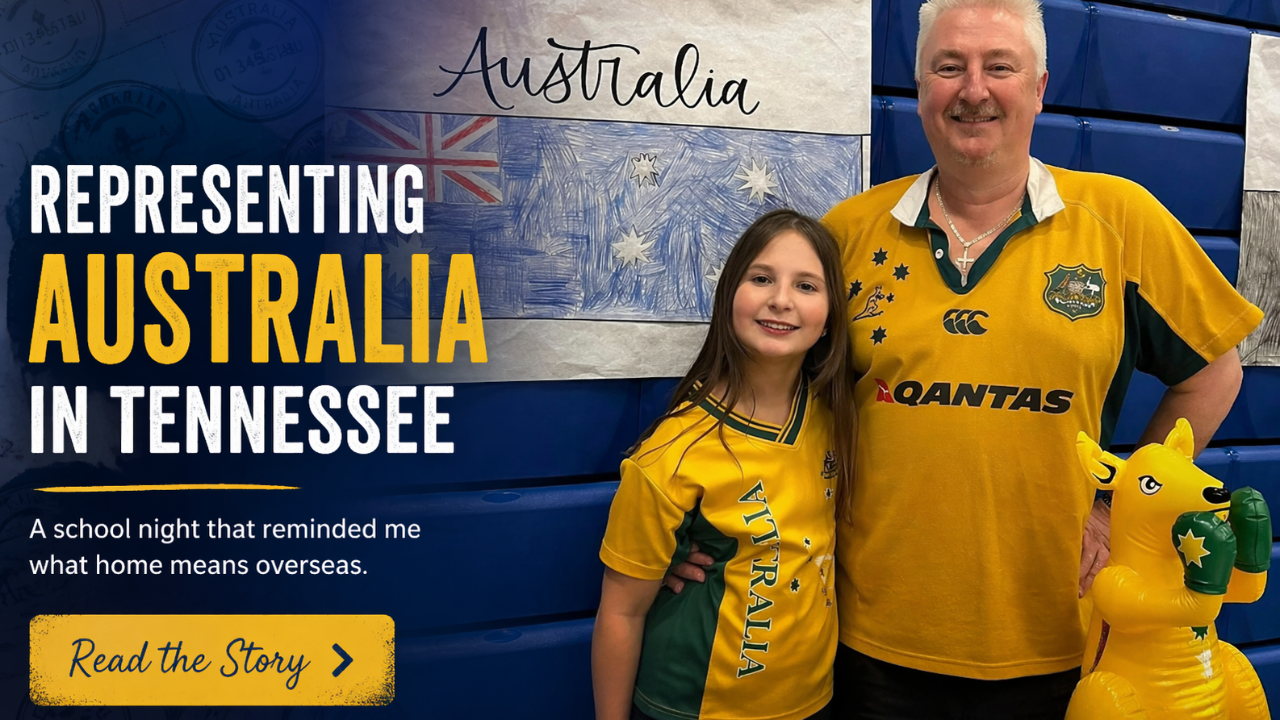
    Recently, Georgia and I took part in her school’s very first international night.

    Around fifteen countries were represented. Booths from places like Uzbekistan, Samoa, Guatemala, India… and there we were for Australia.

    It felt a little surreal standing in a Tennessee school gym representing home.

    What We Brought to the Australian Booth

    We tried to keep it properly Australian:

    • Sausage rolls
    • Vegemite sandwiches
    • Fairy bread
    • Tim Tams
    • Violet Crumble

    Amazon has a great assortment of Aussie items these days in the US:

    Each child had a small passport and moved from country to country collecting stamps.

    It was a simple idea, but a brilliant one.

    They were learning about the world without it feeling like learning.

    That’s usually when education works best.


    Tim Tams Were the Stars of the Night

    The hall started off quiet.

    Then, almost without warning, it filled up.

    Families everywhere. Kids racing around with passports. Parents chatting. Music and movement in every direction.

    We ran out of food halfway through, which I took as a fairly strong sign we’d done alright.

    And yes — the Tim Tams disappeared at alarming speed.

    I may need to contact Arnott’s next year regarding sponsorship opportunities.


    Talking About Australia in the Middle of Tennessee

    What I enjoyed most wasn’t the food.

    It was simply standing there and talking about Australia.

    Some people had visited.
    Many wanted to go.
    Some wanted to discuss cricket.

    And that always catches me off guard a bit.

    You don’t expect to be having a cricket conversation in Tennessee.

    Yet there I was.

    That’s one of the lovely things about living overseas — home appears in strange places.


    The Unexpected Samoan Moment

    At one point I ended up speaking some Samoan with the neighbouring booth.

    That took me back instantly to the years I lived there.

    Funny how language works like that.

    You can go years without using something… then suddenly it returns as if it had only been waiting quietly in the corner.

    They were so excited they called their father over because there was “this guy here” who had lived there and could speak the language.

    For a moment, Tennessee disappeared.

    I was somewhere else entirely.


    Identity Carries Weight

    Our booth sat next to Belgium.

    The couple running it weren’t actually Belgian.

    She was from Belarus, but with everything happening in the world, she didn’t feel comfortable representing that nationality publicly right now.

    So they chose Belgium.

    That stayed with me.

    Because where you’re from can carry more emotional weight than people realise. Sometimes pride. Sometimes pain. Even complexity.

    Identity isn’t always simple.


    Bluey, Bingo and Vegemite Reactions

    Georgia disappeared quickly once her friends arrived, which felt extremely on-brand for a child whose father was left doing passport duties for hundreds of children.

    We also had Bluey and Bingo there.

    That may have been the most popular part of the entire booth.

    And surprisingly, plenty of people liked the Vegemite.

    Though not everyone.

    There were still a few faces that suggested immediate regret, followed by a quiet search for the nearest bin.


    What It Felt Like

    I walked away thinking how much I enjoyed representing Australia.

    Not just missing it.

    Not just talking about it.

    But sharing it.

    There’s something grounding about that when you live overseas.


    Georgia’s Sleepover and a New Normal

    Not long after that, Georgia had a sleepover.

    There was:

    • an American girl
    • a Polish girl
    • a Spanish girl
    • and our Aussie girl

    All just hanging out together as if it were the most normal thing in the world.

    Because to them, it is.

    No labels. No special meaning.

    Just friends.

    When I was growing up in Australia, you noticed where people were from more. Not negatively — it was simply more visible.

    For this generation, diversity often isn’t something they comment on.

    They’re just growing up inside it.

    And there’s something genuinely beautiful about that.


    Easter in America Still Feels Different

    Another reminder of cultural difference came through Easter.

    Back home in Australia, Easter often feels like the country collectively slows down.

    Good Friday. Easter Monday. Shops closed. A pause in rhythm.

    Here in America, much of life keeps moving.

    Banks open. Businesses open. Things rolling on.

    For a place where faith can be very visible publicly, that contrast still feels interesting to me.

    Sometimes what stands out most in another country is what doesn’t happen.


    The Ice-in-Drinks Theory

    A podcast listener messaged me after I mentioned how much ice Americans use in drinks.

    They said:

    “It’s basically a scam.”

    And once that idea enters your mind, it’s hard to ignore.

    You take a few sips. Look down.

    And realise you’re mostly holding frozen optimism.


    The America You See vs The America You Live

    People back home sometimes ask how we can live here.

    Because the America shown in the news can feel intense, loud and relentless.

    But day-to-day life is mostly school runs, groceries, dance classes, errands, dinner, routines.

    Normal life.

    That’s probably the hardest thing to explain from a distance.

    Not that difficult things never happen.

    Just that everyday life rarely looks like headlines.


    Final Thought

    Living overseas has taught me that countries are never fully understood through headlines, stereotypes, or internet arguments.

    They’re understood through ordinary moments.

    School nights. Snack tables. Children laughing. Unexpected conversations. Shared routines.

    Quiet things.

    And often, those quiet things mean the most.


    Related Reads

    Why Are Americans So Polite? An Australian Explains the Cultural Difference
    Why American Goodbyes Feel Faster Than Australian Goodbyes


    Thanks for reading. Hoo roo maties.


  • What It’s Like Living in America (Tornado Warnings, NASA & Daily Life)

    What It’s Like Living in America (Tornado Warnings, NASA & Daily Life)

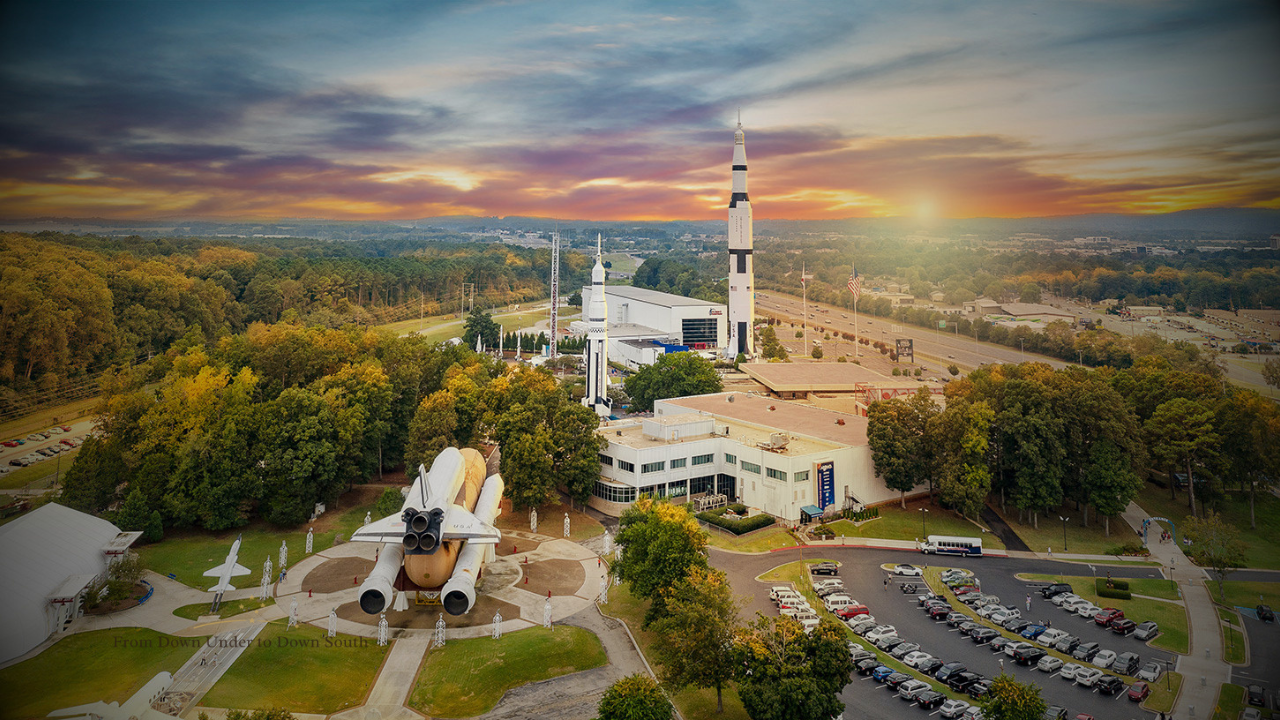
    Living in America as an Australian comes with moments you don’t expect — from tornado warnings to standing under a NASA rocket.

    This week had two of them.

    One where we were standing underneath a rocket that took people to the Moon…
    …and another where we were sitting downstairs close to midnight, waiting out a tornado warning.

    And somehow… both of them felt normal.

    That’s probably the part I wouldn’t have expected when I first moved here.


    The Quiet Shift You Don’t Notice

    When you first arrive somewhere new, everything stands out.

    The way people speak.
    How things are done.
    The way everyday interactions happen.

    You notice all of it.

    You’re constantly comparing it to what you’re used to.

    And in those early months, you feel very aware that you’re somewhere different.

    But over time… that awareness softens.

    Not all at once. Just gradually.

    You stop questioning as much.
    Things that once felt unusual start to feel expected.
    And you don’t really notice the shift happening.

    It just sort of… creeps in.

    Until you get a week like this—where a few moments line up—and you suddenly see it again from the outside.

    Waiting Out a Tornado (Like It’s Just Part of the Week)

    We had our first tornado warning of the season the other night.

    Late. Around midnight.

    There’s something about that time of night that changes everything.

    The house is quiet.
    The day’s done.
    Kids are asleep.

    And then suddenly… you’re waking them up.

    Not in a panic—but not casually either.

    There’s a tone to it.

    “Alright… let’s head downstairs.”

    We’ve done it before. The girls know what’s going on. They know where to go.

    And that’s the part that would’ve surprised me the most years ago—how quickly something like that becomes familiar.

    We went down into the safe room.
    Turned on the live coverage.

    And that’s another thing about storms here…

    You don’t just hear about them—you watch them.

    In real time.

    You see the storm moving across the map.
    You hear street names.
    Nearby towns.
    You listen for anything close to you.

    And you just… wait.

    Not panicking.
    But not relaxed either.

    Just aware.

    Even our cat, Bluey, came down with us—walking between the girls like he was checking on everyone.

    That moment… sitting together… waiting…

    It slows everything down.

    And then it’s over.

    Back upstairs.
    Back into bed.
    House quiet again.

    Just another part of life here.


    Tennessee Weather Has No Interest in Easing You In

    What made it even stranger…

    Two days earlier, I was in shorts.

    Sunday — warm.
    Sunday night — tornado warning.
    Monday — snow and ice.

    And no one really reacts like it’s dramatic.

    It’s just… the weather.

    Tennessee doesn’t ease you into anything.
    It just changes its mind.

    And people here just adjust.


    The Word “Reckon” (And the Things That Quietly Overlap)

    Someone mentioned in the comments recently that the word “reckon” gets used a lot here in the South.

    That made me pause.

    Because back home in Australia, it’s just… normal.

    “I reckon…”

    You don’t think about it.

    And then hearing it here—in a completely different part of the world—used in a similar way…

    It’s one of those small moments where things unexpectedly line up.

    Where you realise…

    Not everything is as different as it first seemed.


    Standing Under a Rocket That Went to the Moon

    A few days earlier, we’d taken a trip down to Huntsville, Alabama.

    To visit the U.S. Space & Rocket Center.

    You walk in… and there it is.

    A Saturn V rocket.

    And it’s hard to explain the scale of it until you’re standing underneath.

    It just keeps going.

    Section after section.
    Stage after stage.

    And you realise…

    This is what took people to the Moon.

    And around you?

    Families walking past.
    Kids running around.
    People stopping for photos.

    It’s not treated like something distant or untouchable.

    It’s just… there.

    Part of where you are.

    That’s something I’ve noticed living here—you don’t just learn about history…

    You live around it.

    Of Course There Was a Buc-ee’s Stop

    On the way home, we stopped at Buc-ee’s.

    Because you don’t not stop at Buc-ee’s.

    Teriyaki jerky again.

    Every time.

    If you want to try this, you can buy it from Amazon, you’ll also need some of their famous Beaver Nuggets to go with it.


    When Costco Flips on You

    We were in Costco the other day.

    And I realised something had flipped.

    Back in Canberra, we’d get excited about American products.

    Different brands.
    Different packaging.
    Things we didn’t normally see.

    Now?

    We’re in Tennessee…

    And it’s the Australian lamb that stands out.

    That’s what catches my eye.

    That’s what feels different.


    Watching Australia From the Other Side of the World

    Australia played Japan in the Women’s Asian Cup Final recently.

    6am start here in Nashville.

    And just trying to watch it…

    Subscriptions. Platforms. Apps.

    Back home, it would’ve just been on.

    No thought required.

    But I was up for it.

    Because those moments…

    They don’t change.

    The anthem.
    The teams walking out.

    It still hits the same.

    Maybe even more.


    What Changes… and What Doesn’t

    Living here changes a lot of things.

    What feels normal.
    What stands out.
    Things that feel familiar.

    But something I’ve noticed over time…

    The people I tend to connect with most here…

    Often aren’t from here either.

    Different countries. Different backgrounds.

    But there’s a shared understanding.

    They’ve had to learn a place… not just grow up inside it.

    And maybe that’s part of it.

    Because even as things shift…

    There are moments where you realise:

    That part of you hasn’t gone anywhere.

    It just shows up a bit differently now.


    Why American Goodbyes Feel Faster Than Australian Goodbyes

    Why Americans Say “You’re Welcome” So Often


    Final Thought

    What becomes normal… isn’t always what you expect.

    Sometimes it’s tornado warnings at midnight.

    Sometimes it’s standing under a rocket that went to the Moon.

    And sometimes…

    It’s just realising you didn’t notice the change happening at all.

    That was this week in America.


  • American School Attendance Rules Surprised This Australian Dad

    American School Attendance Rules Surprised This Australian Dad

    This week, something happened that made me pause.

    Not because it was dramatic.
    And not because anyone had done anything wrong.

    It was just… one of those moments where two different systems quietly collided.

    Having children in American schools has introduced me to some unexpected differences between Australia and the United States. One of the biggest surprises has been how school attendance is recorded, particularly when it comes to unexcused absences, arriving late or leaving early. A recent email about my daughter’s attendance made me realise just how procedural the American school system can feel.


    The Email

    Earlier this week, I received an email from Georgia’s school.

    The subject line was about attendance.

    Apparently, she’s had five unexcused absences this year—and because of that, I now have to attend a meeting with the principal and the school counsellor.

    The interesting part is… I don’t actually know what the five absences are yet.

    That comes later. In a letter. From the state.

    The email itself didn’t explain anything. It just said we’d crossed a threshold—and now a conversation needs to happen.

    And when I read it, my first reaction wasn’t confusion.

    It was recognition.


    I Knew This System Immediately

    I spent 25 years working in banking.

    And almost instantly, I knew exactly what I was looking at.

    This wasn’t really a school system.

    It was an HR system.

    Track the events.
    Log them.
    Wait for the threshold.

    Then trigger the process.

    • Informal conversation
    • Formal conversation
    • Documentation

    Except this time… the “employee” is ten years old.

    And if you’ve ever worked inside structured systems like that, you’ll recognise the feeling straight away — that moment where you stop and go, ah… I know exactly how this is going to play out.

    This Is Something I’ve Noticed More Over Time

    This wasn’t the first time I’d had that feeling.

    It’s something I’ve noticed more and more the longer I’ve lived in America — the way everyday situations are quietly shaped by systems underneath.

    Because it’s the same underlying pattern — structure first, human interpretation second.

    If you’ve seen that video, you’ll recognise it here too.


    What Actually Counts as “Absent”?

    Now I do know a couple of the days they’re probably referring to.

    One of them was when I picked Georgia up early so we could drive five hours to a dance competition.

    Those competition weekends are a much bigger commitment than most people realise. I’ve written about the time, travel and expense involved in The Hidden Cost of Competitive Dance in America.

    If you’re a dance parent, you’ll recognise that rhythm immediately.

    Long drives. Early starts. Costumes packed the night before.

    If you’re in that world, this is actually one of the best things we’ve ended up relying on for comp weekends:

    Because none of that fits neatly into a school system.

    But the system doesn’t see any of that.

    That absence wasn’t excused.


    The Five-Minute Absence

    Another one?

    She arrived about five minutes late one morning.

    At her school, if you’re late, you don’t just walk into class—you check in through the front office.

    And once that happens…

    It’s logged.

    Now that five-minute delay sits in the same column as a full-day absence.

    Not because it’s the same thing.

    But because the system records entries—not meaning.


    Where It Starts to Feel… Mechanical

    And this is the part that stood out.

    The system isn’t designed to interpret context.

    It’s designed to record events.

    • Late arrival → logged
    • Early departure → logged
    • Absence → logged

    Once the number hits a certain point…

    The process activates.

    That’s when the email arrives.

    That’s when the meeting gets scheduled.

    And suddenly something that feels like normal life…

    Feels procedural.


    I’ve Seen This Before — In a Completely Different Way

    Earlier this year, I applied for a role with Child Protective Services.

    It was something I genuinely felt drawn to.

    After years in banking — dealing with fraud, scams, and vulnerable customers — it felt like a natural extension of that work.

    The idea of helping protect children felt meaningful.

    I went through the process.

    And I was offered the job.

    But there was one problem.

    I don’t have a university degree.


    When Systems Ask a Different Question

    It didn’t matter what I’d done.

    It didn’t matter the experience.

    Because the system wasn’t asking:

    “What has he done?”

    It was asking:

    “What box does he tick?”

    And once again…

    I recognised the structure immediately.


    This Is What Living Between Systems Feels Like

    This is something that becomes clearer the longer you live between countries.

    Not the obvious differences.

    The subtle ones.

    Because this is exactly what that feels like.

    Not big cultural shocks.

    Just small, revealing moments.


    It’s Not About Right or Wrong

    To be fair—these systems exist for good reasons.

    Schools need to track attendance.

    There are real situations where children are missing school for serious reasons.

    Structure helps identify those situations.

    The same way hiring requirements create consistency.

    It’s not broken.

    It’s just… structured.


    But It Creates These Moments

    Because every now and then…

    The system and real life don’t quite line up.

    A five-hour drive to a dance competition becomes an attendance issue.

    A five-minute delay becomes an absence.

    And normal life starts to feel like it’s being processed.


    If You’ve Noticed This Too

    This is one of those patterns that keeps showing up in different ways.

    👉 You’ll see the same idea here:
    American Goodbyes

    👉 And here:
    American Politness

    Different situations.

    Same underlying structure.


    A Quick Note

    If you enjoy these kinds of reflections — the small, in-between moments that don’t usually get talked about —

    you can support the channel here:

    👉 https://buymeacoffee.com/fromdownundertodownsouth


    One of Those “Ah… I See” Moments

    Nothing dramatic happened this week.

    No one got in trouble.

    It was just the system…

    Doing exactly what it was designed to do.

    Recording events.
    Triggering processes.
    Asking for a conversation.

    And every now and then—

    You see that system clearly enough…

    That it makes you stop.

    And think.


    👉 If you prefer listening instead of reading, the full podcast lives here:
    https://fromdownundertodownsouth.com/listen/