Tag: Expat life

  • Can You Love Your New Country Without Loving Your Old One Less?

    Can You Love Your New Country Without Loving Your Old One Less?

    AUSTRALIAN EYES ON AMERICA


    There is a strange assumption that sometimes follows you when you move to another country.

    At some point, apparently, you are supposed to choose.

    If you say too many nice things about the country you left, someone wonders why you left it.

    If you say too many nice things about the country you moved to, someone wonders whether you’ve forgotten where you came from.

    I’ve come across versions of both.

    After eight years living in the United States, I’ve become very comfortable saying that I love America.

    I chose to live here. I became an American citizen. I’m raising my children here. I’ve built a life here. There are things about American culture that I’ve genuinely come to admire, and many of them have become the subjects of the videos and articles I make.

    None of that has made me less Australian.

    That’s the part I think people sometimes misunderstand. Loving one country doesn’t mean you have to love the other one less.


    I Didn’t Exchange Australia for America

    When you immigrate, there is a tendency for people to think about the move as a replacement.

    Old country out. New country in.

    But that isn’t how it has felt to me.

    Australia is still there in so much of who I am.

    It’s in my accent, despite whatever America has been doing to it lately. My sense of humour, the food I occasionally find myself desperately searching for. The expressions that come out of my mouth without me even noticing them.

    The experiences that shaped me long before I ever imagined living in Tennessee.

    America didn’t erase any of that.

    It added to it. I think that distinction matters.

    Canberra Australia and Lake Burley Griffin balloon festival
    Australia is still part of who I am, even after eight years of building a life in America

    Psychologists actually have language for this.

    In research on immigration, assimilation generally means adopting the new culture while gradually letting go of your attachment to the culture you came from.

    Integration is different. It means becoming part of your new culture while still maintaining your connection to the old one.

    Research from the American Psychological Association suggests the two identities don’t have to compete. Immigrants can adapt to life in a new country while maintaining a strong connection to their heritage, and research has found benefits to being able to maintain both.

    In other words, the science doesn’t require me to hand in my Vegemite before I’m allowed to enjoy biscuits and gravy. Which is quietly reassuring.


    Somewhere Along the Way, America Became Home Too

    This is where things become more complicated than simply saying, “I’m an Australian who lives in America.”

    Because America isn’t just where I live anymore.

    It’s home.

    That’s a surprisingly significant word for an immigrant.

    Home used to have a very obvious answer. Australia was home because Australia was where I came from.

    Then you spend years somewhere else. You work there. Make friends there. Raise your kids there.

    You stop having to think about where things are or how things work. The supermarket becomes your supermarket. The roads become familiar. Places that once felt foreign become completely ordinary.

    Eventually you return from a trip, walk through your own front door and think:

    It’s good to be home.

    Except you’re not in the country you once meant when you used that word.

    You’re in the other one.

    That has been one of the strangest changes for me.

    I don’t feel 50 percent Australian and 50 percent American.

    Identity isn’t a pie chart.

    I feel Australian.

    I also feel American. Those statements stopped contradicting each other a long time ago.


    Becoming American Didn’t Feel Like Rejecting Australia

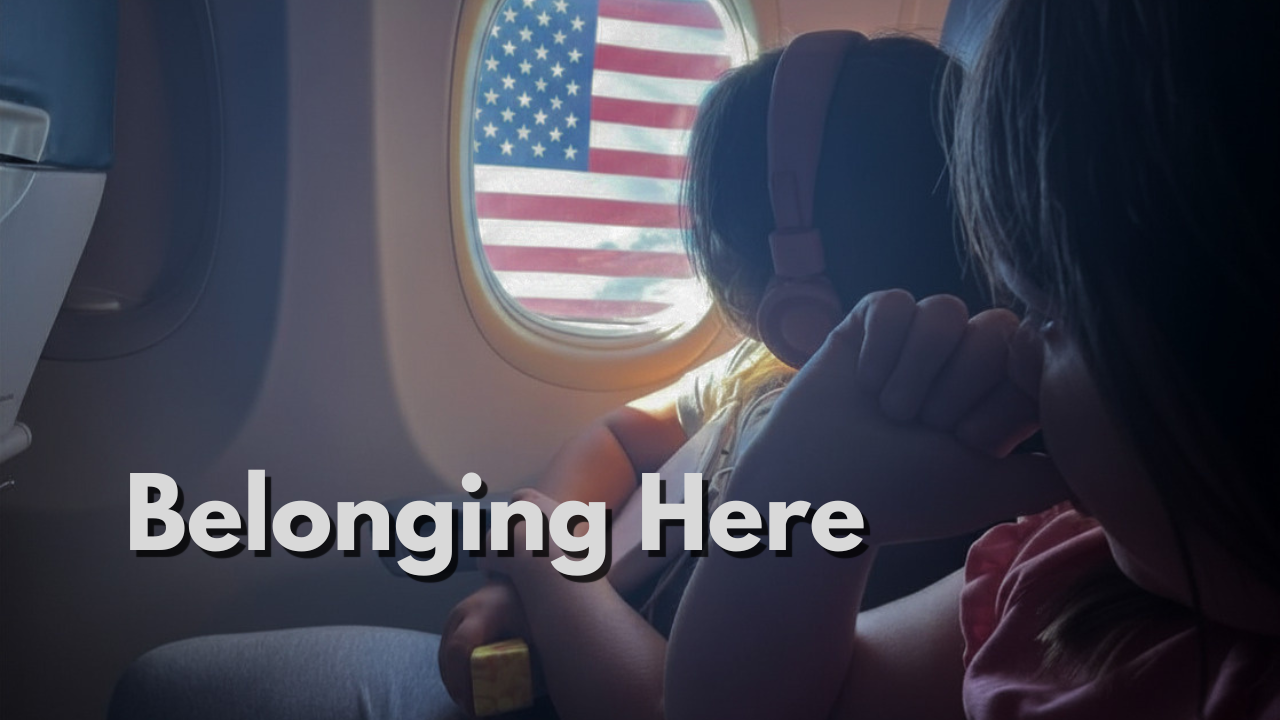
    I remember standing in the courthouse on the day I became an American citizen.

    There were about 40 of us, from all over the world, standing together and taking the Oath of Allegiance to the United States.

    It was a proud moment for me.

    But there was one part of the oath that felt strange.

    I had to declare that I “absolutely and entirely renounce and abjure all allegiance and fidelity” to any foreign state of which I had previously been a citizen.

    In my case, Australia.

    I understood what the oath meant. I was choosing to become an American citizen and accepting the responsibilities that came with that.

    But standing there saying those words, I didn’t feel as though I was renouncing Australia.

    I certainly didn’t feel any less Australian when I walked out of the courthouse than I had when I walked in.

    Michael Saville holding his U.S. citizenship certificate beside an American flag after becoming a U.S. citizen.
    Becoming an American citizen didn’t make me feel any less Australian. It simply gave me another country to call home.

    If anything, becoming an American citizen felt like formal recognition of something that had already happened.

    America had become part of my life.

    I had a stake in this country.

    Its future mattered to me because my future was here too.

    So was my family’s.

    None of that required Australia to become less important.

    There is an interesting contradiction in the language of citizenship itself. For much of history, dual nationality was viewed with suspicion because governments worried about divided loyalties. Today, dual citizenship is far more widely accepted around the world, and both Australia and the United States allow people to hold more than one nationality.

    So I walked into that courthouse as an Australian.

    I walked out as an American.

    But I also walked out as an Australian.

    Maybe that’s the point. Becoming one didn’t require me to stop being the other.


    Sometimes Other People Want the Choice More Than You Do

    One of the interesting things about living between countries is how often identity gets defined from the outside.

    People like neat categories.

    Australian.

    American.

    Immigrant.

    Expat.

    Pick one.

    But people don’t necessarily work that way.

    Research into immigrant belonging suggests that the way newcomers are treated by the society around them can have a significant effect on whether they feel accepted as part of their new country. Research summarized by the Migration Policy Institute has found that public attitudes and political rhetoric can influence an immigrant’s sense of national belonging.

    That makes sense to me.

    Belonging isn’t only about deciding that a country is yours.

    Sometimes it is also about feeling that the country has decided you are one of its people.

    I’ve noticed something interesting when Americans meet me.

    Obviously, the accent usually gives me away pretty quickly. People ask where I’m from, how long I’ve been here and, occasionally, something involving kangaroos.

    But when they learn that I’m also an American citizen, something subtly changes.

    It’s difficult to describe because nobody announces it.

    The conversation just feels slightly different.

    There’s a sense of, Oh, you’re one of us.

    Maybe I’m imagining some of it. Human interactions aren’t exactly easy things to measure while you’re standing in the supermarket talking to a stranger.

    But I’ve noticed it enough times to believe there’s something there.

    My Australian accent still makes me interestingly foreign.

    My American citizenship seems to make me belong.

    The funny thing is, I don’t need one of those things to cancel out the other. I can be the Australian in the conversation and still be one of the Americans in the room.


    Loving America Doesn’t Require Pretending It’s Perfect

    There is another part of this that I think is important.

    Loving your adopted country doesn’t mean pretending everything about it is sunshine, roses and butterflies.

    I don’t believe that about America.

    I didn’t believe it about Australia either.

    No country gets everything right.

    You can love a country and still criticize it.

    Admire another country without declaring it superior in every possible way.

    You can even prefer different things about different places.

    There are things Australia does that I wish America would copy tomorrow. There are things about American life that I now genuinely prefer.

    That isn’t betrayal.

    It’s perspective.

    In fact, one of the unexpected gifts of immigration is that you begin seeing both countries differently.

    Distance makes you notice things about the country you left that you once took for granted.

    Living somewhere new makes you question things you once assumed were universal.

    Then you go back to the country you came from and discover that you’re looking at that differently too.

    I’ve experienced that with Australia.

    Things that were completely unremarkable to me when I lived there suddenly stand out. Some make me appreciate Australia more. Others make me wonder how I never noticed them before.

    You haven’t stopped being an insider.

    But you’re not entirely looking at it through an insider’s eyes anymore either.

    Somehow, you become both.

    It’s occasionally confusing.

    But it’s also fascinating.


    Maybe Belonging Doesn’t Have to Be Exclusive

    In some ways, none of this should be particularly unusual in America.

    Americans have been combining identities for generations.

    Irish American. Italian American. Mexican American. German American.

    For some people, the connection to the first country goes back generations. They may never have lived there, or perhaps never even visited, but their heritage can still be an important part of how they understand who they are.

    My version is obviously a little different.

    Australia isn’t where my ancestors came from several generations ago.

    It’s where I came from.

    It’s where I grew up and spent most of my life before moving to the United States.

    But maybe the principle isn’t so different.

    Becoming American doesn’t require everything that came before it to disappear.

    Researchers studying bicultural identity have found that people can identify strongly with both their heritage culture and their national culture. Research also suggests that seeing those identities as compatible, rather than in conflict with each other, can help people feel more connected to the society around them.

    That feels much closer to my experience than the idea that I must gradually become less Australian in order to become more American. America didn’t replace Australia.

    Family of four smiling together after building a life in the United States.
    Our family has built its life in America, but Australia remains part of our story.

    It joined it.


    I Still Know Where I Came From

    There are moments when the distance from Australia hits harder than others.

    One of the biggest for me came during the Black Summer bushfires of 2019 and 2020.

    I was thousands of miles away in America while fires burned up and down the New South Wales coast and surrounded the area where I grew up.

    Glued to Australian news reports. I listened to Australian radio from America trying to find out what was happening.

    These weren’t just names of towns appearing on a news report.

    I knew these places.

    Knew the roads.

    I knew the countryside.

    I was watching places I knew like the back of my hand burn. At one point, I watched as fire roared across paddocks towards a house I had once lived in and came frighteningly close to engulfing it.

    NSW rural fire services fight a large fire in Australia
    During the Black Summer bushfires, I watched from America as fires tore through parts of New South Wales I knew intimately.

    Being in America didn’t make any of that feel distant.

    If anything, being unable to physically be there made the distance feel enormous. The COVID years brought a different version of the same feeling. Australia suddenly seemed much further away than the number of miles between us.

    Those experiences reminded me that moving overseas doesn’t sever your connection to the place you came from.

    But neither does missing Australia mean I’m secretly waiting to leave America.

    That’s the false choice.

    I can miss one place while being happy in another.

    Be proud of where I came from while being grateful for where I ended up.

    Care about what happens to Australia and care deeply about what happens to America.

    I can watch Australia play sport and know exactly which side I’m supporting.

    Okay, some loyalties apparently do have limits.

    But for everything else, I’ve stopped feeling any need to choose.

    I’ve lived in America long enough now to understand that moving countries didn’t divide my identity.

    It expanded it.

    Australia gave me the foundations of who I am.

    America has shaped who I’ve become since.

    One doesn’t diminish the other.

    So can you love your new country without loving your old one less?

    After eight years of trying it, I think the answer is pretty simple.

    Yes. You just end up with more than one place in the world that feels like yours.


    Enjoyed this article?

    From Down Under to Down South is independently created and supported by readers like you. If you’d like to help me keep making articles, videos and podcasts about life between Australia and America, you can support the work through Buy Me a Coffee.

    You can make a one off contribution or become a monthly supporter for $5 a month. Either way, it helps me keep building the brand and creating more of the stories you enjoy.


    Sources and further reading

    The American Psychological Association’s work on immigration and acculturation explains the distinction between assimilation and integration, including the ability to participate in a new culture while maintaining attachment to one’s heritage culture.

    The APA’s more recent review of immigration research discusses evidence supporting bicultural integration and the psychological and sociocultural benefits associated with maintaining connections to both heritage and destination cultures.

    The Migration Policy Institute has examined both dual citizenship and immigrant belonging, including the historical shift away from treating dual nationality as inherently incompatible with integration. Research published in Cultural Diversity and Ethnic Minority Psychology has also examined dual identity among immigrants and the relationship between identification with both heritage and national cultures, belonging and psychological outcomes.

  • Americans Have a Hidden Superpower: Encouragement

    Americans Have a Hidden Superpower: Encouragement

    One of the things I’ve come to appreciate most after eight years in the United States is American encouragement. There are obvious ways living in another country changes you, but this was one change I didn’t notice happening.

    Your vocabulary changes. Your tastes change. You learn new customs and eventually stop noticing things that once seemed strange.

    Then there are the changes you don’t notice happening.

    It took me years to realize America had changed the way I respond when someone tells me they want to do something with their life.

    These days, my first instinct is usually to encourage them.

    That might not sound particularly remarkable. Surely people encourage each other everywhere right?

    Of course they do.

    But there is a particular kind of optimism I’ve encountered in America that feels different from the culture I grew up with in Australia. It’s an optimism that seems willing to give an idea the benefit of the doubt before demanding evidence that it will work.

    Someone wants to start a business.

    Someone wants to go back to college in middle age.

    Someone wants to make a living doing something they’ve only ever done as a hobby.

    The American response I’ve heard countless times is remarkably simple.

    Why not?


    Optimism and Practicality Aren’t Opposites

    Australians aren’t inherently pessimistic, despite what Americans might conclude after spending enough time with us.

    We can, however, be very good at keeping each other grounded.

    I think there is value in that.

    A friend announces an ambitious plan and the questions begin. Have you thought about the money? What happens if it doesn’t work? Do you know what you’re getting yourself into?

    Often those questions are an expression of care.

    You don’t want someone you love making an enormous mistake, so you start looking for the holes in the plan.

    I’ve done it plenty of times myself.

    What I’ve found interesting about America is that many people ask those questions too. They just don’t necessarily ask them first.

    First comes the encouragement.

    Then comes reality.

    It seems like a small distinction, but I’m increasingly convinced it isn’t.

    The first response someone receives to an idea can determine whether the conversation that follows is about making it happen or explaining why it can’t.


    America Has a High Tolerance for Reinvention

    Maybe one reason encouragement feels so natural here is that reinvention is everywhere.

    I’ve met people who have changed careers several times. People who went back to school decades after leaving it. People who moved hundreds of miles to take an opportunity. People who turned side projects into businesses.

    In a country this large and mobile, starting again doesn’t always carry the sense that something has gone wrong.

    Sometimes starting again is the plan.

    That matters.

    If you’ve grown up surrounded by stories of people changing direction, somebody announcing a new ambition doesn’t necessarily sound ridiculous. It sounds familiar.

    America’s national mythology probably plays a part too.

    The country’s stories are filled with reinvention, invention and improbable ambition. Some of those stories have been polished considerably in the retelling, of course. Opportunity has never been distributed equally, and wanting something badly enough certainly doesn’t guarantee you’ll get it.

    Still, cultural stories matter.

    A society that spends generations telling itself that people can build, move, invent, create and begin again is probably going to produce a lot of people whose instinctive response to a new idea is:

    Give it a shot.


    I’ve Watched This With My Own Children

    Having children in America has made the difference much more noticeable to me.

    When a child expresses an ambition here, adults often take it surprisingly seriously.

    Not seriously in the sense that every childhood dream is treated as a future certainty.

    Seriously enough to ask what the next step might be.

    My daughter Georgia is ten and loves dance. She already has ideas about where that might take her years from now.

    What has struck me isn’t whether those dreams eventually happen. Nobody knows that.

    It’s the response from the adults around her.

    The dream isn’t immediately reduced to something more “realistic.”

    Instead, people help her learn.

    They expose her to people further along the path.

    They allow her to imagine herself doing it.

    Eventually life will provide plenty of reality. There will be auditions, competition, disappointment, money, ability, timing and all the other things that determine where a dream ultimately goes.

    She doesn’t need adults manufacturing those obstacles years in advance.

    I’ve come to appreciate that enormously.

    Encouraging a child to pursue something isn’t the same as promising she’ll achieve it.

    It’s telling her the possibility is worth exploring.

    Young dancer performing on stage in Tennessee
    Watching my daughter grow up in America has made me notice how readily people here encourage a child’s ambitions.

    The Internet Made the Difference Even More Obvious

    Becoming a creator gave me another perspective on this.

    Putting something you’ve made in front of strangers is an excellent way to discover just how vulnerable ambition can make you feel.

    You’re effectively announcing:

    I made this.

    I think it’s worth your time.

    I’d like to make more of it.

    There are countless reasons to convince yourself not to do that.

    Yet some of the most encouraging messages I’ve received since starting From Down Under to Down South have come from Americans who have absolutely no reason to care whether I succeed.

    They don’t know me personally.

    Many stumbled across one video by accident.

    Yet they’ll leave a comment telling me to keep going, congratulate me on a milestone or tell me they hope the channel becomes much bigger.

    I’ve always found that generosity fascinating.

    Success can sometimes be treated as a limited resource. If someone else is doing well, there must somehow be less available for everyone else.

    Encouragement operates on the opposite assumption.

    Your success doesn’t diminish mine.

    I can want something good to happen for you without losing anything myself.

    That may be one of the healthiest ideas I’ve absorbed from living here.


    Somewhere Along the Way, America Rubbed Off on Me

    I only noticed the change when I began catching myself doing the same thing.

    Someone tells me they’re considering a career change and my brain doesn’t immediately produce a spreadsheet of potential disasters anymore.

    I want to know what they’re thinking.

    Someone talks about creating something and I’m interested in how they might start.

    Someone mentions an ambition that sounds a little unlikely and I don’t feel the same urge to bring it back down to earth.

    There will be time for practical questions.

    What I’ve lost is the assumption that practical and encouraging have to be opposites.

    You can tell someone their idea will require enormous work and still hope they succeed.

    You can point out a risk without making the risk the entire conversation.

    You can think someone’s chances are uncertain and still help improve them.

    Most importantly, you don’t have to believe someone will succeed to believe they deserve the opportunity to try.

    That distinction took me a surprisingly long time to understand.

    I explored this idea from a slightly different angle in this video:


    Maybe Encouragement Is More Important Than We Think

    There is an obvious danger in romanticizing American optimism.

    “Believe in yourself” doesn’t pay the mortgage.

    Not every business should be started. Not every career change is sensible. Sometimes the cautious friend asking uncomfortable questions is exactly the person you need.

    But pessimism has its own cost.

    Ideas can be killed long before reality ever gets the chance.

    People talk themselves out of applying for jobs because they assume somebody better will get them.

    They don’t create something because somebody else already does it.

    They don’t return to school because they think they’re too old.

    They don’t pursue an opportunity because failure would be embarrassing.

    Most adults don’t suffer from a shortage of reasons to doubt themselves.

    We’re remarkably good at producing those on our own.

    Perhaps that’s why I’ve come to value the American instinct to add something different to the conversation.

    Possibility.

    Living in the United States hasn’t made me believe anything is possible.

    Eight years here has taught me enough about America to know that isn’t true.

    What it has changed is my willingness to decide what’s impossible before somebody has even tried.

    These days, when someone tells me about the thing they’d love to do, I’m much less interested in being the first person to explain why it might fail.

    There will be plenty of people available for that job.

    I’d rather be the person who asks:

    Why not you?


    Enjoy From Down Under to Down South?

    If you enjoy seeing America through an Australian’s eyes, you can support my work by buying me a coffee. Every bit of support helps me keep making the videos, podcasts and stories you find here.


  • The Plague Hath Arrived: And Still the Children Want Snacks

    The Plague Hath Arrived: And Still the Children Want Snacks

    Getting sick when you live overseas can make you realise just how much of your old support system you left behind. It’s not simply that your family lives far away. It’s that when something goes wrong, the people who would normally step in and help can’t physically be there.

    Our family discovered that the hard way recently when all four of us got COVID.

    At one point, my wife Nikki and I were both completely wiped out while our two daughters, aged ten and seven, were sick as well. When one parent gets sick, the other can usually pick up the slack. When both parents are sick at the same time, things get considerably more complicated.

    The kids still needed feeding and looking after. There was washing to do, food to organise and a house that somehow continued producing dirty dishes despite nobody having the energy to do anything.

    For the first time in eight years of living in America, I found myself seriously wondering: what are we actually supposed to do if we both get too sick to manage this?

    Cold and flu supplies with tissues, tea, medicine and cough drops on a kitchen table.
    At this point, our kitchen table was starting to look like a small pharmacy.

    Sick Children Have a Remarkable Ability to Recover When There’s Something to Fight About

    Thankfully, our girls are old enough to do some things for themselves. They can get a drink, find a snack and entertain themselves without constant supervision.

    They are not, however, old enough to look after two very sick parents.

    They also demonstrated a fascinating feature of childhood illness. One minute, one of them would be lying on the couch looking miserable and telling us how terrible she felt. Twenty minutes later, both girls would be running around like crazed squirrels fighting over the television remote.

    Apparently COVID symptoms can temporarily disappear when your sister changes the channel.

    Then the fight would end and one of them would return to the couch.

    “Dad, I don’t feel well.”

    Neither did I, but unlike them, I hadn’t just completed a 100 yard dash through the house.

    At one point their continued demands inspired me to write a Shakespearean proclamation for the household:

    A plague hath descended upon this house, and both Mother and Father lie stricken, weak of limb and weary of spirit. Yet the young heirs show no mercy.

    If thou hungerest, seek thee the pantry. If thou thirstest, journey forth unto the kitchen.

    Cry havoc, and let slip the children.

    It summed up the week surprisingly well.

    When Cooking Becomes Too Much Effort

    Food was one of the first things to fall apart.

    We relied on takeaway far more than we normally would because neither of us had the energy to cook. There’s a particular level of sickness where having ingredients in the fridge becomes irrelevant. Chicken and vegetables might technically constitute dinner, but only if someone has enough energy to turn them into dinner.

    We didn’t.

    Delivery drivers became our humanitarian aid workers. Leave the food at the front door, retreat to a safe distance and we’ll retrieve the supplies when able.

    I also managed to place an Instacart grocery order while exhausted and sleep deprived. When it arrived, I started unpacking things I had absolutely no memory of ordering.

    Scallion noodles?

    Apparently so.

    There were several other random purchases that made perfect sense to whichever version of me had been scrolling through Instacart at the time. It was like receiving a grocery order selected by a stranger, except the stranger was me.

    Packages of Momofuku soy and scallion noodles and tingly chili noodles from a mystery Instacart order while sick with COVID.
    Apparently COVID Michael decided we needed several packs of noodles. I have absolutely no memory of ordering them.

    Three Hours of Sleep Felt Like a Luxury Holiday

    Sleep became another problem. I went an extraordinary amount of time without getting any meaningful rest because every time I started drifting off, I would cough or wake up uncomfortable.

    Eventually I ordered sleep gummies from Amazon and paid extra for expedited same-day delivery.

    This was no longer casual online shopping. I needed those gummies.

    Amazon cancelled the delivery.

    Of all the packages to cancel, this felt personal.

    Eventually I remembered that we had some older sleep gummies in the house. They were out of date, which would normally have been enough for me to leave them alone. After that long without sleep, however, the expiration date started looking more like a suggestion.

    They worked.

    I slept for more than three hours in a row and woke up feeling as though I’d just returned from a two-week wellness retreat.

    COVID Cancelled Almost Everything Else

    Being sick gradually made our world smaller.

    The girls missed school.

    Georgia and Brianna missed dance classes.

    There wasn’t really a choice. Sending a child with COVID into a dance studio full of other children would have been a spectacularly bad idea.

    I had to cancel my own ballroom dancing too. There was absolutely no chance I had enough energy for that. I could barely foxtrot to the bathroom.

    Work became difficult for another reason: I had virtually no voice.

    A large part of what I do involves YouTube, podcasting and recording. My computer was sitting there, scripts were ready and there were things I wanted to make, but I couldn’t talk without coughing.

    It’s a strange frustration when you technically have everything you need to work except the physical ability to do it.

    Empty home recording setup with a microphone on a boom arm while illness prevented me from recording YouTube videos and podcasts.
    My microphone sat unused while COVID took away my voice and brought YouTube, podcasting and voice work to a temporary halt.

    Who Do You Call When Both Parents Are Sick?

    At the worst point, I found myself wondering whether there was some kind of government service for families in this situation.

    I genuinely didn’t know.

    What happens if both parents become too sick to properly care for their children? We weren’t at the point where we couldn’t look after ours, but lying there completely exhausted made me wonder what would happen if we got worse.

    Then I realised that if we were living in Canberra, I probably wouldn’t have been thinking about government departments at all.

    We would have called Nikki’s mum.

    She doesn’t live in Canberra, but I know she would have got in the car and driven there to help us.

    That one thought completely changed how I saw the week.

    The Invisible Support System You Leave Behind

    When people talk about emigrating, they usually understand that they’re leaving family and friends behind. You know you’ll miss birthdays and Christmases. You know you won’t be able to simply pop around for dinner.

    What I don’t think I fully understood was that I was also leaving behind a practical support system.

    It’s the person who can pick up your children when you can’t. Someone who brings dinner because they know you’re struggling. A grandparent who can watch the kids for a few hours while you sleep.

    It doesn’t take much.

    If Nikki’s mum had been able to come over, we wouldn’t have expected her to magically fix everything. Just having one healthy adult in the house would have made an enormous difference.

    Someone could deal with the girls while we slept, make some food or simply say, “Go to bed. I’ve got this.”

    After eight years in America, that was one of the rare occasions when the distance between here and Australia felt enormous.

    Family of four smiling together during a trip to Australia.
    Our family together in Australia — a reminder that although we’ve built our life in America, much of the family support network we left behind is still on the other side of the world.

    Technology Can’t Replace Being There

    Living overseas today is easier in many ways than it was a generation ago. We can video call family in Australia, send photos instantly and stay involved in each other’s lives from thousands of miles away.

    But there are limits.

    A video call can’t make dinner. It can’t collect your children from school, go to the shops or sit with the kids while both parents get some desperately needed sleep.

    There are moments when emotional closeness isn’t enough. You need someone physically close enough to show up.

    Friends can absolutely become part of that support network, but asking a friend to enter your COVID-infested house and take care of your sick children is quite an ask.

    Family can be different. Sometimes all you have to say is, “We need help.”

    Our Kids Miss That Proximity Too

    This experience also made me think about something I rarely consider: our daughters are growing up without grandparents nearby.

    They know their grandparents and love them, but they don’t have the everyday version of that relationship where you can simply go to Nan’s for the afternoon or a grandparent can unexpectedly pick you up from school.

    To them, that’s completely normal because it’s the only life they’ve known.

    During sickness though, I didn’t only wish someone could help Nikki and me. I wished there was another healthy adult nearby for the girls.

    They were sick too, despite occasionally transforming into crazed squirrels, and they still needed their parents.

    Unfortunately, their parents were operating at about four percent.


    I Wasn’t Homesick. I Missed Having Backup.

    That was probably the biggest realisation of the whole experience.

    I wasn’t lying in bed wishing we could move back to Australia. I wasn’t dreaming about Canberra, Australian food or the places I used to know.

    America is home. Our lives are here.

    What I missed was having backup.

    There’s a difference.

    You can love the life you’ve built overseas while recognising that there are things you gave up to build it. You can feel completely at home in your new country and still occasionally wish the people who would drop everything to help you lived a little closer.

    Most of the time, I don’t notice the 9,000 miles between us and Australia.

    This time I did.

    Getting sick reminded me that one of the hardest parts of living overseas isn’t necessarily missing home. Sometimes it’s discovering all the things you never realised home used to do for you.

    And I learned one other valuable lesson.

    Never place all your faith in same-day Amazon delivery during a plague.

  • Why American Chinese Food Tastes So Different (An Australian Explains)

    Why American Chinese Food Tastes So Different (An Australian Explains)

    One of the biggest surprises after moving from Australia to America wasn’t the supermarkets, the roads or even the accents.

    It was Chinese food.

    American Chinese food and Australian Chinese food share the same roots, but over more than a century they’ve evolved into two very different cuisines. The dishes, sauces, flavours and even the menus are often completely different.

    After living in America for eight years—and growing up in Australia—I still notice those differences every time I order takeaway.

    And perhaps the strangest part?

    I didn’t expect Chinese food to be one of the things I’d miss most.


    Australian Chinese takeaway containers

    When I first arrived in America, I expected plenty of culture shock.

    The supermarkets.

    The enormous cars.

    The accents.

    The friendliness.

    Chinese food never even crossed my mind.

    Within my first few weeks, I ordered what I thought would be a familiar takeaway dinner.

    Instead, I discovered something I hadn’t expected.

    The flavours were completely different.

    Not bad.

    Just…different.

    It was one of those moments that makes you realise you’ve carried assumptions halfway around the world without knowing it.


    Then I Started Seeing Dishes I’d Only Heard About On TV

    One of the funniest moments was seeing Kung Pao Chicken on an actual menu.

    I’d heard Americans mention it for years in television shows like Friends.

    I honestly wasn’t sure whether it was a real dish or simply one of those American pop culture references I’d never experienced.

    Turns out…

    It’s very real.

    And it’s everywhere.

    Meanwhile, I couldn’t find many of the dishes I’d grown up ordering in Australia.

    Close-up of Kung Pao Chicken
    One of the first dishes that made me realise American Chinese food had its own identity.

    The Australian Chinese Dishes I Miss Most

    Australian Chinese takeaway has become its own cuisine.

    Growing up, these were the dishes I expected to see on almost every menu.

    Honey Chicken is probably the biggest one for me.

    I don’t think I’ve ever found an American version that tastes like the one I grew up eating.

    Even the fried rice surprised me.

    Australian fried rice and American fried rice look different, taste different and have completely different flavour profiles.

    It’s amazing how something as simple as fried rice can instantly remind you which country you’re in.

    Chicken and Ham Roll
    Chicken and Ham rolls are my favourite Aussie Chinese dish

    American Chinese Dishes Australians Rarely Grow Up With

    On the other hand, America has its own classics.

    Some of the dishes that became completely normal here were things I barely remember seeing back home.

    For Americans, these are comfort foods.

    For me, they were entirely new discoveries.

    Beef with Broccoli Chinese meal
    Beef with Broccoli, an American Chinese favourite

    Why They’re So Different

    The interesting part is that neither version is more “correct.”

    Both Australia and America were shaped by different waves of Chinese immigration.

    Chinese cooks adapted recipes using local ingredients and local tastes.

    Australia’s Chinese takeaway culture has deep roots in the Cantonese communities that arrived during the gold rush era. Over generations it became part of suburban Australia, often appearing alongside local pubs and RSL clubs.

    America followed its own path.

    Its Chinese restaurants created dishes specifically for American tastes, producing favourites like General Tso’s Chicken and Orange Chicken.

    In other words…

    Australia didn’t copy America.

    America didn’t copy Australia.

    Both countries created their own version of Chinese takeaway.

    Australian Chinese Restaurant in Nowra Australia
    Leongs Chinese Restaurant in Nowra Australia

    There’s Another Reason I Notice These Differences

    My first job in high school was as a kitchen hand in a Chinese restaurant.

    I washed dishes.

    Helped prepare vegetables.

    Learned how some of the sauces were made.

    Looking back, it became an unexpected stepping stone towards eventually becoming a qualified chef.

    So when I notice differences between Australian and American Chinese food, I’m not just comparing takeaway menus.

    I’ve also spent time behind the scenes watching how one version of that cuisine was prepared.

    Chinese restaurant kitchen
    Chinese Restaurant kitchens are fast paced

    The Moment I Realised What I Actually Missed

    Last year we travelled back to Australia.

    Something funny happened.

    We ate Chinese food more than almost anything else.

    Not because we’d missed Chinese food.

    We’d been eating Chinese food in America for years.

    We’d missed Australian Chinese food.

    The Honey Chicken.

    The fried rice.

    The familiar flavours.

    It wasn’t until we’d been away for years that I realised those Friday-night takeaway dinners had quietly become part of what “home” tasted like.


    Final Thoughts

    Before moving overseas, I expected to miss beaches, family and Australian coffee.

    I never imagined I’d spend years craving Honey Chicken.

    Living in another country has taught me something surprising.

    It’s often the smallest traditions that become the strongest reminders of home.

    Sometimes that’s a favourite bakery.

    Sometimes it’s a supermarket.

    And sometimes…

    It’s the particular way your local Chinese restaurant made fried rice.


    FAQ

    Is American Chinese food authentic?

    American Chinese food is authentic to the Chinese-American communities that created it. Like Australian Chinese food, it evolved over generations using local ingredients and local tastes.

    Why doesn’t American Chinese food taste the same as Australian Chinese food?

    The recipes developed independently for different customers over many decades, resulting in different sauces, dishes and flavours.

    Does Australia have General Tso’s Chicken?

    It’s much less common than in America. Australian Chinese restaurants typically feature different signature dishes.

    What Australian Chinese dishes can’t you usually find in America?

    Honey Chicken, Chicken and Ham Rolls, Australian-style Lemon Chicken and some versions of fried rice are much harder to find.

  • The Moment I Realised My Children Belong in America

    The Moment I Realised My Children Belong in America

    One of the hardest parts of raising children overseas is realizing they may end up belonging somewhere different from you.

    Not because they’ve rejected where you came from.

    Not because they’ve forgotten their roots.

    But because their life happened somewhere else.

    After eight years in America, I’ve started to realize that’s exactly what’s happened with my daughters.

    And strangely enough, it happened without me noticing.


    What Raising Children Overseas Taught Me

    When we moved from Australia to America, I expected my life to change.

    I expected new roads.

    New customs.

    New ways of doing things.

    I expected to spend years learning the differences between the two countries.

    What I didn’t fully understand was that moving countries wouldn’t just change me.

    It would shape my children’s entire childhood.

    The friendships they would form.

    The confidence they would develop.

    The place they would eventually call home.

    Recently, that reality hit me harder than it ever has before.

    Daytona gave me more than a week of dance competitions. It gave me time to notice who my daughters are becoming.

    The Week That Made Me Notice

    We’d just come back from Daytona Beach.

    Like most dance trips, it was a blur of hotel rooms, elevators, airports, restaurants, competition schedules and far too little sleep.

    Parents were surviving on caffeine.

    Kids were surviving on excitement.

    Somewhere in the middle of all that, I found myself paying attention to my daughters in a different way.

    Not just watching them.

    Actually noticing them.

    The way they spoke to people.

    How they handled themselves.

    The way they moved through unfamiliar situations.

    And I kept finding myself thinking the same thing.

    I was never like that at their age.


    The Kid Behind The Couch

    When I was young, I was painfully shy.

    Visitors would come to our house and I’d disappear.

    Sometimes behind the couch.

    Sometimes into my bedroom.

    Anywhere that allowed me to avoid being noticed.

    Adults intimidated me.

    Groups overwhelmed me.

    Confidence wasn’t something that came naturally.

    It wasn’t until much later in life that I learned how to navigate those situations comfortably.

    Which is probably why my daughters stand out so much to me now.

    Because neither of them are that child.


    Watching Them Move Through The World

    Brianna will happily talk to almost anyone.

    She orders her own food.

    Asks questions.

    Investigates things she probably shouldn’t.

    She approaches the world as if it’s open until someone proves otherwise.

    Georgia is different.

    She’s quieter.

    More thoughtful.

    More sensitive.

    But she has her own confidence.

    She’ll walk up to a flight attendant and ask for help.

    Navigate an airport.

    Handle situations on her own.

    She’s not loud.

    She’s not pushy.

    Just simply capable.

    And that’s what struck me.

    Both of them are.

    In completely different ways.


    Watching them handle airports and travel on their own still catches me off guard.


    America Shaped Them Too

    When people move overseas, they expect the new country to shape them.

    You learn different customs.

    Different expressions.

    Different social rules.

    You learn that biscuits aren’t biscuits.

    That football sometimes involves very little foot.

    You learn that Americans consider a three-hour drive “close.”

    But eventually I realized something else.

    America wasn’t only shaping me.

    It was shaping my daughters too.


    Georgia Carries Two Homes

    Georgia was born in Australia.

    She still feels connected to that part of her story.

    She knows where she was born.

    Knows where her parents came from.

    She still spells “Mum” correctly, which I consider one of my greatest parenting achievements.

    But she has grown up here.

    Her school is here.

    Her friends are here.

    Dance life is here.

    And recently she started talking about her dream college.

    USC.

    The University of South Carolina.

    She’s only ten years old, so there is every chance she’ll change her mind another twenty times.

    But that’s not really the point.

    When she imagines her future, she imagines it here.


    Brianna Doesn’t Have The Same Question

    Brianna was born in America.

    And in many ways, America simply feels like home.

    Recently we watched Australia versus the USA on TV at the 2026 World Cup.

    When the Australian anthem played, Georgia and I stood up and sang along, hand over our hearts.

    When the American anthem played we did too, but Brianna absolutely lit up.

    She sang every word.

    Then started chanting “USA! USA!”

    Meanwhile I stood there having the complicated emotional experience of an Australian father watching his daughter enthusiastically support the opposition.

    That was probably the moment I should have figured it out.


    There has never been much doubt about where Brianna feels at home.

    Going Back Changed Something

    Last year we took the girls back to Australia.

    For Georgia especially, I think that trip changed something.

    She saw old friends.

    Old places.

    Parts of her earlier life.

    But she also discovered something many adults discover when they move away.

    Life doesn’t pause while you’re gone.

    People move on.

    Friendships evolve.

    Places change.

    And sometimes you realize the version of home you carried in your head no longer exists exactly the way you remember it.

    I think that trip made America feel even more like home for her.

    Not because Australia stopped mattering.

    But because she realized where her actual life was happening.


    The Quiet Realization

    As much as Nikki’s parents probably won’t enjoy reading this, I don’t think either of my daughters will move back to Australia.

    That feels strange to say out loud.

    It’s not sadness exactly.

    But it’s not nothing either.

    It’s pride mixed with a little grief.

    Because if you’re an immigrant parent, you want your children to belong.

    And then one day you realize they do.

    Just not necessarily in the place you expected.


    Pride and grief can sometimes exist in the same moment.

    We Didn’t Raise Copies Of Ourselves

    Nikki and I have always tried to let the girls become themselves.

    Not smaller versions of us.

    Not copies of our childhood.

    Their own people.

    Georgia’s dance dreams belong to her.

    Brianna’s interests belong to her.

    Our job isn’t to own those things.

    Our job is to support them.

    Guide them.

    Protect them.

    And occasionally pay ridiculous amounts of money for costumes covered in rhinestones.


    What America Gave Them

    America isn’t perfect.

    No country is.

    But one thing I’ve noticed is that American culture often encourages children to participate.

    To ask questions.

    Speak up.

    To feel like they belong in the room.

    And I think my daughters have absorbed some of that.

    Georgia absorbed it quietly.

    Brianna absorbed it like a bald eagle wearing glitter shoes.

    But they both absorbed it.

    And honestly, I’m grateful for that.


    Home Is More Complicated Than It Used To Be

    One daughter carries Australia within her identity.

    The other is deeply, proudly American.

    So how exactly am I supposed to turn that into a competition?

    I can’t.

    And I don’t want to.

    Australia shaped me.

    America shaped them.

    Both countries matter because both countries shaped the people I love most.


    Recommended Reading


    Home Isn’t Always One Place

    The biggest thing I’ve learned since moving overseas is that home isn’t always a country.

    Sometimes it’s a couch you used to hide behind.

    Sometimes it’s an airport gate.

    Maybe a dance studio.

    Or your daughter confidently ordering her own meal.

    Sometimes it’s hearing an anthem that isn’t yours somehow become part of your family story.

    And sometimes it’s standing there watching your children move through the world with a confidence you never had at their age.

    That’s what happened to me in Daytona.

    Not in one dramatic moment.

    Not during some life-changing conversation.

    Just in a hundred little moments.

    Georgia asking questions.

    Brianna talking to strangers.

    Both of them moving through the world with ease.

    And me finally realizing something I probably should have understood years ago.

    They’re not growing up overseas.

    They’re growing up at home.


    Some Great Reading About Home & Identity

  • What Is a Servo in Australia? It’s Not Quite an American Gas Station

    What Is a Servo in Australia? It’s Not Quite an American Gas Station

    What is a servo in Australia? A servo is the Australian word for a gas station or petrol station. It’s one of those everyday Australian terms that can completely confuse Americans the first time they hear it.

    When I first moved to America, I quickly learned that what Australians call a servo, Americans call a gas station.

    The funny thing is that Australians use the word so casually that we often forget it’s slang.

    “Just pulling into the servo.”

    “Need anything from the servo?”

    “The servo down the road has cheaper fuel.”

    To an Australian, those sentences sound completely normal. To an American, they can sound like we’re talking about some mysterious piece of machinery.

    Why Do Australians Call It a Servo?

    The word servo is simply a shortened version of service station.

    Australians love shortening words. In fact, it’s almost a national hobby.

    We don’t just have:

    • Servo (service station)
    • Arvo (afternoon)
    • Bottle-o (liquor store)
    • Macca’s (McDonald’s)
    • Rego (vehicle registration)

    We shorten so many words that sometimes visitors feel like they’re learning a second language.

    A service station became a servo, and the name stuck.

    What Happens at a Servo?

    Meat Pie

    Traditionally, a servo was a place to buy petrol and maybe get basic vehicle services.

    Today, Australian servos are much more like American gas stations.

    Most have:

    • Fuel pumps
    • Convenience stores
    • Soft drinks and snacks
    • Coffee machines
    • Ice
    • Toilets
    • Basic automotive supplies

    Some larger servos have surprisingly good food.

    On long road trips across Australia, stopping at a servo is often part of the journey. You fill the tank, grab a meat pie, buy a drink, and stretch your legs before heading back onto the highway.

    • Buying meat pies in the US is so difficult! Here’s a bumper sticker for those of you who want to start spreading the word here on how good they are!

    Servo vs Gas Station

    Although they serve the same purpose, there are a few language differences between Australia and America.

    AustraliaUnited States
    ServoGas station
    PetrolGas
    Fill up the tankFill up the tank
    Unleaded petrolRegular gas
    Service stationGas station

    The first time someone in America asked me where I got gas, I nearly answered, “At the servo.”

    Then I remembered that nobody around me would have any idea what I meant.

    Do Australians Ever Say Gas Station?

    Not usually.

    Most Australians say either servo, service station or petrol station.

    If you said “gas station” in Australia, people would understand you, largely because of American movies and television, but it would sound distinctly American.

    It’s similar to how Australians understand words like “sidewalk” or “apartment,” even though we would normally say “footpath” and “unit.”

    One of Australia’s Most Recognisable Words

    Servo is one of those words that instantly identifies someone as Australian.

    The moment an Australian abroad says, “I need to stop at the servo,” other Australians know exactly where they’re from.

    It’s a small word, but it’s part of a much larger Australian habit of shortening everyday language and turning ordinary words into nicknames.

    And once you’ve spent enough time around Australians, you’ll probably find yourself saying it too.

    If you’ve ever wondered what is a servo in Australia, the answer is simple: it’s the Australian term for a gas station or petrol station.

    Hoo roo maties.

  • Starting Over at 49 Was Harder Than I Expected

    Starting Over at 49 Was Harder Than I Expected

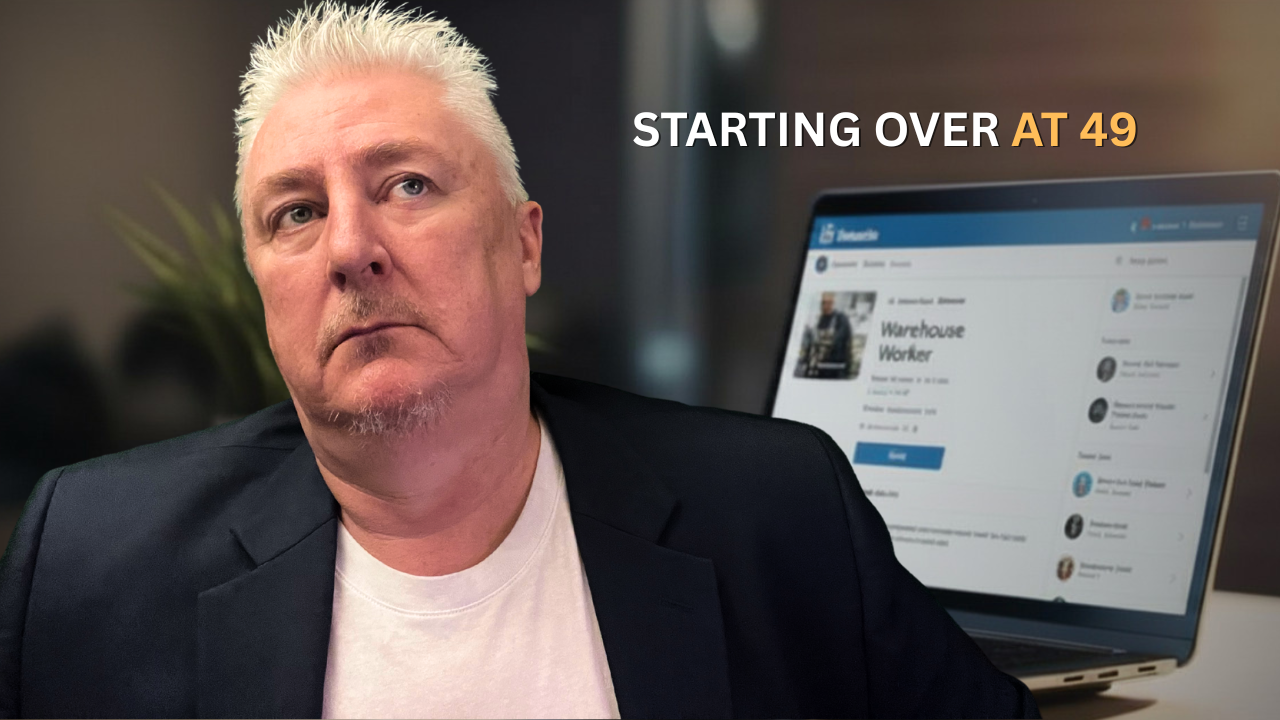
    In the past three years, I’ve applied for more than 2500 jobs.

    That number sounds made up.

    Honestly, if somebody had told me a few years ago that a former regional banking manager with 24 years of experience would end up applying for Amazon warehouse jobs, driving for Uber, uploading résumés at midnight and getting rejected from roles he could probably do blindfolded… I would’ve assumed they’d taken a wrong turn somewhere.

    But here we are.

    And somewhere between application number 700 and application number 1800, I realised modern job searching has become its own form of psychological warfare.

    Upload your résumé.

    Now manually type your résumé back into smaller boxes.

    Write a cover letter.

    Now answer personality questions designed to determine whether you’re passionate enough about moving cardboard boxes.

    Then hear absolutely nothing ever again.

    I suspect I may now hold the unofficial world record for hearing nothing from HR departments.

    The strange part is… I wasn’t always “starting over.”

    I’ve actually done this before.


    Apparently I Have a Habit of Reinventing Myself

    When I left high school in Australia, I completed a four-year chef’s apprenticeship.

    Young Australian chef early in his hospitality career before later transitioning into banking and eventually media and storytelling.
    Before banking, there was hospitality, kitchens, Samoa, and another life altogether.

    I eventually became a sous chef and then landed an executive chef role in Samoa. Later I moved into hotel management in Fiji.

    Then I came back to Australia and realised something uncomfortable:

    I didn’t want to do it anymore.

    So I started again.

    I got a job as a bank teller.

    That somehow turned into a 24-year banking career.

    Over time I worked my way up through management until eventually I became a regional banking manager.

    Australian regional banking manager during his corporate career before leaving banking and later rebuilding his life in Tennessee.
    On paper, this probably looked like success. In many ways, it was.

    On paper, it probably looked like success.

    And financially, in many ways, it was.

    But toward the end, my life had quietly narrowed into work.

    I was commuting three hours a day.

    Working six days a week.

    Seventy-hour weeks had become normal.

    My youngest daughter was three and barely knew me.

    I’d become one of those blokes who spends his entire life providing for his family while somehow barely getting to participate in it.

    Then came the moment that broke me.

    In July 2023, after finally securing a transfer closer to home, my boss had me fire my second-in-charge before I even started. I’d have no backup which meant even longer hours.

    Then I was informed my office was being removed.

    No desk.

    No office.

    After 24 years.

    I quit on the spot.

    No backup plan.

    No next job.

    Nothing.

    At the time, I thought I was escaping burnout.

    In hindsight, I think I was also escaping a version of myself.


    The Part Nobody Talks About

    When most people picture unemployment, they imagine somebody sitting around not wanting to work.

    That wasn’t my reality at all.

    I wanted to work.

    I just didn’t want my entire identity consumed by corporate life anymore.

    When I first moved to America, I actually hoped I could transition into something more meaningful.

    Fraud or Investigations.

    Just wanting to help people without chasing targets and goals.

    Something where experience mattered.

    Instead, after four or five months, I ended up back in retail banking managing a downtown branch.

    And somehow, years later, I found myself sitting in front of LinkedIn at midnight applying for literally everything.

    Insurance roles.

    Fraud teams.

    Case management.

    911 dispatcher positions.

    Local police departments.

    Sheriff’s offices.

    Warehouse jobs.

    At one point I think I applied for enough positions to qualify as a full-time applicant.

    Laptop displaying online job applications late at night during a prolonged period of unemployment and career rebuilding.
    Somewhere along the way, job searching became its own full-time job.

    The strangest part was being simultaneously “overqualified” and unemployable.

    In the very few interviews I actually got, people would ask me why I wanted such “basic” jobs.

    Which is a very polite way of saying:

    “Why is somebody with your background here?”

    The truth?

    Because bills still arrive and kids still need dance lessons.

    Because groceries still cost money and pride doesn’t pay the electricity bill.

    And because somewhere along the way, I realised I no longer cared about status nearly as much as I cared about having a life.


    The Job I Thought Changed Everything

    There was one role that nearly broke me emotionally.

    A position with the Department of Community Services.

    It genuinely felt like the first job I’d ever applied for that aligned with who I actually was.

    I would’ve been working with victims of human trafficking and child abuse. Things I had experience in as a Bank Manager.

    Helping people.

    Something meaningful.

    I had a phone interview.

    Then a panel interview.

    Then I got the call.

    I got the job.

    I accepted it.

    Long government building hallway symbolizing the emotional weight and disappointment of losing a meaningful job opportunity later in life.
    For a little while, I thought I’d finally found something meaningful.

    I remember feeling absolutely ecstatic. Telling people excitedly.

    Honestly, I thought maybe my entire career had been leading toward this.

    Then it disappeared.

    Background checks revealed I didn’t have a university degree.

    Nobody had mentioned one was required.

    I had 24 years of banking leadership experience.

    International experience.

    Extensive management experience.

    The Chief Justice of the Tennessee Supreme Court as one of my references.

    Didn’t matter.

    No degree.

    No job.

    That one flattened me.

    I think that was the moment job searching stopped feeling frustrating and started feeling personal.

    After that, even the thought of another application made me physically recoil.


    The Quiet Shame of Starting Over Later in Life

    I’m 52 now.

    And while nobody will openly say it, I do believe age plays a role.

    Maybe it was age, or maybe it was being Australian.

    Maybe it was experience or that employers saw somebody who’d managed large teams and assumed I’d leave.

    Or maybe they preferred younger graduates, maybe all of it.

    I’ll never know.

    But I do know this:

    At some point, repeated rejection stops feeling professional and starts feeling existential.

    You stop wondering:

    “Why didn’t I get the job?”

    And start wondering:

    “Has the world quietly decided I’m past my use-by date?”

    That’s a hard feeling to explain to people.

    Especially as a man who spent most of his adult life being the provider.

    For years my role was simple:

    Work.

    Provide.

    Keep moving.

    And to be fair, I did that.

    But I also burned myself out doing it. Multiple times.

    I missed huge parts of life while climbing ladders that, in hindsight, weren’t attached to anything meaningful.

    Losing my Mum a few years ago changed something in me too.

    It made me realise life is a lot more fragile than corporations would like us to believe.

    One day you’re working 70-hour weeks.

    The next day the people you spoke to every day disappear.

    That was another strange lesson.

    People you think are your friends at work often aren’t.

    The moment you leave the system, the system moves on.

    Very quickly.


    The Unexpected Part

    Here’s the part I didn’t expect.

    Somewhere inside all this uncertainty, I accidentally found parts of myself again.

    Australian ballroom dancer practicing in Tennessee after rediscovering creativity, movement and identity beyond corporate life.
    Somewhere during all of this, I found my way back onto a dance floor too.

    I rediscovered dance.

    Built a media brand from scratch.

    I taught myself podcasting.

    Audio editing.

    Video editing.

    Writing.

    Graphics.

    Storytelling.

    I spend over 40 hours a week building it now. I’m sitting here at midnight writing this.

    Australian creator and podcaster building a media brand from home in Tennessee after leaving a long corporate banking career.
    Building the brand didn’t just give me work. It gave me a creative life again.

    And the funny part is… it doesn’t feel like work.

    Not because it isn’t real work.

    It absolutely is.

    But because for the first time in a very long time, it actually feels like me.

    Ironically, people often don’t see content creation as a “real job.”

    So these days when somebody asks what I do, I usually say:

    “I’m a writer.”

    That tends to confuse people less than saying:

    “I’m an Australian YouTuber and podcaster living in Tennessee trying to explain American goodbyes to the internet.”

    But while the financial side has been difficult, this period also gave me something banking never could.

    Time.

    I’ve been able to drive my daughters Georgia and Brianna to school.

    Take them to dance.

    Australian father with his daughters in Tennessee after leaving corporate banking and rebuilding a more present family life.
    For years I provided for my family. This period finally let me participate in it.

    Music lessons.

    Do the groceries.

    Be present.

    And honestly?

    I’ve loved it.

    I think somewhere along the way, I realised the version of success I’d spent decades chasing may not actually have been mine.


    So Where Does That Leave Me?

    Recently, after nearly three years of applications and rejection, I was offered a part-time job in a completely unrelated field.

    The interview was quick.

    Simple.

    Human.

    And the next day they offered me the role.

    No endless personality tests, or corporate theatre.

    No twenty-stage recruitment process requiring the emotional resilience of a Navy SEAL.

    Just:

    “You seem capable. We’d like to hire you.”

    Honestly, I felt everything at once.

    Relief.

    Exhaustion.

    Sadness.

    Gratitude.

    Maybe even grief.

    Because part of me wanted the media brand to become fully sustainable before I ever had to go back to regular employment.

    But another part of me knows something important now:

    I don’t actually want my old life back.

    Australian creator in Tennessee rediscovering humour and everyday joy after leaving a long corporate banking career.
    Turns out happiness sometimes looks less like a boardroom and more like bothering skeletons at a Spirit Halloween store.

    Financially?

    Sure.

    There are parts of it I miss.

    But the version of me who only existed to work?

    No.

    I’ve already done that.

    Twice, apparently.

    And maybe that’s the strangest lesson in all of this.

    Careers are chapters.

    Not identities.

    At 18, I thought I was a chef.

    Then at 30, I thought I was a banker.

    At 52, I’m honestly not completely sure what I am yet.

    But I know this:

    I’m bigger than my job title.

    And if this whole experience has taught me anything, it’s that starting over can happen to anyone.

    Even the people who looked successful from the outside.


    Life After Corporate Work

    There were nights during all of this where I’d finish another application, close the laptop, and wonder whether I’d somehow become invisible.

    That was part of the reason I started writing more honestly about identity, migration and life between cultures here on the website. Articles like What America Gets Right, After Living Here for 8 Years and When the Show Becomes the Focus came directly out of this period of my life.

    I think when your career identity starts falling apart a bit, you begin trying to make sense of yourself in other ways.

    For me, that became storytelling.

    Podcasting.

    Writing.

    And weirdly enough… ballroom dancing.

    Going back to dance after all these years genuinely helped my mental health more than I expected. There’s something strangely grounding about having to focus on timing, movement and not tripping over your own feet for ninety minutes.

    Honestly, this whole brand exists because I finally stopped pretending work was the only meaningful thing about me.

    If you’ve found yourself in that strange middle ground too — between careers, identities, countries, expectations, or versions of yourself — you might also connect with some of the other stories I’ve written:

    And if you prefer listening while driving, walking or pretending to exercise like I do, the podcast lives here too:

    From Down Under to Down South Podcast

    You’ll also find it on iTunes and Spotify or wherever you listen to podcasts.

    These days I’m still building.

    Still figuring things out.

    Still trying to create something sustainable.

    But for the first time in a very long time, I actually feel connected to the life I’m living while I’m living it.

    And that feels worth something.

    If you’d like to support the brand while I continue building all this from Tennessee, you can also shout an Aussie creator a coffee here:

    Hoo roo maties.

  • The Small Things Australians Miss After Moving to America

    The Small Things Australians Miss After Moving to America

    You think the big things will be what you miss when you move overseas.

    Family. Friends. Familiar places.

    And you do miss those things.

    But honestly… some of the strongest homesickness hits come from standing in an American supermarket looking for chicken salt.

    Or opening a packet of “Australian-style” lollies and realising they just don’t taste right.

    I’ve lived in America for around eight years now, and over time I’ve realised that home slowly becomes a collection of tiny things.

    Little routines. Familiar foods. Smells. Phrases.

    Small comforts that quietly remind you who you are.


    Australian food care packages for expat overseas
    A typical care package from Australia never lasts long in our house.

    Vegemite Becomes a Survival Item

    We go through a lot of Vegemite in our house.

    We normally keep four or five jars in the cupboard at any given time.
    I have it most mornings on toast, and both of our girls love it too. Nikki’s mum sends it to us in bulk from Australia, so at any given moment there are usually four or five jars sitting in the cupboard like emergency supplies.

    If we ever got down to one jar, I’d probably start rationing it.

    Americans are fascinated by Vegemite too. Whenever friends come over, it eventually turns into:
    “Alright then… let’s see you try it.”

    The reactions are usually dramatic. But for Australians overseas, Vegemite isn’t really about the taste anymore. It’s familiarity. It’s routine. It’s sitting at the kitchen table in the morning feeling, for a few minutes at least, like you’re back home again.

    I talked more about the strange experience of keeping an Australian identity while living overseas in this article:


    Allens snake lollies

    Australian Road Trips Just Feel Different

    One of the things I never expected to miss was Australian road trip culture.

    Growing up, road trips for us usually meant driving from Canberra to the coast, or inland to see Nikki’s family in Griffith. And before every trip, there was always the same ritual.

    Fill up the car.

    Go into the servo.

    Buy a bag of Allen’s snakes, maybe some other lollies, and drinks for the drive.

    There was something oddly comforting about it.

    Now, in America, we’ve replaced that ritual with Buc-ee’s stops.

    And honestly? Buc-ee’s is incredible.

    Australia has absolutely nothing like it.

    But even now, grabbing nuts or lunch at Buc-ee’s still doesn’t quite hit the same emotional note as buying a bag of snakes before heading down the highway in Australia.

    Part of that is because the lollies here just aren’t the same. The snakes are too sweet. Even the Cadbury chocolate tastes different because the version sold here is British Cadbury, not Australian Cadbury. You don’t realise how specific your memories are until you try to recreate them somewhere else.

    Every now and then we’ll order a mixed Australian lolly box online just because we are feeling homesick.

    • I’ve spoken before about how living overseas slowly changes the way you think, sound and even remember home, the below video is a great example of that.

    Care Packages Mean More Than You’d Think

    Care packages from Australia hit differently when you live overseas.

    Nikki’s mum sends boxes over for us and the girls, usually packed with Australian food, little gifts, chocolates, random surprises… and somehow it always feels bigger than just “stuff.”

    australian care package sent to expat overseas

    One year my old workplace in Australia sent us a huge Christmas box filled with Australian snacks, games, soccer balls, all sorts of things.

    It honestly felt like someone had posted a piece of Australia directly to our front door.

    And for the girls, it’s not even necessarily the food they love most.

    It’s knowing that Nanna packed it.

    That connection matters.

    I will admit though that they always beat me to the Caramello Koalas, they barely last a few days.


    Australian Bakeries Overseas Are Usually Disappointing

    This might upset a few people, but Australian bakeries overseas are almost always disappointing.

    We’ve been to Australian bakeries in America — including one in Atlanta that’s pretty good — but it’s still not quite the same.

    There’s also an Australian-owned café near us in Tennessee that sells meat pies and sausage rolls.

    Again… not even close to home.

    The funny thing is, the first thing I want when I land back in Australia isn’t anything fancy.

    It’s a bakery stop.

    A sausage roll.

    A meat pie.

    A vanilla slice.

    And an iced coffee Dare.

    That’s home.

    I make my own sausage rolls here now because sometimes it’s easier than trying to recreate the feeling through substitutes. We buy Jamaican meat pies and chicken pasties occasionally too, and while they’re definitely not Australian pies, they scratch a similar itch. Close enough becomes an important concept when you live overseas.


    Smells Become Emotional Time Machines

    Smell might actually be the strongest trigger of all.

    The bush after rain.

    Gum trees.

    The ocean.

    Jervis Bay National Park Australia

    Sunscreen.

    That hot Australian air right before a storm rolls in.

    Sometimes you’ll randomly smell something in America that takes you straight back to Australia for half a second before reality catches up again.

    It’s strange how powerful that can be. Even thinking about it now makes me a bit homesick.


    Watching Your Kids Grow Up Between Two Cultures

    One of the strangest parts of living overseas long term is watching your kids slowly become a blend of both countries.

    We still celebrate Australia Day at home, although having a barbecue in January is a bit harder when there’s snow outside in Tennessee.

    I try teaching the girls Aussie slang too.

    “How’s it goin’ mate.”
    “Yeah nah.”
    “No worries.”

    And Georgia especially will switch between Australian and American words or accents depending on who she’s talking to.

    It’s fascinating to watch.

    Because in some ways, that’s exactly what living overseas feels like yourself. You slowly become a mix of places.


    The Small Things Matter More Than You Expect

    I think that’s the biggest surprise about moving overseas.

    Home stops being one giant thing.

    It becomes little things.

    A jar of Vegemite in the cupboard.

    A care package from family.

    A bag of snakes before a road trip.

    A bakery stop after a long flight.

    A phrase your kids still say with an Australian accent.

    Tiny things that remind you who you were before life got complicated.

    And maybe that’s why Australians overseas hold onto those small comforts so tightly. Because sometimes the smallest things are the ones that make a place feel like home again.


    If you enjoy these Australia vs America reflections, I also talk about them regularly over on the podcast and YouTube channel:

  • This Week in America — A Kentucky Weekend: Dance, Derby & the Moments You Don’t Plan

    This Week in America — A Kentucky Weekend: Dance, Derby & the Moments You Don’t Plan

    We travelled to Louisville this week for a dance competition.

    That was the plan, at least.

    But I’ve noticed something about these weekends.

    They rarely stay as simple as the reason you go.


    The Drive In — When a City Takes Over

    We arrived just before the lead-up to the Kentucky Derby.

    And the city already felt like it was gearing up.

    Traffic backed up everywhere.
    Police on the roads.
    That quiet sense that something big was about to happen.

    We were still twenty minutes out and:

    • the GPS kept changing
    • the girls were asking how much longer every six minutes
    • Nikki had moved into that calm voice that means she’s not calm
    • and I was confidently choosing alternate routes despite having no idea where I was going

    Which, as a husband and father, is one of the more pointless confidence moves available.


    When a Place Has Its Own Identity

    We were there for dance.

    Louisville was there for Louisville.

    And I liked that.

    America does this well.

    When something matters locally, it doesn’t stay contained.
    It spills into the streets.

    You feel it—even if you’re not part of it.


    The Fort Knox Moment

    Driving through, we saw signs for Fort Knox.

    For most people here, that’s just another exit.

    For me growing up in Australia, it was one of those names that felt almost mythical—
    like Hollywood or Wall Street.

    Seeing it casually written on a highway sign made me laugh.

    Only in America does a dance weekend casually involve Fort Knox.


    A City with Weight

    Then there were the bridges over the Ohio River.

    I’ve always liked bridges.

    They make a place feel like it matters.

    Louisville has that solid feel to it—
    river, steel, history.

    It feels like a place shaped by doing things, not just talking about them.


    Owning Greatness

    The Muhammad Ali murals stood out straight away.

    Louisville doesn’t hide who came from there.

    It claims him.

    And I respect that.

    Australia can be a bit different—we admire people, but we also like bringing them back down to earth.

    America seems more comfortable simply saying:

    “This person was great.”

    There’s something refreshing in that.


    A Side Trip with Brianna

    While Georgia was tied up with competition, Brianna and I explored downtown.

    Those little side moments with your kids matter more as you get older.

    Less about where you are.
    More about being there together.


    Turning Culture Into Experience

    We stopped at the Louisville Slugger Museum & Factory.

    And it’s a very American idea.

    Take something simple—like a baseball bat—
    and turn it into something you can walk through.

    Even without growing up with baseball, I enjoyed it.


    College Sport — Still Hard to Process

    The scale of college sport still surprises me.

    Massive stadiums.
    Serious infrastructure.

    Back home, it exists.

    Here, in some places, it feels like something much bigger.


    Bourbon and Unexpected Conversations

    That night, I ended up at the hotel bar with another dance dad.

    And got an unexpected introduction to Kentucky bourbon.

    Not casually.

    Properly.

    I nodded through most of it, adding expert commentary like:

    “Yeah… that’s smooth.”

    Completely useless.

    Still appreciated.


    What I Noticed About People

    People here are generous with what they love.

    No gatekeeping.

    Just:

    “Here, try this.”
    “Let me tell you why this one matters.”

    That stays with you.


    The Moment That Actually Mattered

    But the real highlight was Georgia.

    She danced her best solo of the year.

    And placed seventh out of twenty.


    Parents see what sits behind a performance.

    The practice.
    The frustration.
    The doubt.

    And then one day, it clicks.

    Fifteen seconds in, I knew.

    She looked calm.
    Settled.
    Like herself.

    That’s the moment.


    Dance Competitions in America


    Not Trying to Be Someone Else

    Georgia dances lyrical.

    Slower. More controlled. More expressive.

    Often up against louder, faster routines.

    So placing felt even better.

    She wasn’t trying to be someone else.


    Cracker Barrel and a Strange Thought

    On the way home, we stopped at Cracker Barrel.

    Sitting on the porch, something crossed my mind.

    This feels like home.


    Which is a strange thought for someone born in Australia.

    But maybe home changes.

    Maybe it grows.


    Of Course We Stopped at Buc-ee’s

    And naturally, we stopped at Buc-ee’s.

    Because no road trip here feels complete without it.


    You can fuel the car, buy snacks, grab merchandise…

    …and somehow leave with more than you planned.

    Every time.


    Closing Reflection

    We went for dance.

    But we came home with more.

    That’s something I keep noticing about life here.

    You head somewhere for one reason…

    …and the place adds its own chapters.

    A conversation.
    A moment.
    A feeling you didn’t expect.

    That’s usually how the best weekends happen.

    Not through grand plans.

    Just ordinary things unfolding well.


    For more reflections like this, tune in to the weekly podcast.


    🔗 Internal Links (END BLOCK)

    You might also enjoy:


  • When School Starts to Feel Like HR (An Aussie Perspective)

    When School Starts to Feel Like HR (An Aussie Perspective)

    This week, something happened that made me pause.

    Not because it was dramatic.
    And not because anyone had done anything wrong.

    It was just… one of those moments where two different systems quietly collided.


    The Email

    Earlier this week, I received an email from Georgia’s school.

    The subject line was about attendance.

    Apparently, she’s had five unexcused absences this year—and because of that, I now have to attend a meeting with the principal and the school counsellor.

    The interesting part is… I don’t actually know what the five absences are yet.

    That comes later. In a letter. From the state.

    The email itself didn’t explain anything. It just said we’d crossed a threshold—and now a conversation needs to happen.

    And when I read it, my first reaction wasn’t confusion.

    It was recognition.


    I Knew This System Immediately

    I spent 25 years working in banking.

    And almost instantly, I knew exactly what I was looking at.

    This wasn’t really a school system.

    It was an HR system.

    Track the events.
    Log them.
    Wait for the threshold.

    Then trigger the process.

    • Informal conversation
    • Formal conversation
    • Documentation

    Except this time… the “employee” is ten years old.

    And if you’ve ever worked inside structured systems like that, you’ll recognise the feeling straight away — that moment where you stop and go, ah… I know exactly how this is going to play out.

    This Is Something I’ve Noticed More Over Time

    This wasn’t the first time I’d had that feeling.

    It’s something I’ve noticed more and more the longer I’ve lived in America — the way everyday situations are quietly shaped by systems underneath.

    Because it’s the same underlying pattern — structure first, human interpretation second.

    If you’ve seen that video, you’ll recognise it here too.


    What Actually Counts as “Absent”?

    Now I do know a couple of the days they’re probably referring to.

    One of them was when I picked Georgia up early so we could drive five hours to a dance competition.

    If you’re a dance parent, you’ll recognise that rhythm immediately.

    Long drives. Early starts. Costumes packed the night before.

    If you’re in that world, this is actually one of the best things we’ve ended up relying on for comp weekends:

    Because none of that fits neatly into a school system.

    But the system doesn’t see any of that.

    That absence wasn’t excused.


    The Five-Minute Absence

    Another one?

    She arrived about five minutes late one morning.

    At her school, if you’re late, you don’t just walk into class—you check in through the front office.

    And once that happens…

    It’s logged.

    Now that five-minute delay sits in the same column as a full-day absence.

    Not because it’s the same thing.

    But because the system records entries—not meaning.


    Where It Starts to Feel… Mechanical

    And this is the part that stood out.

    The system isn’t designed to interpret context.

    It’s designed to record events.

    • Late arrival → logged
    • Early departure → logged
    • Absence → logged

    Once the number hits a certain point…

    The process activates.

    That’s when the email arrives.

    That’s when the meeting gets scheduled.

    And suddenly something that feels like normal life…

    Feels procedural.


    I’ve Seen This Before — In a Completely Different Way

    Earlier this year, I applied for a role with Child Protective Services.

    It was something I genuinely felt drawn to.

    After years in banking — dealing with fraud, scams, and vulnerable customers — it felt like a natural extension of that work.

    The idea of helping protect children felt meaningful.

    I went through the process.

    And I was offered the job.

    But there was one problem.

    I don’t have a university degree.


    When Systems Ask a Different Question

    It didn’t matter what I’d done.

    It didn’t matter the experience.

    Because the system wasn’t asking:

    “What has he done?”

    It was asking:

    “What box does he tick?”

    And once again…

    I recognised the structure immediately.


    This Is What Living Between Systems Feels Like

    This is something that becomes clearer the longer you live between countries.

    Not the obvious differences.

    The subtle ones.

    Because this is exactly what that feels like.

    Not big cultural shocks.

    Just small, revealing moments.


    It’s Not About Right or Wrong

    To be fair—these systems exist for good reasons.

    Schools need to track attendance.

    There are real situations where children are missing school for serious reasons.

    Structure helps identify those situations.

    The same way hiring requirements create consistency.

    It’s not broken.

    It’s just… structured.


    But It Creates These Moments

    Because every now and then…

    The system and real life don’t quite line up.

    A five-hour drive to a dance competition becomes an attendance issue.

    A five-minute delay becomes an absence.

    And normal life starts to feel like it’s being processed.


    If You’ve Noticed This Too

    This is one of those patterns that keeps showing up in different ways.

    👉 You’ll see the same idea here:
    American Goodbyes

    👉 And here:
    American Politness

    Different situations.

    Same underlying structure.


    A Quick Note

    If you enjoy these kinds of reflections — the small, in-between moments that don’t usually get talked about —

    you can support the channel here:

    👉 https://buymeacoffee.com/fromdownundertodownsouth


    One of Those “Ah… I See” Moments

    Nothing dramatic happened this week.

    No one got in trouble.

    It was just the system…

    Doing exactly what it was designed to do.

    Recording events.
    Triggering processes.
    Asking for a conversation.

    And every now and then—

    You see that system clearly enough…

    That it makes you stop.

    And think.


    👉 If you prefer listening instead of reading, the full podcast lives here:
    https://fromdownundertodownsouth.com/listen/