Tag: Life in America

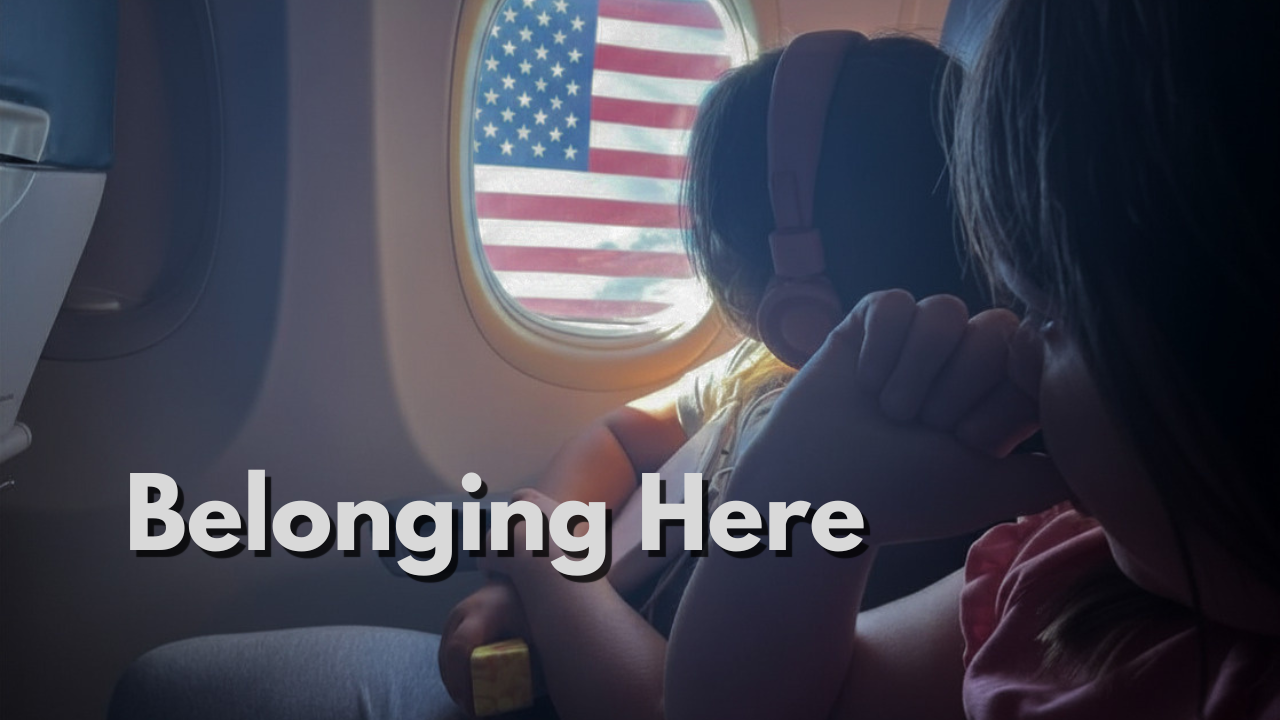
  • The Moment I Realised My Children Belong in America

    The Moment I Realised My Children Belong in America

    One of the hardest parts of raising children overseas is realizing they may end up belonging somewhere different from you.

    Not because they’ve rejected where you came from.

    Not because they’ve forgotten their roots.

    But because their life happened somewhere else.

    After eight years in America, I’ve started to realize that’s exactly what’s happened with my daughters.

    And strangely enough, it happened without me noticing.


    What Raising Children Overseas Taught Me

    When we moved from Australia to America, I expected my life to change.

    I expected new roads.

    New customs.

    New ways of doing things.

    I expected to spend years learning the differences between the two countries.

    What I didn’t fully understand was that moving countries wouldn’t just change me.

    It would shape my children’s entire childhood.

    The friendships they would form.

    The confidence they would develop.

    The place they would eventually call home.

    Recently, that reality hit me harder than it ever has before.

    Daytona gave me more than a week of dance competitions. It gave me time to notice who my daughters are becoming.

    The Week That Made Me Notice

    We’d just come back from Daytona Beach.

    Like most dance trips, it was a blur of hotel rooms, elevators, airports, restaurants, competition schedules and far too little sleep.

    Parents were surviving on caffeine.

    Kids were surviving on excitement.

    Somewhere in the middle of all that, I found myself paying attention to my daughters in a different way.

    Not just watching them.

    Actually noticing them.

    The way they spoke to people.

    How they handled themselves.

    The way they moved through unfamiliar situations.

    And I kept finding myself thinking the same thing.

    I was never like that at their age.


    The Kid Behind The Couch

    When I was young, I was painfully shy.

    Visitors would come to our house and I’d disappear.

    Sometimes behind the couch.

    Sometimes into my bedroom.

    Anywhere that allowed me to avoid being noticed.

    Adults intimidated me.

    Groups overwhelmed me.

    Confidence wasn’t something that came naturally.

    It wasn’t until much later in life that I learned how to navigate those situations comfortably.

    Which is probably why my daughters stand out so much to me now.

    Because neither of them are that child.


    Watching Them Move Through The World

    Brianna will happily talk to almost anyone.

    She orders her own food.

    Asks questions.

    Investigates things she probably shouldn’t.

    She approaches the world as if it’s open until someone proves otherwise.

    Georgia is different.

    She’s quieter.

    More thoughtful.

    More sensitive.

    But she has her own confidence.

    She’ll walk up to a flight attendant and ask for help.

    Navigate an airport.

    Handle situations on her own.

    She’s not loud.

    She’s not pushy.

    Just simply capable.

    And that’s what struck me.

    Both of them are.

    In completely different ways.


    Watching them handle airports and travel on their own still catches me off guard.


    America Shaped Them Too

    When people move overseas, they expect the new country to shape them.

    You learn different customs.

    Different expressions.

    Different social rules.

    You learn that biscuits aren’t biscuits.

    That football sometimes involves very little foot.

    You learn that Americans consider a three-hour drive “close.”

    But eventually I realized something else.

    America wasn’t only shaping me.

    It was shaping my daughters too.


    Georgia Carries Two Homes

    Georgia was born in Australia.

    She still feels connected to that part of her story.

    She knows where she was born.

    Knows where her parents came from.

    She still spells “Mum” correctly, which I consider one of my greatest parenting achievements.

    But she has grown up here.

    Her school is here.

    Her friends are here.

    Dance life is here.

    And recently she started talking about her dream college.

    USC.

    The University of South Carolina.

    She’s only ten years old, so there is every chance she’ll change her mind another twenty times.

    But that’s not really the point.

    When she imagines her future, she imagines it here.


    Brianna Doesn’t Have The Same Question

    Brianna was born in America.

    And in many ways, America simply feels like home.

    Recently we watched Australia versus the USA on TV at the 2026 World Cup.

    When the Australian anthem played, Georgia and I stood up and sang along, hand over our hearts.

    When the American anthem played we did too, but Brianna absolutely lit up.

    She sang every word.

    Then started chanting “USA! USA!”

    Meanwhile I stood there having the complicated emotional experience of an Australian father watching his daughter enthusiastically support the opposition.

    That was probably the moment I should have figured it out.


    There has never been much doubt about where Brianna feels at home.

    Going Back Changed Something

    Last year we took the girls back to Australia.

    For Georgia especially, I think that trip changed something.

    She saw old friends.

    Old places.

    Parts of her earlier life.

    But she also discovered something many adults discover when they move away.

    Life doesn’t pause while you’re gone.

    People move on.

    Friendships evolve.

    Places change.

    And sometimes you realize the version of home you carried in your head no longer exists exactly the way you remember it.

    I think that trip made America feel even more like home for her.

    Not because Australia stopped mattering.

    But because she realized where her actual life was happening.


    The Quiet Realization

    As much as Nikki’s parents probably won’t enjoy reading this, I don’t think either of my daughters will move back to Australia.

    That feels strange to say out loud.

    It’s not sadness exactly.

    But it’s not nothing either.

    It’s pride mixed with a little grief.

    Because if you’re an immigrant parent, you want your children to belong.

    And then one day you realize they do.

    Just not necessarily in the place you expected.


    Pride and grief can sometimes exist in the same moment.

    We Didn’t Raise Copies Of Ourselves

    Nikki and I have always tried to let the girls become themselves.

    Not smaller versions of us.

    Not copies of our childhood.

    Their own people.

    Georgia’s dance dreams belong to her.

    Brianna’s interests belong to her.

    Our job isn’t to own those things.

    Our job is to support them.

    Guide them.

    Protect them.

    And occasionally pay ridiculous amounts of money for costumes covered in rhinestones.


    What America Gave Them

    America isn’t perfect.

    No country is.

    But one thing I’ve noticed is that American culture often encourages children to participate.

    To ask questions.

    Speak up.

    To feel like they belong in the room.

    And I think my daughters have absorbed some of that.

    Georgia absorbed it quietly.

    Brianna absorbed it like a bald eagle wearing glitter shoes.

    But they both absorbed it.

    And honestly, I’m grateful for that.


    Home Is More Complicated Than It Used To Be

    One daughter carries Australia within her identity.

    The other is deeply, proudly American.

    So how exactly am I supposed to turn that into a competition?

    I can’t.

    And I don’t want to.

    Australia shaped me.

    America shaped them.

    Both countries matter because both countries shaped the people I love most.


    Recommended Reading


    Home Isn’t Always One Place

    The biggest thing I’ve learned since moving overseas is that home isn’t always a country.

    Sometimes it’s a couch you used to hide behind.

    Sometimes it’s an airport gate.

    Maybe a dance studio.

    Or your daughter confidently ordering her own meal.

    Sometimes it’s hearing an anthem that isn’t yours somehow become part of your family story.

    And sometimes it’s standing there watching your children move through the world with a confidence you never had at their age.

    That’s what happened to me in Daytona.

    Not in one dramatic moment.

    Not during some life-changing conversation.

    Just in a hundred little moments.

    Georgia asking questions.

    Brianna talking to strangers.

    Both of them moving through the world with ease.

    And me finally realizing something I probably should have understood years ago.

    They’re not growing up overseas.

    They’re growing up at home.


    Some Great Reading About Home & Identity

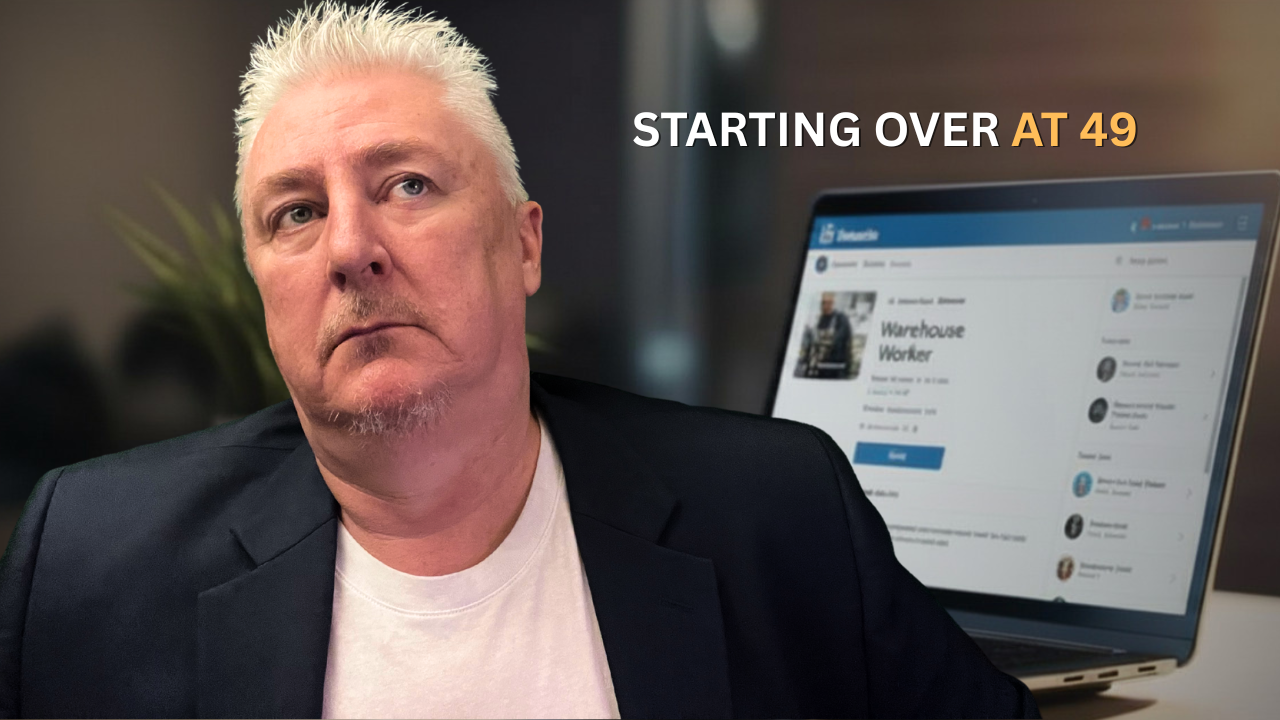
  • Starting Over at 49 Was Harder Than I Expected

    Starting Over at 49 Was Harder Than I Expected

    In the past three years, I’ve applied for more than 2500 jobs.

    That number sounds made up.

    Honestly, if somebody had told me a few years ago that a former regional banking manager with 24 years of experience would end up applying for Amazon warehouse jobs, driving for Uber, uploading résumés at midnight and getting rejected from roles he could probably do blindfolded… I would’ve assumed they’d taken a wrong turn somewhere.

    But here we are.

    And somewhere between application number 700 and application number 1800, I realised modern job searching has become its own form of psychological warfare.

    Upload your résumé.

    Now manually type your résumé back into smaller boxes.

    Write a cover letter.

    Now answer personality questions designed to determine whether you’re passionate enough about moving cardboard boxes.

    Then hear absolutely nothing ever again.

    I suspect I may now hold the unofficial world record for hearing nothing from HR departments.

    The strange part is… I wasn’t always “starting over.”

    I’ve actually done this before.


    Apparently I Have a Habit of Reinventing Myself

    When I left high school in Australia, I completed a four-year chef’s apprenticeship.

    Young Australian chef early in his hospitality career before later transitioning into banking and eventually media and storytelling.
    Before banking, there was hospitality, kitchens, Samoa, and another life altogether.

    I eventually became a sous chef and then landed an executive chef role in Samoa. Later I moved into hotel management in Fiji.

    Then I came back to Australia and realised something uncomfortable:

    I didn’t want to do it anymore.

    So I started again.

    I got a job as a bank teller.

    That somehow turned into a 24-year banking career.

    Over time I worked my way up through management until eventually I became a regional banking manager.

    Australian regional banking manager during his corporate career before leaving banking and later rebuilding his life in Tennessee.
    On paper, this probably looked like success. In many ways, it was.

    On paper, it probably looked like success.

    And financially, in many ways, it was.

    But toward the end, my life had quietly narrowed into work.

    I was commuting three hours a day.

    Working six days a week.

    Seventy-hour weeks had become normal.

    My youngest daughter was three and barely knew me.

    I’d become one of those blokes who spends his entire life providing for his family while somehow barely getting to participate in it.

    Then came the moment that broke me.

    In July 2023, after finally securing a transfer closer to home, my boss had me fire my second-in-charge before I even started. I’d have no backup which meant even longer hours.

    Then I was informed my office was being removed.

    No desk.

    No office.

    After 24 years.

    I quit on the spot.

    No backup plan.

    No next job.

    Nothing.

    At the time, I thought I was escaping burnout.

    In hindsight, I think I was also escaping a version of myself.


    The Part Nobody Talks About

    When most people picture unemployment, they imagine somebody sitting around not wanting to work.

    That wasn’t my reality at all.

    I wanted to work.

    I just didn’t want my entire identity consumed by corporate life anymore.

    When I first moved to America, I actually hoped I could transition into something more meaningful.

    Fraud or Investigations.

    Just wanting to help people without chasing targets and goals.

    Something where experience mattered.

    Instead, after four or five months, I ended up back in retail banking managing a downtown branch.

    And somehow, years later, I found myself sitting in front of LinkedIn at midnight applying for literally everything.

    Insurance roles.

    Fraud teams.

    Case management.

    911 dispatcher positions.

    Local police departments.

    Sheriff’s offices.

    Warehouse jobs.

    At one point I think I applied for enough positions to qualify as a full-time applicant.

    Laptop displaying online job applications late at night during a prolonged period of unemployment and career rebuilding.
    Somewhere along the way, job searching became its own full-time job.

    The strangest part was being simultaneously “overqualified” and unemployable.

    In the very few interviews I actually got, people would ask me why I wanted such “basic” jobs.

    Which is a very polite way of saying:

    “Why is somebody with your background here?”

    The truth?

    Because bills still arrive and kids still need dance lessons.

    Because groceries still cost money and pride doesn’t pay the electricity bill.

    And because somewhere along the way, I realised I no longer cared about status nearly as much as I cared about having a life.


    The Job I Thought Changed Everything

    There was one role that nearly broke me emotionally.

    A position with the Department of Community Services.

    It genuinely felt like the first job I’d ever applied for that aligned with who I actually was.

    I would’ve been working with victims of human trafficking and child abuse. Things I had experience in as a Bank Manager.

    Helping people.

    Something meaningful.

    I had a phone interview.

    Then a panel interview.

    Then I got the call.

    I got the job.

    I accepted it.

    Long government building hallway symbolizing the emotional weight and disappointment of losing a meaningful job opportunity later in life.
    For a little while, I thought I’d finally found something meaningful.

    I remember feeling absolutely ecstatic. Telling people excitedly.

    Honestly, I thought maybe my entire career had been leading toward this.

    Then it disappeared.

    Background checks revealed I didn’t have a university degree.

    Nobody had mentioned one was required.

    I had 24 years of banking leadership experience.

    International experience.

    Extensive management experience.

    The Chief Justice of the Tennessee Supreme Court as one of my references.

    Didn’t matter.

    No degree.

    No job.

    That one flattened me.

    I think that was the moment job searching stopped feeling frustrating and started feeling personal.

    After that, even the thought of another application made me physically recoil.


    The Quiet Shame of Starting Over Later in Life

    I’m 52 now.

    And while nobody will openly say it, I do believe age plays a role.

    Maybe it was age, or maybe it was being Australian.

    Maybe it was experience or that employers saw somebody who’d managed large teams and assumed I’d leave.

    Or maybe they preferred younger graduates, maybe all of it.

    I’ll never know.

    But I do know this:

    At some point, repeated rejection stops feeling professional and starts feeling existential.

    You stop wondering:

    “Why didn’t I get the job?”

    And start wondering:

    “Has the world quietly decided I’m past my use-by date?”

    That’s a hard feeling to explain to people.

    Especially as a man who spent most of his adult life being the provider.

    For years my role was simple:

    Work.

    Provide.

    Keep moving.

    And to be fair, I did that.

    But I also burned myself out doing it. Multiple times.

    I missed huge parts of life while climbing ladders that, in hindsight, weren’t attached to anything meaningful.

    Losing my Mum a few years ago changed something in me too.

    It made me realise life is a lot more fragile than corporations would like us to believe.

    One day you’re working 70-hour weeks.

    The next day the people you spoke to every day disappear.

    That was another strange lesson.

    People you think are your friends at work often aren’t.

    The moment you leave the system, the system moves on.

    Very quickly.


    The Unexpected Part

    Here’s the part I didn’t expect.

    Somewhere inside all this uncertainty, I accidentally found parts of myself again.

    Australian ballroom dancer practicing in Tennessee after rediscovering creativity, movement and identity beyond corporate life.
    Somewhere during all of this, I found my way back onto a dance floor too.

    I rediscovered dance.

    Built a media brand from scratch.

    I taught myself podcasting.

    Audio editing.

    Video editing.

    Writing.

    Graphics.

    Storytelling.

    I spend over 40 hours a week building it now. I’m sitting here at midnight writing this.

    Australian creator and podcaster building a media brand from home in Tennessee after leaving a long corporate banking career.
    Building the brand didn’t just give me work. It gave me a creative life again.

    And the funny part is… it doesn’t feel like work.

    Not because it isn’t real work.

    It absolutely is.

    But because for the first time in a very long time, it actually feels like me.

    Ironically, people often don’t see content creation as a “real job.”

    So these days when somebody asks what I do, I usually say:

    “I’m a writer.”

    That tends to confuse people less than saying:

    “I’m an Australian YouTuber and podcaster living in Tennessee trying to explain American goodbyes to the internet.”

    But while the financial side has been difficult, this period also gave me something banking never could.

    Time.

    I’ve been able to drive my daughters Georgia and Brianna to school.

    Take them to dance.

    Australian father with his daughters in Tennessee after leaving corporate banking and rebuilding a more present family life.
    For years I provided for my family. This period finally let me participate in it.

    Music lessons.

    Do the groceries.

    Be present.

    And honestly?

    I’ve loved it.

    I think somewhere along the way, I realised the version of success I’d spent decades chasing may not actually have been mine.


    So Where Does That Leave Me?

    Recently, after nearly three years of applications and rejection, I was offered a part-time job in a completely unrelated field.

    The interview was quick.

    Simple.

    Human.

    And the next day they offered me the role.

    No endless personality tests, or corporate theatre.

    No twenty-stage recruitment process requiring the emotional resilience of a Navy SEAL.

    Just:

    “You seem capable. We’d like to hire you.”

    Honestly, I felt everything at once.

    Relief.

    Exhaustion.

    Sadness.

    Gratitude.

    Maybe even grief.

    Because part of me wanted the media brand to become fully sustainable before I ever had to go back to regular employment.

    But another part of me knows something important now:

    I don’t actually want my old life back.

    Australian creator in Tennessee rediscovering humour and everyday joy after leaving a long corporate banking career.
    Turns out happiness sometimes looks less like a boardroom and more like bothering skeletons at a Spirit Halloween store.

    Financially?

    Sure.

    There are parts of it I miss.

    But the version of me who only existed to work?

    No.

    I’ve already done that.

    Twice, apparently.

    And maybe that’s the strangest lesson in all of this.

    Careers are chapters.

    Not identities.

    At 18, I thought I was a chef.

    Then at 30, I thought I was a banker.

    At 52, I’m honestly not completely sure what I am yet.

    But I know this:

    I’m bigger than my job title.

    And if this whole experience has taught me anything, it’s that starting over can happen to anyone.

    Even the people who looked successful from the outside.


    Life After Corporate Work

    There were nights during all of this where I’d finish another application, close the laptop, and wonder whether I’d somehow become invisible.

    That was part of the reason I started writing more honestly about identity, migration and life between cultures here on the website. Articles like What America Gets Right, After Living Here for 8 Years and When the Show Becomes the Focus came directly out of this period of my life.

    I think when your career identity starts falling apart a bit, you begin trying to make sense of yourself in other ways.

    For me, that became storytelling.

    Podcasting.

    Writing.

    And weirdly enough… ballroom dancing.

    Going back to dance after all these years genuinely helped my mental health more than I expected. There’s something strangely grounding about having to focus on timing, movement and not tripping over your own feet for ninety minutes.

    Honestly, this whole brand exists because I finally stopped pretending work was the only meaningful thing about me.

    If you’ve found yourself in that strange middle ground too — between careers, identities, countries, expectations, or versions of yourself — you might also connect with some of the other stories I’ve written:

    And if you prefer listening while driving, walking or pretending to exercise like I do, the podcast lives here too:

    From Down Under to Down South Podcast

    You’ll also find it on iTunes and Spotify or wherever you listen to podcasts.

    These days I’m still building.

    Still figuring things out.

    Still trying to create something sustainable.

    But for the first time in a very long time, I actually feel connected to the life I’m living while I’m living it.

    And that feels worth something.

    If you’d like to support the brand while I continue building all this from Tennessee, you can also shout an Aussie creator a coffee here:

    Hoo roo maties.

  • The Small Things Australians Miss After Moving to America

    The Small Things Australians Miss After Moving to America

    You think the big things will be what you miss when you move overseas.

    Family. Friends. Familiar places.

    And you do miss those things.

    But honestly… some of the strongest homesickness hits come from standing in an American supermarket looking for chicken salt.

    Or opening a packet of “Australian-style” lollies and realising they just don’t taste right.

    I’ve lived in America for around eight years now, and over time I’ve realised that home slowly becomes a collection of tiny things.

    Little routines. Familiar foods. Smells. Phrases.

    Small comforts that quietly remind you who you are.


    Australian food care packages for expat overseas
    A typical care package from Australia never lasts long in our house.

    Vegemite Becomes a Survival Item

    We go through a lot of Vegemite in our house.

    We normally keep four or five jars in the cupboard at any given time.
    I have it most mornings on toast, and both of our girls love it too. Nikki’s mum sends it to us in bulk from Australia, so at any given moment there are usually four or five jars sitting in the cupboard like emergency supplies.

    If we ever got down to one jar, I’d probably start rationing it.

    Americans are fascinated by Vegemite too. Whenever friends come over, it eventually turns into:
    “Alright then… let’s see you try it.”

    The reactions are usually dramatic. But for Australians overseas, Vegemite isn’t really about the taste anymore. It’s familiarity. It’s routine. It’s sitting at the kitchen table in the morning feeling, for a few minutes at least, like you’re back home again.

    I talked more about the strange experience of keeping an Australian identity while living overseas in this article:


    Allens snake lollies

    Australian Road Trips Just Feel Different

    One of the things I never expected to miss was Australian road trip culture.

    Growing up, road trips for us usually meant driving from Canberra to the coast, or inland to see Nikki’s family in Griffith. And before every trip, there was always the same ritual.

    Fill up the car.

    Go into the servo.

    Buy a bag of Allen’s snakes, maybe some other lollies, and drinks for the drive.

    There was something oddly comforting about it.

    Now, in America, we’ve replaced that ritual with Buc-ee’s stops.

    And honestly? Buc-ee’s is incredible.

    Australia has absolutely nothing like it.

    But even now, grabbing nuts or lunch at Buc-ee’s still doesn’t quite hit the same emotional note as buying a bag of snakes before heading down the highway in Australia.

    Part of that is because the lollies here just aren’t the same. The snakes are too sweet. Even the Cadbury chocolate tastes different because the version sold here is British Cadbury, not Australian Cadbury. You don’t realise how specific your memories are until you try to recreate them somewhere else.

    Every now and then we’ll order a mixed Australian lolly box online just because we are feeling homesick.

    • I’ve spoken before about how living overseas slowly changes the way you think, sound and even remember home, the below video is a great example of that.

    Care Packages Mean More Than You’d Think

    Care packages from Australia hit differently when you live overseas.

    Nikki’s mum sends boxes over for us and the girls, usually packed with Australian food, little gifts, chocolates, random surprises… and somehow it always feels bigger than just “stuff.”

    australian care package sent to expat overseas

    One year my old workplace in Australia sent us a huge Christmas box filled with Australian snacks, games, soccer balls, all sorts of things.

    It honestly felt like someone had posted a piece of Australia directly to our front door.

    And for the girls, it’s not even necessarily the food they love most.

    It’s knowing that Nanna packed it.

    That connection matters.

    I will admit though that they always beat me to the Caramello Koalas, they barely last a few days.


    Australian Bakeries Overseas Are Usually Disappointing

    This might upset a few people, but Australian bakeries overseas are almost always disappointing.

    We’ve been to Australian bakeries in America — including one in Atlanta that’s pretty good — but it’s still not quite the same.

    There’s also an Australian-owned café near us in Tennessee that sells meat pies and sausage rolls.

    Again… not even close to home.

    The funny thing is, the first thing I want when I land back in Australia isn’t anything fancy.

    It’s a bakery stop.

    A sausage roll.

    A meat pie.

    A vanilla slice.

    And an iced coffee Dare.

    That’s home.

    I make my own sausage rolls here now because sometimes it’s easier than trying to recreate the feeling through substitutes. We buy Jamaican meat pies and chicken pasties occasionally too, and while they’re definitely not Australian pies, they scratch a similar itch. Close enough becomes an important concept when you live overseas.


    Smells Become Emotional Time Machines

    Smell might actually be the strongest trigger of all.

    The bush after rain.

    Gum trees.

    The ocean.

    Jervis Bay National Park Australia

    Sunscreen.

    That hot Australian air right before a storm rolls in.

    Sometimes you’ll randomly smell something in America that takes you straight back to Australia for half a second before reality catches up again.

    It’s strange how powerful that can be. Even thinking about it now makes me a bit homesick.


    Watching Your Kids Grow Up Between Two Cultures

    One of the strangest parts of living overseas long term is watching your kids slowly become a blend of both countries.

    We still celebrate Australia Day at home, although having a barbecue in January is a bit harder when there’s snow outside in Tennessee.

    I try teaching the girls Aussie slang too.

    “How’s it goin’ mate.”
    “Yeah nah.”
    “No worries.”

    And Georgia especially will switch between Australian and American words or accents depending on who she’s talking to.

    It’s fascinating to watch.

    Because in some ways, that’s exactly what living overseas feels like yourself. You slowly become a mix of places.


    The Small Things Matter More Than You Expect

    I think that’s the biggest surprise about moving overseas.

    Home stops being one giant thing.

    It becomes little things.

    A jar of Vegemite in the cupboard.

    A care package from family.

    A bag of snakes before a road trip.

    A bakery stop after a long flight.

    A phrase your kids still say with an Australian accent.

    Tiny things that remind you who you were before life got complicated.

    And maybe that’s why Australians overseas hold onto those small comforts so tightly. Because sometimes the smallest things are the ones that make a place feel like home again.


    If you enjoy these Australia vs America reflections, I also talk about them regularly over on the podcast and YouTube channel: