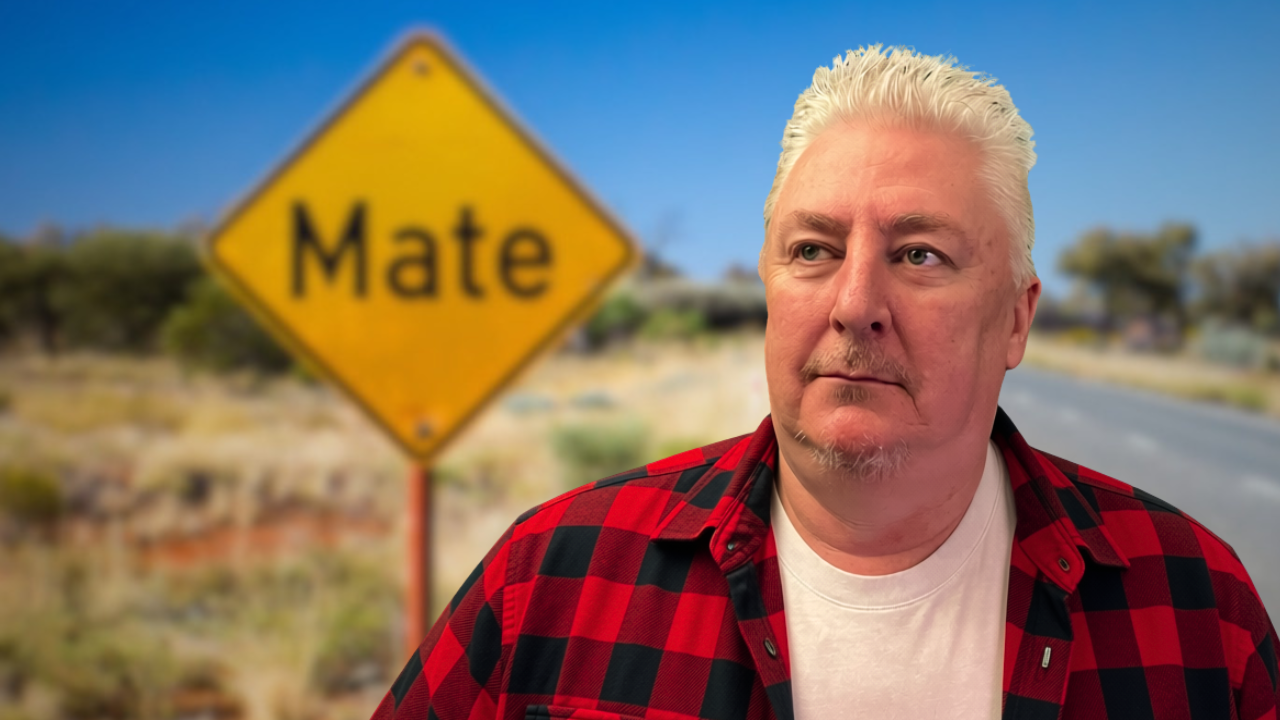
Australians say mate because it’s more than just a word. It’s a greeting, a thank you, a sign of friendship, a warning, a term of affection, and sometimes all five at once.
Eight years after moving to America, I still say it dozens of times a day.
“Cheers, mate.”
“Thanks, mate.”
“No worries, mate.”
“See ya, mate.”
Now the people that know are plenty used to it by now but those that don’t always pause for a split second when they hear it. You can almost see them translating it in real time.
Then it clicks.
Oh right.
He’s Australian.
The funny thing is that I don’t even notice I’m saying it anymore.
It’s one of those habits that survived the move. My accent has softened a little over the years. I’ve learned to say gas station instead of servo. I’ve stopped confusing cashiers by handing over exact change and expecting them to appreciate it.
But mate never left.
Mate Doesn’t Mean What Americans Think It Means
One of the biggest misconceptions is that Australians call everyone mate because we’re all best friends.
That’s not really how it works.
I’ve called complete strangers mate. Shop assistants have called me mate. Taxi drivers, tradies, neighbours, and random blokes I’ve met for thirty seconds have all used it.
It’s less about friendship and more about familiarity.
It’s a way of saying, “We’re alright. Let’s keep this simple.”
One of my closest friends here in Tennessee is Mexican.
Years ago she started saying mate back to me.
These days I call her matey and she calls me mate.
Neither of us are using it correctly anymore, but we’ve committed to it so heavily that there’s no turning back now.

Not Everyone Gets Called Mate
Despite what Hollywood might suggest, Australians don’t call absolutely everyone mate.
There are situations where it fits and situations where it doesn’t.
When I worked in banking, I wasn’t walking into meetings with ambassadors and saying, “G’day mate.”
That would have been a very short diplomatic meeting.
In Australia, mate is often a social leveler.
It works best when people are meeting as equals.
Tradies use it.
Country Australians use it.
Blokes leaning on fences use it.
People standing around a barbecue use it.
It strips away a bit of formality and makes the conversation feel more relaxed.
Things Americans Think Are Normal (That Still Confuse Me After 8 Years)
That’s one reason Australians often sound more casual than we actually are.
The Same Word Can Also Start an Argument
Of course, Australians have found a way to make the word mean the complete opposite too.
Tone matters.
“Thanks, mate.”
Friendly.
“Good to see you, mate.”
Friendly.
“Listen here, mate…”
Not friendly.
Nobody in Australian history has ever heard the words “Listen here, mate” and thought something positive was about to follow.
The same goes for:
“Pull your head in, mate.”
Or the classic Alf Stewart line from Home and Away:
“You’re a bit of a drongo, mate.”
Australians have somehow managed to turn one of our friendliest words into a warning system.
It’s actually quite impressive when you think about it.
Why I Still Say It
I’ve lived in America long enough now that some Australian habits have faded.
Others haven’t.
Mate is one of the ones that stuck.
Partly because it’s habit.
Partly because it feels natural.
But if I’m being honest, there’s probably another reason too.
The person who used the word most in my life wasn’t a tradie, a farmer, or one of my mates at the pub.
It was my mum.
Every phone call started the same way.
“Hi mate.”
Or sometimes:
“Love you, mate.”
I was telling my daughters about that the other day.
How normal it felt at the time.
It was something I never thought twice about it.
How I never imagined I’d miss hearing a single word so much.
Looking back, I think that’s why Australians keep using it.
Yes, it’s friendly.
It’s a social leveler.
Yes, it’s part of our culture.
But it’s also a word that carries connection.
It’s a word we use with friends, family, workmates, neighbours, and sometimes complete strangers.
Somehow Australians found a way to squeeze friendship, affection, gratitude, sarcasm, and belonging into four letters.
Not bad, mate.
