THIS WEEK IN AMERICA
There are famous people whose deaths you hear about.
Then there are the ones you feel.
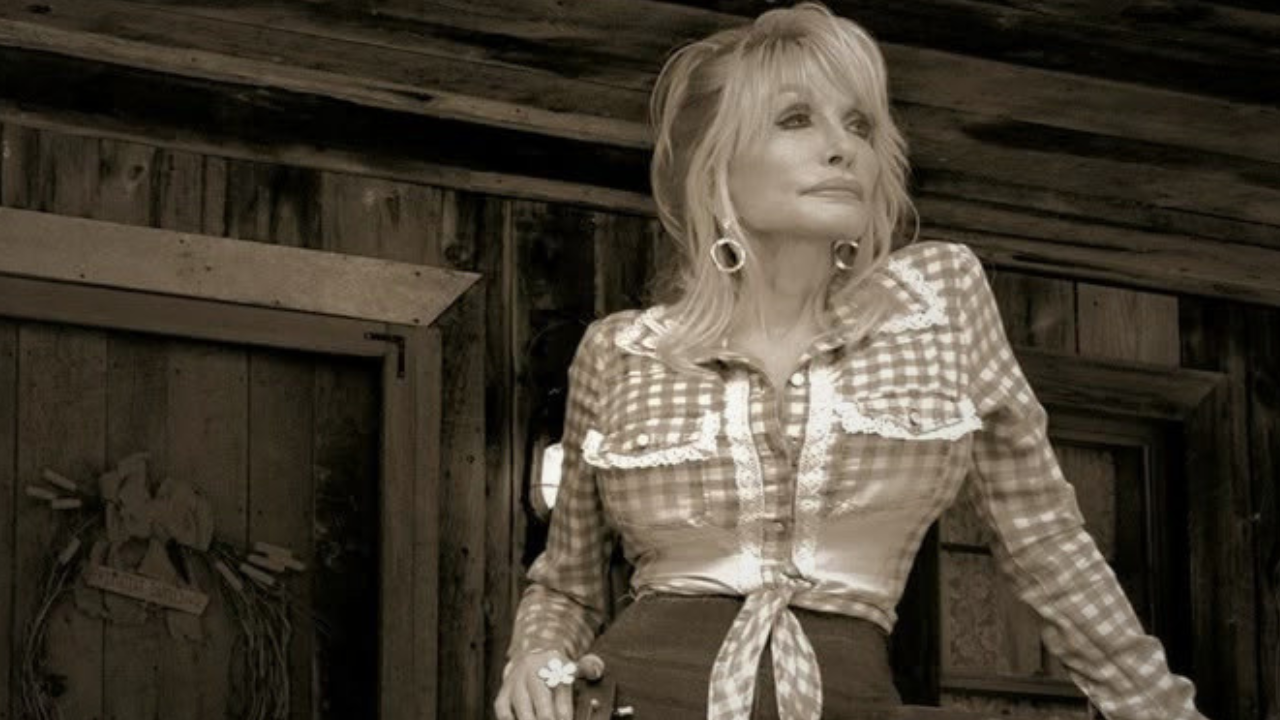
Dolly Parton died on August 25, and here in Tennessee, you could feel it almost immediately.
It wasn’t simply another celebrity death appearing on television screens and social media feeds. People were crying. Flowers appeared outside her home. Schools found their own ways to remember her. Radio stations played her music. Conversations that normally had nothing to do with country music somehow ended up being about Dolly.
I cried too.
That surprised me a little.
I knew she’d been unwell. Only days earlier I’d watched an interview with her. She still looked happy. She still sounded like Dolly. There was nothing about it that made me think I was watching one of the final interviews she would ever give.
Then she was gone.
Over the next few days, I watched Tennessee react to losing someone who had been part of this state for generations.
And I began to understand that people here weren’t simply mourning a famous country singer.
They were mourning something much closer to home.

Dolly Was Different in Tennessee
I grew up in Australia, so Dolly Parton existed in my life long before Tennessee did.
She was already one of those people who seemed permanently famous.
The hair.
The rhinestones.
The voice.
The jokes.
The songs everybody somehow knew, even if they claimed they didn’t listen to country music.
But living in Tennessee changed the way I saw her.
Celebrity looks different when you live close enough to see the fingerprints someone has left behind.
I’ve been to Dollywood several times. What always struck me about the place wasn’t simply that Dolly Parton owned a theme park.
Plenty of famous people can put their name on something.
Dollywood feels connected to the place that made her.
There are craftsmen, music, old Appalachian traditions, reminders of mountain life and pieces of a culture that could very easily have been polished away in the name of creating something newer and shinier.
Dolly became one of the most recognisable women on Earth without ever appearing remotely embarrassed by the mountains she came from.
Quite the opposite.
She took them with her.
I think that’s one of the things I came to admire most about her.
Success didn’t seem to require pretending she had come from somewhere else.
I’ve even been eyeing a Dolly Parton TIME cover poster for the wall of my studio. Eight years ago, I’m not sure that would ever have occurred to me. Now it feels strangely appropriate.
The Dolly Parton You Heard About Around Town
Living around Nashville also means occasionally meeting people whose worlds have crossed with people you’ve only ever seen on television.
Over the years I’ve met several people who knew Dolly.
One woman had worked as her videographer.
When Dolly came up in conversation, she described someone remarkably similar to the public version the rest of us knew.
Funny.
Sassy.
Energetic.
Caring.
That always stayed with me because celebrity reputations often become considerably less impressive the closer you get to them.
Dolly’s seemed to work the other way.
There’s even an antique store not far from where we live where the owner has a photograph of herself with her. Apparently she used to drop in and browse.
That image of Dolly somehow feels more Tennessee to me than a red carpet ever could.
Dolly Parton, international superstar, wandering around an antique store.
Yep.
That really fits.
A few years ago, when I was working as a bank manager in Franklin, Tennessee, I saw another side of her that I’ve never forgotten.
Occasionally, checks would appear.
They had Dolly Parton’s signature on them.
Sometimes they were for $10,000.
Sometimes $20,000.
They were going to ordinary families who were struggling.
There wasn’t a television crew standing beside them.
Or an oversized novelty check.
There wasn’t a press conference explaining what a wonderful person Dolly Parton was.
Someone needed help.
She helped.
Working in banking meant I obviously couldn’t go home and start telling everybody whose accounts I’d seen. But I remember looking at those checks and thinking about how extraordinary it would be to have reached a point in life where you could quietly alter the course of someone else’s life.
More importantly, it made me think about what I was doing with mine.
That’s a fairly impressive legacy for a piece of paper.

Tennessee Didn’t Mourn Her Like a Celebrity
In the days after Dolly died, I began noticing something interesting about the way Tennessee responded.
There were certainly the expected tributes.
Pink.
Boots.
Sparkles.
Music.
But there was something underneath all of that.
Schools across Middle Tennessee encouraged children to wear pink or western clothes, bring books and perform acts of kindness. At Gladeville Middle School, students were invited to take part in a “What Would Dolly Do?” kindness challenge.
At my daughters’ school, the principal spoke to the children over the loudspeaker.
She asked them to honour Dolly through kindness.
Not by listening to one of her records.
Not by finding the biggest blonde wig in Tennessee.
Kindness.
Of everything they could have chosen to represent her, that’s what they chose.
Meanwhile, mourners gathered outside Dolly’s Brentwood home in such numbers that flowers, signs and balloons accumulated around the property and police eventually had to manage traffic in the area.
This wasn’t simply Tennessee saying goodbye to someone famous.
It felt much more like people saying goodbye to someone they believed belonged to them.
Or perhaps someone they believed they belonged to.
There’s a difference.

Then I Started Thinking About Mum
My mum loved Dolly.
She had her albums.
One of my earliest memories of Dolly Parton’s music is Coat of Many Colors.
I remember hearing it as a boy in Australia.
More specifically, I remember Mum singing it.
There were times when we didn’t have much money either.
Mum worked hard. She loved horses, the country and life on the land. Given the opportunity, I think she would happily have disappeared onto a property somewhere with several horses and reappeared only when somebody reminded her she had children.
There were parts of Dolly’s story that I think Mum understood instinctively.
So when Dolly died, all those old memories suddenly came rushing back.
My mum died four years ago.
Grief does something strange after enough time has passed.
It stops occupying the whole room.
You learn to live around it.
Days go by.
Then weeks.
You work. Take the kids to school. You complain about the electricity bill. You wonder why nobody in the house except you appears capable of replacing an empty toilet roll.
Life resumes its normal nonsense.
Then something completely unexpected opens a door you didn’t know was still there.
A song.
A smell.
A photograph.
Or apparently, the death of Dolly Parton.
Suddenly I wasn’t only thinking about the woman Tennessee had lost.
I was thinking about the woman I’d lost too.

A Song Somehow Travelled 9,000 Miles With Me
The strange part is where life eventually took me.
Imagine explaining this to the little Australian boy listening to his mum singing Coat of Many Colors.
One day you’ll move to America.
Not just America.
Tennessee.
You’ll visit the Smoky Mountains that Dolly sang about.
Go to Dollywood.
You’ll meet people who knew her.
Even see small evidence of things she did for people when nobody was watching.
Then decades after first hearing those songs on the other side of the world, you’ll be living just outside Nashville when Tennessee wakes to the news that Dolly Parton is gone.
Life is ridiculous sometimes.
We talk about migration in terms of places.
I moved from Australia to America.
That’s geographically true.
But I’m increasingly convinced that when you move countries, you don’t leave one life behind and start another.
You carry bits of the old one with you.
Songs.
Expressions.
Memories.
People.
Most of the time they sit quietly in the background.
Then something happens in your new home that suddenly reaches all the way back into your old one.
For me, Dolly Parton became one of those bridges.
A woman from the mountains of East Tennessee was part of my childhood in Australia because my mum loved her music.
Decades later, East Tennessee became part of my own life.
I don’t know that I could have written a more unlikely circle if I’d tried.
I talked about that strange connection between Dolly, Tennessee and Mum on This Week in America. You can hear the original story below.
Maybe That’s Why Dolly Meant So Much
I’ve joked for years that if aliens ever arrive and demand to meet someone who represents humanity, we shouldn’t send a politician.
Send Dolly Parton.
Give her twenty minutes.
We’ll probably be fine.
It’s a joke, obviously.
Mostly.
But there’s a reason it works.
Dolly managed something that’s becoming increasingly difficult.
People who disagreed about almost everything seemed capable of liking her.
She had her own beliefs, but she never seemed interested in turning every interaction into a test of whether you shared them.
Dolly was deeply rooted in her faith and her culture without expecting everybody else to be exactly like her. She could make fun of herself without diminishing herself, and become extraordinarily successful without pretending she’d achieved it alone.
Perhaps most remarkably, after making enormous amounts of money, she still seemed to notice people who didn’t have much.
That’s much rarer than a good singing voice.
Her Imagination Library has also put hundreds of millions of free books into the hands of children, an extraordinary extension of something Tennessee families had known about her for decades: she cared deeply about where she came from and believed success carried some responsibility to give something back.
Dollywood has already announced that it intends to preserve that philosophy as it develops tributes to her legacy, including places for reflection and new experiences built around dreaming, storytelling and kindness.
That seems right.
Because I don’t think Dolly Parton’s most important legacy is Jolene.
Or 9 to 5.
Or even I Will Always Love You.
It’s certainly not the wigs.
Although, fair play, that’s a fairly substantial body of work on its own.
I think her real legacy is much simpler.
She came from very little.
Achieved almost everything.
She never seemed to become embarrassed by the people or the place she came from.
And somewhere along the way, she made a lot of people want to be a little kinder.
That’s not bad for one life.
Goodbye, Dolly
Tennessee feels a little different without her.
I imagine it will for quite some time.
For me, though, her death will always be connected to something more personal.
I’ll think about Mum singing Dolly’s songs in Australia.
About growing up without much money.
I’ll think about horses and country life and those records playing when I was a boy.
About the absurd route that eventually brought me from there to here.
And perhaps that’s one of the gifts music gives us.
It attaches itself to people.
We think we’re remembering a song when we’re actually remembering a kitchen, a car, a childhood, a parent or a version of ourselves that disappeared years ago.
Dolly Parton belonged to Tennessee.
But somehow, a little piece of her belonged to my mum too.
I hope wherever they both are, Mum finally gets to see the concert.
Knowing Mum, she’ll probably want decent seats.

If you enjoy these stories about life in America through Australian eyes, you can help support From Down Under to Down South with a coffee. Every coffee helps me keep writing, recording and sharing the stories I find along the way. Thank you for being here.
